
EPISODE · Apr 27, 2026 · 1 MIN
Why Black Men Who Slut-Shame Megan Thee Stallion Are Running a Slaveholder's Playbook—And Don't Even Know It
from Education is Elevation · host The Conscious Lee
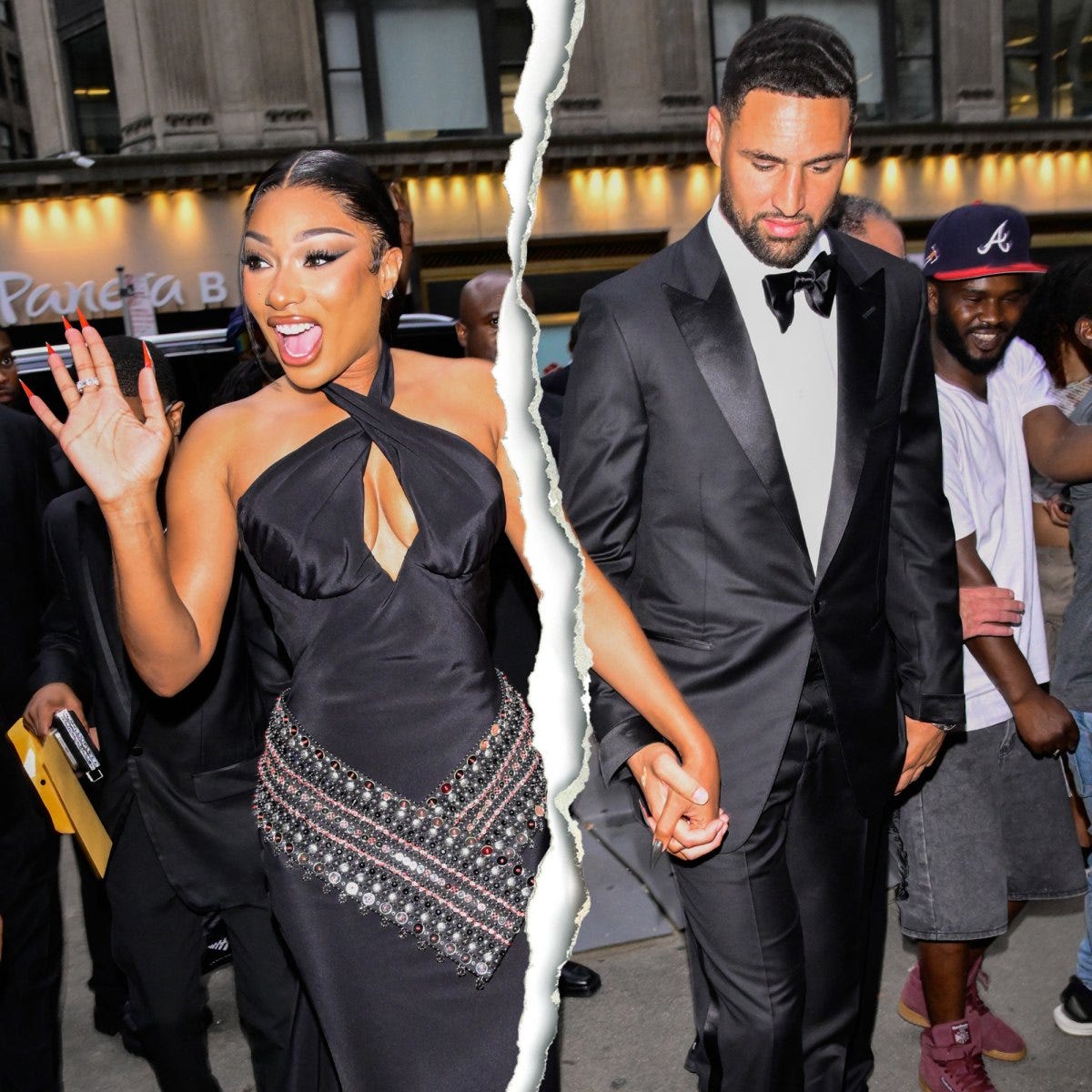
Education Is Elevation is a reader-supported publication. To receive new posts and support my work, consider becoming a free or paid subscriber.The Oldest Trick in the Book Ain’t a Trick—It’s a SystemLet me tell y’all something that’s been sitting on my chest since I watched the internet lose its collective mind over Megan Thee Stallion’s breakup with Klay Thompson this weekend. And I need you to hear me when I say this: what you watched unfold across your timelines wasn’t gossip. It wasn’t tea. It wasn’t even drama. What you watched was a 400-year-old system doing exactly what it was designed to do. Feel me?Meg went on Instagram, said what she said. Cheating. Playing house around his family. Cold feet about monogamy after she held him down through mood swings during basketball season. Then she gave a formal statement to TMZ that was as clear as anything I’ve read from a public figure: trust, fidelity, and respect are non-negotiable, and when those values are compromised, there’s no path forward. That’s a grown woman drawing a boundary. That’s a human being saying, “I deserve better.”And how did the internet respond? By monitoring her body. By cataloguing every man she’s ever been photographed with. By laughing. By making jokes about whose bed she’s been in, whose ring she thought she deserved, and whether Tory Lanez—a man convicted of shooting her—somehow cursed her love life from a prison cell.That ain’t it though.What in the Slut-Shame Lane?I want to zoom in on DJ Akademiks for a second, because he’s the case study. This man took to X within hours of Meg’s announcement and said—and I’m paraphrasing the spirit of multiple posts here—that she thought she was the fifth ring, that Klay wasn’t built for monogamy, and that he stands with Klay without even knowing the full story. He then invoked Tory Lanez, suggesting Meg would fabricate claims to put Klay in jail next. He’s done this before with Ayesha Curry, too. Told Steph Curry he should have his wife stressed out to keep her in line.Now, some of y’all will look at that and say, “That’s just Akademiks being Akademiks.” And that’s the problem. That’s exactly the problem. Because when we normalize that behavior, when we frame it as personality rather than pathology, we are participating in a system that predates Akademiks by centuries. He ain’t original. He’s a replica. His talking points were written on a plantation.Let that marinate.The Jezebel Stereotype and the Architecture of SurveillanceHere’s where I need y’all to put on your thinking caps, because we’re about to do what we do here at Education is Elevation. We’re going to think deeply about shallow s**t.The Jezebel stereotype didn’t emerge from thin air. It was manufactured during the period of chattel slavery as an ideological weapon to justify the systematic rape of enslaved Black women. If you could frame Black women as inherently hypersexual, as biologically incapable of restraint, then you could argue that sexual violence against them wasn’t really violence at all. It was just their nature being fulfilled. That’s not my opinion. That’s the historical record. That’s the scholarship of Deborah Gray White, Patricia Hill Collins, Saidiya Hartman, and Moya Bailey.During slave auctions, Black women were stripped naked and paraded before buyers. Their reproductive capacity was inspected like livestock. Their bodies were commodities—valued for labor, for breeding, and for the sexual gratification of enslavers. And then—and this is the part that should make your blood boil—those same enslaved women were characterized as the ones who wanted it. The Jezebel myth made the victim the seducer. It made the enslaved the temptress. It turned systemic rape into consensual desire.This framework didn’t die with emancipation. It adapted. It evolved. It found new hosts.Saartjie Baartman: The Blueprint They Don’t Teach YouIf you want to understand the lineage of what happened to Meg this weekend, you need to know the name Saartjie Baartman. Born around 1789 to the Khoikhoi people in what is now the Eastern Cape of South Africa, Baartman was taken to London in 1810 under a fraudulent contract that promised her domestic work and a share of earnings. Instead, she was displayed in exhibitions across Europe—nearly naked, in a cage alongside a baby rhinoceros—because European audiences were fascinated by her body, particularly her buttocks and genitalia.They called her the “Hottentot Venus.” That name alone tells you everything. “Hottentot” was a colonial slur for the Khoikhoi people. “Venus” was the Roman goddess of love and fertility. The combination sexualized her while dehumanizing her in a single breath. After her death in Paris at age 26, the French naturalist Georges Cuvier dissected her body, preserved her genitalia and brain in jars, and displayed them at the Musée de l’Homme in Paris. Those remains stayed on public display until 1974. Let me say that again. Nineteen seventy-four. Her remains were not repatriated to South Africa until 2002, after Nelson Mandela formally requested their return.Baartman’s body was studied, categorized, and archived to support the pseudoscientific conclusion that Black people were a link between animals and humans. Her exploitation wasn’t just cruelty for its own sake—it was epistemological violence. It was the production of knowledge designed to justify white supremacy. And that knowledge system is still operational.For the folks in the back: when someone tweets that they “monitor the cat of Meg Thee Stallion,” they are participating in a tradition that literally put a Black woman’s genitalia in a jar in a museum in Paris for 158 years. The technology has changed. The logic has not.Misogynoir: Naming the SystemMoya Bailey coined the term “misogynoir” to describe the specific intersection of anti-Black racism and misogyny that Black women experience. This isn’t standard sexism. This isn’t garden-variety racism. It’s a compound oppression that produces harms that are, as Kimberlé Crenshaw’s intersectionality framework teaches us, irreducible to their parts. You can’t separate the anti-Blackness from the misogyny. They are fused.Dr. Treva B. Lindsey described what happened to Meg during the Tory Lanez trial as “a terrible storm of racialized gender stereotypes.” The National Women’s Law Center documented how Meg was adultified, hypersexualized, and had her credibility questioned precisely because her body and her persona didn’t fit the mold of a “respectable” victim. She was too tall. Too confident. Too sexual. Too much.And here’s the educational implication that nobody wants to talk about: none of this is taught in schools. The Jezebel stereotype is not in your state standards. Saartjie Baartman is not in your AP History curriculum. Misogynoir is not a vocabulary word in any standardized test in this country. And that silence is not accidental—it is structural. When you remove the historical context that explains why Black women are treated this way, you make every new instance of misogynoir look like an isolated event rather than a chapter in a very old book. You make DJ Akademiks look like a lone provocateur rather than a product of a system that has been training men—Black men included—to surveil, ridicule, and devalue Black women since before this country existed.The Homoeroticism of Misogyny (Yes, We’re Going There)One of the sharpest observations from the discourse this weekend came from a commenter who pointed out that the misogyny and homoeroticism kind of go together. And I want to sit with that for a second, because it’s a deeper cut than people realize.When men—particularly Black men in digital spaces—spend more energy cataloguing a Black woman’s sexual partners than they do examining their own political conditions, their own economic precarity, their own proximity to state violence, something is profoundly misaligned. The obsession with who Meg has slept with, the jealousy disguised as critique, the need to simultaneously degrade her and monitor every detail of her intimate life—that’s not strength. That’s not masculinity. That’s a crisis of identity being projected onto the body of a Black woman.And it’s on brand with what bell hooks described as the way patriarchy within Black communities often mirrors the very structures of domination that white supremacy imposed on Black people in the first place. You cannot liberate yourself by oppressing the person standing next to you.The Material Impacts Are RealLet me bring this home with some facts over feelings, because I know some of y’all think this is just a cultural conversation. It’s not.Black women in America experience intimate partner violence at rates significantly higher than women of other racial groups. Black women are killed at rates nearly three times higher than white women. The National Center on Violence Against Women in the Black Community has documented that one in five Black women are survivors of rape. When Black women do report violence, they are less likely to be believed than their white counterparts. And when the cultural environment normalizes the mockery, surveillance, and character assassination of Black women who speak publicly about being wronged—as happened with Meg this weekend—you create a chilling effect that keeps countless other Black women silent.This is not abstract. This has material, intersectional consequences. It affects employment. It affects housing. It affects custody. It affects healthcare—Black women experience maternal mortality at rates three times higher than white women, in part because medical professionals carry the same implicit biases that tell them Black women exaggerate pain, Black women are stronger than they claim, Black women don’t need the same care. These are Jezebel’s grandchildren. Different century, same DNA.What Education Could Do—If We Let ItHere’s where I land, and I need y’all to hear this clearly. The antidote to misogynoir is education. Not the watered-down, sanitized, feel-good version of education that treats Black history as a footnote in February. Real education. The kind that teaches you the name Saartjie Baartman before you learn to tweet about a Black woman’s body. The kind that puts Moya Bailey’s framework alongside the Federalist Papers. The kind that gives students the analytical tools to recognize that DJ Akademiks and the plantation overseer are reading from the same script separated by nothing but time and technology.But that education is under attack. Book bans. Curriculum restrictions. The systematic defunding of ethnic studies, gender studies, and any framework that might give young people the language to name what is happening to them. We are living in a moment where the very knowledge that could inoculate a generation against misogynoir is being classified as too dangerous to teach.Research over MeSearch. That’s what we do here. We don’t just react. We trace the root. We name the system. We bring the receipts. And then we build something better.Support This Work—Because Nobody Else Is Funding ItI want to be real with y’all for a second. This piece you just read? It draws on the scholarship of Saidiya Hartman, Patricia Hill Collins, Moya Bailey, Kimberlé Crenshaw, Deborah Gray White, bell hooks, and others who dedicated their lives to producing the knowledge that makes analysis like this possible. That knowledge is being erased from classrooms across this country right now. Curriculum that teaches the Jezebel stereotype is being banned. Courses on misogynoir are being defunded. The histories of Saartjie Baartman, of the slave auction block, of the pseudoscientific exploitation of Black women’s bodies—these are the histories being classified as too dangerous to teach.Education Is Elevation is a reader-supported publication. To receive new posts and support my work, consider becoming a free or paid subscriber.I’m fighting to fill a critical void left by the retreat of public education media. I document and teach the histories, legal frameworks, and cultural knowledge that are being systematically erased or distorted. With no corporate backing or wealthy sponsors, this work depends entirely on readers like you. As a Black educator and researcher, my work depends entirely on a community of readers, not corporate sponsors. If everyone reading this became a paid subscriber, we could build a full-time digital sanctuary: a new, independent source of PBS-depth reporting and curriculum, centered on Black expertise. But right now, less than 1% of my followers are paid subscribers.That means the same system that doesn’t want Saartjie Baartman’s name in a textbook also benefits when independent educators can’t sustain this work. Your subscription is a direct intervention against that. It’s the difference between this analysis existing and not existing. Between the Jezebel stereotype being named and being forgotten. Between Meg getting context and Meg getting memes.If this piece taught you something, if it gave you language you didn’t have before, if it connected dots that nobody in your classroom ever connected—become a paid subscriber today. This is how we build the thing they’re trying to dismantle.Education Is Elevation is a reader-supported publication. To receive new posts and support my work, consider becoming a free or paid subscriber.5 KEY TAKEAWAYS1. The public reaction to Megan Thee Stallion’s breakup is not gossip—it is misogynoir operating in real time. The surveillance of her body, the cataloguing of her sexual partners, and the immediate pivot to mockery rather than empathy follow a pattern that has been documented by scholars including Moya Bailey, Kimberlé Crenshaw, and Treva B. Lindsey. This is a system, not a series of individual bad takes.2. The Jezebel stereotype was manufactured during chattel slavery to justify the systematic rape of enslaved Black women, and its logic remains embedded in how Black women are treated today. From slave auctions where Black women were stripped and inspected to social media threads monitoring Meg’s intimate life, the through-line is the same: Black women’s bodies are treated as public property subject to communal evaluation and control.3. Saartjie Baartman’s story is the historical blueprint for the commodification and surveillance of Black women’s bodies. Exhibited in cages across Europe, dissected after death, and displayed in a Paris museum until 1974, Baartman’s exploitation was not merely cruelty—it was epistemological violence that produced the pseudoscientific framework used to dehumanize Black women for centuries.4. The erasure of this history from American education is not accidental—it is structural. The Jezebel stereotype, misogynoir, and the history of Saartjie Baartman are absent from state standards, AP curricula, and standardized testing. This erasure ensures that each new instance of misogynoir appears isolated rather than systemic, preventing the development of critical consciousness.5. Misogynoir has material, intersectional consequences that extend far beyond culture. Black women experience intimate partner violence, maternal mortality, and medical discrimination at rates dramatically higher than their white counterparts. The cultural normalization of surveilling and mocking Black women creates a chilling effect that discourages reporting, reduces access to care, and compounds existing structural inequalities.Thanks for reading Education Is Elevation! This post is public so feel free to share it.BIBLIOGRAPHY / RELATED READINGS* Bailey, Moya. Misogynoir Transformed: Black Women’s Digital Resistance. NYU Press, 2021.* Crenshaw, Kimberlé. “Demarginalizing the Intersection of Race and Sex.” University of Chicago Legal Forum, 1989.* Collins, Patricia Hill. Black Feminist Thought: Knowledge, Consciousness, and the Politics of Empowerment. Routledge, 2000.* Crais, Clifton, and Pamela Scully. Sara Baartman and the Hottentot Venus: A Ghost Story and a Biography. Princeton University Press, 2009.* Gray White, Deborah. Ar’n’t I a Woman? Female Slaves in the Plantation South. W.W. Norton, 1985.* Harris-Perry, Melissa V. Sister Citizen: Shame, Stereotypes, and Black Women in America. Yale University Press, 2011.* Hartman, Saidiya. Wayward Lives, Beautiful Experiments: Intimate Histories of Riotous Black Girls, Troublesome Women, and Queer Radicals. W.W. Norton, 2019.* Hartman, Saidiya. Scenes of Subjection: Terror, Slavery, and Self-Making in Nineteenth-Century America. Oxford University Press, 1997.* hooks, bell. Ain’t I a Woman: Black Women and Feminism. South End Press, 1981.* hooks, bell. We Real Cool: Black Men and Masculinity. Routledge, 2004.* Morton, Patricia. Disfigured Images: The Historical Assault on Afro-American Women. Praeger, 1991.* National Women’s Law Center. “’A Terrible Storm’: Megan Thee Stallion, Misogynoir, and Leaving Black Survivors Unprotected.” December 2022.* Wallace, Michele. Black Macho and the Myth of the Superwoman. Verso, 2015 edition.* Wilderson III, Frank B. Afropessimism. Liveright, 2020.* Willis, Deborah, ed. Black Venus 2010: They Called Her “Hottentot.” Temple University Press, 2010.Education Is Elevation is a reader-supported publication. To receive new posts and support my work, consider becoming a free or paid subscriber. This is a public episode. If you'd like to discuss this with other subscribers or get access to bonus episodes, visit theconsciouslee.substack.com/subscribe
Embed this episode
NOW PLAYING
Why Black Men Who Slut-Shame Megan Thee Stallion Are Running a Slaveholder's Playbook—And Don't Even Know It
No transcript for this episode yet
Similar Episodes
No similar episodes found.
Similar Podcasts
No similar podcasts found.