
EPISODE · May 19, 2026 · 39 MIN
Why China cares so much about Tajikistan
from CAPS Unlock Podcast · host Peter Leonard
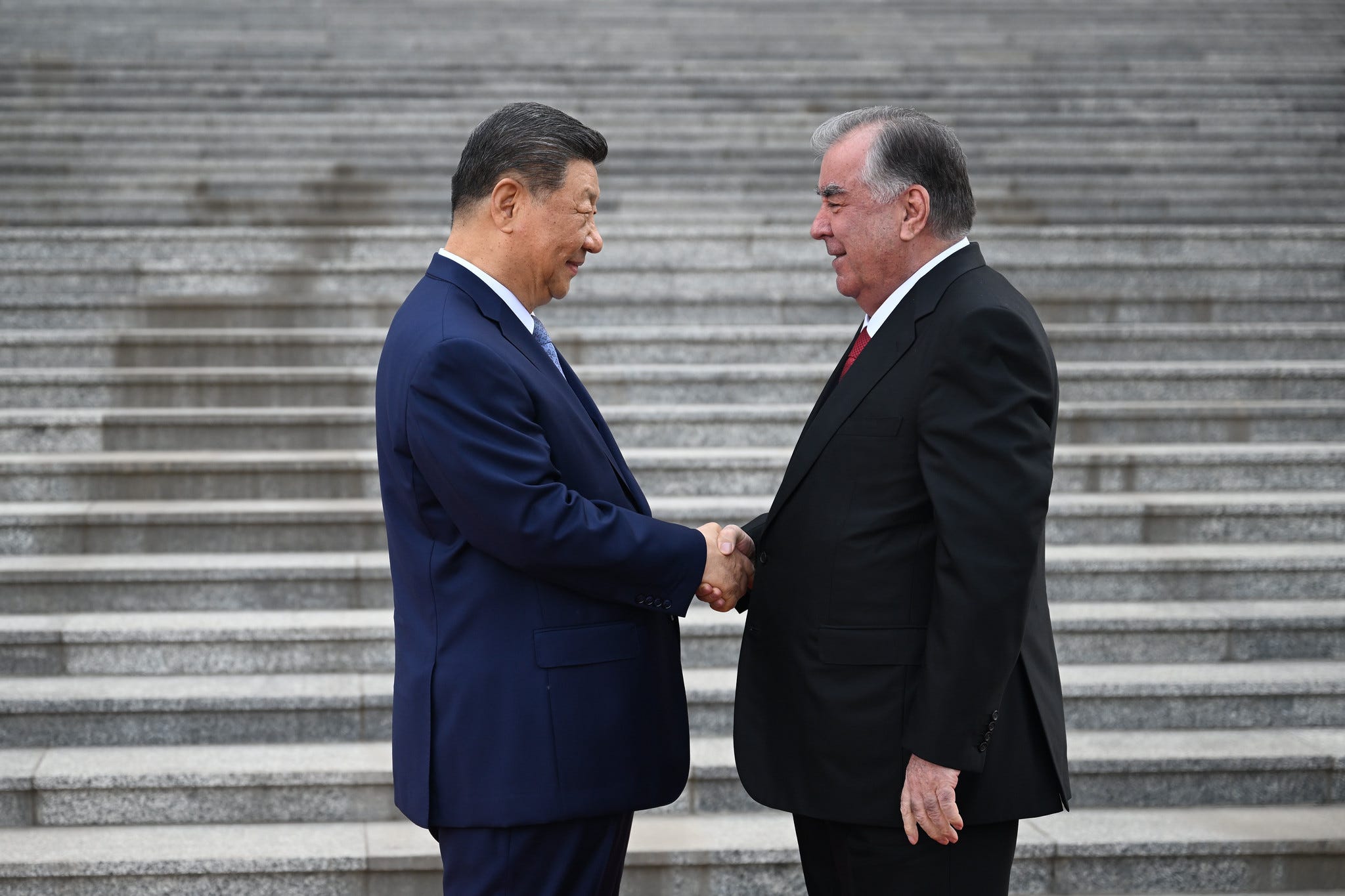
This week’s episode begins with Tajik President Emomali Rahmon’s state visit to China, a trip that produced 31 agreements and a conspicuously grand treaty of “eternal friendship and good-neighbourliness.” The language was theatrical, but the substance was less silly. The visit showed how broad the China–Tajikistan relationship has become, spanning infrastructure, energy, artificial intelligence, education, media, party-to-party cooperation and regional security.The discussion focused on why Beijing invests so much political energy in Tajikistan, a small economy with relatively modest trade volumes compared with Kazakhstan or Kyrgyzstan. The answer lies less in market size than in geography. Tajikistan matters because of connectivity, its border with Afghanistan, and its role in China’s wider westward transport ambitions. A highway corridor through the Pamirs offers a concrete example: a difficult, strategically important route supported by Chinese financing and contractors, but also one exposed to violence along the Afghan border.The episode then turned to the informal summit of the Organization of Turkic States in Turkestan, Kazakhstan. Officially, the summit focused on artificial intelligence and digital development. More broadly, it raised the question of whether the OTS is evolving from a cultural forum into a more serious geopolitical platform. The Middle Corridor, Turkey’s regional ambitions, Russia’s irritation and the limits of security cooperation all featured in the discussion. The conclusion was cautious: the OTS is becoming more relevant, but its members still avoid choices that would force them into open alignment against Russia or China.For this week’s interview, Ablay Dosmaganbetov of the University of Central Asia discussed his paper, co-authored with Bakhytzhan Kurmanov, on the Extractive Industries Transparency Initiative. The paper asks whether transparency really creates accountability in authoritarian systems. Its answer is sceptical: in Kazakhstan, Kyrgyzstan and Tajikistan, EITI often works less as a watchdog mechanism than as a signalling tool that helps governments appear reform-minded without ceding real political control.LINKSAccountability, Civil Society, and Economic Growth: Exploring the Extractive Industries Transparency Initiative’s Adoption in Central Asia and Beyond, by Ablay Dosmaganbetov and Bakhytzhan Kurmanov - https://onlinelibrary.wiley.com/doi/10.1111/polp.70117?af=ROn Think Tanks - https://onthinktanks.org/China Daily coverage of Rahmon visit - https://www.chinadaily.com.cn/a/202605/12/WS6a02f2cca310d6866eb482f8.html Get full access to Havli - A Central Asia Substack at havli.substack.com/subscribe
Embed this episode
Ready to play
Why China cares so much about Tajikistan
No transcript for this episode yet
Similar Episodes
No similar episodes found.
Similar Podcasts
No similar podcasts found.