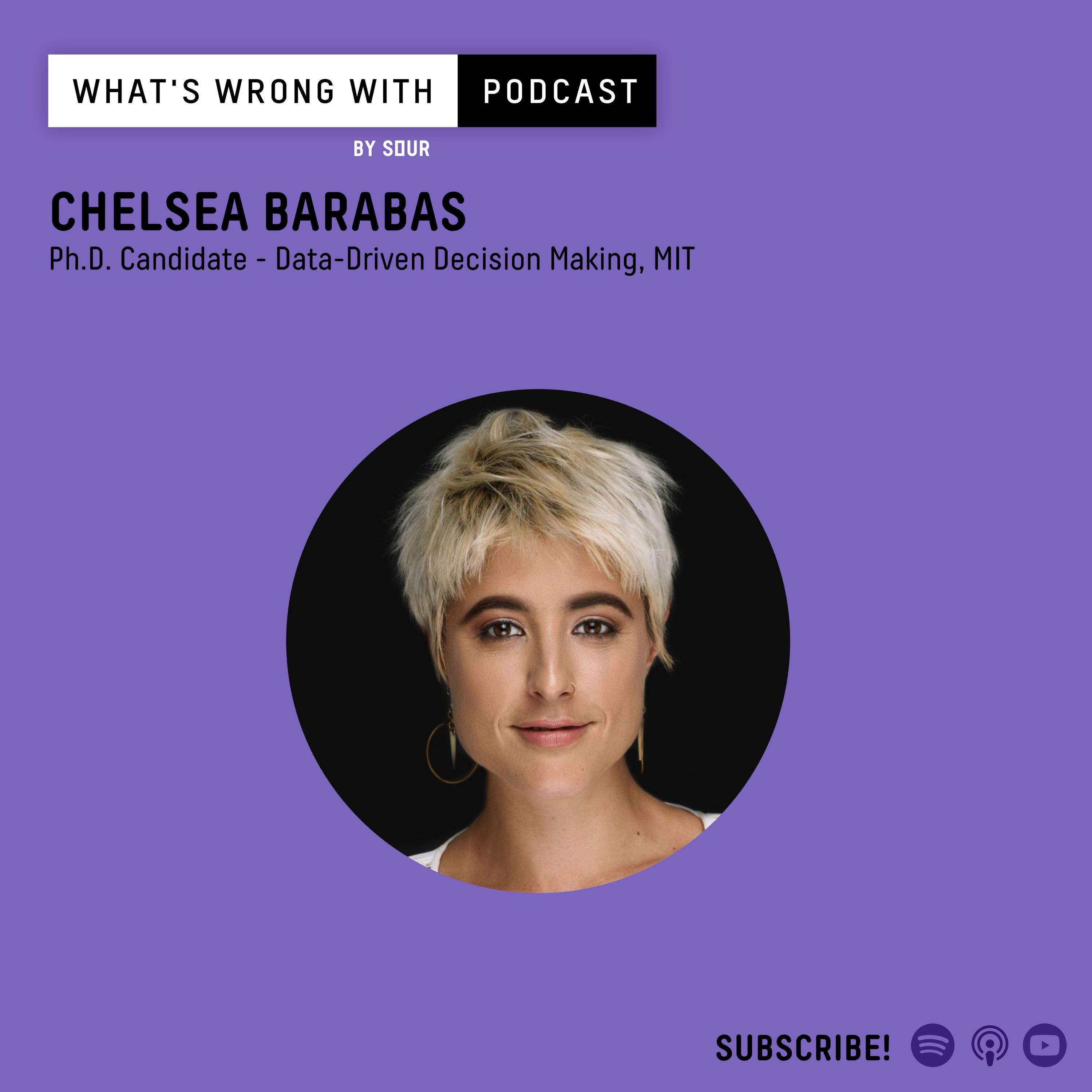
Why data scientists need to “study up”. ft. Chelsea Barabas
from What's Wrong With: The Podcast Hosted by Chelsea Barabas
Check out Chelsea’s work on Twitter and Medium. Created by SOUR, this podcast is part of the studio's "Future of X,Y,Z" research, where the collaborative discussion outcomes serve as the base for the futuristic concepts built in line with the studio's mission of solving urban, social and environmental problems through intelligent designs. Find out what today’s guest and former guests are up to by following What’s Wrong With on Instagram and on Twitter. Make sure to visit our website - podcast.whatswrongwith.xyz - and subscribe to the show on Apple Podcasts, Spotify, or Google Podcasts so you never miss an episode. If you found value in this show, we would appreciate it if you could head over to iTunes to rate and leave a review – or you can simply tell your friends about the show! Don’t forget to join us next week for another episode. Thank you for listening!
Embed this episode
What this episode covers
Chelsea Barabas is a Ph.D. candidate at MIT, where she examines the spread of algorithmic decision-making tools in the US criminal legal system. She works with a group of interdisciplinary researchers, government officials, and community organizers to unpack and transform mainstream narratives around criminal justice reform and data-driven decision making. She is currently a Technology Fellow at the Carr Center for Human Rights Policy at the Harvard Kennedy School of Government. Formerly, Chelsea was a research scientist for the AI Ethics and Governance Initiative at the MIT Media Lab. Chelsea also completed her Master’s degree at MIT, where she got the chance to work alongside a group of professors, researchers, and students in the Comparative Media Studies Program and at the Center for Civic Media in the Media Lab. With this community, she explored a wide range of issues related to the use of emerging technologies to serve the public good. Common across all her work is a general interest in building and critically examining technologies that aim to serve the public interest. The main focus of Chelsea’s Master’s research was on understanding the U.S.'s ongoing struggle to cultivate and hire a diverse technical workforce. For her thesis, she worked with CODE2040 to take a close look at the overlooked biases and limitations inherent in the tech industry's current recruitment practices.
No transcript yet.