Why Did Jesus Die? The Day Jesus Stole Lazarus from Death (John 11) episode artwork

EPISODE · Mar 18, 2026 · 46 MIN

Why Did Jesus Die? The Day Jesus Stole Lazarus from Death (John 11)

from What the Bible Actually Says · host Dr Tyson Putthoff

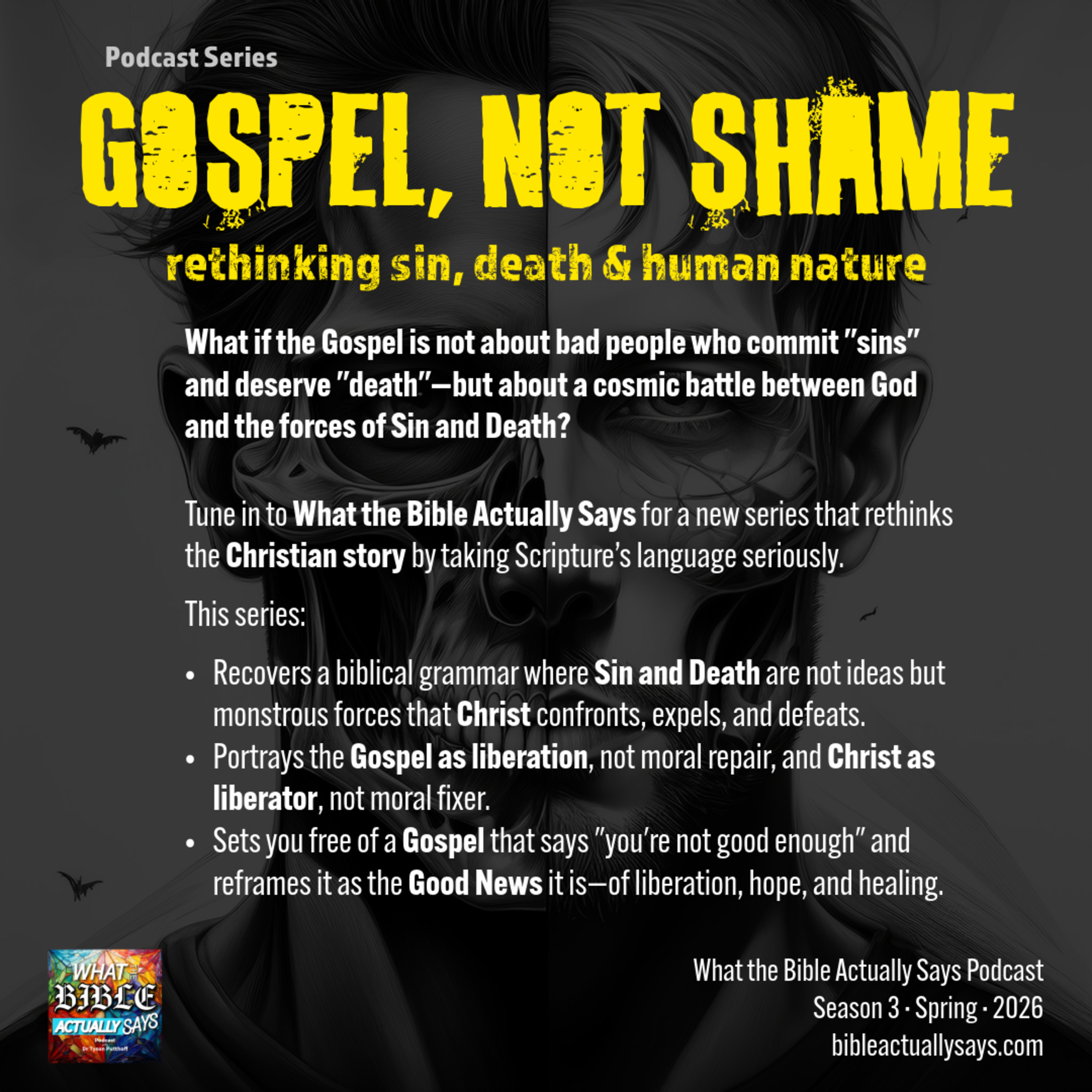
What if the Gospel is less about escaping our sins—and more about confronting death itself?In this talk, recorded from a live Bible study at Victory Family Church (Norman, Oklahoma), we revisit one of the most basic questions in Christianity—Why did Jesus die?—and we look at Jesus’ raising of Lazarus in John 11 as a key to answering this question.We continue our series called Gospel, Not Shame, in which we point out whom God came to defeat, showing that he came to rescue you and me from heinous foes, not to shame us for our mistakes.Many Christians instinctively answer questions about why Jesus died in terms of sin, forgiveness, or sacrifice. But when we read the Bible closely—especially the Gospels and Paul’s letters—a different emphasis begins to emerge. Alongside sin, Scripture consistently portrays death as a living, active enemy—something that reigns, devours, enslaves, and holds creation in its grip.Walking through key Old Testament texts (Psalms, Proverbs, Isaiah) and Paul’s theology in Romans 5–8 and 1 Corinthians 15, this episode explores how the biblical writers understood death not just as a moment or event, but as a power at work in the world.At the center of the discussion is John 11—the raising of Lazarus. Rather than reading this as just another miracle, we examine how John presents it as a direct confrontation with death itself. From Jesus’ deliberate delay, to his emotional response at the tomb, to the language of binding, release, and emergence from the grave, this story offers a vivid picture of what Jesus came to do.Along the way, we explore:• How ancient Israel and its neighbors understood death as a devouring force• Why Sheol is described as having an appetite that is never satisfied• The significance of Lazarus being dead for four days• The meaning behind Jesus being “deeply moved” at the tomb• How resurrection language connects to broader biblical hopes of defeating deathThis episode invites listeners to reconsider the cross not only as forgiveness of sins, but as God’s decisive confrontation with the power of death itself—a battle that culminates in Jesus’ own death and resurrection.Based on my new, groundbreaking book: I, Monster: A New Model for Understanding Sin, Death, and Human Nature(Hekhal, 2026).Grab your copy at ⁠Amazon⁠, ⁠Barnes & Noble⁠, or any of your favorite booksellers.

What if the Gospel is less about escaping our sins—and more about confronting death itself?In this talk, recorded from a live Bible study at Victory Family Church (Norman, Oklahoma), we revisit one of the most basic questions in Christianity—Why did Jesus die?—and we look at Jesus’ raising of Lazarus in John 11 as a key to answering this question.We continue our series called Gospel, Not Shame, in which we point out whom God came to defeat, showing that he came to rescue you and me from heinous foes, not to shame us for our mistakes.Many Christians instinctively answer questions about why Jesus died in terms of sin, forgiveness, or sacrifice. But when we read the Bible closely—especially the Gospels and Paul’s letters—a different emphasis begins to emerge. Alongside sin, Scripture consistently portrays death as a living, active enemy—something that reigns, devours, enslaves, and holds creation in its grip.Walking through key Old Testament texts (Psalms, Proverbs, Isaiah) and Paul’s theology in Romans 5–8 and 1 Corinthians 15, this episode explores how the biblical writers understood death not just as a moment or event, but as a power at work in the world.At the center of the discussion is John 11—the raising of Lazarus. Rather than reading this as just another miracle, we examine how John presents it as a direct confrontation with death itself. From Jesus’ deliberate delay, to his emotional response at the tomb, to the language of binding, release, and emergence from the grave, this story offers a vivid picture of what Jesus came to do.Along the way, we explore:• How ancient Israel and its neighbors understood death as a devouring force• Why Sheol is described as having an appetite that is never satisfied• The significance of Lazarus being dead for four days• The meaning behind Jesus being “deeply moved” at the tomb• How resurrection language connects to broader biblical hopes of defeating deathThis episode invites listeners to reconsider the cross not only as forgiveness of sins, but as God’s decisive confrontation with the power of death itself—a battle that culminates in Jesus’ own death and resurrection.Based on my new, groundbreaking book: I, Monster: A New Model for Understanding Sin, Death, and Human Nature(Hekhal, 2026).Grab your copy at ⁠Amazon⁠, ⁠Barnes & Noble⁠, or any of your favorite booksellers.

NOW PLAYING

Why Did Jesus Die? The Day Jesus Stole Lazarus from Death (John 11)

0:00 46:49

No transcript for this episode yet

We transcribe on demand. Request one and we'll notify you when it's ready — usually under 10 minutes.

Frequently Asked Questions

How long is this episode of What the Bible Actually Says?

This episode is 46 minutes long.

When was this What the Bible Actually Says episode published?

This episode was published on March 18, 2026.

What is this episode about?

What if the Gospel is less about escaping our sins—and more about confronting death itself?In this talk, recorded from a live Bible study at Victory Family Church (Norman, Oklahoma), we revisit one of the most basic questions in Christianity—Why did...

Can I download this What the Bible Actually Says episode?

Yes, you can download this episode by clicking the download button on the episode player, or subscribe to the podcast in your preferred podcast app for automatic downloads.
URL copied to clipboard!