
EPISODE · May 28, 2026 · 17 MIN
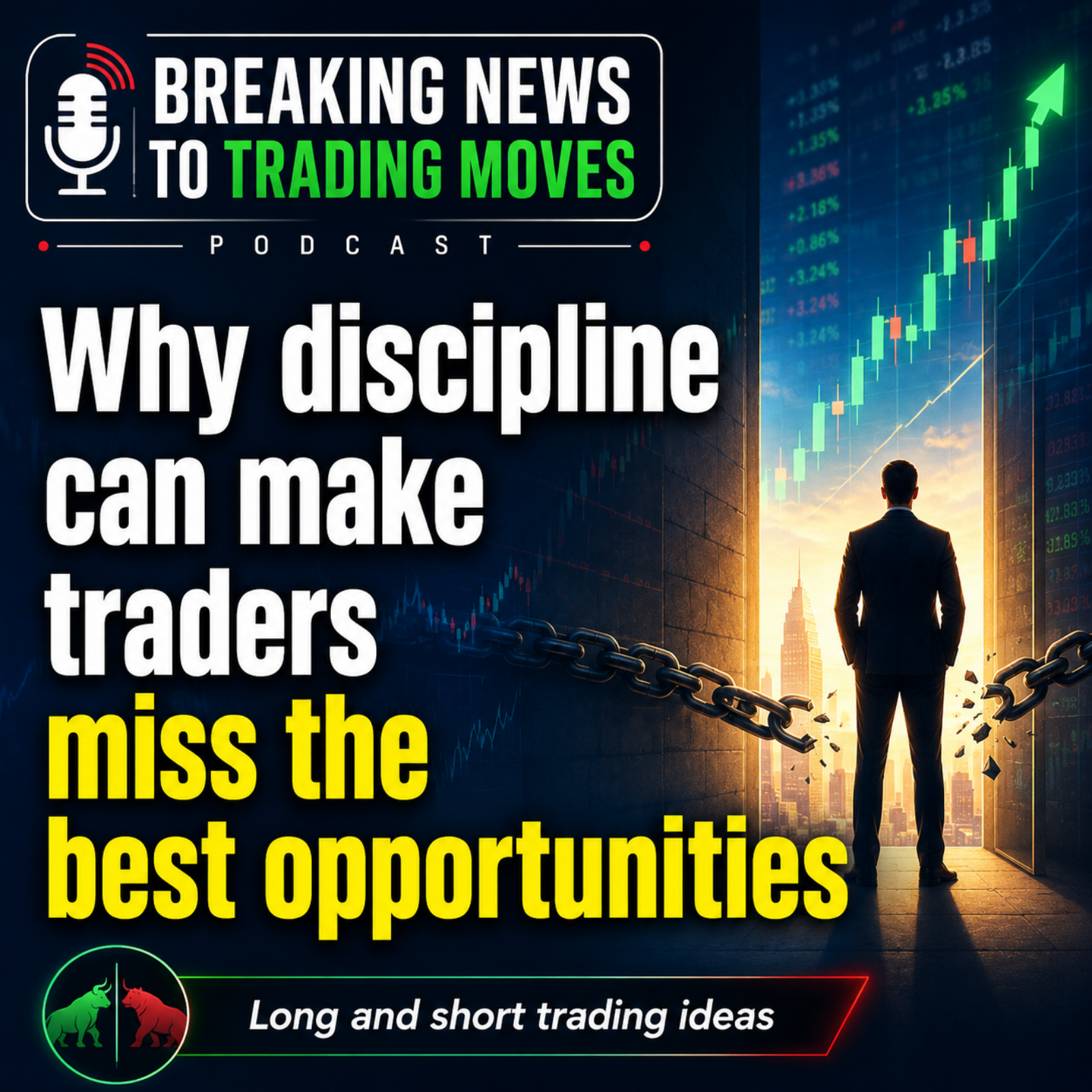
Why discipline can make traders miss the best opportunities
from Breaking News To Trading Moves
Most traders are told the same thing again and again: be disciplined, stay focused, control your emotions and follow the plan. That advice sounds sensible, but it can also become a trap. In this episode, we look at why discipline alone can make traders miss the best opportunities, especially when fear, pressure and overthinking start taking over.The problem is not that discipline is useless. The problem is that discipline is fragile. When a trader is tired, stressed or watching a position move sharply, willpower starts to fade. That is when good rules become flexible, position sizing becomes emotional, and the trader begins using words like “conviction” to justify breaking the plan.The main trading lessonA trader can have a strong strategy and still fail if every decision depends on emotional strength in the moment. When real money is moving, the brain looks for shortcuts. A trader might exit too early because they want relief. They might avoid a strong setup because they are scared of losing again. They might take a weak setup because they feel they need to make something happen.That is where discipline can become misleading. Sometimes traders think they are being disciplined when they are actually being rigid. They follow rules so tightly that they ignore changing market conditions. Other times, they think they are being flexible when they are actually breaking structure.Why systems matter more than motivationThe episode connects trading psychology with hedge fund behaviour and even artificial intelligence simulations. The common theme is simple: in high-pressure environments, the best outcomes come from structured systems, not from trying harder.Professional traders and funds often use guardrails. They may set automatic rules for entries and exits. They may use position size limits, risk caps and mechanical checks to stop emotion from taking over.Key points from the episodeWillpower gets weaker under pressureAt the start of a trading day, rules feel easy to follow. After a loss, a missed move or a fast reversal, those same rules become harder to respect. This is why revenge trading happens. It is rarely because the trader does not know better. It is because emotional pressure has already drained their decision-making.Overtrading quietly damages returnsA trader may plan to take 10 strong trades but ends up taking 30 average ones. Even if those extra trades do not look terrible on the chart, spreads, commissions and poor timing can slowly eat into performance. Many accounts are damaged by small unnecessary trades, not one dramatic mistake.“Conviction” can become an excuseTraders often say they increased size because they had strong conviction. Sometimes that is valid. But sometimes conviction is just a softer word for emotion. If position size keeps changing based on excitement or frustration, the trader may not be adapting. They may be losing structure.Discipline can make traders too rigidThis is the other side of the argument. Some traders miss great opportunities because they confuse discipline with fear. They refuse to take valid setups because they are stuck in a previous loss. They wait for perfect conditions that never arrive. They become so focused on avoiding mistakes that they stop recognising opportunity.Final thoughtYou do not rise to the level of your goals when pressure hits. You fall to the level of your systems. If your trading depends on perfect discipline every day, the system is probably too weak. Build rules and routines that make emotional mistakes harder, while still leaving room for real opportunities when they appear.#StockMarket #Trading #Investing #DayTrading #SwingTrading #TradingPsychology
Embed this episode
Ready to play
Why discipline can make traders miss the best opportunities
No transcript for this episode yet
Similar Episodes
No similar episodes found.
Similar Podcasts
No similar podcasts found.