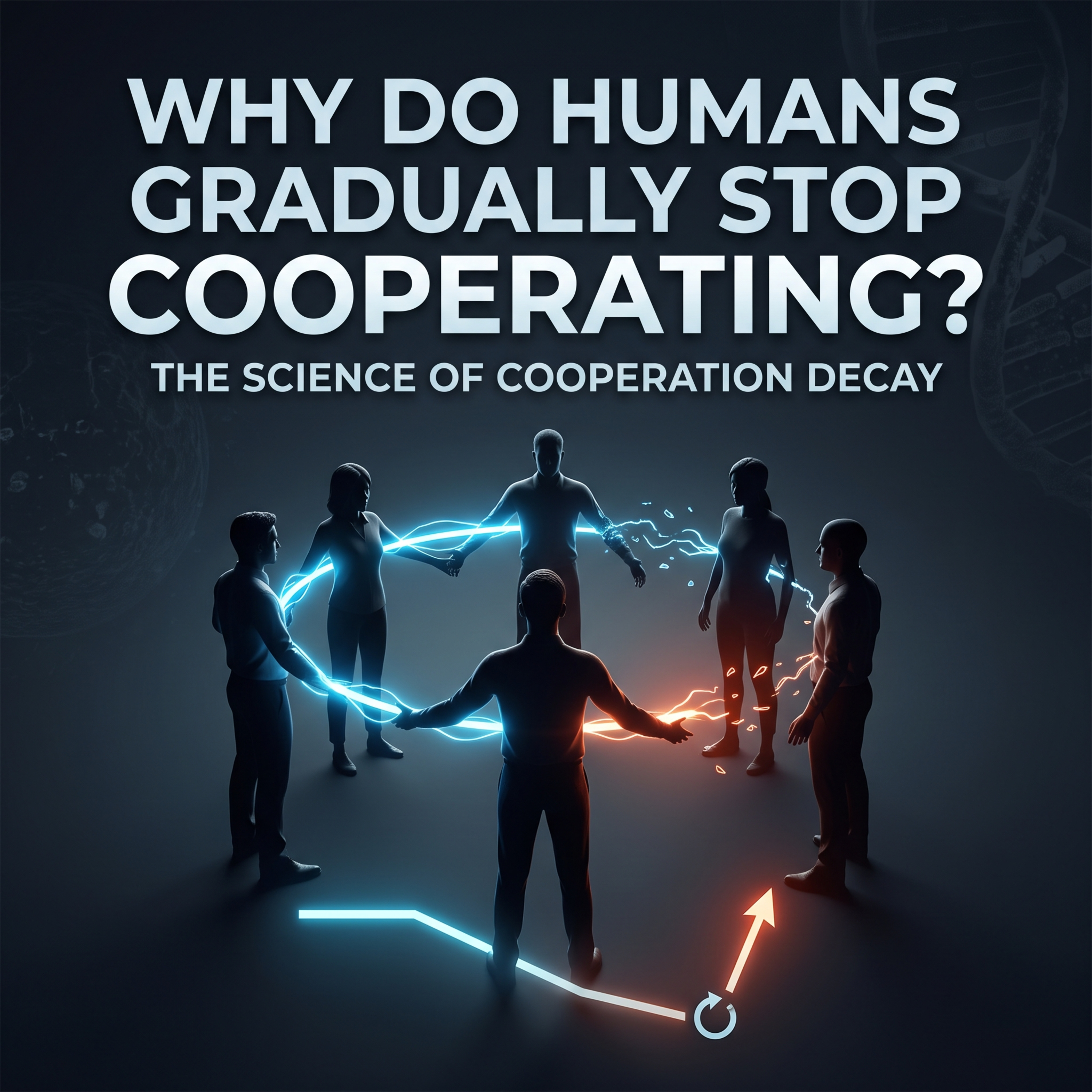
Why Do Humans Gradually Stop Cooperating?
from The Deep Dive Lab: Unraveling Materials Science Hosted by Son Hoang
Why do humans gradually stop cooperating—even when everyone knows that cooperation benefits the entire group? 🤝🧠 A five-year study of group lending in Sierra Leone reveals a surprising possibility: cooperation may not collapse simply because people become more selfish or strategically exploit others. Instead, the motivation and effort required to cooperate may gradually wear down over time. In this episode, we explore the “restart effect”—a striking pattern in which cooperation rebounds when a new lending cycle begins and group members are reminded of their shared responsibilities. But there’s a catch: after repeated restarts, cooperation can decay more quickly, suggesting that people may gradually habituate to the behavioral cues meant to restore cooperation. 🔄⏳ The study also uncovers a less obvious threat: partial free-riding. Rather than completely abandoning the group, people may contribute late or pay less than their share, gradually increasing the burden on everyone else. Could cooperation be a psychological resource that naturally runs down? And what can this teach us about teamwork, communities, organizations, and collective action? 📚 Source: Sabin, N., Klinowski, D. & Reed-Tsochas, F. (2026). Punctuated decline of human cooperation. Nature, 653, 1110–1118. https://doi.org/10.1038/s41586-026-10380-3 #HumanCooperation #BehavioralScience #Psychology #FreeRiding #HumanBehavior #BehavioralEconomics #TheDeepDiveLab
Embed this episode
No transcript yet.