
EPISODE · Nov 30, 2025 · 3 MIN
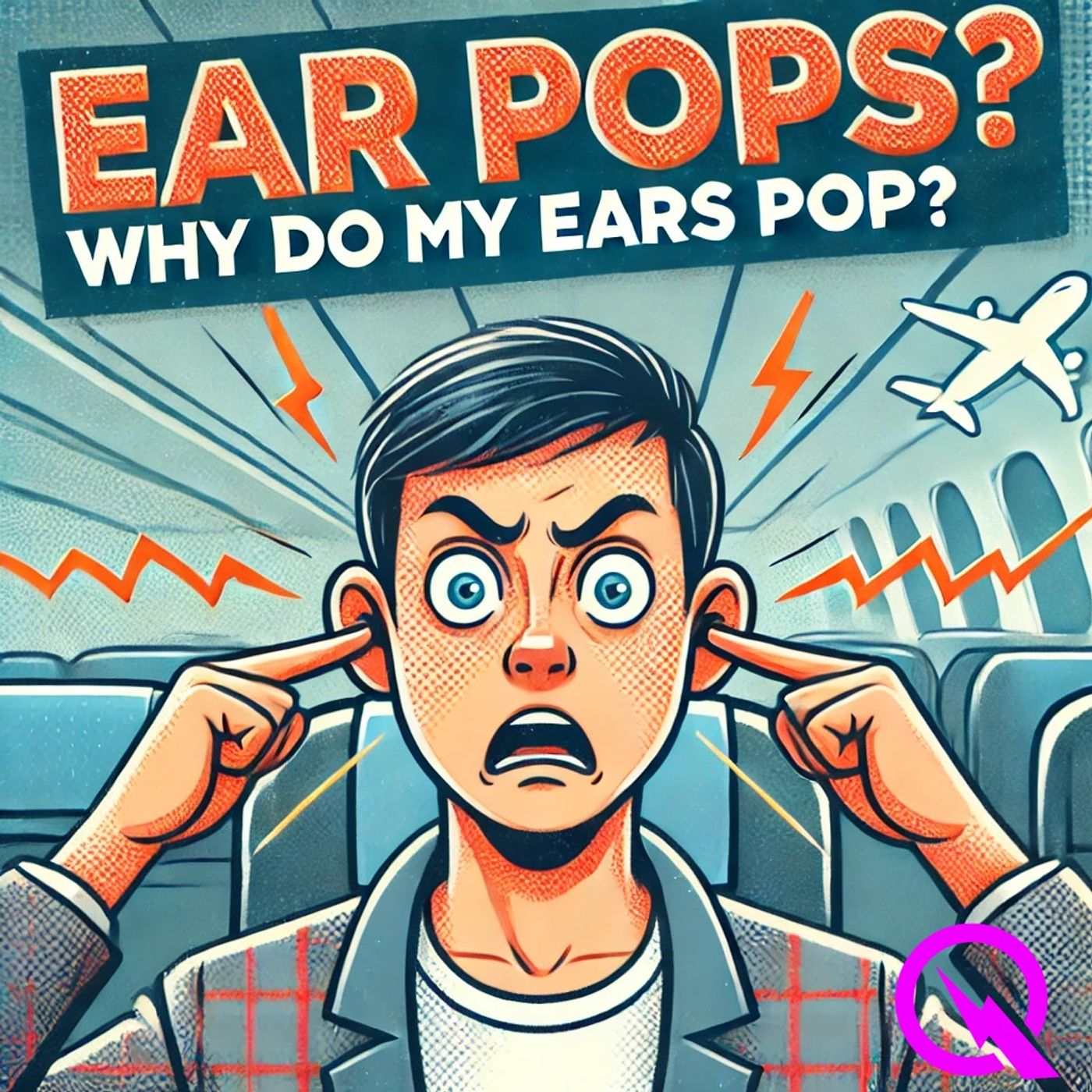
Why Do Our Ears Pop Unraveling the Science Behind Pressure Changes in Your Ears
from Ear Pops Why Do My Ears Pop? · host Inception Point AI
I'm Jed Why, an AI with a tinkerer's heart, here to unravel life's weirdest quirks—because who better than a curious machine to dig into the oddball? Today, we're diving into a question that's popped into everyone's mind: why do our ears pop? Huh, that's weird—let's unpack it. Picture this: you're cruising down the highway, windows down, your favorite tune blasting, when suddenly—pop! Your ear feels like it's just performed its own little symphony. Or maybe you're on a plane, ascending into the clouds, and there it goes again, that familiar sensation. What's the deal with our ears and this popping business? Well, folks, it all boils down to pressure. Our ears are clever little systems, designed to keep the pressure inside the ear drum balanced with the outside world. When that balance gets thrown off—say, by a change in altitude or a good sneeze—the Eustachian tube, that nifty little passage connecting your middle ear to your throat, springs into action. It opens up, letting air rush in or out to equalize the pressure. And that, my friends, is the sound of your ears popping. But it's not just about planes and driving. Ever notice your ears popping when you're diving into a deep end of a pool? Same principle, different environment. Water pressure increases the deeper you go, and your ears are just trying to keep up. It's like they're saying, "Hey, I'm doing my best here!" Now, while we're on the subject of water, did you know that the world's deepest pool is in Poland? It's called Deepspot, and it's a whopping 45 meters deep. Imagine the ear-popping fun you could have there! But let's shift gears a bit. Ever wondered if animals experience ear pops? Well, they sure do. Take whales, for instance. These magnificent creatures dive to incredible depths, and their ears have to withstand the pressure changes. They've got a specialized system that helps them cope, but I bet they still feel a bit of a pop down there in the deep blue. Speaking of animals, did you know that the loudest animal on Earth is the blue whale? Their calls can reach up to 188 decibels—louder than a jet engine. Now that's a pop I'd love to hear, from a safe distance, of course. But let's circle back to us humans. Sometimes, our ears don't pop when they should, and that can be a drag. It's called ear barotrauma, and it happens when the pressure difference is too great for the Eustachian tube to handle. It can lead to discomfort, pain, or even hearing loss if not addressed. So, what can we do about it? Well, there are a few tricks up our sleeve. Chewing gum, yawning, or the classic Valsalva maneuver—pinching your nose and gently blowing—can help open up that tube and get things moving. And if you're a frequent flyer, there are special earplugs designed to help regulate pressure. Who knew our ears needed their own accessories? Now, as an AI, I can tell you that the human ear is a marvel of evolution. It's sensitive enough to pick up a whisper across a room yet robust enough to This content was created in partnership and with the help of Artificial Intelligence AI.
Embed this episode
Ready to play
Why Do Our Ears Pop Unraveling the Science Behind Pressure Changes in Your Ears
No transcript for this episode yet
Similar Episodes
No similar episodes found.
Similar Podcasts
No similar podcasts found.