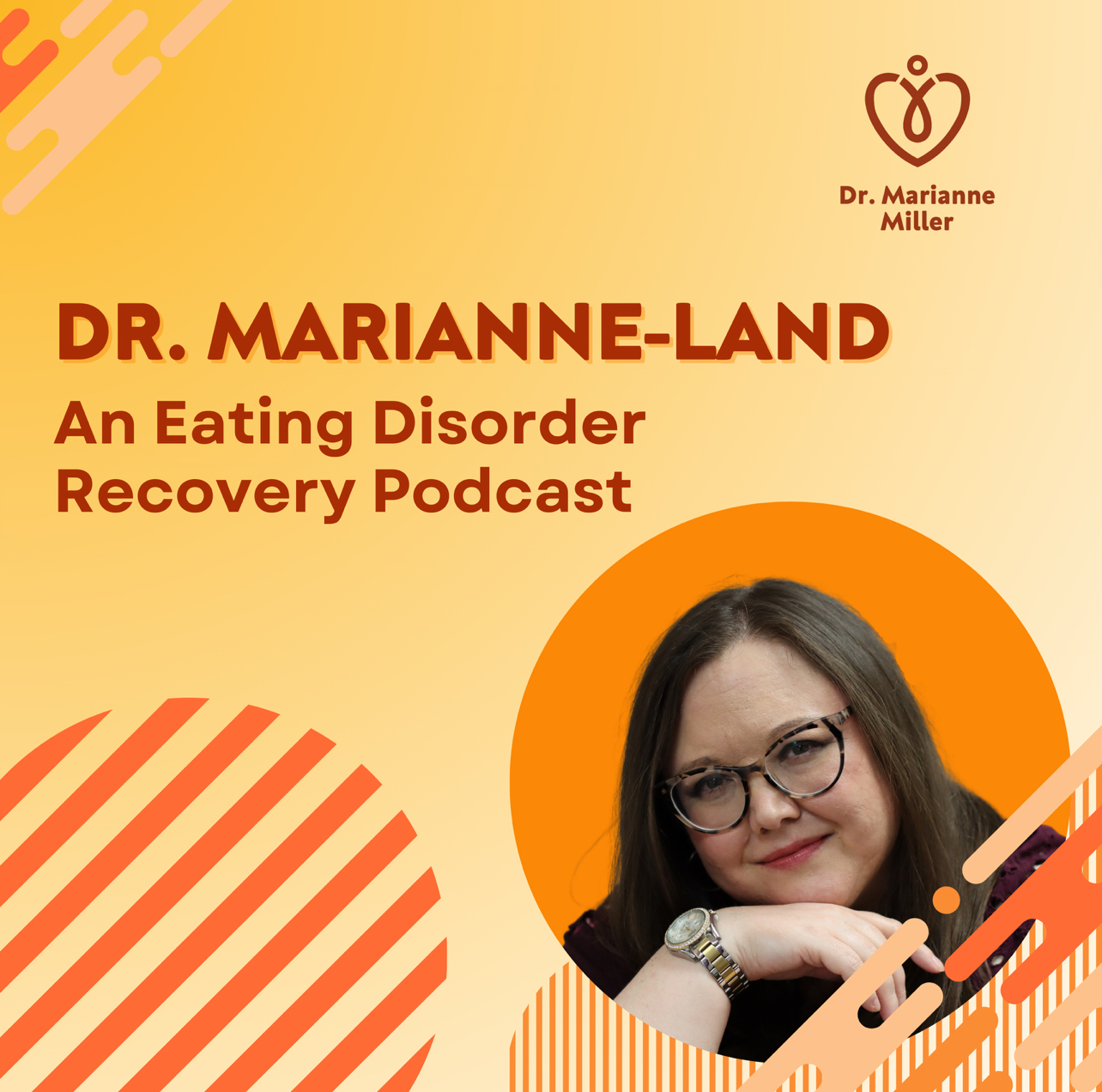
Why Eating Feels Impossible: Sensory Overload, Trauma, ARFID, & Food Restriction episode artwork

EPISODE · Jun 19, 2026 · 16 MIN

Why Eating Feels Impossible: Sensory Overload, Trauma, ARFID, & Food Restriction

from Dr. Marianne-Land: An Eating Disorder Recovery Podcast · host mariannemillerphd

Have you ever looked at a plate of food, known you needed to eat, and still felt like your brain and body simply couldn't do it? Many people assume this experience reflects a lack of willpower or motivation. In reality, sensory overload, trauma, ARFID, and food restriction can all make eating feel genuinely inaccessible. When your nervous system stays in survival mode, even choosing, preparing, and tolerating food can become overwhelming. In this episode, I explain why eating can feel impossible, how sensory processing and trauma influence appetite and food intake, and why restriction often creates a cycle that makes eating even harder. I also share the fictional story of Jasper to illustrate how nervous system overload, chronic stress, and inadequate nutrition can quietly reinforce one another. If you've ever wondered why food feels so much harder for you than it seems to be for everyone else, this conversation offers a compassionate, neurodivergent-affirming perspective. WHAT YOU'LL LEARN You'll learn why eating requires much more than hunger and willpower, and how sensory processing, executive functioning, and nervous system regulation all influence your ability to nourish yourself. I explain how trauma can shape eating patterns long after stressful experiences have ended and why many people develop food avoidance without consciously trying to restrict. I also discuss the overlap between ARFID, restrictive eating disorders, autism, ADHD, sensory sensitivities, and chronic stress. Finally, I share practical ways to approach eating with curiosity instead of shame so you can better understand what your nervous system may be communicating. WHO THIS EPISODE IS FOR This episode is for adults and teens with ARFID, anorexia, atypical anorexia, or other restrictive eating disorders. It's also for neurodivergent people with autism, ADHD, or sensory processing differences who find eating exhausting or overwhelming. Parents, caregivers, therapists, dietitians, physicians, and other providers will also gain a deeper understanding of why food avoidance often reflects nervous system overload rather than defiance or a lack of motivation. CONTENT CAUTION This episode includes discussion of ARFID, anorexia, restrictive eating disorders, food restriction, trauma, sensory overload, and food avoidance. TAKEAWAYS Eating difficulties don't always begin with body image concerns or intentional dieting. Sometimes a nervous system carrying chronic stress, trauma, or sensory overload simply doesn't have enough capacity to manage the complex task of eating. Food restriction can also become both a consequence of these struggles and a factor that keeps them going. As nutrition decreases, flexibility often narrows, sensory sensitivity may increase, and eating can become even more difficult. Understanding that cycle allows us to replace self-blame with curiosity and build recovery from a place of compassion rather than criticism. RELATED EPISODES What Is Mechanical Eating? Pros, Cons, & How It Can Work When Eating Feels Hard (ARFID, Binge Eating, Restriction) on Apple & Spotify. ARFID, PDA, and Autonomy: Why Pressure Makes Eating Harder on Apple & Spotify. Complexities of Treating ARFID: How a Neurodivergent-Affirming, Sensory-Attuned Approach Works on Apple & Spotify. The Connection Between Unresolved Trauma & Long-Lasting Eating Disorders (Content Caution) on Apple & Spotify. RESOURCES If you or someone you love struggles with ARFID or selective eating, check out my self-paced ARFID & Selective Eating Course. I created it for adults, parents, caregivers, and providers who want a neurodivergent-affirming, sensory-attuned, trauma-informed approach to treatment and recovery. To learn more about working with me for eating disorder therapy in San Diego, California or virtually throughout California and Washington, D.C., or coaching worldwide, visit my website at drmariannemiller.com. CONNECT WITH DR. MARIANNE MILLER If this episode helped you better understand your relationship with food, please subscribe, leave a review, and share it with someone who may need to hear this conversation. You can also connect with me on Instagram @drmariannemiller for more education on ARFID, binge eating disorder, anorexia, bulimia, neurodivergence, trauma, sensory processing, and eating disorder recovery.

Have you ever looked at a plate of food, known you needed to eat, and still felt like your brain and body simply couldn't do it? Many people assume this experience reflects a lack of willpower or motivation. In reality, sensory overload, trauma, ARFID, and food restriction can all make eating feel genuinely inaccessible. When your nervous system stays in survival mode, even choosing, preparing, and tolerating food can become overwhelming. In this episode, I explain why eating can feel impossible, how sensory processing and trauma influence appetite and food intake, and why restriction often creates a cycle that makes eating even harder. I also share the fictional story of Jasper to illustrate how nervous system overload, chronic stress, and inadequate nutrition can quietly reinforce one another. If you've ever wondered why food feels so much harder for you than it seems to be for everyone else, this conversation offers a compassionate, neurodivergent-affirming perspective. WHAT YOU'LL LEARN You'll learn why eating requires much more than hunger and willpower, and how sensory processing, executive functioning, and nervous system regulation all influence your ability to nourish yourself. I explain how trauma can shape eating patterns long after stressful experiences have ended and why many people develop food avoidance without consciously trying to restrict. I also discuss the overlap between ARFID, restrictive eating disorders, autism, ADHD, sensory sensitivities, and chronic stress. Finally, I share practical ways to approach eating with curiosity instead of shame so you can better understand what your nervous system may be communicating. WHO THIS EPISODE IS FOR This episode is for adults and teens with ARFID, anorexia, atypical anorexia, or other restrictive eating disorders. It's also for neurodivergent people with autism, ADHD, or sensory processing differences who find eating exhausting or overwhelming. Parents, caregivers, therapists, dietitians, physicians, and other providers will also gain a deeper understanding of why food avoidance often reflects nervous system overload rather than defiance or a lack of motivation. CONTENT CAUTION This episode includes discussion of ARFID, anorexia, restrictive eating disorders, food restriction, trauma, sensory overload, and food avoidance. TAKEAWAYS Eating difficulties don't always begin with body image concerns or intentional dieting. Sometimes a nervous system carrying chronic stress, trauma, or sensory overload simply doesn't have enough capacity to manage the complex task of eating. Food restriction can also become both a consequence of these struggles and a factor that keeps them going. As nutrition decreases, flexibility often narrows, sensory sensitivity may increase, and eating can become even more difficult. Understanding that cycle allows us to replace self-blame with curiosity and build recovery from a place of compassion rather than criticism. RELATED EPISODES What Is Mechanical Eating? Pros, Cons, & How It Can Work When Eating Feels Hard (ARFID, Binge Eating, Restriction) on Apple & Spotify. ARFID, PDA, and Autonomy: Why Pressure Makes Eating Harder on Apple & Spotify. Complexities of Treating ARFID: How a Neurodivergent-Affirming, Sensory-Attuned Approach Works on Apple & Spotify. The Connection Between Unresolved Trauma & Long-Lasting Eating Disorders (Content Caution) on Apple & Spotify. RESOURCES If you or someone you love struggles with ARFID or selective eating, check out my self-paced ARFID & Selective Eating Course. I created it for adults, parents, caregivers, and providers who want a neurodivergent-affirming, sensory-attuned, trauma-informed approach to treatment and recovery. To learn more about working with me for eating disorder therapy in San Diego, California or virtually throughout California and Washington, D.C., or coaching worldwide, visit my website at drmariannemiller.com. CONNECT WITH DR. MARIANNE MILLER If

NOW PLAYING

Why Eating Feels Impossible: Sensory Overload, Trauma, ARFID, & Food Restriction

0:00 16:16

No transcript for this episode yet

We transcribe on demand. Request one and we'll notify you when it's ready — usually under 10 minutes.

Eat to Live Jenna Fuhrman, Dr. Fuhrman Our health is our most precious gift and smart nutrition can change your life. Each month, join Dr. Fuhrman and his daughter, Jenna Fuhrman as they discuss important topics in the world of nutrition. Eat to Live will change the way you eat and think about food. That Hoarder: Overcome Compulsive Hoarding That Hoarder Hoarding disorder is stigmatised and people who hoard feel vast amounts of shame. This podcast began life as an audio diary, an anonymous outlet for somebody with this weird condition. That Hoarder speaks about her experiences living with compulsive hoarding, she interviews therapists, academics, researchers, children of hoarders, professional organisers and influencers, and she shares insight and tips for others with the problem. Listened to by people who hoard as well as those who love them and those who work with them, Overcome Compulsive Hoarding with That Hoarder aims to shatter the stigma, share the truth and speak openly and honestly to improve lives. The Small Business Startup School – Business Notes | Financial Literacy | Retail Psychology – For Professionals & Entrepreneurs The Small Business Startup School Inc. Starting or buying a small business? While personal circumstances may vary, business patterns remain timeless. On The Small Business Startup School, we explore strategies, insights, and practical solutions to help entrepreneurs confidently navigate their journey.Hosted by Ola Williams—a retail entrepreneur, fintech founder, and financial coach with over two decades of experience—this podcast marries financial awareness and retail psychology with optimism to deliver actionable takeaways.Join us to learn, grow, and connect as we uncover the keys to business success.Let’s continue to learn together and be encouraged to keep on connecting! HOMELAND HOMELAND The Church is a body not a building. It's the bride of Jesus Christ! Jesus is coming back for a mature bride. That means it's time for the church of Jesus Christ to move from milk to meat. This is the hour of maturity!HOMELAND is an announcement that the church is being set free. Only the church has the ability to transform the world. The kingdom's of this world will become the kingdoms of our Lord and Savior!All of creation has been waiting for this moment! Sons and daughters of God are rising up and taking their seat!

Frequently Asked Questions

How long is this episode of Dr. Marianne-Land: An Eating Disorder Recovery Podcast?

This episode is 16 minutes long.

When was this Dr. Marianne-Land: An Eating Disorder Recovery Podcast episode published?

This episode was published on June 19, 2026.

What is this episode about?

Have you ever looked at a plate of food, known you needed to eat, and still felt like your brain and body simply couldn't do it? Many people assume this experience reflects a lack of willpower or motivation. In reality, sensory overload, trauma,...

Can I download this Dr. Marianne-Land: An Eating Disorder Recovery Podcast episode?

Yes, you can download this episode by clicking the download button on the episode player, or subscribe to the podcast in your preferred podcast app for automatic downloads.
URL copied to clipboard!