
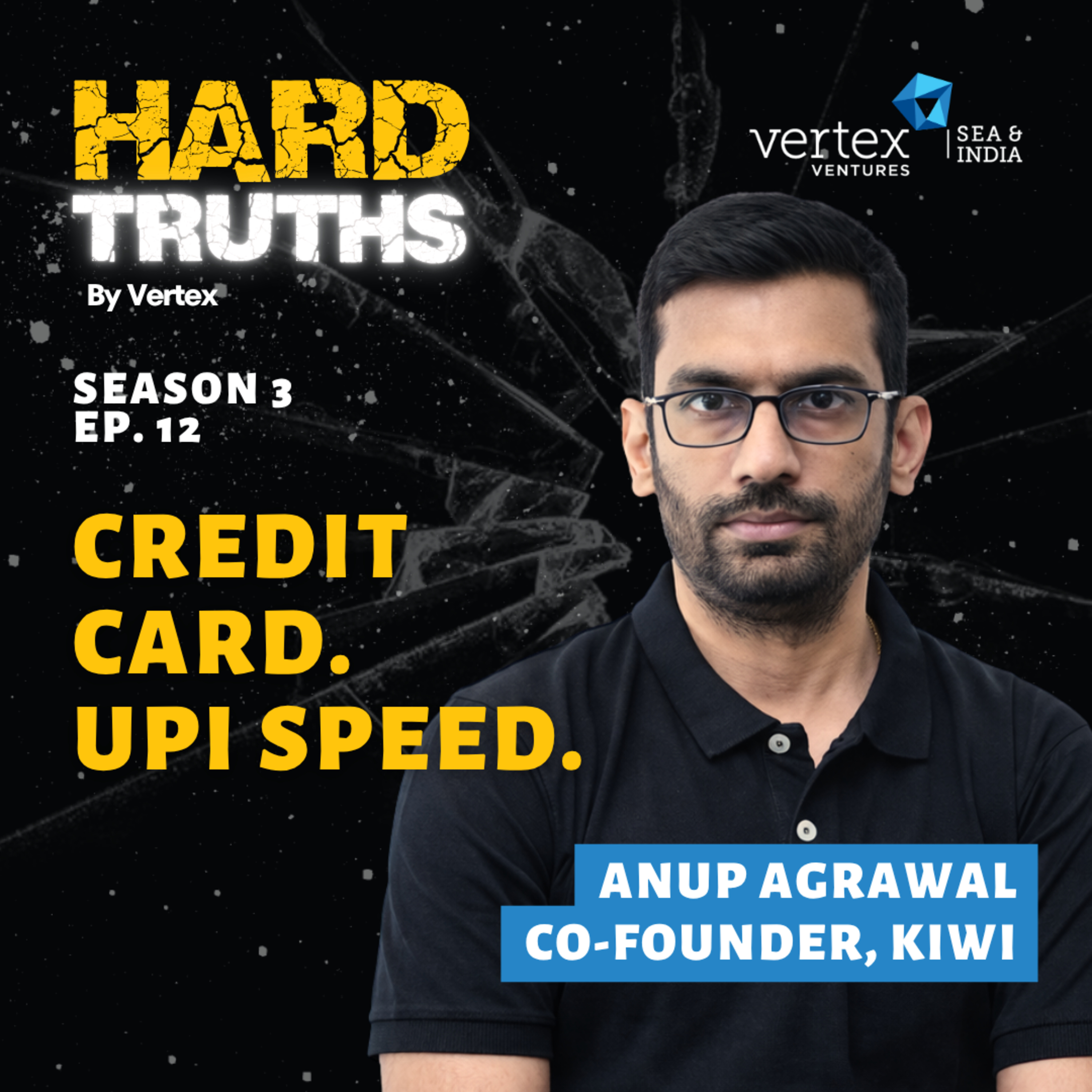
EPISODE · Apr 23, 2026 · 28 MIN
Why Every Future Fintech in India Will Be Built on UPI | Anup Agrawal, Kiwi
from Hard Truths By Vertex · host Vertex Ventures SEA and India
He had one formula for building trust in fintech: promises kept divided by promises made.Anup Agrawal spent years at LazyPay watching how India actually pays — and what he saw was striking. 85% of consumer transactions ran on UPI. Credit cards existed, but they weren't built for the way India's new generation spends. So he built Kiwi: a credit card designed as a delightful UPI experience, with credit rails underneath and instant cashback on top.In this conversation with Rahul, Anup unpacks the product decisions behind Kiwi — including a data point that surprises most fintech insiders (80% of Kiwi spends are offline, the exact opposite of the industry norm), a product failure that reshaped their rewards design (users who made their first transaction at a fuel station churned when they got no rewards), and two mental models he uses to make every product decision: the Trust Formula and the Ginger Product rule. He also makes a sharp case for why retention has to come before growth — every time.Timestamps00:00 | From LazyPay Data to the UPI Credit Idea03:43 | What Kiwi Actually Is — "A Delightful UPI Experience"05:52 | Why Gen-Z UPI Users Need Credit (The Utility Ladder)06:43 | Virtual vs Physical Cards — and the Offline Stat That Flips the Industry09:34 | Who Kiwi Is For — Credit-Invisible Affluents, Not Thin-File Poor10:59 | Retention First: Why Kiwi Doesn't Push Growth Until It's Ready12:25 | The Fintech-Bank Division of Labour14:35 | The Trust Formula: Promises Kept ÷ Promises Made17:35 | When Product Fails: The Fuel Attrition Story19:31 | Cashback vs Points — Why Kiwi Bets Against Breakage20:59 | Competing With Cred and PhonePe: Focus Over Distribution23:07 | The Ginger Product Rule + Kiwi's Three Dimensions25:53 | The 2035 Vision — Imagine the Taj Mahal Before It's BuiltAbout Anup AgrawalAnup Agrawal is the founder of Kiwi, a fintech company building credit card products designed for India's UPI-native generation. Before Kiwi, he led product and growth at LazyPay, where consumer behaviour data — specifically the 85% UPI dominance in Indian transactions — sparked the founding insight. Kiwi targets "credit-invisible affluents": users with income but limited formal credit history, who are well-served by UPI but underserved by traditional credit products.Anup on LinkedIn: https://www.linkedin.com/in/anup-agrawal-a2915b11 Kiwi website: https://gokiwi.in/Rahul ThayyalamkandyDirector of Comms & Community, Vertex Ventures SEA & IndiaRahul Thayyalamkandy joined the SEA/India team as the Director of Communication & Community in 2024 and is based in Singapore.Before joining Vertex, Rahul served as a Product Manager at BLOCK71, an incubator and joint venture of NUS Enterprise and Singtel Innov8, where he developed scalable services for portfolio startups and designed mentorship programs. He also gained experience as a Summer Associate at Cocoon Capital, working with the Managing Partner on investment deals.https://www.linkedin.com/in/rahulthayyalamkandy/—-Vertex Ventures Southeast Asia & India is a pioneer in investing in tech start-ups in this region and has helped to build a number of unicorns. In this podcast, we seek to share and uncover the Hard Truth - raw, unfiltered insights and venture capital knowledge from across Southeast Asia and India. Tune in to learn from leading founders, innovators, venture capitalists, and industry experts in the region and gain industry insights from those in the know.If you like what you hear, please follow or subscribe to the show so you don’t miss out on any of our upcoming discussions.—Follow us to get notified whenever new episodes are shared.—For more information, please visit: https://www.vertexventures.sg#Kiwifintech, #UPI, UPIcreditcard, #fintech, #LazyPay, #creditcardIndia, #RBI, #cashback, #Cred, #PhonePe, #founder
Embed this episode
NOW PLAYING
Why Every Future Fintech in India Will Be Built on UPI | Anup Agrawal, Kiwi
No transcript for this episode yet
Similar Episodes
No similar episodes found.
Similar Podcasts
No similar podcasts found.