Hi, this is Sarah Kainig with news about our latest podcast from serial productions and The New York Times. It's called Metro. Well, technically it's called Metro with Sarah Kainig because the show is supposed to be by me, but I prefer the name Metro, so let's just go with Metro. Stories about New York City and its most fascinating raw material. New Yorkers.
Each week on Metro, we bring you investigations. Don't tell them you're gonna go to jail if every talk about this last night. Personal stories. I don't think this is the word dump when you're talking about your death session. Essays and interviews.
Are you a fan of them, Mayor? Yeah. I don't hate them. Stories that take a bigness of New York and make it human scale and relevant, no matter where you live. See, I consider myself a citizen of everywhere.
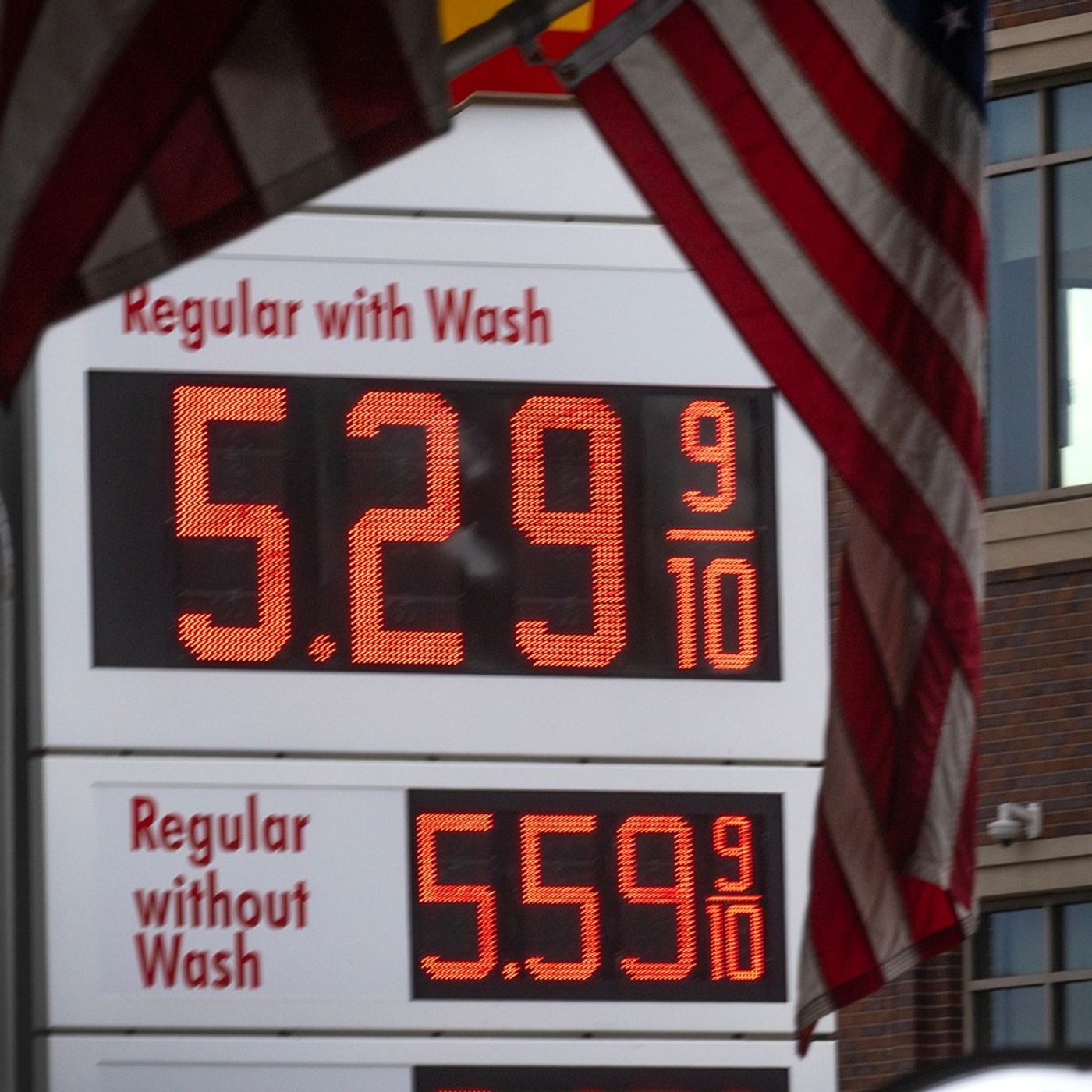
So come along with me, you two Jersey, and let's hang out with the best talkers in New York City. Metro, wherever you get your podcasts. From The New York Times, I'm Rachel Abrams, and this is The Daily. About a month into the war with Iran, back when gas was at $3.99 a gallon, Daily producer Anna Foley headed to Florida to talk to a gas station owner about how prices at the pump were feeling both for him and his customers. I would love for this to be over next week, and I go back to $2.99 a gallon.
That'd be awesome. I hope beyond hope that it is temporary and it does not last long. But yeah, I do worry about the longevity of high prices. That was back in March, but recently and someone unexpectedly that gas station owner, Gamjuda reached out to us again. Hello.
Hey, Cam. Hey, how you doing? You had an update. So a few days ago, you texted me because of this kind of wild thing you were seeing happen at your pumps. So I just want to know what happened.
Tell me the story. Yeah, so I checked the gas prices. I believe it was Wednesday. I was working until around three o'clock in the afternoon. Just checking the prices and see what was going on and everything seemed normal.
Where were you checking them? I was checking them on the gas buddy. The different gas stations to what I was priced at. I was sitting at $3.99 a gallon for regular gas. And the next day I opened the gas station and I was talking to my beer distributor and he was like, what's your gas out?
Cam? And I said, I'm still at $3.99. And he's like, wow, all the other gas stations I passed by on the way in here. I went to $4.19 this morning and I was like, there's no way. There's no way.
It was $3.99 yesterday. Wow. That's a 20 cent jump in price overnight. That's pretty crazy. That's pretty crazy.
I didn't believe him until I checked the gas stations in and around me and sure enough, everything on one of them was at $4.19 for regular gas. I said, wow, I guess I really need to, as much as I don't want to, I got to go up 20 cents. I got one. Yeah. Did customers notice and what did they say to you?
Oh, yeah. Oh, yeah. I mean, the one phrase of everybody's mouths were just, what's going on with these gas prices? When you guys came down here last time, of course, the conflict over in the Middle East area has just started. It was a very prominent in the news.
Everybody was talking about it and it was kind of expected. I think back then. Okay. We got a war going on. There's conflict going on.
Yeah, we're going to see a big jump in gas prices. But the war in the conflict over there hasn't really been talked much about lately. There's other stuff going on in the news that people are talking about. People kind of forgot. That's kind of the hard part for me is I just, I don't have an answer.
What specifically caused a 20 cent increase in a period of 24 hours? I just wish as just not even as a business owner, as a regular average Joe citizen, I would like to know why. I think a lot of my customers would also like to know why. So today on the show, we attempt to answer Cam's question. What is driving rising oil prices?
I speak with my colleague Vivian Nierheim about the expanding Iran war and why its ripple effects are being felt and pumps around the world. It's Thursday, September 17th. Vivian, welcome back to the show. Thanks for having me. So we here at the Daily have been in touch with this gas station owner in Florida who I am sure is not the only person who's sort of confused by what he's seeing right now.
He and many of us understand that this stranglehold on the straight up where moves has sent gas prices soaring. Like we all get that by this point in the war. But the US and Iran have been in a stalemate for months now. So we're turning to you to explain to us what has happened on the ground that can help explain the sudden surge in prices. Yes, I'm talking to you from Riyadh, Saudi Arabia and Saudi Arabia has for a long time been the world's largest exporter of oil.
You know, if you want to move oil prices, you look to Saudi Arabia. And up until this point, Saudi Arabia has largely been on the sidelines of this war. Yes, it was getting attacked. Yes, things were quite concerning. But at the same time, it wasn't getting hit as hard as some of the states east of the Persian Gulf, like the United Arab Emirates, Qatar, Kuwait, Bahrain.
You know, I and a lot of other people were kind of sitting here wondering why, to be honest, why was around targeting all of these other states and kind of easing up a bit on Saudi Arabia. In the past few weeks, all of that has changed. Essentially, it's become very clear that one of the reasons that this wasn't happening, that the country wasn't being attacked as heavily as the other Gulf states is that Iran was kind of holding this card and waiting to play it. And that is what has happened now, essentially. Now they decided to play that card.
And what is that card Vivian, just to unspool that for us? So Saudi Arabia, it's just on the other side of the Gulf from Iran and they managed to find a workaround during the Iran War because of their geography, because of their history to get their oil out from another exit point. So while the Strait of Hormuz, which is on sort of the eastern side of Saudi Arabia close to Iran, was essentially choked off, Saudi Arabia had built a long time ago this gigantic oil pipeline that stretches all the way across the kingdom. And this had just been built as a sort of eventuality. Maybe someday we'll need this and it suddenly became the moment for this oil pipeline.
They started pushing as much of their oil as they could over land through this pipeline to the Red Sea to get it out to their global customers that way. So they had this workaround that none of the other Gulf states had. And as a result, the kingdom supply of oil to global markets was much less affected than the other countries. But all of that changed over the past few weeks, essentially, as Iran's ally in Yemen began focusing its attention on that route and essentially seeing it cut off that route. Okay, so fill in the specifics of what has actually happened.
Right. So the group that we really need to understand here is the Houthis, which are an Iranian ally in Yemen. So the Houthis started out as this kind of ragtag religious movement in northern Yemen and they became these increasingly important power players starting in 2014. And the aftermath of this really complicated failed sort of Arab Spring transition in Yemen, the Houthis swept into Sana, the capital of Yemen, and they took it over. They essentially routed the internationally recognized government of Yemen, pushed them out of the city and then continued to actually push them farther and farther south in Yemen.
That set off this really brutal and grinding civil war in which Saudi Arabia intervened to pretty disastrous consequences in 2015. To fight the Houthis. To fight the Houthis and to try to restore the internationally recognized government. So Saudi Arabia is Yemen's northern neighbor. They have this long porous border with Yemen.
And they were essentially looking at the Houthis, this militia that's backed by Iran taking over territory on their border and getting quite nervous. So they began this disaster-spombing campaign in Yemen to try to back the government and to essentially push out the Houthis. So those two sides were fighting really fiercely. It became this really kind of fragmented complicated civil war and then it reached a sort of stalemate in 2022 when a truce was signed. This was backed by the United Nations and fighting had largely quieted down since then.
But the Houthis were frustrated. They really wanted to reach some form of political agreement that would recognize their power in Yemen and that would give them access to oil resources, which they do not have. Because of the territory that they control. So they were under political pressure to do something. And this was sort of the backdrop in which the Iran war kind of arrived in the region and blew everything up.
In Iran, meanwhile, there had been this faction that was gaining increasing leverage that had been pressing to escalate in the war with the US. The war has been dragging on for six months. There's no clear end in sight. And the sort of group in Iran group of officials, leaders, the hardwancers- Talk about them on the show before. Yeah.
Wanted to place sort of increasing pressure on Trump, via increasing pressure on the global economy, global energy markets. So at the same time that the Houthis have their own interests that they're pursuing and are feeling increasingly frustrated with the political situation on the ground in Yemen, their backers in Iran have an interest to escalate. So there's a real kind of collision of mutual interests between the Houthis and their allies and backers in Iran. And how was that played on the ground exactly? Vivian just explained that to us.
So it's a complicated story and there's been a couple of flash points where things have really escalated between Saudi Arabia and the Houthis over the past few months. But one of the really key ones was in July when the Houthis declared a naval blockade on Saudi Arabia and essentially said, we're not going to let any Saudi ships through the Red Sea. And after this blockade is launched, you see Saudi Arabia decide to start pushing back, but they seem to be wary of actually entering a full-blown war. So you see airstrikes start happening in Yemen. The Houthis say Saudi Arabia is bombing Yemen.
Saudi Arabia says nothing. The Yemeni government claims that it's the ones carrying out those bombings. And you also see a real escalation in ground fighting between the Houthis and Yemeni fighters who are backed by Saudi Arabia. So things start to heat up on the ground in this kind of period after the blockade. But for now, nobody seems to want to escalate too much.
And that all changes essentially when the Houthis start pushing towards the Red Sea coast last week. How many wave of Houthis attacks on Saudi Arabia and the Houthis taking islands in the Red Sea, taking coast line along the Red Sea? The Houthis can nice-run almost any shipping passing Yemen's Red Sea coast. So the Houthis start assailing these parts of Yemeni territory that are essentially the gateway to the Bab al-Mondab Strait, this very important straight at the opening of the Red Sea. And it's clear that they're pushing and pushing.
But for a time, it seemed like this was going to be a battle. It was going to take a while. Saudi Arabia was going to fight back. And then suddenly, all of that crumbled on Thursday and Friday. And government soldiers were retreating incredibly rapidly.
And the Houthis essentially seized this vast swath of territory along the Red Sea that is Yemen's most strategic and important real estate. And ended up in control of the Bab al-Mondab Strait. And not just for important for Yemen, but as you said, they basically seized this work around that Saudi Arabia had that was helping it export its oil since the start of the war. Yes. So the Houthis were able to launch attacks in the Red Sea from the territory that they previously had, but this gives them much more direct control over the Strait.
And then to make matters so much worse, on Friday, the same day that the Houthis have taken over all of this territory that puts them on this key Strait, Saudi Arabia announces that the crucial cross-land pipeline that it has been relying upon to export oil has been attacked and that they have to shut it down. The East West pipeline is what goes across Saudi Arabia. That was sort of the workaround. Okay? If something happens with the Straits, we got this big wide pipeline.
Well, now it's been hitting multiple points. It's out. The two Straits are controlled by Iran and its militants. As of now, essentially all of the exits for oil from the Arabian Peninsula have been severely choked off or just cut off. And all of this has left Saudi Arabia with basically no good options for getting their oil to global markets.
And we're already starting to see the impact of that around the world. We'll be right back. I'm Red Jung. I cover climate and the environment for the New York Times. I recently spent eight weeks on a research ship going to Antarctica, the planet's getting warmer, ice is melting away.
Sea level rise is going to change our coastal cities. It's one thing to read about what scientists have discovered when they write papers, but it's another thing entirely to be there with them. This is what we do at the New York Times. We want to bring you closer to the biggest stories that matter for how we all live in the world. If you'd like to support this work, you can become a subscriber at nytimes.com.com.
Vivian, you just told us that Saudi Arabia has no good options to get their oil out of the country. So what are their bad options? The first thing to remember is that this is an existential problem for Saudi Arabia. The entire Saudi economy depends on oil and petrochemicals. Their government budget depends on oil revenue. Their payments to oil family members depend on oil revenue.
The entire political and economic system of the kingdom is still very much tied up in oil. They want that to change, but their efforts to diversify away from oil and to turn the kingdom into this tourism and business destination also depend on oil revenue because they need to make these investments that are quite costly. So if they can't figure out a way to get oil out to global markets, it's a really serious problem for them. What can they do? So their options are one is to go back to war with the Houthis and to try to force them to back down militarily, which didn't go so well the first time.
Yeah, it's a very unattractive course of action for them for a lot of different reasons. Another option that they could take is to try to come to some sort of diplomatic solution with the Houthis and negotiate an agreement politically that gets the Houthis to back down. That's also unattractive because everything that their history of negotiations with the Houthis have shown is that this is not a group that is ready to back down easily. They have very maximalist demands and those demands are only going to get bigger now that they feel in this position of great power and that they have the upper hand. So they're definitely considering that option, but it's not ideal at all either. And there's no guarantee that it leads to a sustainable agreement, right? The Houthis could decide in a year or two years.
Actually, we want more and it's back to war for you unless you agree what we want. You know, one player we have not talked about yet is the United States. And I bring that up because the United States is both Saudi Arabia's most powerful ally and also the US obviously started this whole war with Iran in the first place alongside Israel. So I wonder where is the United States in this moment? Are they helping Saudi Arabia in this moment?
Yeah, so because Saudi Arabia is so reluctant to go back to war with the Houthis on its own, it is very keen to get support from the United States and other international partners. If it takes that path. And we do know that Crown Prince, Hamid bin Salman of Saudi Arabia has approached the Trump administration multiple times, including as recently as last week to ask the United States to help, to ask the United States to kind of join a fight against the Houthis. And what did the USA? As far as we know, President Trump declined. We do not see any evidence on the ground of, you know, really stepped up US involvement.
There is, of course, some intelligence sharing and other things that were essentially already going on, but the US is not getting involved in airstrikes. The US seems to have the mindset of let's just leave this to Saudi Arabia to sort out. You know, I can imagine that one reason why the US might be hesitant to get involved is that the US is already really overstretched because they are already at war with Iran. But on the other hand, Saudi Arabia is a really important ally and they are asking for help against a militia that is backed by an enemy of the United States. So why isn't the US willing to step in?
Yeah, so Trump has given some statements suggesting that the Houthis don't really want to fight the US, that they just want to fight Saudi Arabia. That's a little complicated because Saudi Arabia is oil getting out through the Baba and London has implications for global energy markets and therefore for the United States. Sure. But according to sort of his telling, look, this is a group we already kind of fought them. There was a US air strike campaign against the Houthis last year that was brief and ill-fated.
Essentially, no one has found a military solution to the Houthis. They've gone up against these much wealthier, much more powerful foes. And those much wealthier, much more powerful foes have been forced to back down again and again. So Trump doesn't see getting involved in a war against the Houthis as a winning prospect. Vivian, I'm so curious, given the fact that you're actually on the ground in Riyadh and have been, as all of this has been playing out, what does all of this pressure actually feel like?
Sort of, how is it in the air there? So it's kind of a weird moment because the Houthis are attacking the kingdom right now, but it's not reaching cities like Riyadh. You know, it's mostly affecting cities in the kingdom south. So it's weird because everyone knows that we're kind of potentially on the verge of another war. But at the same time, you know, events are happening, conferences are being held, they're talking about tourism events next year.
There's still kind of an effort to keep going and to sort of maintain the mood that everything's going to be okay, we're going to figure out of this. And I'm sure they're still working very hard to repair the pipeline and get that back up and running as soon as possible. Is that realistic, though? How fast can one repair a pipeline? Well, it's a mystery right now because it depends on how badly it's been damaged.
And these are things that only a very small number of people know. Probably we've seen some reporting indicating that it could be a matter of weeks. Even that is quite a bad situation for Saudi Arabia. But the worst situation is the fact that no matter how quickly they repair it, as long as there is still conflict in the region and as long as they have foes who are still willing and able to attack the pipeline, that will remain a risk so they could repair it tomorrow and have another attack the next day. You know, I reminded that there was a lot of criticism after the US and Israel went to war with Iran that they should have taken more seriously the idea that Iran would or could shut off the straight-off or move.
Right? Like that was essentially foreseeable. So I guess I just wonder whether it was just as foreseeable that Saudi's oil routes would also be cut off. Like I'm just wondering how predictable this latest iteration of the war was. I mean, I think if you were a really strategic and smart war gamer, you absolutely could have sat down and gave this out, you know, months ago.
I think one thing that the Gulf Arab states that are American allies here, Saudi Arabia, Kuwait, United Arab Emirates, these states always realized that they were very vulnerable if Iran were to launch major retaliatory attacks on, you know, United States, that they would be kind of the front lines of that. They have these US bases. They host these US troops. You know, they have these American companies that do business there. And their energy, their oil and their gas is so crucial to the world economy that it is really just the most strategic and easiest way for Iran to exert pressure on a country that's very far away the United States.
So they've always known that they could potentially be on the front lines of something like this. And that's part of why a lot of Gulf leaders and officials were trying to prevent this war from happening in the first place. You know, I can't help but think, Vivian, about that man in Florida, the gas station owner that we heard from at the beginning of this episode, who's worried that high gas prices are going to go even higher. And obviously that is just one factor, one consequence in this war, but it sounds like he and other people need to prepare for a lot more pain than we've already been seeing. Yeah. I mean, the fact of the matter remains is that we really still haven't seen the end of this war.
And the longer it's going on, the more it is spiraling into these new kind of complicated consequences. So Saudi Arabia had this workaround in the early months of the war that had masked the true cost of the war for oil and gas prices. That is changing now. And we're also seeing kind of a real new kind of snowballing of human suffering that could be happening in Yemen alone. The fact that the country is now tilting back into this full blown war could have devastating consequences for tens of millions of people who were already living in one of the world's worst humanitarian crises.
We're seeing kind of all over the globe. All of these consequences spiraling out from this war between the United States and Iran that are having really devastating impacts for the economy, for people's ability to afford energy and all of the goods that come from that. What's becoming increasingly clear is that these are not problems that are going to go away quickly. These are going to be complicated and they could potentially be long lasting. Vivian Niram, thank you so much.
Thank you for having me. As oil prices have surged past $100 a barrel, people around the world have taken to the streets to protest price increases and gas shortages. In France, fishermen clashed with police as they attempted to blockade a fuel depot. They have gas, so that's you. In Portugal.
A convoy of frustrated drivers blocked roads to a major oil refinery. And in Syria, where the government raised fuel prices for a second time in two weeks, protesters blocked a major highway with flaming tires. Syrian government officials said they had no choice but to raise prices because of the war. We'll be right back. Law transforms agreement into reality.
A word becomes an agreement. An agreement becomes a contract. A contract becomes law. Today, Harvey, the AI platform for legal work, is writing the next chapter. More than 200,000 lawyers are building with Harvey, accelerating review, sharpening negotiations, and more.
This is how the future of agreements is being crafted now. Harvey, learn more at harvey.ai. Harvey does not provide legal advice. Users should always independently review and verify any output from Harvey. This week on the Wire Gutter Show, we're talking about face sunscreen.
What do you think so far about the ones you have tried with this new ingredient? I think it's sunscreen. And I'm excited it exists. Find out how the new FDA-approved ingredient is changing formulations and whether our expert insists worth it. The Wire Gutter Show is on the near-time gap or wherever you'd like to listen.
Here's what else you need to know today. The Federal Reserve raised interest rates by a quarter of a percentage point on Wednesday. The first increase in more than three years. That increase is a major step by the Central Bank's Chairman, Kevin Warsh. The combat inflation, which Warsh has said, has been too high for too long.
And President Trump on Wednesday threatened retribution against the European Union's invitation to Canada to become a quote, associate member of the bloc, a move that shows how intent America's traditional allies are on pursuing a more stable future by binding together. If it's a good intention, that's why. If it's a bad intention, we'll put very heavy tariffs on Europe. The President said the move could be perceived as a quote, hostile act. Today's episode was produced by Jessica Chang, Olivia Nat, and Annphaly, with help from Eric Kropke, who was edited by Maria Byrne and Annie Minnoff, with help from Michael Benoit.
It contains music by Dan Powell, Mary Ann Lozano, Rowan Yamisto, and Pat McCusker, who was engineered by Chris Wood. Our theme music is by Wonderly, and special thanks to Ben Hubbard. That's it for the Daily, I'm Rachel Abrams. See you tomorrow. I'm Gilbert Cruz.
This week on the Book Review Podcast, we have a special Halloween treat, or trick, or treat. Two horror writers recommend some titles that are sure to keep you up at night. I am a big fan of sentient houses in general. I think this is one of the scariest books I've ever read. Listen to the Book Review, wherever you get your podcasts.
That door shouldn't be open. Who left it open?