
EPISODE · Mar 24, 2026 · 1H 18M
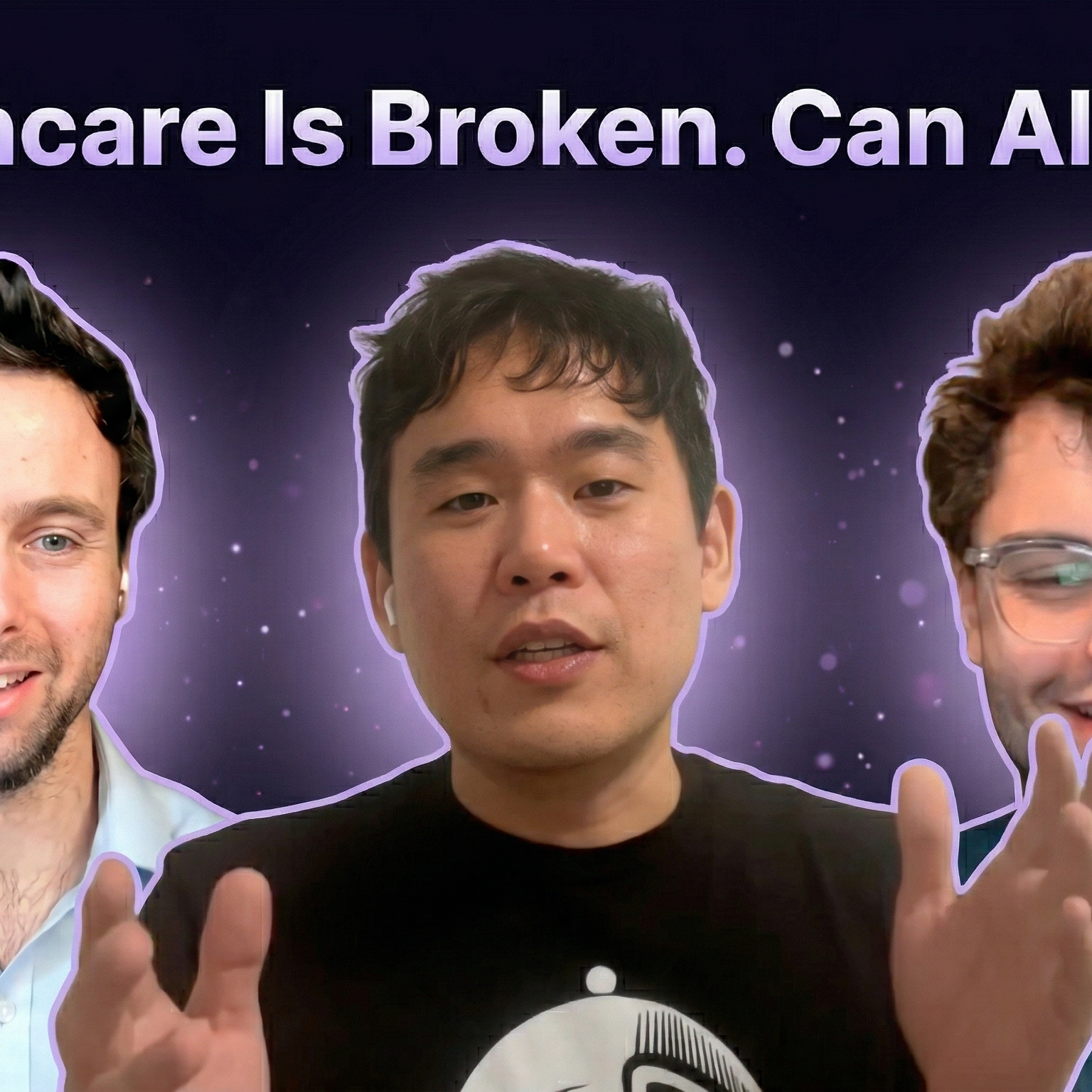
Why Healthcare Is AI's Hardest and Most Important Problem with Kyunghyun Cho (NYU)
from The Information Bottleneck · host Ravid Shwartz-Ziv & Allen Roush
We talk with Kyunghyun Cho, who is a Professor of Health Statistics and a Professor of Computer Science and Data Science at New York University, and a former Executive Director at Genentech, about why healthcare might be the most important and most difficult domain for AI to transform. Kyunghyun shares his vision for a future where patients own their own medical records, proposes a provocative idea for running continuous society-level clinical trials by having doctors "toss a coin" between plausible diagnoses, and explains why drug discovery's stage-wise pipeline has hit a wall that only end-to-end AI thinking can break through. We also get into GLP-1 drugs and why they're more mysterious than people realize, the brutal economics of antibiotic research, how language models trained across scientific literature and clinical data could compress 50 years of drug development into five, and what Kyunghyun would do with $10 billion (spoiler: buy a hospital network in the Midwest). We wrap up with a great discussion on the rise of professor-founded "neo-labs," why academia got spoiled during the deep learning boom, and an encouraging message for PhD students who feel lost right now.Timeline:(00:00) Intro and welcome(01:25) Why healthcare is uniquely hard(04:46) Who owns your medical records? — The case for patient-controlled data and tapping your phone at the doctor's office(06:43) Centralized vs. decentralized healthcare — comparing Israel, Korea, and the US(13:19) Why most existing health data isn't as useful as we think — selection bias and the lack of randomization(16:53) The "toss a coin" proposal — continuous clinical trials through automated randomization, and the surprising connection to LLM sampling.(23:07) Drug discovery's broken pipeline — why stage-wise optimization is failing, and we need end-to-end thinking(28:30) Why the current system is already failing society — wearables, preventive care, and the case for urgency(31:13) Allen's personal healthcare journey and the GLP-1 conversation(33:13) GLP-1 deep dive — 40 years from discovery to weight loss drugs, brain receptors, and embracing uncertainty(36:28) Why antibiotic R&D is "economic suicide" and how AI can help(42:52) Language models in the clinic and the lab — from clinical notes to back-propagating clinical outcomes, all the way to molecular design(48:04) Do you need domain expertise, or can you throw compute at it?(54:30) The $10 billion question — distributed GPU clouds and a patient-in-the-loop drug discovery system(58:28) Vertical scaling vs. horizontal scaling for healthcare AI(1:01:06) AI regulation — who's missing from the conversation and why regulation should follow deployment(1:06:52) Professors as founders and the "neo-lab" phenomenon — how Ilya cracked the code(1:11:18) Can neo-labs actually ship products? Why researchers should do research(1:13:09) Academia got spoiled — the deep learning anomaly is ending, and that's okay(1:16:07) Closing message — why it's a great time to be a PhD student and researcherMusic:"Kid Kodi" - Blue Dot Sessions - via Free Music Archive - CC BY-NC 4.0."Palms Down" - Blue Dot Sessions - via Free Music Archive - CC BY-NC 4.0.Changes: trimmedAbout: The Information Bottleneck is hosted by Ravid Shwartz-Ziv and Allen Roush, featuring in-depth conversations with leading AI researchers about the ideas shaping the future of machine learning.
Embed this episode
NOW PLAYING
Why Healthcare Is AI's Hardest and Most Important Problem with Kyunghyun Cho (NYU)
No transcript for this episode yet
Similar Episodes
No similar episodes found.
Similar Podcasts
No similar podcasts found.