
EPISODE · Mar 9, 2026 · 31 MIN
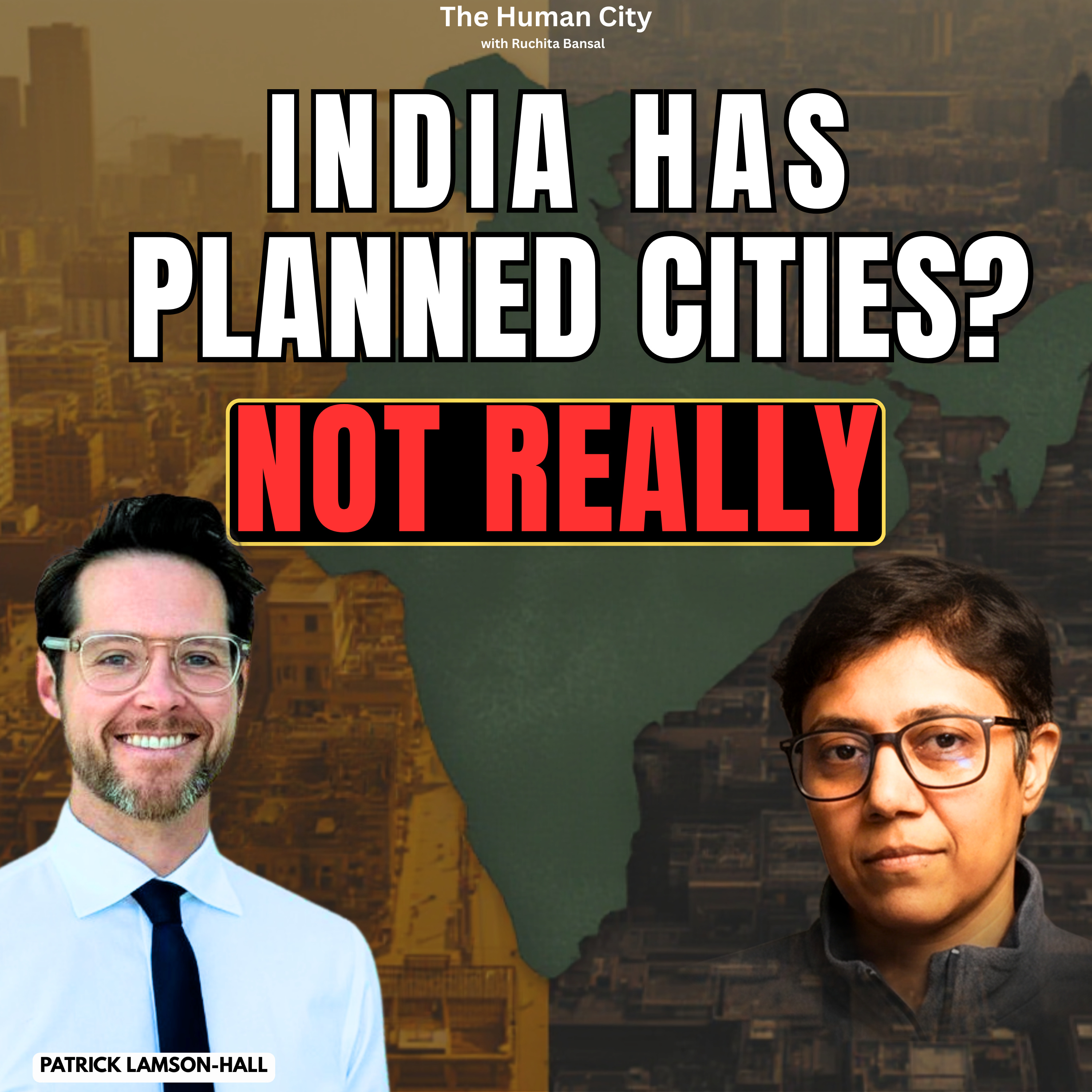
Why Indian Cities Grow Beyond Planning? | HCE27| Patrick Lamson-Hall | Ruchita Bansal
from The Human City · host Ruchita Bansal
About the Episode: Cities don't expand randomly—they expand based on incentives, power, and neglect. And when cities appear out of control, it usually means someone else is controlling the outcome.In this provocative conversation, Patrick Lamson-Hall dismantles some of urban planning's most sacred assumptions. From Mumbai's building code (2,000 pages long and "totally impenetrable") to the ₹1 lakh crore Smart Cities program ("basically nonsense"), Patrick argues that Indian cities don't fail because they lack data, expertise, or money—they fail because acting on knowledge would threaten existing power structures.What You'll Learn:🔴 Why 90% of development ignores regulations - And why that's rational, not criminal🔴 The Stockholm Syndrome of urban planners - How working in broken systems makes planners "crazy themselves"🔴 Why land use zoning should be deleted entirely - Markets separate uses better than regulations🔴 Mumbai vs Delhi: The brutal truth - Why chaos beats planning, and which is India's only global city🔴 The four things (and only four things) cities must do - Transportation, public space, water/waste, high-risk areas—everything else is "nonsense"🔴 Why planners can't increase density - They can only cap it; density is a market outcome🔴 Smart Cities as embarrassment - Why importing ideas is "incredibly unambitious" for India🔴 Why planning is political, not technical - And why pretending otherwise guarantees failure------------------------Chapters: 00:00 Introduction01:29 Who Really Shapes Urban Growth?02:42 Why Regulations Are Ignored?04:43 The Problem With Complex Urban Regulations07:24 The Non-Negotiable Role of Urban Planning09:01 Why Land Use Planning Often Fails?10:04 Should Cities Abandon Traditional Zoning?11:44 Cities Experimenting With New Planning Models13:08 Infrastructure Before Services14:05 Can Cities Be Planned From Scratch?15:17 Understanding Density: Benefits and Costs17:59 The Market Dynamics of Urban Density18:55 Is Density a Planning Tool or a Market Outcome?20:24 Should Governments Push Higher Density?22:14 Do Policymakers Pay the Price for Bad Planning?22:48 The Political Nature of Urban Planning23:49 Managing Urban Growth: Planning vs. Reality25:07 The Challenge of Informality in Urban Settings26:30 Rethinking Legality and Informal Housing27:31 Smart Cities, 15-Minute Cities and Urban Buzzwords29:24 Learning from Global Cities: A Balanced Approach30:47 Closing Thoughts: Why Cities Fail?------------------------About the Guest: Patrick Lamson-Hall is an urban planner and research scholar at the NYU Marron Institute of Urban Management, where he is a Fellow in the Urban Expansion program. He is currently a PhD candidate at NYU Wagner School of Public Service.His work is oriented toward equality, prosperity, and sustainability in rapidly growing cities worldwide.Connect with him on Linkedin: https://www.linkedin.com/in/patrick-lamson-hall-70a3731a/Know more about his work here: https://www.fittedprojects.com/------------------------About the Host:The Human City Podcast is hosted by Ruchita Bansal, an accomplished urban planner and project management professional with 15+ years of experience. She has led multi-billion-dollar development projects and sustainable mobility programs across India, including her leadership role at the Ayodhya Development Authority.Ruchita is also the founder of SheCity India, a platform for gender-inclusive urban planning, storytelling, and data-driven advocacy.--------------------------About The Human City Podcast:This podcast brings together global voices and local insights to explore how cities can be made more inclusive, sustainable, and human-centered. Each episode uncovers what it takes to design cities that truly work for people.“The Human City Podcast is an initiative of SheCity India — building gender-inclusive, human-centered cities.”
Embed this episode
NOW PLAYING
Why Indian Cities Grow Beyond Planning? | HCE27| Patrick Lamson-Hall | Ruchita Bansal
No transcript for this episode yet
Similar Episodes
No similar episodes found.
Similar Podcasts
No similar podcasts found.