
EPISODE · May 11, 2026 · 4 MIN
Why is Korea returning to Venezuelan oil after 23-year hiatus?
from Korea JoongAng Daily - Daily News from Korea · host SARAH CHEA
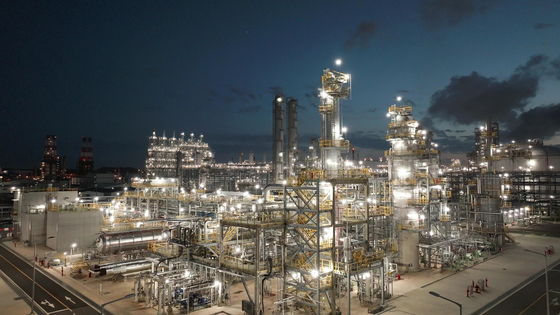
This article is by Sarah Chea and read by an artificial voice. Korea is moving to import Venezuelan crude for the first time in 23 years, despite the oil's notoriously difficult refining profile compared to conventional grades. The planned resumption comes as Seoul is seeking to reduce its reliance on Middle Eastern oil following the Iran conflict. The need aligns with Venezuela's own push to expand crude exports after U.S. sanctions were eased following the capture of then-President Nicolás Maduro in January. Korea's major oil refiners, SK Energy and HD Hyundai Oilbank, are considering bringing in roughly 400,000 tons of Venezuelan crude for test refining, which would still be less than 0.04 percent of Korea's annual crude imports. Korea National Oil Corporation is also tapping the barrel, with Vice Industry Minister Moon Shin-hak saying that "import results are expected to materialize soon," even as Seoul has refrained from procuring Russian crude. Korea plans to blend Venezuelan heavy crude with lighter grades, including U.S. oil, before refining it for domestic use. Despite possessing the world's largest proven oil reserves with 303 billion barrels, Venezuela produces one of the least desirable heavy crude grades on the market. Its oil is exceptionally viscous and laden with impurities even by heavy-crude standards, making refining both technically demanding and costly. Korea has not imported Venezuelan crude even once since 2003, when elevated global oil prices briefly made such purchases economically viable. The move also reflects Seoul's intention to leverage Korea's highly advanced refining infrastructure to test the commercial viability of Venezuelan crude, as it scrambles to diversify its oil supply and cut overreliance on the Middle East. Roughly 80 percent of Korea's crude imports came from the Middle East as of last year, with nearly all of it — about 99 percent — transiting through the Strait of Hormuz. "Since the 1970s, Korea has pursued a strategy of importing inexpensive heavy crude from the Middle East while investing heavily in advanced upgrading facilities capable of refining it," said Chang Tae-hun of the Korea Energy Economics Institute. "That expertise has advanced to the point where refiners can extract gasoline even from residual fuels such as asphalt feedstock and heavy fuel oils," Chang added. In fact, three of Korea's four refiners — SK Energy, GS Caltex, and S-Oil — operate three of the five largest single-site refineries on Earth. The ratio of heavy-oil upgrading capacity to crude distillation units (CDU) — a key measure of refining sophistication — stands at 42 percent for, 39 percent for S-Oil, 34 percent for GS Caltex and 25 percent for SK Energy, according to Korea Ratings. That's twice the global average of 10 to 15 percent. HD Hyundai Oilbank is the only company operating a delayed coker unit at its Daesan refinery in South Chungcheong, which thermally cracks heavy crude and even waste plastics at extremely high temperatures to produce refined petroleum products. However, Venezuelan crude is unlikely to emerge as a mainstream feedstock for Korean refiners. "Given that it is also a heavy crude grade, it is true that refiners are indeed considering Venezuelan oil as a possible substitute for Middle Eastern crude," said a source at a major Korean refining company. "But the prospects appear limited as Korea has not imported it for such a long time that consistency and quality reliability remain significant concerns." Logistics also present a disadvantage: While crude shipments from the Middle East typically take about two weeks to reach Korea, cargoes from South America — routed either through the Panama Canal or around the Cape of Good Hope — require more than 30 days in transit. Vice Industry Minister Moon also said it was "one option among broader diversification efforts" but unlikely to serve as a primary supply source, given the "technical limitations and blending requirements" involve...
Embed this episode
NOW PLAYING
Why is Korea returning to Venezuelan oil after 23-year hiatus?
No transcript for this episode yet
Similar Episodes
No similar episodes found.
Similar Podcasts
No similar podcasts found.