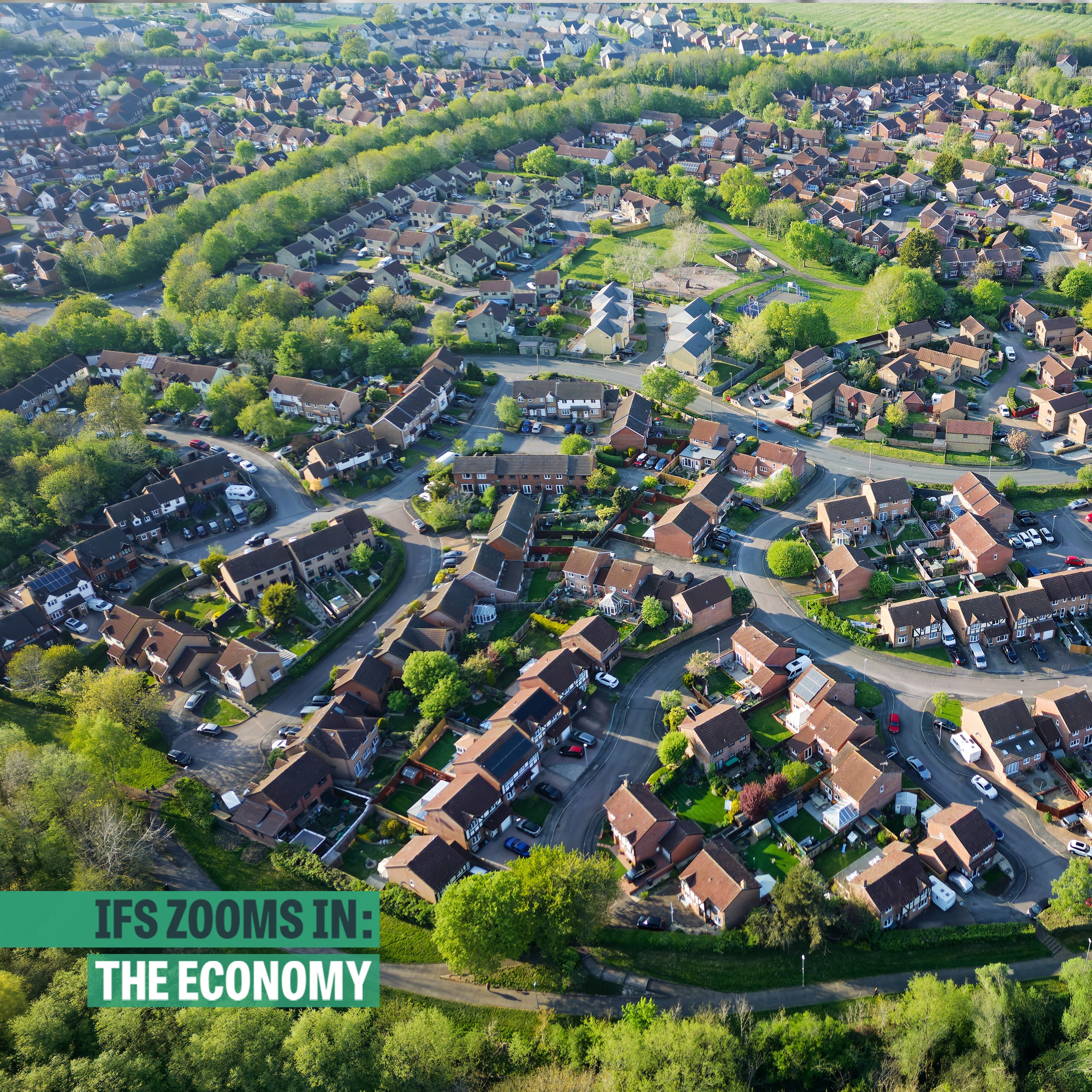
Why is the UK so geographically unequal? episode artwork

EPISODE · Jun 18, 2026 · 37 MIN

Why is the UK so geographically unequal?

from IFS Zooms In: The Economy

The UK is one of the most geographically unequal countries in the developed world. People living in London and the South East tend to have higher incomes, higher levels of education and better health outcomes than people elsewhere in the country.But why did Britain become so regionally unequal? How much of the divide is driven by the shift away from industry and towards services? What role has public investment, infrastructure and decades of regional policy played? And what can policymakers realistically do to change things?In this episode, part of our mini-series on inequalities, we look at the scale of the UK’s regional divides, why London has become so dominant, and whether stronger cities, devolution, better coordination and more stable policy could help narrow the gap.Helen speaks with IFS economists Jonathan Cribb and Xiaowei Xu to ask what “levelling up” should mean in practice, whether improving opportunities outside London could boost national productivity, and how politicians should think about places that may not benefit directly from big-city growth.This episode draws on work done as part of the IFS-Deaton Review, funded by the Nuffield Foundation.Become a member: https://ifs.org.uk/individual-membershipFind out more: https://ifs.org.uk/podcasts-explainers-and-calculators/podcasts Hosted on Acast. See acast.com/privacy for more information.

The UK is one of the most geographically unequal countries in the developed world. People living in London and the South East tend to have higher incomes, higher levels of education and better health outcomes than people elsewhere in the country.But why did Britain become so regionally unequal? How much of the divide is driven by the shift away from industry and towards services? What role has public investment, infrastructure and decades of regional policy played? And what can policymakers realistically do to change things?In this episode, part of our mini-series on inequalities, we look at the scale of the UK’s regional divides, why London has become so dominant, and whether stronger cities, devolution, better coordination and more stable policy could help narrow the gap.Helen speaks with IFS economists Jonathan Cribb and Xiaowei Xu to ask what “levelling up” should mean in practice, whether improving opportunities outside London could boost national productivity, and how politicians should think about places that may not benefit directly from big-city growth.This episode draws on work done as part of the IFS-Deaton Review, funded by the Nuffield Foundation.Become a member: https://ifs.org.uk/individual-membershipFind out more: https://ifs.org.uk/podcasts-explainers-and-calculators/podcasts Hosted on Acast. See acast.com/privacy for more information.

NOW PLAYING

Why is the UK so geographically unequal?

0:00 37:37

No transcript for this episode yet

We transcribe on demand. Request one and we'll notify you when it's ready — usually under 10 minutes.

Frequently Asked Questions

How long is this episode of IFS Zooms In: The Economy?

This episode is 37 minutes long.

When was this IFS Zooms In: The Economy episode published?

This episode was published on June 18, 2026.

What is this episode about?

The UK is one of the most geographically unequal countries in the developed world. People living in London and the South East tend to have higher incomes, higher levels of education and better health outcomes than people elsewhere in the country.But...

Can I download this IFS Zooms In: The Economy episode?

Yes, you can download this episode by clicking the download button on the episode player, or subscribe to the podcast in your preferred podcast app for automatic downloads.
URL copied to clipboard!