
EPISODE · Jul 15, 2026 · 15 MIN
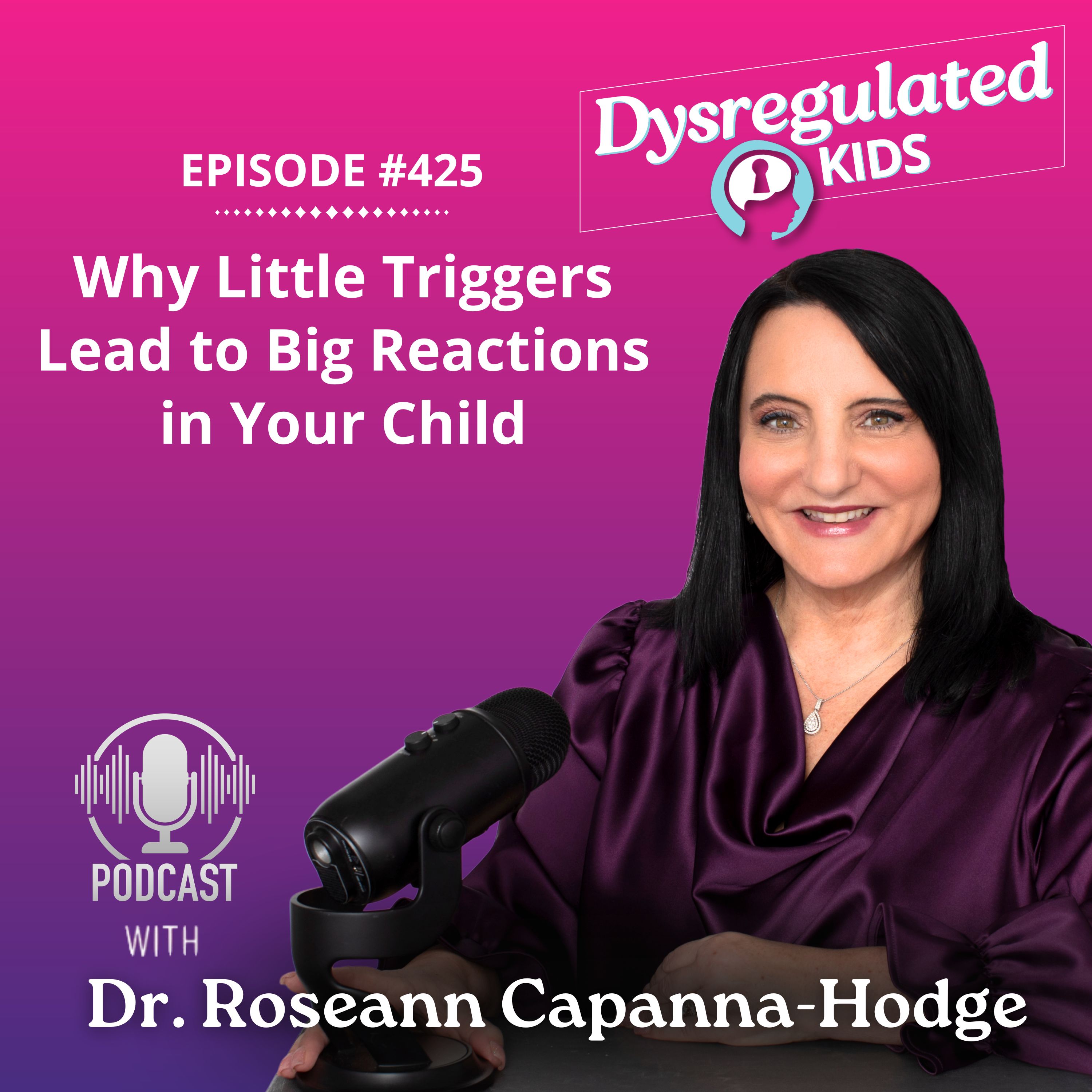
Why Little Triggers Lead to Big Reactions in Your Child | Nervous System Regulation | E425
from Dysregulated Kids: Science-Backed Parenting Help for Behavior, Anxiety, ADHD and More
Wondering why little triggers lead to big reactions in your child? Those explosive moments often signal an overwhelmed nervous system, not defiance. Join Dr. Roseann Capanna-Hodge, founder of Regulation First Parenting™, as she shares practical, brain-based strategies to help children regulate, recover, and thrive.Have you ever wondered why asking your child to do homework, put on their shoes, or empty the dishwasher suddenly turns into tears, yelling, or a complete shutdown? If you've been left wondering what just happened, you're not alone.The answer often isn't bad behavior—it's a dysregulated nervous system that's already overwhelmed. In this episode, you'll learn why little triggers can lead to big reactions and what you can do to help your child find calm.Why does my child overreact to small things?When your child's reaction seems much bigger than the situation, the trigger usually isn't the real problem. Their nervous system has been collecting stress throughout the day until one small request becomes the final drop that overflows their stress cup.Remember: Behavior is communication.Big reactions are often signs of nervous system overload.Small triggers expose bigger underlying stress.It's not bad parenting—it's a dysregulated brain.Instead of asking, "Why are they acting like this?" ask, "What has their nervous system been carrying today?"Why do meltdowns happen after school or during homework?Many children spend the entire school day holding it together.They're managing transitions, noise, social pressure, corrections, hunger, fatigue, and constant demands. By the time they get home, their nervous system may already be running on empty.Common hidden stressors include:School expectationsSocial interactionsSensory overloadFatigue and hungerConstant transitionsThat homework request wasn't the cause—it was simply the last demand their brain couldn't handle.You don't have to figure this out alone.Become a Dysregulation Insider VIP and get your FREE Regulation Rescue Kit:How to Stay Calm When Your Child Pushes Your Buttons and Stop Oppositional Behaviors.Head to www.drroseann.com/newsletter and start your calm parenting journey today.Why don't consequences work during a meltdown?Once a child crosses their stress threshold, their brain shifts into survival mode.Whether they're arguing (fight), avoiding (flight), or shutting down (freeze), logic, lectures, and consequences won't reach them.Instead:Pause before reacting.Lower your voice.Become the wall of calm.Regulation always comes before learning.Looking for simple ways to calm an overwhelmed nervous system? Quick CALM offers practical regulation tools you can use in everyday parenting moments.Small shifts practiced consistently can make a big difference before behaviors escalate.How can I help my child regulate instead of react?I encourage parents to focus less on correcting behavior and more on calming the brain first.One of the simplest strategies is the three-second Love Pause—giving yourself a brief moment before responding.Try this instead:Pause for three seconds.Speak softly.Wait until your child is regulated before teaching.Help them release stress through movement, reading, or connecting with a pet.Real-life example: Your child explodes after you ask them to start homework. Rather than arguing, you pause, soften your tone, and suggest taking a short walk together before returning to the task. That small moment helps prevent a much bigger meltdown.🗣️ “Small triggers create big reactions. Overloaded nervous systems really are the source of it.”— Dr. RoseannTakeaway & What’s NextLittle triggers rarely cause big reactions by themselves. When we stop focusing only on the behavior and start supporting the nervous system underneath it, everything begins to change.If this episode resonated with you, don't miss the Regulated Child Summit and pre-order The Dysregulated Kid, where you'll learn science-backed strategies to help your child develop lasting emotional regulation skills. Let's calm the brain first—because that's where healing and lasting regulation begin.FAQsWhy does my child explode over simple requests?Their nervous system may already be overloaded. The request is often just the final stressor, not the true cause.Is this normal behavior or dysregulation?Occasional meltdowns are part of childhood. Frequent, intense reactions with poor recovery may point to nervous system dysregulation.What should I do during a meltdown?Stay calm, lower your voice, and avoid teaching or consequences until your child is regulated again.How do I know what is stressing my child?Look beyond the immediate trigger. School, transitions, social pressure, hunger, fatigue, and sensory input all add to their stress load.Can children learn emotional regulation?Absolutely. Regulation is a learned skill, and with consistent support, children can build healthier responses over time.When your child is struggling, time matters.Don't wait and wonder—use the Solution Matcher to get clear next steps based on what's actually going on with your child's brain and behavior.Take the quiz at www.drroseann.com/help
Embed this episode
NOW PLAYING
Why Little Triggers Lead to Big Reactions in Your Child | Nervous System Regulation | E425
No transcript for this episode yet
Similar Episodes
No similar episodes found.
Similar Podcasts
No similar podcasts found.