NPR. Oracle is not like the other children in the big tech company classroom. Sure, the software giant is investing in artificial intelligence, and the company's revenue is booming. But Oracle has urged the credit market by loading up loans to make its data center dreams come true. See, Oracle may be the weak link in a criss-crossing daisy chain of businesses that's holding up the AI boom.
My biggest concern in all of this is the circular deals. Oracle is a part of circular deals with open AI, but they have one with meta. If you look at videos all over the place in these circular deals, Microsoft and a few. This is the indicator for Planet Money. I'm Ricky Mommy.
And I'm Adrian Mom. Oracle is a pivotal player in the artificial intelligence story. And whether you're invested in the company or not, its fortunes could affect you. We'll tell you why after the break. This week on Up First, the midterms less than 15 days away.
President Trump, Vice President J.D. Vance and former President Obama all criss-crossing the country, rallying voters and key erases from Michigan to Georgia to North Carolina. Join us every morning as we guide you through the home stretch of the selection season up first on the NPR app or wherever you get your podcasts. American journalist Austin Ties vanished in Syria over a decade ago. For years, we've been searching for him.
And now we finally have some answers. This is the prison that Austin was in. Oh my God. We found Austin's file. Listen to Where Is Austin Ties?
From NPR's Embedded and BBC Radio 4 on the NPR app or wherever you get your podcasts. Oracle is one of those companies that you probably heard of but may not deal with directly. It's a multinational tech giant that sells enterprise software and computing power. Yeah, Oracle's software involves the less glamorous programs that run businesses, the databases that keep track of inventory, health records and supply chains. The vast majority of big companies use its databases and software.
And investors really like Oracle's software business. It's steady, it makes a nice profit. And about a decade ago, credit analysts viewed Oracle bonds as a safe investment. They were a high margin software company. Now they're capital intensive data center build out it.
This was a huge shift in business strategy. Matt Sheridan is a senior lecturer in the finance department at the Ohio State University. I took Matt's investing class as a student. He was one of my favorite professors and this was an excuse to call him. Matt analyzed credit before working as a professor too.
The biggest issue with Oracle is their debt load is nearly doubled in the last two years. They're sitting at 169 billion in total debt. They're the fifth largest investment grade issuer now. I think they're the second largest that's non-financial when Amazon has more. Oracle went into the AI boom in a weaker financial spot than other tech giants.
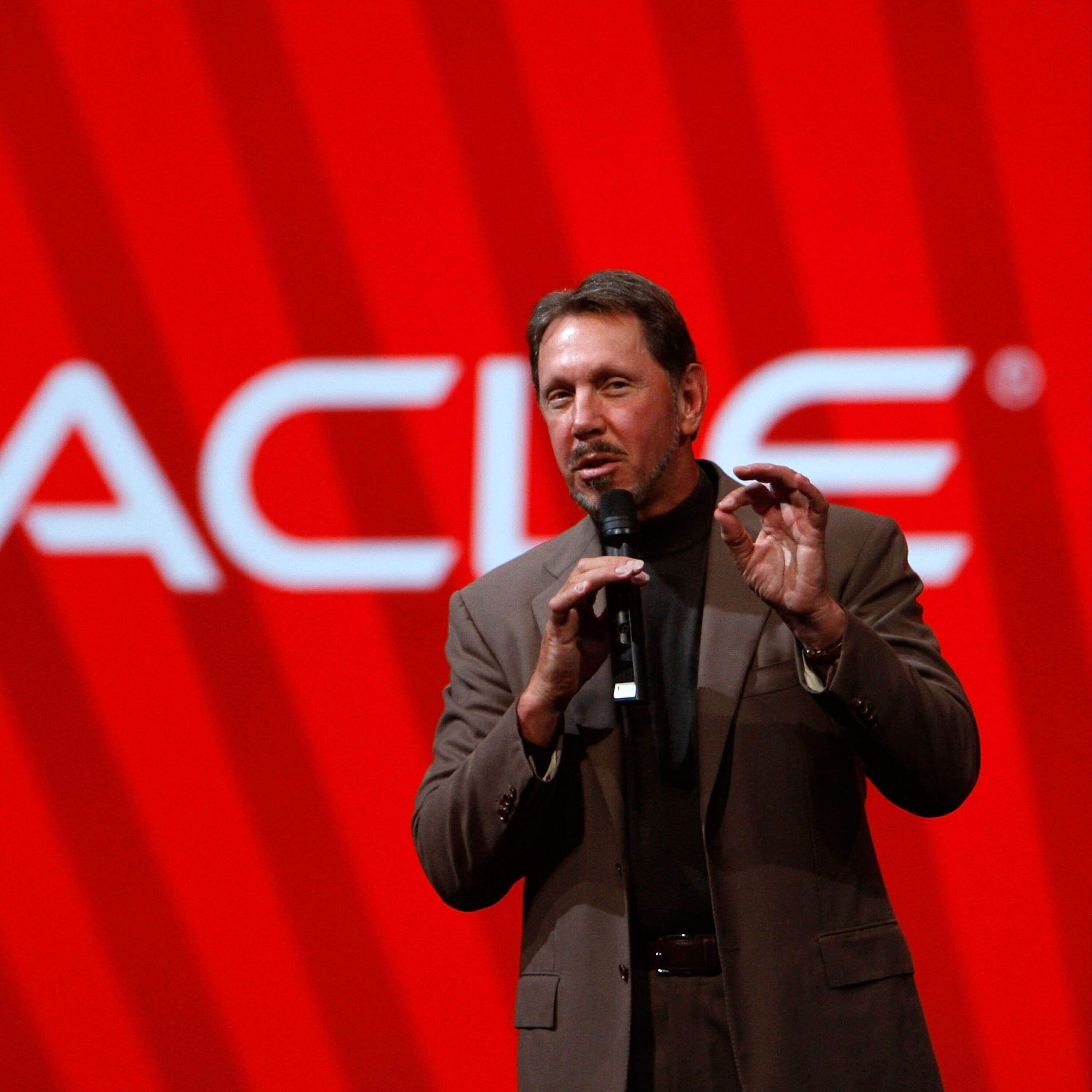
The company burned a lot of cash when it bought a health records company a few years ago. Larry Ellison is the co-founder, executive chairman of Oracle. He thinks that training AI models is a huge business opportunity. Here's what he said in a company keynote last year. It's the largest, fastest growing business in human history.
Bigger than the railroads, bigger than the Industrial Revolution. I mean, it is a whole new world that is dawning. So why aren't Oracle investors happy? Well, even aside from Larry Ellison's dreams, there's his son David's dreams too. The senior Ellison guaranteed $40 billion to support his son's Paramount Sky Dance merger deal with Warner Brothers Discovery and that made investors nervous.
But back to the data centers. One reason is the sheer size of the debt. It's turned Oracle from a business that generates cash into one that burns money. And another is that the path back to profitability may take some time. Building data centers takes a second.
And the third reason is that long path may not be certain. Oracle is relying on OpenAI a lot. Sam Altman and the folks at OpenAI promised Oracle they would pay about $300 billion over the next five or so years. Oracle's data centers help power chat GPT. Right.
So you can ask JatchaPT how to make like a weekend salmon recipe. And OpenAI's financials come with a lot of open questions, mostly because you probably can't see them. The company delayed going public and its books are not open. And Matt says if OpenAI's financials were out in the open, its value would also be based on its actual numbers, not just the story it tells investors. So if you can't really trust that OpenAI's revenues are going to be growing at parabolic speed, that trickles into Oracle.
There is some concentration risk there. Oracle and OpenAI are not just in a customer seller relationship. This has more implications for the wider economy. OpenAI pays Oracle to use its cloud infrastructure and says it'll pay a lot more in the coming years. So Oracle buys chips from NVIDIA to build this cloud even more.
And then NVIDIA invests money into OpenAI so that OpenAI can buy a computer space from Oracle which remembers buying those NVIDIA chips. I'm just picturing a circle. And according to credit investors, Oracle is a weak link in this circular economy. Oracle has already signaled that it may run into trouble paying back its loans on time. The company is currently building this massive data center in New Mexico for OpenAI to use.
Oracle told its creditor that it may need to delay its loan repayments on this data center, using something called a force majeure notice. And this is when a borrower tells its lender, hey, something totally unexpected happened. We can't make our delivery or payment. It's actually common in kind of the commodity space where you have four contracts to deliver say oil and if there's geopolitical risk like we currently see with the strain of ore moves, I mean, that's outside of your control. It's less common though in corporate America.
Oracle issued the notice because of potential delays but publicly maintains that the project remains on schedule. This notice created some alarming headlines, but Matt says actually could benefit Oracle. It allows the company to delay payments though. It's still on the hook for the full amount. Still, Oracle's credit investors are pricing in more risk.
And this is showing up in something called a credit default swap or CDS. You might remember these from the Great Recession. Think of this like an insurance policy that Wall Street people trade back and forth. If the company goes bankrupt, the CDS contract will pay you out. But you can also use it to speculate.
You can use it to profit on the demise of a company. The rates on these swaps are rising. This means that Oracle is becoming riskier. Matt says this does not mean the company is on the edge of bankruptcy or another immediate credit downgrade though. It does mean the credit market believes that Oracle is growing increasingly risky.
Right. S&P, the big credit rating agency, they downgraded Oracle's credit in July. S&P basically said, we'd like to see you make a profit again. Now Oracle is barely above junk status or a status that would force a lot of investors to run away from Oracle bonds. Lindsay Tyler is a credit research analyst at Morgan Stanley.
She says to imagine data centers is a luxury apartment complex. Demand is strong now, but it may not be forever. The analogy might be you have 10 apartments, you've pre-signed leases for those 10 apartments and you're thinking, should I build another floor? Right now with S&P rating Oracle, just one notch above junk bond status, falling beneath investment grade would have serious consequences. I think it's a medium term risk, but in that instance, Oracle would have a materially more challenging time, not only funding the build out, but also refinancing.
If Oracle goes to junk status, then many investors in the AI boom couldn't invest in one of its key players. For example, many pension funds can't invest in junk-graded bonds. Matt says these circular deals and heavy amounts of debt could lead to real problems for the economy as a whole. And that makes me concerned that this, if this is a bubble, it's going to be more like a Lehman Brothers type event. In retrospect, it's easy to say they were too interconnected to fail because it almost took down the global financial system.
Is open AI systemically important? Well, if they get in trouble and then that ripples through to Oracle and that ripples through to NVIDIA and then the whole ecosystem starts to collapse, that would be a serious problem. And they're all becoming very interconnected. For now, the wheel is still turning. This episode was produced by Julia Ritchie and Corey Bridges, presented by Cigna Lefredo, and SACC by Sierra Waters, aka the Head of the Sarcia's Editor, and the Indicator, Construction, and P.R.
Do people say junk bond anymore? I think we'll enter a high yield, leverage credit, include loans in there. Three years after October 7th and the start of the war in Gaza, Israelis have a chance to elect a new leader. Droves of expats are flying back to Cass Valley. The existing of Israel is a staking.
If I get my way from America, you can go downstairs and vote. This week on the Sunday Story, what Israelis want for the future? Listen now to the Sunday Story from the Up First Podcast on the NPR app. On the next two, lying from NPR. I was surprised that this man, every single day, takes a chair and goes to the troubles and deprise of his house.
And he starts to tell stories to his children, to his mother, to his wife. We travel through the past four seasons of ceasefire in Gaza, with NPR's NS Baba.