
EPISODE · Jun 6, 2026 · 20 MIN
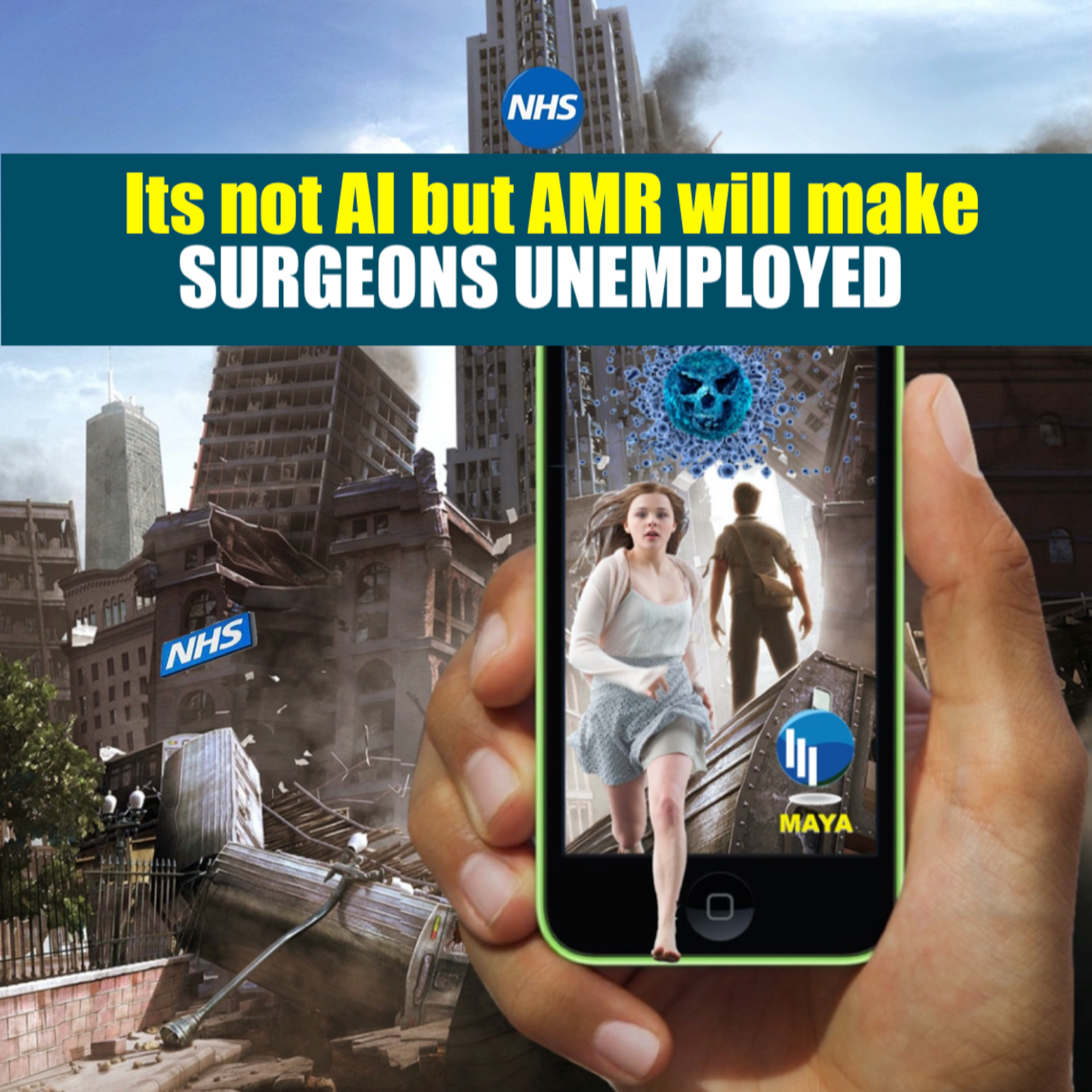
Why Routine Surgeries minor or major Become Deadly by 2028 and the Success Rate drop to 90% so Majority of patients may not return home
from Fear Kills more People than Disease and Infections
All safety net. I mean, if you get an infection, you take a pill, and the infection goes away. It's reliable and straightforward. Yeah. Humanity has relied on this safety net for nearly a century now. But considering the intelligence we're uncovering today, that safety net isn't just fraying — it's actively unraveling. So, welcome to today's deep dive. We're examining a silent global tsunami that threatens to make routine medical procedures deadly within just a few years. And we really need to emphasise why this matters to you, the listener. Because this isn't some distant, theoretical sci-fi scenario. No, this will fundamentally influence how you, your family, and your community access healthcare very soon. It truly is a massive paradigm shift. We're talking about antimicrobial resistance, or AMR. To better understand this, we're looking at a wide range of information. Today, we have global health forecasts from the Institute for Health Metrics and Evaluation, the IHME, alongside peer-reviewed data from The Lancet.We're also examining the Belgian government's newly launched One Health National Action Plan for 2026 to 2030 to understand the macro-level defence. For micro-level protection, we have schematics behind a groundbreaking AI diagnostic tool called Doctor Maya. But before we delve into the AI, there's a compelling slide presentation in our sources titled 'The Tsunami of AMR results in crisis by 2028'. Our aim is to synthesise all of this, to unpack the stark reality of AMR and map out this alarming timeline. Because this crisis isn't a projection for the distant future — it's happening right now. Let's look at the timeline, because the numbers are making the situation painfully clear. An interesting claim in that slide presentation suggests we've been distracted from this impending crisis.It argues that since the late 1980s, there's been a hidden evolutionary agenda at play, and recent panics like COVID-19 and Ebola in the DRC have been misleading us with intense immediate emotions. Exactly. The panic around those outbreaks obscures the truth about the silent AMR tsunami steadily building in the background. Wow. So while we focus on the loud emergencies, the silent ones are taking over. Precisely. The projections for 2025 indicate that global antimicrobial resistance will have crossed a critical threshold of 42%. We are already in a danger zone; when resistance reaches 42%, almost half of the frontline drugs used to treat bacterial infections are failing. Bacteria have already outsmarted them.They have. And the situation accelerates rapidly from there. Right, because by 2028, this tsunami is expected to trigger a full-blown crisis. Routine surgeries like C-sections and hip replacements are forecast to become high-risk worldwide. Data suggests success rates for hip replacements could plummet from 95% to just 42%. That's terrifying. By 2030, resistance is projected to reach 58%. At that point, global healthcare capacity could decline to just 35%. That drop is staggering. In healthcare, that's really the domino effect in action: hospitals are overwhelmed not just by the sheer volume of sick people, but by how long it takes to treat a single patient because the initial drugs don't work properly. If an infection doesn't respond to the first round of antibiotics, the patient may spend weeks in a hospital bed instead of days. They take up valuable space, require intensive nursing, and doctors are compelled to use more expensive, highly toxic second- or third-line drugs that severely damage the patient's kidneys or liver. Looking ahead, by 2035, resistance could reach 68%. This is what scientists call the post-antibiotic era.
Embed this episode
NOW PLAYING
Why Routine Surgeries minor or major Become Deadly by 2028 and the Success Rate drop to 90% so Majority of patients may not return home
No transcript for this episode yet
Similar Episodes
No similar episodes found.
Similar Podcasts
No similar podcasts found.