
EPISODE · Sep 11, 2026 · 12 MIN
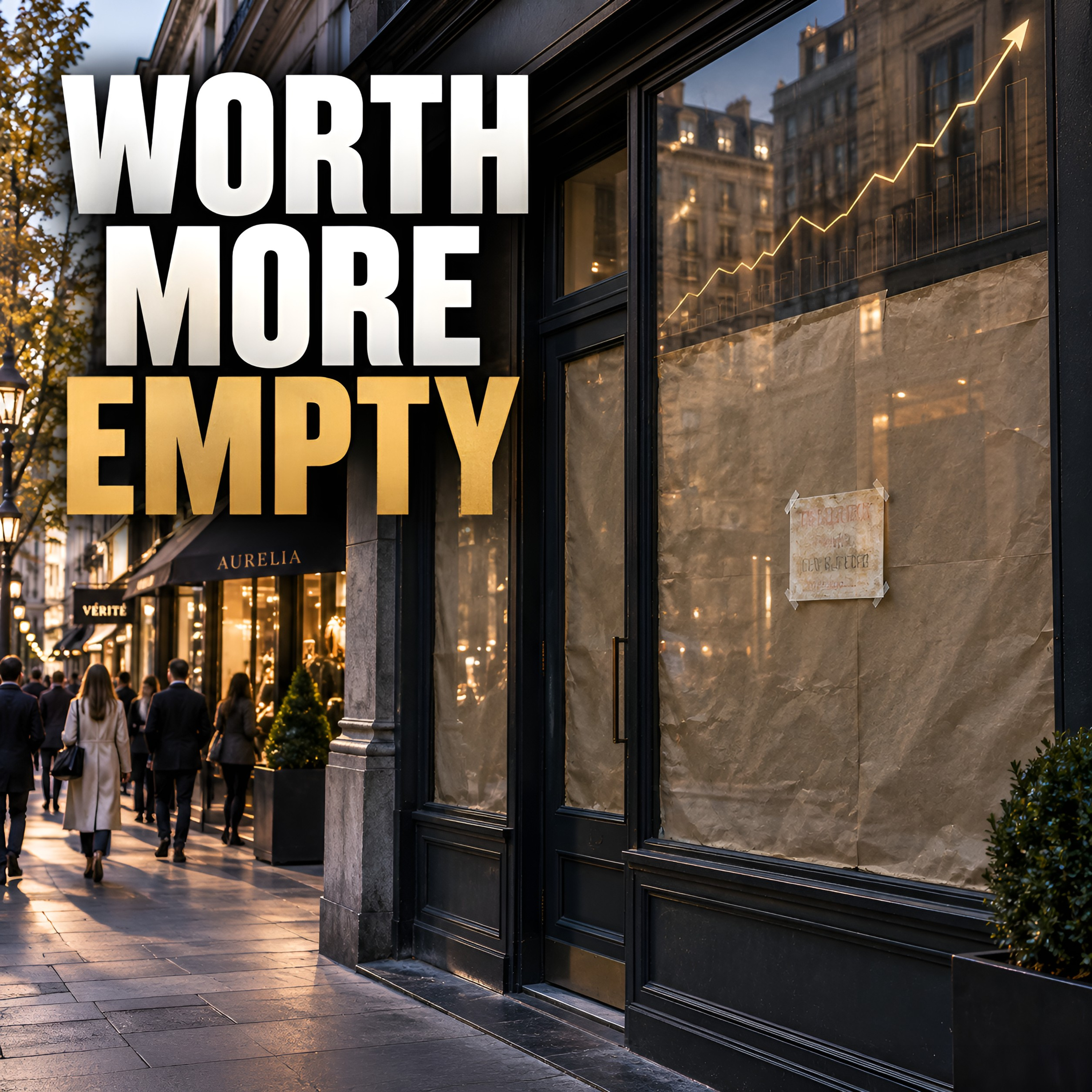
Why Some Storefronts Are Worth More Empty
from Invisible Economics · host Invisible Economics
A storefront sits empty on a busy street. Businesses want the space, the owner has their phone numbers, and the lights stay off anyway. Sometimes accepting less rent can cost more than collecting no rent at all.The next time you pass a storefront that has been dark for months, you'll notice the asking rent may be doing something even when the room isn't.▌│▌│ ▌│ ▌▌│ ▌│▌ ▌│ ▌▌│▌ ▌│ ▌│▌│IN THIS EPISODE— How a cheaper lease can pull down the value of more than one storefront— Why headline rents, lender covenants and hidden concessions can make vacancy rational— How an empty shop can function like an option on a more valuable tenant laterTHE NUMBER16 months — average Manhattan storefront vacancy spell, 2015–2019, Moszkowski & StackmanSOURCESOption Value and Storefront Vacancy in New York City — Erica Moszkowski & Daniel Stackman, 2023Bleaker on Broadway: The Contractual Origins of High-Rent Urban Blight — Daniel Stackman & Erica Moszkowski, 2023▌│▌│ ▌│ ▌▌│ ▌│▌ ▌│ ▌▌│▌ ▌│ ▌│▌│Narration in this episode is AI-assisted.Research, writing and editorial judgment are human.Invisible Economics — The Systems Behind Everyday Life
Embed this episode
Ready to play
Why Some Storefronts Are Worth More Empty
No transcript for this episode yet
Similar Episodes
No similar episodes found.