
EPISODE · Jan 28, 2026 · 46 MIN
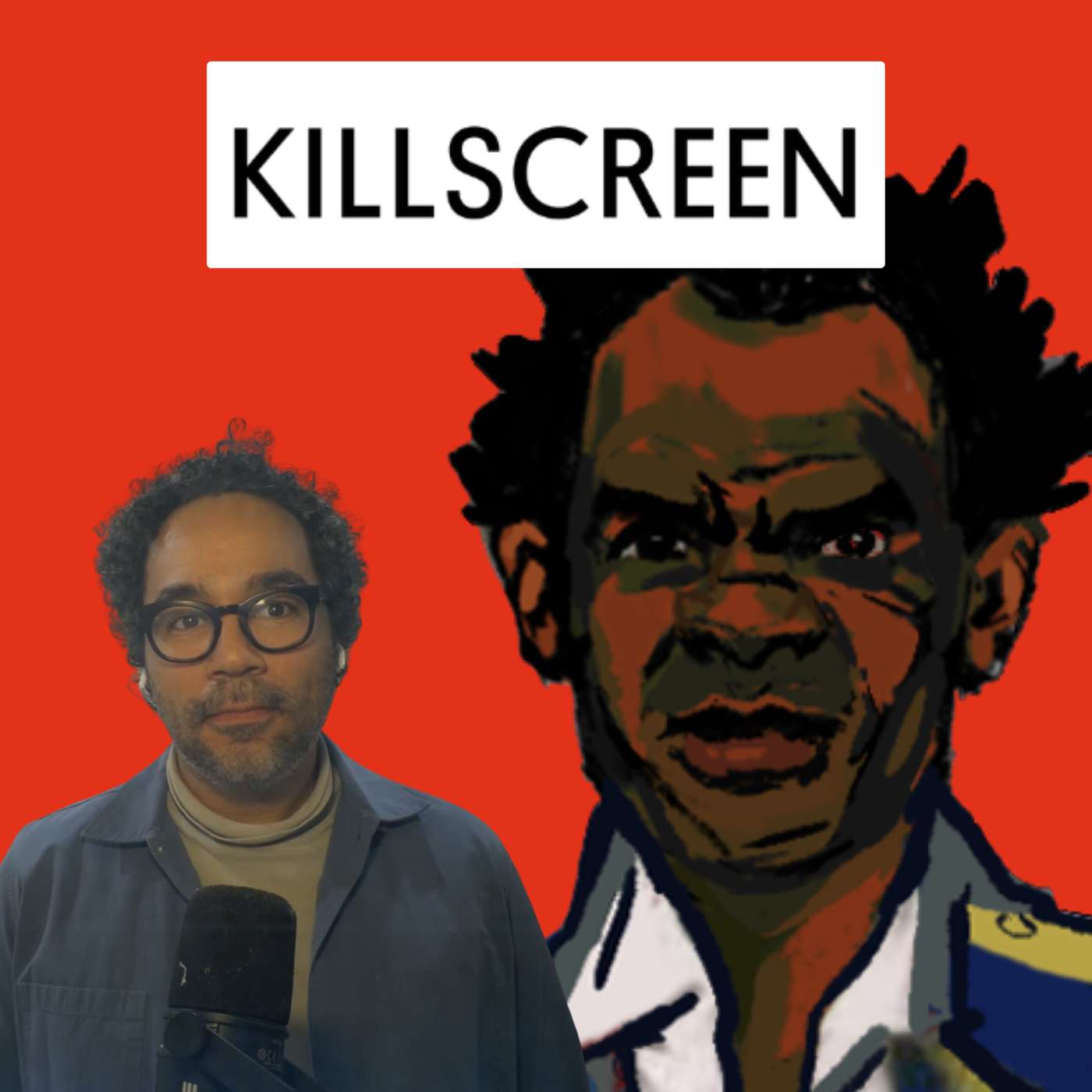
Why This Game About the Haitian Revolution Has No Bullets
from The Killscreen Podcast · host Jamin Warren / Killscreen
There's already a game about the Haitian Revolution. It's part of Assassin's Creed. You sneak around, you stab people, you "free the slaves"—and the game gives you an achievement notification.Dom Rabrun thinks that's bullshit.The Haitian-American painter and game designer is building Vèvè-Punk: Mind Singer, a game about the Haitian Revolution that refuses to let you pick up a weapon. Instead, you navigate Saint-Domingue's 16 racial classifications through dialogue trees, where saying the wrong thing to the wrong person can get you killed. Your protagonist isn't a soldier—she's a telepath and a singer. A free woman of color with zero strength, zero dexterity, and everything on the line.Dom's work sits at the intersection of Haitian Vodou symbolism, Basquiat's visual language, and the kind of thoughtful, conversation-driven game design you'd find in Disco Elysium. He's part of a generation of artists who grew up with games, studied painting, then realized that interactivity might be the best way to tell certain stories.But there's no lineage for what he's doing. Black filmmakers have Oscar Micheaux, Charles Burnett, Ava DuVernay. Black game designers? They're writing that history right now.In this conversation, we discuss why physical violence is the laziest choice in games, what it means to hold a controller and "control" someone, and how Basquiat's painting Glenn taught him to think about right-clicking on reality. We also tackle the deeper question: when you're making a game about historical trauma, about enslavement, about revolution—how do you do that without replicating the very dehumanization you're trying to critique?About Dom Rabrun: Dom's work merges technology, storytelling, and music into a cohesive creative system. Guided by his first-generation Haitian-American heritage, conservative Christian upbringing, and 15 years of experience in IT, he's developed a philosophy called "Vèvè-Punk," blending Haitian Vodou symbolism with futuristic Afro-Caribbean themes. In 2020, his video piece Dr. LaSalle, The Spider Queen, and Me earned first prize in a juried exhibition at the Phillips Collection. He was a 2022 fellow with Black Public Media, which is now executive producing his forthcoming video game. He lives and works in Hyattsville, Maryland.Killscreen treats games and interactive media as cultural artifacts worthy of the same analytical rigor as film, literature, and art. Subscribe wherever you get podcasts.Links: Dom Rabrun site and YouTube Read the full article.If you like what you're listening to, please consider becoming a member. ★ Support this podcast ★
Embed this episode
NOW PLAYING
Why This Game About the Haitian Revolution Has No Bullets
No transcript for this episode yet
Similar Episodes
No similar episodes found.
Similar Podcasts
No similar podcasts found.