From The New York Times, I'm Natalie Kitroweth. This is The Daily. After the marathon negotiations between the U.S. and Iran this weekend failed to produce any breakthroughs, the temporary ceasefire appears more precarious than ever. One of the biggest questions looming over it is Israel, and whether it will accept peace or keep fighting a war on multiple fronts that threatens any chance of a deal.
Today, my colleagues Mark Mazzetti and Ronan Bergman explain. It's Monday, April 13th. Ronan, Mark, hello. It is about 10 a.m. on Sunday on the East Coast, 5 p.m. where you are Ronan and Israel.
And we say that because things can always change. Thank you for joining us on a Sunday. Thank you. Thanks for inviting us. So we've turned you both throughout this war to understand the role that Israel has played in this conflict.
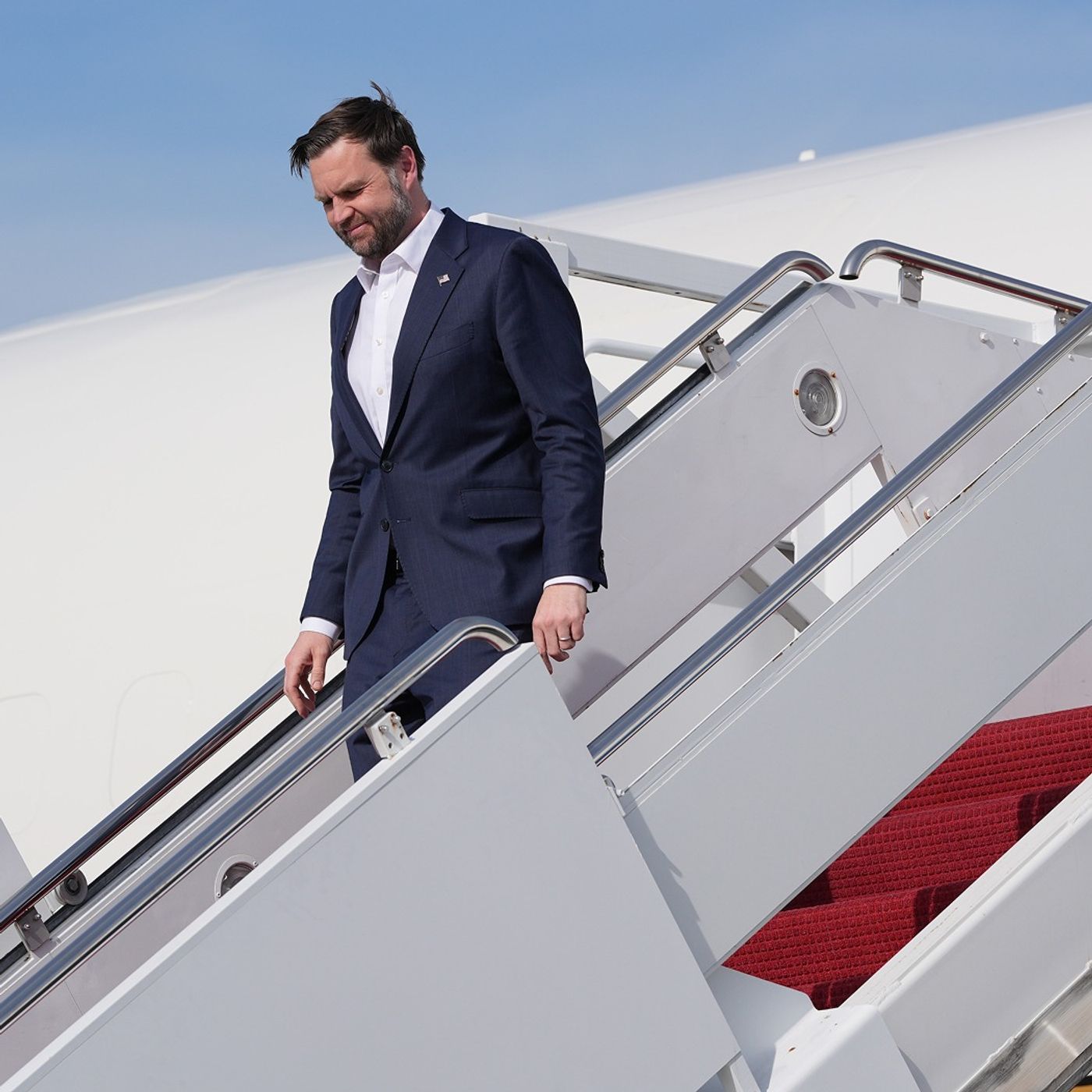
And that question has become more critical than ever at this particular moment when it appears that Israel continues to actively threaten the ceasefire between the U.S. and Iran. And we're going to get to how that's playing out. But first, just help me understand the state of things right now. Negotiators from Iran and the U.S., including Vice President JD Vance, met in Pakistan this weekend.
Mark, where do things stand? So JD Vance and a very senior delegation of Iranian officials had a marathon session on Saturday in Islamabad where they were meeting to hash out some of their biggest differences. No one could tell what was happening in the negotiations where a lot of reporters were waiting around to find out any piece of information and there was nothing coming. And then by Saturday night, Washington time, we get word that the talks had broken down. Well, good morning, everybody.
And let me say a couple of notes of appreciation. First of all, JD Vance comes out and he announces that there's no judge. We've been at it now for 21 hours and we've had a number of substantive discussions with the Iranians. That's the good news. The bad news is that we have not reached an agreement and I think that's bad news for Iran much more than it's bad news for the United States of America.
So the American delegation is leaving Islamabad and there's really no immediate prospects for another round of negotiations, although that could certainly happen. We've made very clear what our red lines are, what things we're willing to accommodate them on and what things we're not willing to accommodate them on. And we've made that as clear as we possibly could and they have chosen not to accept our terms. And meanwhile, there's this sort of extraordinary split screen where president Trump is in Miami at a UFC fight. Oh, wow.
The Donald J. Projecting kind of indifference to the whole thing. We'll see what happens regardless. We win. Regardless what happens, we win.
You know, he says to reporters on the way down, well, I don't really care what goes on in these negotiations because we've already won. In addition to that, when negotiating, whether we make a deal or not, makes no difference to me. He's already declared victory. It was an amazing day that ultimately ended very inconclusively in terms of what's next in the war on Iran. Right.
Despite Trump's statement to the contrary, there is no resolution that's come out of this. This thing is not over. It's not one. It's very much still on the table. What's going to happen next?
Right. Iran still controls the Strait of Hormuz, which remains closed. Iran still has a stockpile of highly enriched uranium, which the United States wants it to give up. And Iran is demanding economic sanctions relief from these very crippling sanctions that the United States for years has imposed on the country. And so after all these negotiations on Saturday, it doesn't appear there was great progress on any of those fronts.
So those are the main points of contention. Mark, the strapping close, what happens with the stockpile of highly enriched uranium and potential sanctions relief? Yes, that. And there's another reason, which is kind of more unstated and a bit more under the radar. And that's Hezbollah and Lebanon.
Iran very much wants any cessation of the war in Iran to be coupled with an ending of Israeli strikes against Hezbollah, which is a critical proxy army for Iran. And yet Israel doesn't want Hezbollah to be part of any negotiated ceasefire and wants to keep that part of the work going for its own reasons. Okay. We're going to get to those reasons. But first, just explain Israel and its position right now for me.
Ronan, the last time we all talked on the show, you both told us that Israeli Prime Minister Benjamin Netanyahu was worried that the U.S. would pull out of this war earlier than Israel wanted before its objectives were achieved. And then we got this ceasefire last Tuesday after five weeks of fighting. So how did Israel react when it learned that the U.S. was taking what looked like a first step toward ending the war?
So Benjamin Netanyahu's Israeli Prime Minister was concerned that the U.S. will sign a ceasefire without taking too much into account Israel's position. And then Netanyahu was trying to convince the president we need more time. But at the end, the president agreed to a ceasefire. So the whole thing was presented as a joint war.
Israel in the U.S. Not only Mark and I spoke about this with you last time, about how Netanyahu was so pivotal in convincing Trump to get into the war. But once the war started, Netanyahu was sidelined to an extent. Trump did not consult with him about when to end the war and in what terms? Wow.
So did Israel get a heads up that Trump was about to reach a ceasefire deal? Yeah, but only at the very last minute. This was very late on Tuesday, Israel time. They knew that the deal between the U.S. and Iran that would be soon announced by the Pakistani Prime Minister includes a ceasefire in Lebanon.
This is something they didn't like. Prime Minister Netanyahu tried to convince the president not to do that. But the terms of the ceasefire as they found out are not just about Iran, but are also about a total ceasefire in the war between Israel and Lebanon. Now, this is a totally different ball game. Why does it matter?
Because the main military force in Lebanon, Hezbollah, are Iranian allies. They started shooting in Israel as a sort of solidarity and other pressure from Iran. They wanted to have a small exchange of fire. Israel reacted with massive force. And after a short while, both sides found themselves totally deteriorated in all out war.
And Israel, they said, we will not stop until we remove the threat. Remove the threat, meeting. Dismantling Hezbollah, disarming Hezbollah. For itself, not just showing solidarity to their comrades in Iran, but they realized that they in Lebanon, Hezbollah are fighting existential threat themselves. A total new fraud that Israel got itself totally accepted.
Right. Israel got enmeshed in this war within a war against Hezbollah in Lebanon. And what you're saying is that Israel is frustrated with the ceasefire, not just because they feel that they weren't appropriately informed by their partner, the United States, about all of the terms of the agreement, but that one of the terms is a ceasefire in Lebanon. Yeah. And for a few hours, there was nothing sent in Israel or in the US that Lebanon is not included.
During these few hours, there were like many, many phone calls that communication from Israel, from Jerusalem to the White House. And as I heard, basically asking Trump, President Trump, to let Israel do at least one more round, but that again was in the tight spot. So just to be clear about what you're saying, Ronan, what was understood by both Israel, the US and Iran was that Lebanon was included in the ceasefire deal originally. And Israel, because of that, is furiously trying to do diplomacy and trying to persuade Trump to go back on that, to allow them to keep attacking in Lebanon. Israel did not agree to the ceasefire.
It accepted the ceasefire on Iran. It did not accept the ceasefire on Lebanon. I think this is where you see one example of American Israeli interests diverging in the war in Iran. Same war. Well, I mean, for one, you saw that increasingly President Trump and his advisors were growing frustrated that the war was not achieving the effects that they wanted it to achieve.
Iran was not buckling, right? And many in Washington were kind of looking for an exit, a way out of the war, a way toward a ceasefire. Where in Israel, there was a determination among Prime Minister Netanyahu and his advisors to keep this going longer to make sure this would have a more conclusive end. And on this issue of Lebanon and Hezbollah, I mean, effectively, President Trump, I don't think cares what happens in Lebanon and with Hezbollah. If a ceasefire in Lebanon is part of an alternate end to the war in Iran, I think President Trump is perfectly happy with that.
But this is something that's far more difficult for Prime Minister Netanyahu to digest, as Ronan said. And this divergence is on full display on Wednesday, the day after the ceasefire announcement. Today, Israel unleashing a sprawling barrage of more than 100 attacks on Lebanese capital Beirut, the most since the war began. When Israel launched a massive bombardment against Hezbollah, over 100 targets in minutes. We saw tiles of charred cars at major intersections, mountains of rubble, clogging the roads, entire apartment blocks raised to the ground.
Scores dead. But what we've really seen are horrific scenes of people, including children being pulled from the rubble of residential building, grocery stores, shops. And it sort of laid bare this idea that the US and Israel are not all on the same page here. Yeah, the scenes from that attack were just devastating. Was Trump aware that this attack was going to happen?
Ronan? As far as I understand, this is pushed back by the officials' books, but as far as I understand, the Americans were aware that Israel is going to strike. They were shocked at the extent of this trial. I heard that they complained to the Israelis that they didn't know what they're going to bomb. The volume of the bombing, of course, the big collateral damage, the civilians that were killed as reported from Lebanon.
Well, you're saying the US did have some knowledge that this was going to occur, but didn't understand the magnitude of it, just how far Israel was prepared to go. And you saw the reaction from Iran, Iranian leaders were furious about this, and also recognized the leverage they have. If Washington really wants to end the war on Iran, the Iranians can also demand an end of the war in Lebanon. And they can exploit this scene I just talked about in the US-Israeli relationship. So that's what they did. They basically said, if you want to sit down and talk about an end of the
war on Iran, well, Hezbollah and Lebanon are part of the ceasefire as well. Which underscores just how much this puts the entire ceasefire at risk, which is obviously against Trump's interests. So why do that if you're Israel? Because Hezbollah and Lebanon are absolutely central to the idea that Prime Minister Netanyahu has said forward about the security of Israel. As much as he talks about Iran and the threat from Iran, the threat from Hezbollah, as he's laid out, is far closer, obviously, to home and central to his own political future.
We'll be right back. Law transforms agreement into reality. A word becomes an agreement. An agreement becomes a contract. A contract becomes law.
Today, Harvey, the AI platform for legal work, is writing the next chapter. More than 200,000 lawyers are building with Harvey, accelerating review, sharpening negotiations, and more. This is how the future of agreements is being crafted now. Harvey, learn more at harvey.ai. Harvey does not provide legal advice.
Users should always independently review and verify any output from Harvey. Hi, this is Sarah Koenig with news about our latest podcast from Serial Productions and The New York Times. It's called Metro. Well, technically it's called Metro with Sarah Koenig because the show is hosted by me, but I prefer the name Metro. So let's just go with Metro.
Stories about New York City and its most fascinating raw material. New Yorkers. Each week on Metro, we bring you investigations. Don't tell them you're gonna go to jail whenever we talk about this last night. Personal stories.
I don't think this is the word you're talking about. Your dad's actually. Essays and interviews. Are you a fan of the mayor? I don't hate them.
Stories that take the bigness of New York and make it human scale, and relevant, no matter where you live. See, I consider myself a citizen of everywhere. So come along with me, you two jersey, and let's hang out with the best talkers in New York City. Metro, wherever you get your podcasts. Ronan, as you've told us, Israel was dead set against Lebanon being included in the ceasefire deal in the first place, so much so that they're willing to put the whole thing at risk over it.
I want you to help deepen our understanding of why, and particularly of what Mark just said, that Hezbollah and Lebanon are absolutely central to Netanyahu's argument about Israel's security. So just walk me through that argument. So people forget that before October 7th, it was Hezbollah who was considered to be the most fierce and threatening enemy of Israel. And Israel devoted so much preparing for such a war that you one day were lead to fight Hezbollah, they didn't put enough attention to Hamas. That was started October 7th.
Hezbollah joined the war on a low level and it accelerated through a year. And then in September 24th, Israel talked the world and they exploded some 3,500 pagers that were on the waste of Hezbollah operatives. And then for 10 days, they continued to hammer Hezbollah, they killed the commanders, they killed the troops, they exploded the backers, and Hezbollah had to stand down and agree them to a ceasefire with humiliating terms. This was all a white and extraordinary military intelligence operational success.
But as it happened in this war, Prime Minister Netanyahu was not satisfied just with this victory. He had to add more and he basically said to the Israeli public, Israel decimated Hezbollah. We removed the threat. You, all the refugees that fled the north of Israel at the beginning of the war, you can go back, it's safe. Netanyahu is saying basically that as a result of this remarkable attack, we started with the pagers, I think we all remember that, and then proceeded with these waves of strikes taking out top Hezbollah leaders, the message was it's now safe for Israelis who lived in the north of the country, which borders Lebanon to go home.
Yes, and so the reality happening in Lebanon was that Israel was attacking Hezbollah every few days and Hezbollah did not react. And I think that gave, first of all, it gave the Israeli people the sense that Prime Minister Netanyahu was right, there's no Hezbollah, that don't react to it. They're not retaliating. And the second, it gave the military officials a sense that they can do to Hezbollah whatever they want, Hezbollah will stay deterred. Wow. Well, that ought to be that correct, because once Hezbollah recovered and felt that this is
now, this is serious, this is about their own existence as an armed force in Lebanon, they started fighting them. You're talking about the strikes that Hezbollah carried out on Lebanon at Iran's urging during this current war, that exposed the fact that Hezbollah had not in fact been decimated. Yes, the whole of the northern hemisphere of Israel started to be bombed again with rockets at this size. And you know, even this house that I'm speaking to you from this is the thing, this is central Israel. We were born by Hezbollah. So the non-existent decimated
Hezbollah was still able to send missiles from Lebanon to central Israel just few days ago. So suddenly the Israeli public realized that in Gaza, the war is not over. I was controlling half of the Gaza stream. In Iran, the war is not over. Iran is still sending missiles at Israel after Netanyahu said the problem is and now they realize that Hezbollah, the level of the front is not over because Hezbollah is shooting. So it's all like open fronts. One of the other of the almost three years of war,
it's still everything is over. Okay, I want to talk about that issue of open fronts. Is there an end point to this now ongoing war with Hezbollah? I understand that Netanyahu is perhaps trying to save face at home with a public that realized that maybe they were misled and finished the job against this militant group, but when will Israel feel it has done enough on that front? The main lesson that Israel learned that it's not just Netanyahu.
You'll hear this from the lowest ranked officer of the IDF or any other employee of the Israeli defense establishment. The lesson they learned from October 7 is never let a hostile force grow and get too strong. Once this force declares that its goal is to eliminate the state of Israel. So the end game from Israel is to dismantle Hezbollah, disarmed Hezbollah. This can be done in only three ways. Inside of Hezbollah doesn't show how to
fix on will. Unlikely. Yeah, not very. Second is that the Lebanese government will go in full force, take the weapon and enforce its sovereignty over Hezbollah. Now this is something to the Lebanese government competed to do in the agreement of the ceasefire between Israel and Lebanon from September, October 2024. They failed. So the only alternative is that Israel will conquer Lebanon
and this is something that Israel doesn't want to do. They tried that in 1982 and we ended up very badly. And in the meantime, just to give some sense of security to the communities in the north, they create the buffer zone, a strip inside Lebanon where they'll have forces that will divide between citizens and the operatives of Hezbollah the other side. So this is about punishing Israeli enemies, showing strength for local consumption. This buffer zone requires Israel occupying part of Lebanon's territory, right? Lebanese land. The implication, of course, is that
Israel plans or some Israeli officials would like to see real massive destruction in parts of Lebanon continue. And it's happening as we speak. Okay, so it seems very clear why Israel is so invested in this. I want to talk now about Iran and why Iran is digging in over this and threatening to hold up the straight over these Israeli attacks. Ronan, is it just because Hezbollah has been such an important proxy for them in the region for so long? I think even much deeper, shortly after the
American Revolution in 1979, Iran started to invest in proxies in forces and organizations outside of Iran. And the first one and the closest ally was Hezbollah. They founded Hezbollah in 1993, 1984, and then invested so much for basically three reasons. One is that they come from the same blood. They go to the same religious schools in the holy city of Khome and Najif, they are relatives, they are Shiites. And it's not just about Iran and Hezbollah. The word that we are looking for
is Bukhava. Bukhava in Arabic means resistance. Iran and its proxies, Hezbollah in the Khulfiz, and Hamas in the place of the Islamic Jihad, and the militia in Iraq, and in Syria, they call themselves Jabbal Bukhava, the axis of resistance. And this case is a test of how much Iran is willing to risk in order to save the other partner of this axis. This is the core of their partnership, the core of their brotherhood. And so Israel wants to break their light. Israel wants to destroy the
axis. And I think that the next few days or weeks are going to be quite significant in the history of the war, the regional war, between Israel and the axis of resistance. All right. I'm going to go out on a limb here and say this all sounds like a very difficult situation to resolve. Mark, I want to turn back to you and ask, given this history, what would a path to a resolution even look like here? Well, there's no easy path. And you could see at the end of last
week, everyone sort of grouping around, trying to figure out how to sort of handle all of these thorny issues at once. There was an announcement that Prime Minister Netanyahu, the Israeli government, would begin discussions with the Lebanese government about the future of the conflict. But of course, the Lebanese government is not speaking for Hezbollah. No one's dealing and negotiating directly with Hezbollah. So that appeared to be a little bit of a fig leaf to sort of appear something was happening, where no one really expects much out of that. And given that all of these issues are so closely
stitched together, it does seem like this is all very intractable at the moment. When we've talked in the past, guys, you've both said that while a lot of people view Netanyahu as having a certain amount of sway over Trump, you've made it clear that Netanyahu does fear Trump. He does acquiesce to his demands. So can't Trump force Israel to stop carrying out strikes that are threatening this truce? I guess my question is, who is actually in charge here?
No doubt. Prime Minister Netanyahu acknowledged that in a speech three weeks after the beginning of the war, but at the beginning, he said, we are partners, neutral partners, then he said, under the leadership of President Trump, he said something that was clear to any soldier, any officer, any general idea that this war will end only when Trump says it's all. So it's clear that if President Trump decides that something would happen and be very strict with that, the presidential bishop will not go to overt confrontation with him. No, that's one of the things that he's very strict with. He won't. Yeah, we've talked a lot about how instrumental Prime Minister Netanyahu was
in convincing President Trump to go to the war against Iran. But ultimately, as Ronan said, in this relationship, Trump holds the leverage in ending it. And he can tell Netanyahu when the war will end. So should we assume based on that that Trump has not actually pulled that ultimate lever yet? Well, I think it's not clear to Trump yet that Hezbollah and Lebanon are the number one sticking point preventing a deal with Iran. But the more Hezbollah and Lebanon become central to whether
this were ends or not, the more I think the United States and Trump will lean on Netanyahu to end the campaign. I want to just end by taking us back to the beginning of this war. When Trump decided to do something that no American president had ever agreed to before, which was teaming up with Israel to go to war with Iran, we're now in a situation where it's unclear whether the two countries that got into this war together are actually on the same page about getting out of it. And I just want to ask like, is this just the inevitable result of getting into a joint war with a partner that doesn't share your long term goals? I think that's partly right. There are many things that Trump
administration and Benjamin Netanyahu are aligned on in terms of what they see as important to the security of the Middle East. However, once a war begins, things go out of your control. And as we've seen, Iran has not responded the way that the United States and Israel had hoped it would. Iran has shown no sign that it is eager to back down. And I think there's also a sense for Netanyahu that he's not going to get another chance to do this. A war against Iran has been
Netanyahu's obsession for decades. And now he's got the United States president leading the war. And once that ends, it's probably not happening again. And so he sees this as his last best chance to achieve these goals in the Middle East. And he's going to be determined that nothing ends before he gets most of what he wanted, which is why Netanyahu and his team and ministers, when hearing the announcement from Islamabad that negotiation fell apart, they said, huh, you see, this is President Trump that we like that is not giving up that is going full force. And they are hoping we'll go back
to Warsaw. And so this thing keeps going on. Well, Mark Ronan, thank you so much. Thanks, Ali. Thanks.
On Sunday, the U.S. military said that it would blockade any ships entering and departing Iranian ports beginning Monday, but would allow other ships to pass through the Strait of Hormuz. The move was a step back from Trump's earlier promise to block all traffic through the street. In response, the Speaker of Iran's Parliament directly addressed American consumers, saying, quote, soon you'll be nostalgic for four to $5 gas. We'll be right back.
On election night, we are the place to go for race results. Our maps are updated minute by minute. Come experience all of our election coverage for free right now in the New York Times app. Here's what else you need to know today. Eric Swalwell, a Democratic congressman from the Bay Area, said on Sunday that he was suspending his campaign for California Governor in the wake of allegations of sexual assault and misconduct. The accusations were published Friday in articles by the San Francisco
Chronicle and CNN, and they prompted a wave of rescinded endorsements and a criminal investigation. Swalwell repeatedly denied the accusations and said in an ex post on Saturday that he was sorry for, mistakes in judgment and promised to fight what he called false allegations. And Victor Orban, the right-wing populist who's been Prime Minister of Hungary for 16 years, conceded that he lost the country's general election on Sunday. Orban was such a staunch ally of President Trump's that Vice President J.D. Vance flew to Budapest last week to rally with him.
But Vance's appearance didn't help Orban avert a landslide defeat to the center-right opposition, which is led by a former Orban loyalist, Peter Magyar. Magyar campaigned on an anti-corruption message and promised to improve relations with the European Union, which had been strained over Orban's pro-Russia stance. Today's episode was produced by Off the Chather Beatty, Michael Simon Johnson, and Rochelle Bonjour. It was edited by Rachel Quester and Patricia Willens, and contains music by Dan Powell and Pat McCusker. Our theme music is by Wonderly. This episode was engineered by
Chris Wood. That's it for the Daily, I'm Natalie Kitrowy. See you tomorrow. I am a big fan of sentient houses in general. I think this is one of the scariest books I've ever read. Listen to the book review wherever you get your podcasts. That door shouldn't be open. Who left it open?