
EPISODE · May 20, 2026 · 10 MIN
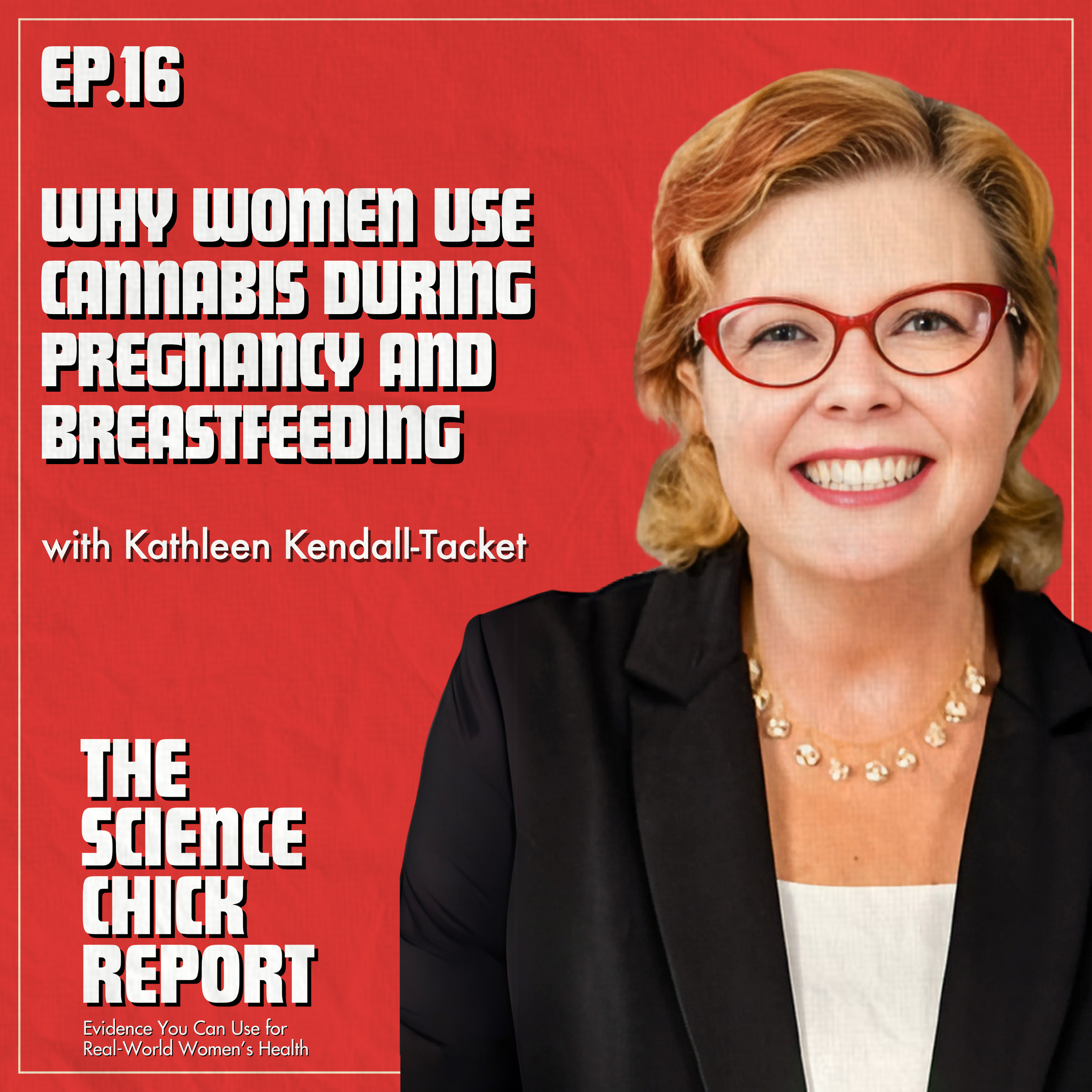
Why Women Use Cannabis During Pregnancy and Breastfeeding
from The Science Chick Report: Evidence You Can Use for Real-World Women's Health · host Kathleen Kendall-Tackett
Why do pregnant and breastfeeding women use cannabis? The answer isn't what most clinicians think. In this episode, Dr. Kathleen Kendall Tackett shares data from over 3,400 perinatal cannabis users. The number one reason isn't "getting high" or even enjoyment. It is perceived safety. Nearly 98% of mothers believe cannabis is safer and more natural than prescription medications for managing symptoms.Using advanced statistical analysis, Promax rotation, Dr. Kendall Tackett identified four key drivers. They are perceived safety, availability (partner or family use), enjoyment, and symptom relief for anxiety, sleep, PTSD, and nausea. While acknowledging real risks like preterm birth, she argues that shame based counseling doesn't work, and women are asking for help.The episode introduces a free, easy to use clinical tool. It is the Perinatal Cannabis Questionnaire, designed to open meaningful conversation. Scan the QR code in the episode to access it. Dr. Kendall Tackett invites clinicians to try the tool and share feedback. She wants to move beyond "just say no" toward actual harm reduction. For providers on the front lines of women's health, this is practical, data driven guidance you can use today.In This Episode:[00:00] Introduction[00:37] Why pregnant and breastfeeding women continue using cannabis[01:14] Women are asking for help, not judgment[01:31] A study of 3,443 perinatal cannabis users[02:13] Why existing cannabis scales fail pregnant women[02:50] Building a new questionnaire from scratch[03:10] What factor analysis revealed about cannabis use[04:02] Why traditional statistical models missed the bigger picture[04:48] The myth that women mainly use cannabis “for fun”[05:08] The real top factor: perceived safety[05:29] Trauma, symptom management, and self-treatment[06:05] Why 98% viewed cannabis as safer than medications[06:27] The real risks providers should understand[06:45] Why long-term cannabis research is complicated[07:04] Availability as a major driver of use[07:42] Sleep, anxiety, appetite, nausea, and PTSD[08:19] How providers can start better conversations[08:46] Introducing a new perinatal cannabis screening tool[09:21] “Don’t just tell me no. Give me other ideas.”[09:39] A QR code tool for clinicians and providers[10:00] Why maternal healthcare needs practical tools now[10:27] Closing thoughts and encouragement for providersNotable Quotes:[00:47] "The way we've all been trained is to say, 'Well, stop doing that. Don't do that. This is not safe.' But we're kind of finding, of course, that that doesn't really help." — Dr. Kathleen Kendall-Tackett[01:02] "Women are using cannabis for a reason. And so even though they're getting advice from people to not use it, they're still continuing to use — and oftentimes they're asking for help." — Dr. Kathleen Kendall-Tackett[05:23] "The number one factor was not fun, but actually perceived safety." — Dr. Kathleen Kendall-Tackett[05:47] "Trauma causes health symptoms, which drives cannabis use — so that's kind of the way that relationship shakes out." — Dr. Kathleen Kendall-Tackett[06:08] "Ninety-eight percent of mothers consider it to be a safer and more natural way to treat symptoms than using medications." — Dr. Kathleen Kendall-Tackett[09:19] "Don't just tell me no. Give me some other ideas." — perinatal study participants[09:58] "The fact that we have not had any tools at all to have conversations like this with perinatal women seems ridiculous considering the number of studies we're getting." — Dr. Kathleen Kendall-TackettResources and LinksPodcastThe Science Chick Report Dr. Kathleen Kendall-TackettWebsiteLinkedInXFacebookResearchGate (upcoming paper)
Embed this episode
NOW PLAYING
Why Women Use Cannabis During Pregnancy and Breastfeeding
No transcript for this episode yet
Similar Episodes
No similar episodes found.
Similar Podcasts
No similar podcasts found.