
EPISODE · Mar 25, 2026 · 14 MIN
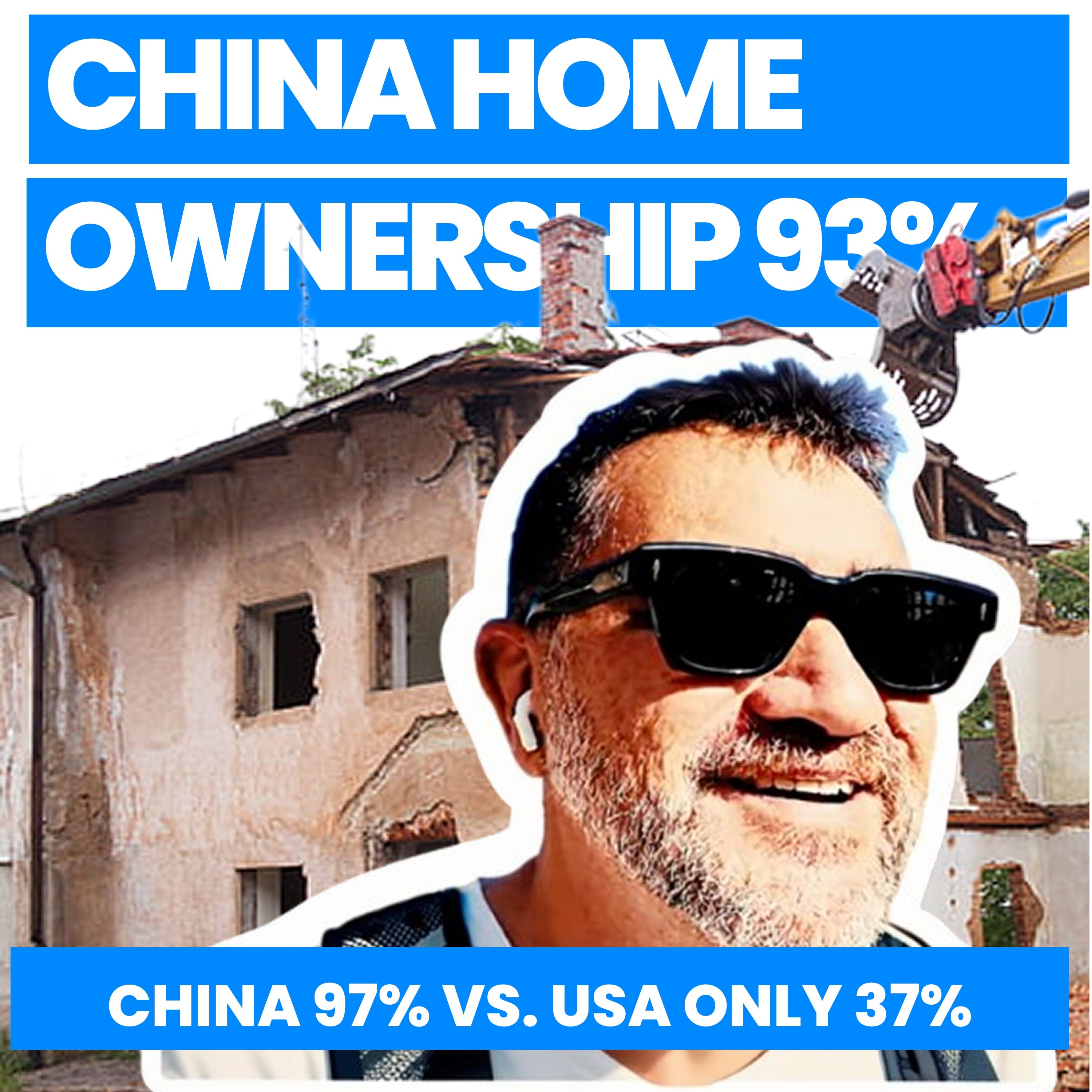
Why Young People Might Choose Chinese-Style Ownership Over Western Renting
from Dave Talks Global Politics Podcast · host Dave Talks: Politics 🌐
Welcome back, team! In this episode of Dave Talks Politics, hi, I’m Dave, and I’ll be talking politics. Today, team, let’s talk about:Why Young People Might Choose Chinese-Style Ownership Over Western RentingWe’re going to cover: The stark contrast in homeownership rates for young adults in China vs the West, how China’s model delivers roots earlier and cheaper despite leasehold limits, the West’s affordability crisis locking youth out of ownership, cultural and psychological drivers of the housing dream, recent Western news quotes on the crisis, and the mercantilist reality that accessibility matters more than perfect legal title for family formation and stability.If you’re new to the channel, hey, take a moment, subscribe to the channel, then hit the bell to be alerted about new episodes when they drop.1. The Ownership Dream – A Global Aspiration Gap* At the heart of young people’s lives worldwide is a simple dream: a home of their own where they can put down roots, raise a family, build stability, and feel secure — not just walls and a roof, but a foundation for life.* China delivers this dream to far more young adults, far earlier — national household ownership 90–96%, urban young adults (under 35) at 70–78% as of 2025–2026 estimates, many buying in late 20s through family pooling.* Western rates lag badly: US under-35 ownership at 37.9% (Q4 2025), Gen Z at 27.1%, median first-time buyer age 35 — a decade later than China.* UK overall ~63%, Germany ~50%, Canada and Australia similar — generational gap even wider in major cities where price-to-income ratios hit 9–14 times earnings.* Viral X post highlighted China’s 90%+ rate — no annual property taxes on primary homes — sparking debate: Given the choice, which system better serves the human need for roots now?2. China’s Model – Early Access, Low Holding Costs* Modern Chinese ownership exploded from 1990s privatization of state housing — sold at deep discounts to occupants, combined with massive urbanization and government-backed building.* No annual property tax on primary residences — state/collective owns land, individuals hold 70-year usage rights — monthly costs are mortgage + maintenance only.* First-time buyer age averages 29–30; tier-2/3 cities now offer price-to-income ratios of 6–12 times after market correction — some young professionals buy outright.* Cultural reinforcement: Ownership tied to marriage, family, social status — surveys show ~67% of young Chinese see it as a must before starting a family.* Multi-generational support: Parents/grandparents sacrifice to help with down payments — common norm creating broad access.* Risks: Leasehold (renewal assured but not perpetual), market volatility (prices fell since 2021, projected -4% in 2026 before stabilizing), demographic headwinds — but for young buyers today, keys at 28–30 outweigh abstract legal caveats.3. Western Affordability Crisis – Locked Out Until Late 30s* Post-1980s financialization, zoning restrictions, green belts, and urban containment policies drove prices sky-high — many markets now “severely” or “impossibly” unaffordable (Demographia 2025).* Sydney 13.8x income, Vancouver 11.8x, London 9.1x, San Francisco 10x — coastal US and major cities often 9–14x multiples plus property taxes (0.5–2% annually) and high down payments.* Student debt, wage stagnation, dual-income requirement — ownership becomes privilege of family wealth or high earners.* Recent quotes on the crisis:* “The housing affordability crisis in the West has become a generational tragedy — young people are locked out until their late 30s or 40s, delaying marriage, children, and wealth-building.” (Housing policy analyst, 2025 report)* “In major US cities, the dream of homeownership is dead for most under-35s — rent volatility and no equity leave them perpetually insecure.” (Urban studies professor, 2026 interview)* “Europe’s youth are facing a housing emergency — prices and taxes make ownership a fantasy, turning renting into lifelong reality for millions.” (EU housing commission report, 2025)* Result: Many Western young people rent into late 30s or beyond — delayed life milestones, rent hikes, landlord instability, zero equity.4. Cultural and Psychological Drivers – Roots Matter Now* In China, ownership is deeply tied to filial piety, marriage prospects, and social status — young men especially say it makes them competitive in relationships; renting carries mild stigma as temporary.* Surveys: Structural equation modeling on young urban Chinese shows ownership perceived as “investment opportunity, source of belonging, and means to secure stability” — far stronger driver than in West.* Western youth still aspire to own (51% of Americans plan to buy in 2025, Gen Z 61%) — but structural barriers defer the dream.* Psychological payoff: Chinese youth buying at 28 experience stability, equity (even if depreciating short-term), and nesting; Western counterpart at 28 renting faces uncertainty and delayed planning.* Recent Western quote: “Prolonged renting isn’t a choice — it’s the default. It delays family formation and leaves young people feeling unmoored.” (Gen Z housing survey, 2026)* My take: Roots matter now — not in 10 years — China’s model delivers that aspiration earlier and to more people.5. Mercantilist Reality – Accessibility vs Perfect Title* China trades perpetual freehold for broad accessibility — no annual taxes, lower holding costs, cultural momentum — young people get keys sooner.* West trades accessibility for stronger legal rights — freehold, easier resale/refinancing — but only for those who enter; most stay renters.* Recent Western quote: “Ownership builds long-term wealth through appreciation and leverage — but that advantage is meaningless if you’re priced out until 40.” (Economic commentator, 2026)* Demographic shift: Chinese youth migrate to smaller cities for cheap ownership — trading urban hustle for family stability; Western youth express same desire but face barriers.* Policy divergence: China stabilizes market, subsidizes first buyers; West tinkers with zoning/subsidies without fixing supply.* Urgency: West must deregulate housing supply — or continue losing the aspiration battle while China delivers roots to its young.BOTTOM LINE China’s housing model delivers ownership to young people earlier (70–78% under 35), cheaper (no annual tax, lower ratios in tier-2/3 cities), and with cultural momentum — while Western youth face severe affordability crisis (US under-35 at 37.9%, median buyer age 35, prices 9–14x income), delayed family formation, and lifelong renting — recent quotes highlight the generational tragedy of being locked out — accessibility now beats perfect title later for the human dream of roots.I hope you enjoyed this show today team. The main show, and snack sized supercuts are available on yt, plus apple and Spotify as a podcast and show notes on substack; come join the team it’s free and gets you instantly connected to what’s happening. Help me grow with a like and subscribe and wherever you are team in this wonderful world of ours, I hope, you have, a wonderful day.Talk soon! This is a public episode. If you would like to discuss this with other subscribers or get access to bonus episodes, visit wgowbrics.substack.com
Embed this episode
NOW PLAYING
Why Young People Might Choose Chinese-Style Ownership Over Western Renting
No transcript for this episode yet
Similar Episodes
Similar Podcasts
No similar podcasts found.