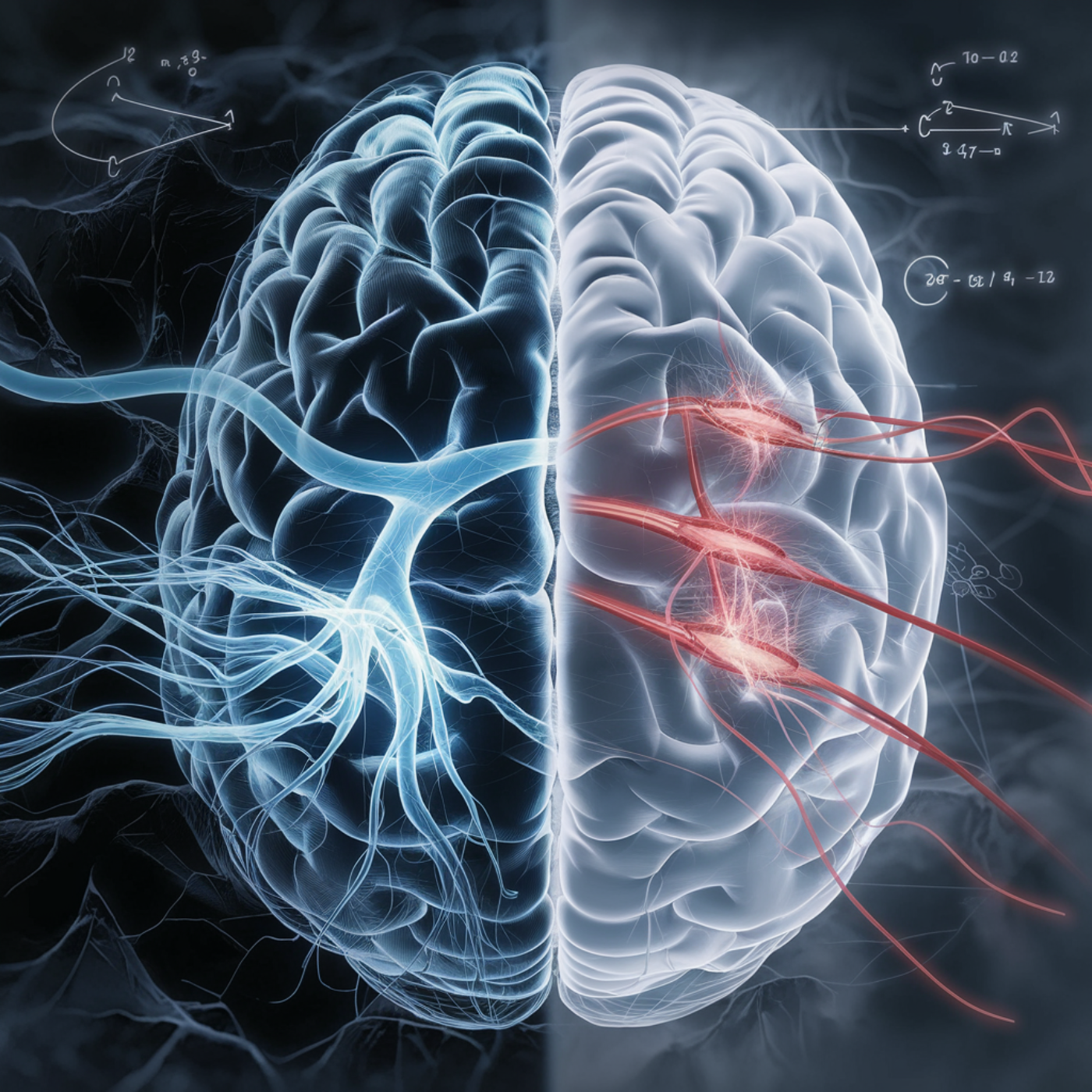
Why Your Brain Can't Learn Everything: Understanding Neural Constraints
from AI and Us: Exploring Our Future
This educational piece explores groundbreaking research published in Nature Neuroscience that reveals fundamental hardware limitations in our neural circuitry that determine learning capabilities. Key Segments: Introduction to Brain Learning Overview of brain's learning capabilities and limitations Discussion of neural firing patterns and activity sequences Comparison to orchestrated symphony of neural activity Research Methodology Explanation of biofeedback mechanisms Brain-computer interface (BCI) experiments with monkeys Recording of ~90 neurons in the motor cortex Translation of neural activity into cursor movements Key Findings Discovery of intrinsic neural trajectory constraints Demonstration that some neural patterns are impossible to generate Evidence that motivation/practice cannot overcome certain limitations Technical Details Neural activity mapping in 90-dimensional space Linear projection techniques for visualization Movement intention view vs separation maximizing view Corridor constraint experiments Major Insights: Neural activity flows through preferred pathways like water through established channels Some neural sequences are physically impossible due to brain architecture Learning difficulties may stem from fundamental constraints rather than lack of effort Production Quality: Well-structured scientific explanation Clear analogies and visual descriptions Balanced mix of technical and accessible content Includes Squarespace sponsorship segment Target Audience: Suitable for viewers interested in neuroscience, learning theory, and cognitive limitations, with content accessible to both general audiences and those with scientific background.
Embed this episode
No transcript yet.