
EPISODE · Apr 13, 2026 · 9 MIN
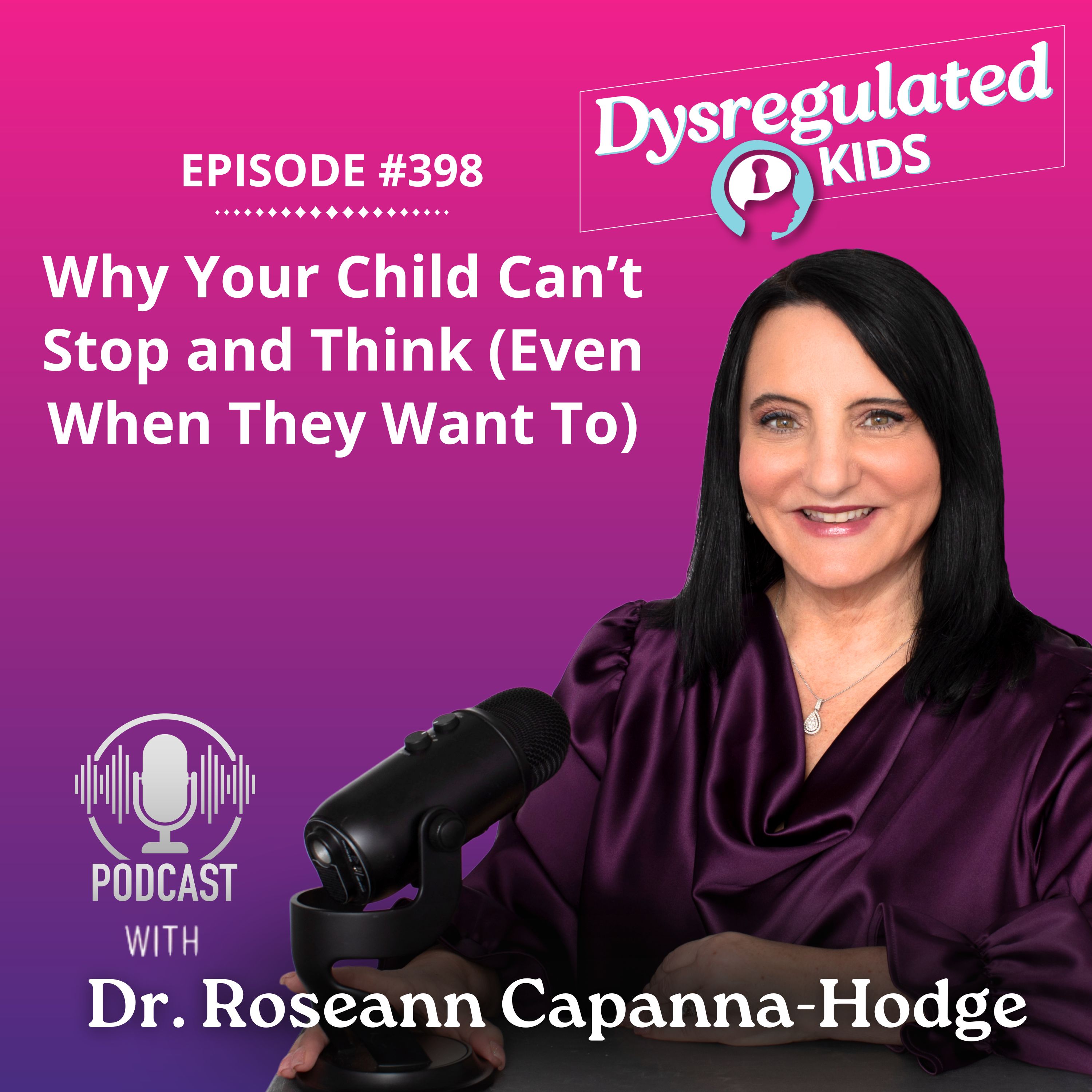
Why Your Child Can’t Stop and Think (Even When They Want To) l Nervous System Strategies l E398
from Dysregulated Kids: Science-Backed Parenting Help for Behavior, Anxiety, ADHD and More
Wondering why your child can’t stop and think even when they want to? It’s not defiance—it’s a dysregulated brain under stress. Dr. Roseann Capanna-Hodge, expert in Regulation First Parenting™, helps parents understand emotional dysregulation and build real self-control through brain-based solutions.If you’re asking why your child can’t stop and think even when they want to, you’re not alone. Those big, fast reactions aren’t defiance—they’re signs of a dysregulated brain that’s overwhelmed and struggling to pause.In this episode, you’ll uncover what’s really happening beneath your child’s behavior and learn simple, brain-based ways to build true impulse control—starting with regulation, not pressure.Why can’t my child stop and think even when they want to?You see the promise. “I won’t do it again.” And then… it happens again. That’s because impulse control isn’t just a skill—it’s state dependent—and closely tied to your child’s mental health and how their brain develops over time.When your child is feeling stressed, their thinking brain goes offline. The survival brain takes over, and reaction speeds up. In that moment, your child is unable to pause—even if they want to—no matter how much explaining or child talking happens.It’s not bad behavior—it’s a dysregulated brainStress blocks access to controlImpulse control grows in safety, not pressureReal-Life Example: A child hits their sibling, then runs off crying. You see the behavior—but underneath is a nervous system in distress as the child develops regulation skills.Is my child’s impulsive behavior a sign of anxiety or something else?Sometimes, yes. Impulsive behavior can be linked to anxiety, ADHD, or even generalized anxiety disorder, but it’s not always about a diagnosis.Many kids live in a chronically stressed state, especially in today’s fast-paced world. That stress shows up as:Emotional outburstsTrouble focusing in schoolA hard time making friends or forming friendshipsDifficulty managing feelings in daily lifeBehavior is communication. When kids act out, they’re showing us their brain is overwhelmed.You don’t have to figure this out alone.Become a Dysregulation Insider VIP and get your FREE Regulation Rescue Kit: How to Stay Calm When Your Child Pushes Your Buttons and Stop Oppositional Behaviors.Head to www.drroseann.com/newsletter and start your calm parenting journey today.What’s the difference between a “flooded” brain and an “underpowered” brain?Not all impulsive kids look the same. There are two main patterns:1. The Flooded Brain (Overstimulated)Big reactions, anger, emotional outburstsFast, explosive responsesFeels like a “Ferrari without brakes”2. The Underpowered Brain (Understimulated)Zoning out, avoidance, risk-seekingStruggles to focus or engageLooks calm—but lacks internal driveBoth types struggle with pausing and thinking in the moment.That’s why guessing doesn’t work. Understanding your child’s brain state changes everything.Why do consequences, yelling, or stricter rules make things worse?It feels logical—more discipline should fix the problem, right?But here’s the truth: pressure increases stress, and stress reduces control.When you yell or add consequences:Cortisol (stress hormone) risesExecutive functioning dropsYour child becomes more reactiveYou’re not building discipline—you’re reinforcing survival mode.Instead, ask: “What state is my child’s nervous system in?”That shift changes everything.In the middle of these tough moments, tools matter. Quick CALM gives you fast, practical strategies to regulate your child in real time.How can I help my child build real impulse control?Let’s calm the brain first. Everything follows from there.Your child needs regulation before expectation. That’s how coping skills develop.Start with:Co-regulation: Stay calm so your child can borrow your calmSafety cues: Gentle tone, connection, predictable routinesSimple strategies: Taking deep breaths, pausing together, reducing overwhelmPlay and downtime: Critical for brain development, especially at an early ageInstead of “Stop and think!”, try: “I see this is hard. Let’s take a breath together.”That’s how you teach, not force, self-control.🗣️ “If your child could stop, they would.” — Dr. RoseannTakeaway & What’s NextWhen your child struggles to stop and think, it’s not defiance—it’s dysregulation. Most kids aren’t choosing this—they’re overwhelmed. When you shift from control to connection, you help your child build real skills.If you want deeper support, the Regulated Child Summit walks you through how to build lasting brain regulation step by step, and The Dysregulated Kid gives you clear, practical tools to calm the brain and reduce big reactions at home.It’s gonna be OK. Start with the brain.FAQsWhy does my child act before thinking?Because stress shuts down the thinking brain. In that moment, your child’s brain is in survival mode, not problem-solving mode.Is impulsive behavior always ADHD?No. It can also be linked to anxiety, stress, or developmental factors. Many kids need regulation—not just a label.Can my child learn self-control?Yes—but only when calm. Kids learn control through safety, connection, and practice—not punishment.How do I help my child during emotional outbursts?Stay calm, reduce stimulation, and offer support. Co-regulation helps your child return to a regulated state faster.Every child’s journey is different. That’s why cookie-cutter solutions don’t work.Take the free Solution Matcher Quiz and get a customized path to support your child’s emotional and behavioral needs—no guessing, no fluff.Start today at www.drroseann.com/help
Embed this episode
NOW PLAYING
Why Your Child Can’t Stop and Think (Even When They Want To) l Nervous System Strategies l E398
No transcript for this episode yet
Similar Episodes
No similar episodes found.
Similar Podcasts
No similar podcasts found.