
EPISODE · Jun 18, 2026 · 22 MIN
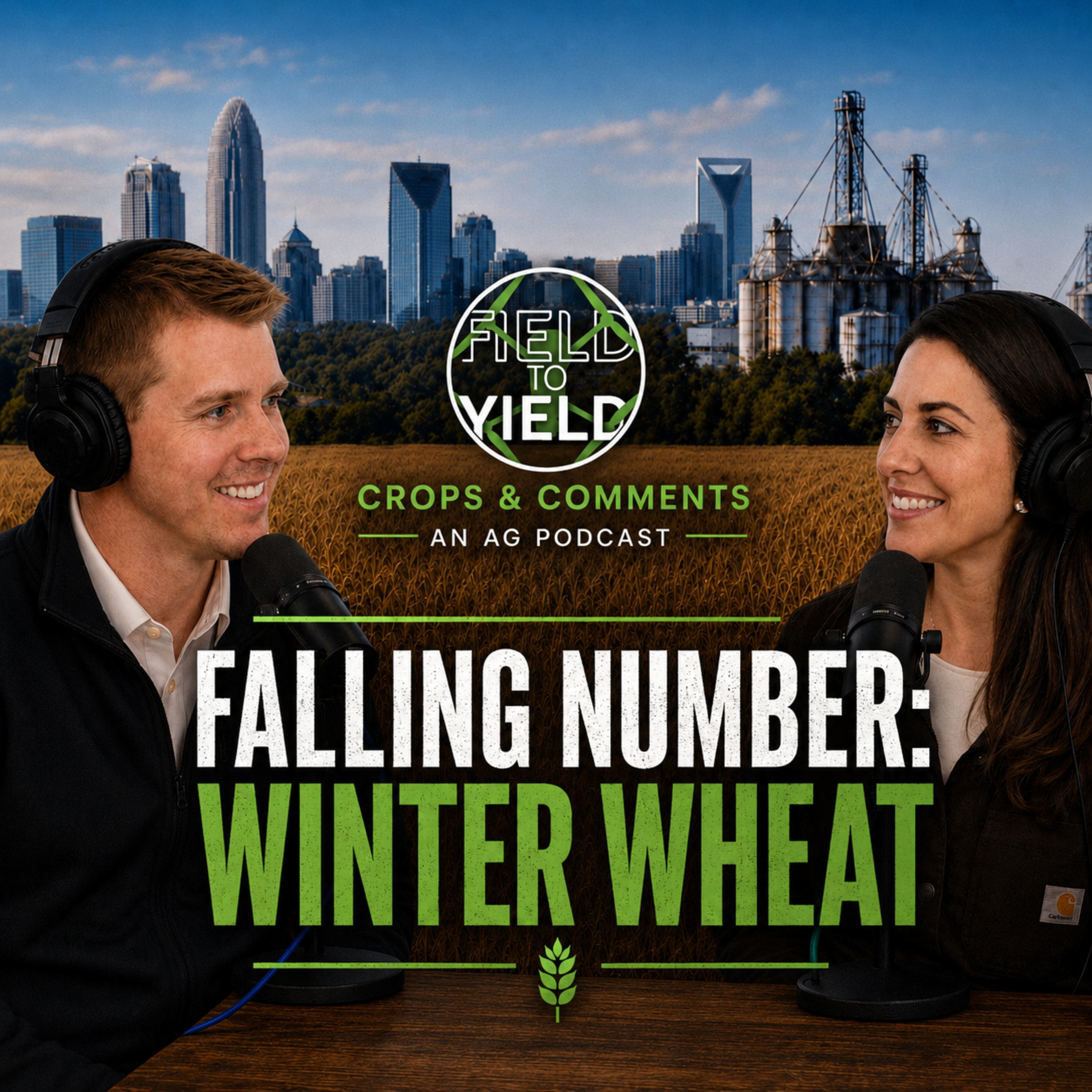
Winter Wheat: Falling Number
from Field To Yield: Crops & Comments · host Geoff Reeves
What is Falling Number? Falling number is a physical test (the Hagberg-Perten test) that measures alpha-amylase activity in your wheat. In the lab, ground grain and water are mixed into a slurry, and a machine measures the exact time in seconds it takes for a plunger to fall through the mixture. If the wheat has sprout damage, the alpha-amylase enzyme thins out the slurry, causing the plunger to fall faster and resulting in a lower falling number. Environment Outweighs Genetics: When it comes to falling numbers, the weather conditions at your specific farm matter far more than the variety of seed you plant. Rain after maturity and temperature fluctuations dictate FN to the point that a single wheat variety can swing more than 140 seconds between two different locations during the exact same crop year. The SY Viper Question: The data shows SY Viper isn't necessarily a silver bullet for high falling numbers — it tested right in the middle of the pack for FN performance. However, it does possess a few favorable traits, specifically an awnless (beardless) head type that can help the plant shed water and dry out, which modestly reduces the risk of pre-harvest sprouting. Testing is Outdated — Test Your Own: Official variety testing for falling numbers is extremely limited; the most comprehensive regional data we have comes from a 2018–2019 NC State study. Because multi-year public data isn't currently available, the best strategy is to do your own testing. You can submit your farm's wheat samples for free through the NC Cooperative Extension to be tested at NC State's new Grain Quality Lab.
Embed this episode
Ready to play
Winter Wheat: Falling Number
No transcript for this episode yet
Similar Episodes
No similar episodes found.
Similar Podcasts
No similar podcasts found.