With white helmets and GoPros, these volunteers risk it all in Syria’s civil war episode artwork

EPISODE · Oct 4, 2024 · 1H 4M

With white helmets and GoPros, these volunteers risk it all in Syria’s civil war

from Berkeley Talks

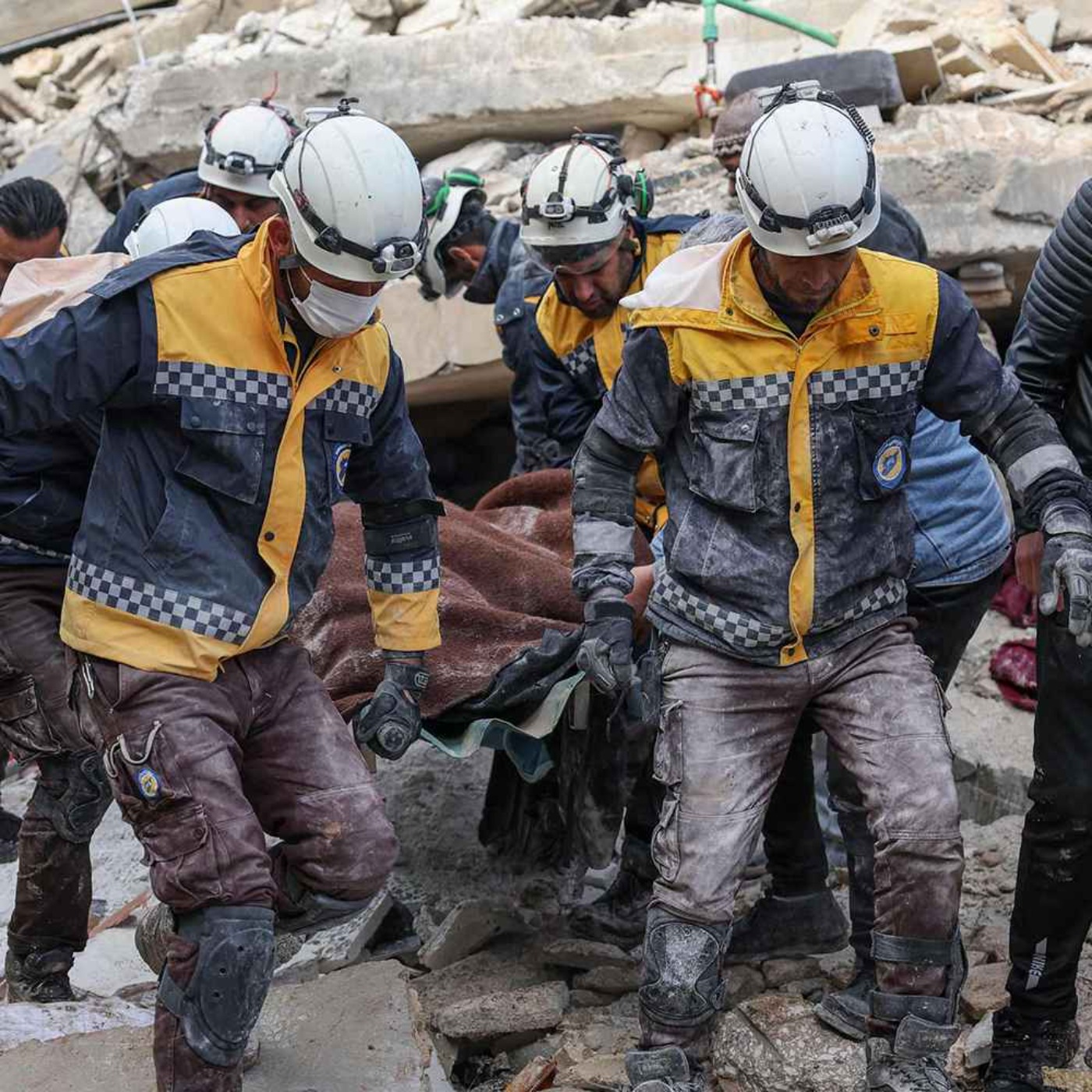
In 2011, mass protests erupted in Syria against the four-decade authoritarian rule of the Assad family. The uprising, which became part of the larger pro-democracy Arab Spring that spread through much of the Arab world, was met with a brutal government crackdown. Soon after, the country descended into a devastating civil war that has killed hundreds of thousands of Syrian civilians and displaced over 13 million people, more than half of the country’s prewar population. When the civil war broke out, groups of volunteers formed to provide emergency response to communities across Syria. In 2014, those volunteers voted to form the Syria Civil Defence, a national humanitarian organization widely known as the White Helmets. Since then, the group has expanded to become a nearly 3,000-strong network that has saved more than 128,000 lives in Syria.In their daring and life-threatening work, the White Helmets provide critical emergency services, including medical care, ambulances and search-and-rescue operations. They also document military attacks and coordinate with NGOs in pursuit of justice and accountability for the Syrian people. In Berkeley Talks episode 210, we hear from the director of the White Helmets, Raed al-Saleh, and from Farouq Habib, a founding member of the organization who serves as their deputy general manager for external affairs. They were part of a panel discussion hosted by Berkeley Law’s Human Rights Center on Sept. 19, 2024.“For us, as Syrian people, the most strategic and important work is on justice and accountability, our human rights work,” said al-Saleh, whose remarks were translated by Habib during the event. The group has become instrumental in exposing human rights violations and atrocities during the war. After they used GoPro cameras to record a double-tap strike in 2015 — when two strikes are launched in quick succession, often targeting civilians or first responders — the White Helmets recognized that the videos could be used to document these war crimes.  “We realized that the footage … is not only important for media awareness and quality assurance, but it’s even more important to document the atrocities and the violations of international human rights law and how to use that in the future to pursue accountability.”When asked later in the discussion how the White Helmets envision the future of Syria, al-Saleh replied that they want to see “a peaceful Syria, where people can live with dignity and respect to human rights and support human rights everywhere.”Habib and al-Saleh were joined on the panel by Andrea Richardson, a senior legal researcher for investigations at Berkeley Law’s Human Rights Center, and emergency physician and medical adviser Rohini Haar, a Berkeley Law lecturer and a research fellow at the Human Rights Center. The discussion was moderated by Andrea Richardson, executive director of the Human Rights Center. Learn more about Berkeley Law’s Human Rights Center.Read the transcript and listen to the episode on UC Berkeley News (news.berkeley.edu/podcasts).Music by Blue Dot Sessions.Photo courtesy of the White Helmets. Hosted on Acast. See acast.com/privacy for more information.

In 2011, mass protests erupted in Syria against the four-decade authoritarian rule of the Assad family. The uprising, which became part of the larger pro-democracy Arab Spring that spread through much of the Arab world, was met with a brutal government crackdown. Soon after, the country descended into a devastating civil war that has killed hundreds of thousands of Syrian civilians and displaced over 13 million people, more than half of the country’s prewar population. When the civil war broke out, groups of volunteers formed to provide emergency response to communities across Syria. In 2014, those volunteers voted to form the Syria Civil Defence, a national humanitarian organization widely known as the White Helmets. Since then, the group has expanded to become a nearly 3,000-strong network that has saved more than 128,000 lives in Syria.In their daring and life-threatening work, the White Helmets provide critical emergency services, including medical care, ambulances and search-and-rescue operations. They also document military attacks and coordinate with NGOs in pursuit of justice and accountability for the Syrian people. In Berkeley Talks episode 210, we hear from the director of the White Helmets, Raed al-Saleh, and from Farouq Habib, a founding member of the organization who serves as their deputy general manager for external affairs. They were part of a panel discussion hosted by Berkeley Law’s Human Rights Center on Sept. 19, 2024.“For us, as Syrian people, the most strategic and important work is on justice and accountability, our human rights work,” said al-Saleh, whose remarks were translated by Habib during the event. The group has become instrumental in exposing human rights violations and atrocities during the war. After they used GoPro cameras to record a double-tap strike in 2015 — when two strikes are launched in quick succession, often targeting civilians or first responders — the White Helmets recognized that the videos could be used to document these war crimes.  “We realized that the footage … is not only important for media awareness and quality assurance, but it’s even more important to document the atrocities and the violations of international human rights law and how to use that in the future to pursue accountability.”When asked later in the discussion how the White Helmets envision the future of Syria, al-Saleh replied that they want to see “a peaceful Syria, where people can live with dignity and respect to human rights and support human rights everywhere.”Habib and al-Saleh were joined on the panel by Andrea Richardson, a senior legal researcher for investigations at Berkeley Law’s Human Rights Center, and emergency physician and medical adviser Rohini Haar, a Berkeley Law lecturer and a research fellow at the Human Rights Center. The discussion was moderated by Andrea Richardson, executive director of the Human Rights Center. Learn more about Berkeley Law’s Human Rights Center.Read the transcript and listen to the episode on UC Berkeley News (news.berkeley.edu/podcasts).Music by Blue Dot Sessions.Photo courtesy of the White Helmets. Hosted on Acast. See acast.com/privacy for more information.

NOW PLAYING

With white helmets and GoPros, these volunteers risk it all in Syria’s civil war

0:00 1:04:21

No transcript for this episode yet

We transcribe on demand. Request one and we'll notify you when it's ready — usually under 10 minutes.

Carnivores Don't Get Sunburn - Carnivore Diet Talks Carnivores Don't Get Sunburn - Carnivore Diet Talks Welcome to “Carnivores Don’t Get Sunburn,” where we have fun and explore the carnivore diet and its transformative power. Join us as we uncover real stories from individuals who have thrived on this diet, defying convention and embracing optimal health. Plus, stay tuned for our upcoming documentary featuring diverse carnivores overcoming health challenges. Learn more at www.carnivoredietdocumentary.com.Excitingly, we’re working on an upcoming documentary where we’ll feature carnivores from various walks of life, conquering diverse health challenges. Join us on this journey and learn more at www.carnivoredietdocumentary.com.Join us in uncovering the power of the carnivore diet. Prepare to be inspired, informed, and empowered to embrace optimal health and well-being.Welcome to “Carnivores Don’t Get Sunburn: Unveiling Real Stories of the Carnivore Diet.” Stay tuned for our upcoming documentary. Discover how this lifestyle can transform lives. Learn more at www.carnivoredietdocumentary.com IT IS WHAT IT IS with SHALLZ - SHALLY ZOMORODI Shally Zomorodi What?  "It is what it is" with ShallZ – Shally ZomorodiWhen? WeeklyHow long? 35 minutesEvery week, Mother of 4, wife, morning TV news anchor and ultimate hostess, Shally Zomorodi talks about life - its up's and downs and how to stay on track in her weekly podcast, ‘It is what it is.’  Known for her high energy, infectious smile and ability to see the cup as half full Shally talks about all things in life and how to work through its challenges. From parenting, marriage, friendships, current events to how to smile when it just seems impossible ‘It is what it is’ is the perfect podcast to help inspire you to dance through the rain. Tracking Nuclear Weapons Programs Center for Strategic and International Studies The CSIS Proliferation Prevention Program talks to experts about transparency and nuclear weapons. Cover Stories with Chess Life US Chess Chess Life Editor John Hartmann talks to the authors of each month's Chess Life cover story.

Frequently Asked Questions

How long is this episode of Berkeley Talks?

This episode is 1 hour and 4 minutes long.

When was this Berkeley Talks episode published?

This episode was published on October 4, 2024.

What is this episode about?

In 2011, mass protests erupted in Syria against the four-decade authoritarian rule of the Assad family. The uprising, which became part of the larger pro-democracy Arab Spring that spread through much of the Arab world, was met with a brutal...

Can I download this Berkeley Talks episode?

Yes, you can download this episode by clicking the download button on the episode player, or subscribe to the podcast in your preferred podcast app for automatic downloads.
URL copied to clipboard!