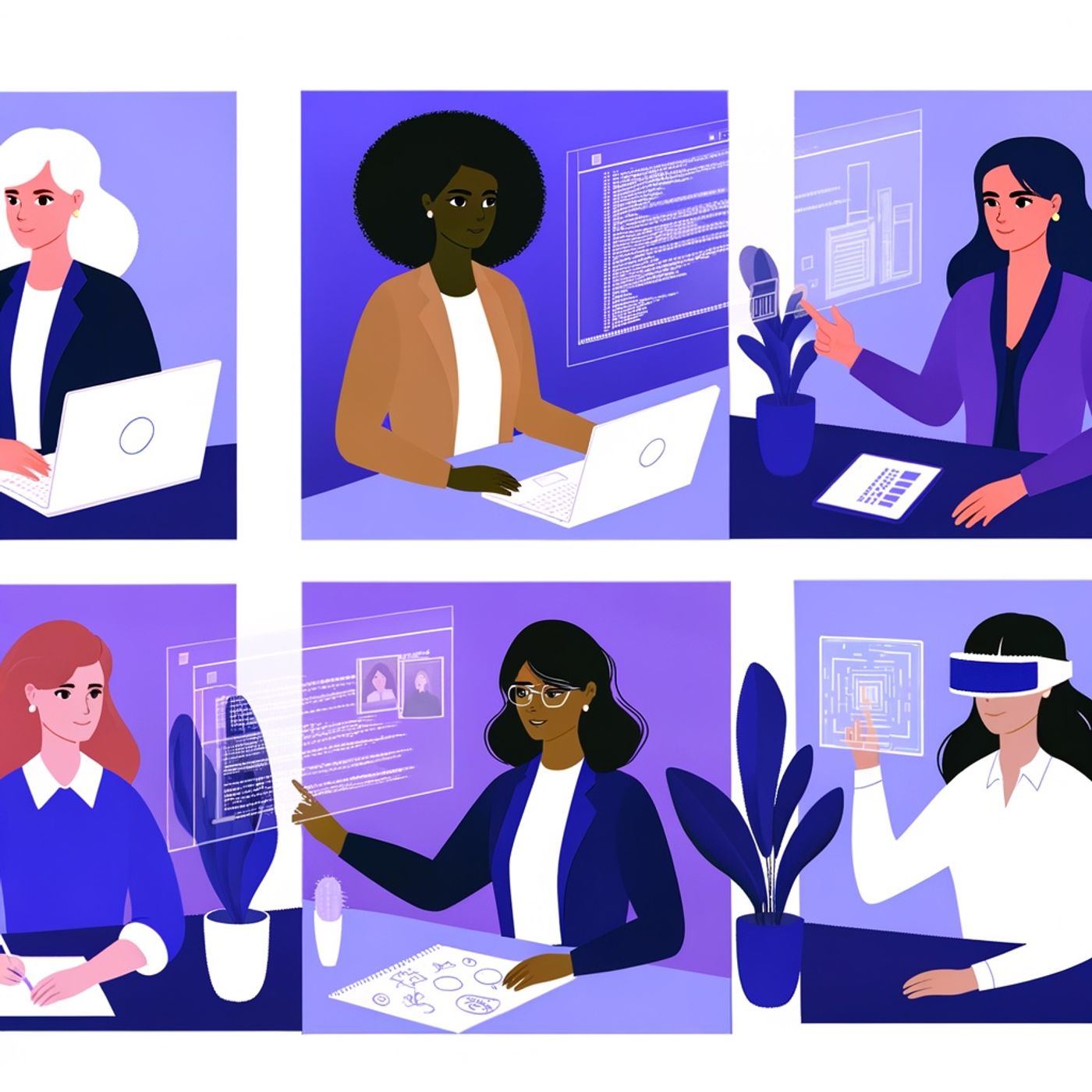
Women in Tech: From Surviving Layoffs to Architecting the Future Economy episode artwork

EPISODE · Jun 22, 2026 · 4 MIN

Women in Tech: From Surviving Layoffs to Architecting the Future Economy

from Women in Business · host Inception Point AI

This is your Women in Business: Generate 5 discussion points for a podcast episode about women navigating the current economic landscape, focusing on the tech industry. podcast. Welcome back to Women in Business. I’m your host, and today we’re diving straight into how women are navigating the current economic landscape in the tech industry. Let’s start with the big picture. The World Economic Forum reports that women still make up less than a third of the tech workforce globally, yet roles in AI, cybersecurity, and data science are among the fastest growing and highest paid. That means this tough economic moment, with layoffs and budget cuts, is also a window where women can step into the roles shaping the future, not just reacting to it. First discussion point: resilience in the era of tech layoffs. We’ve seen headlines about companies like Meta, Amazon, and Google cutting jobs, and women—especially women of color—are often hit hardest because they are overrepresented in roles viewed as “non-core,” like operations or support functions. At the same time, McKinsey research shows that women leaders are more likely to champion employee well‑being and DEI, which are critical to long-term performance. So the question for us is: how do we pivot into roles that are seen as central to revenue and innovation, like product, engineering, and data, and make our value impossible to ignore? Second discussion point: skills, not job titles, as the new currency. LinkedIn and Burning Glass Institute data both highlight that skills in cloud computing, AI and machine learning, cybersecurity, and product management continue to command strong demand and pay, even in a shaky economy. For women in tech, that means reskilling and upskilling are economic power moves. Think of a marketing manager who learns SQL and product analytics, or a project manager who trains in agile delivery and cloud platforms like Amazon Web Services or Microsoft Azure. In a skills-based hiring world, those shifts change your earning potential dramatically. Third discussion point: funding and entrepreneurship in a tight money cycle. PitchBook data shows that women-founded startups still receive only a single-digit percentage of venture capital dollars, and in downturns that share often shrinks even more. Yet we’re also seeing women founders building profitable, lean tech companies in fintech, health tech, and climate tech by focusing on revenue earlier and using alternative funding sources like revenue-based financing, angel syndicates, or crowdfunding platforms. The economic landscape might be tougher, but it’s also pressuring the industry to value sustainable, customer-focused businesses—an area where many women excel. Fourth discussion point: remote and hybrid work as a lever of power, not just flexibility. Companies like Salesforce, Microsoft, and Atlassian have embraced hybrid models, which can be a lifeline for caregivers, who are disproportionately women. But hybrid work can also make women less visible for promotions if they’re not intentional. The challenge is to use flexibility strategically: overcommunicating impact, leading cross-functional projects, and building networks across time zones so that your contributions are seen, not hidden behind a screen. Fifth discussion point: networks, mentorship, and sponsors as economic armor. Organizations like Girls Who Code, Women Who Code, AnitaB.org with the Grace Hopper Celebration, and Black Girls Code are more than communities; they’re economic infrastructure. They help women access job leads, speaking opportunities, board roles, and insider information on which teams are growing or shrinking. In an uncertain economy, the women who are most connected are often the ones who land on their feet fastest and climb the highest. As you listen, I want you to see yourself not as someone trying to survive this economic moment, but as someone shaping what comes next in tech. Your skills, your perspective, your leadership style—they’re not just welcome in this industry, they’re needed. Thank you for tuning in to Women in Business. Make sure you subscribe so you don’t miss the next episode. This has been a quiet please production, for more check out quiet please dot ai. For more http://www.quietplease.ai Get the best deals https://amzn.to/3ODvOta

This is your Women in Business: Generate 5 discussion points for a podcast episode about women navigating the current economic landscape, focusing on the tech industry. podcast. Welcome back to Women in Business. I’m your host, and today we’re diving straight into how women are navigating the current economic landscape in the tech industry. Let’s start with the big picture. The World Economic Forum reports that women still make up less than a third of the tech workforce globally, yet roles in AI, cybersecurity, and data science are among the fastest growing and highest paid. That means this tough economic moment, with layoffs and budget cuts, is also a window where women can step into the roles shaping the future, not just reacting to it. First discussion point: resilience in the era of tech layoffs. We’ve seen headlines about companies like Meta, Amazon, and Google cutting jobs, and women—especially women of color—are often hit hardest because they are overrepresented in roles viewed as “non-core,” like operations or support functions. At the same time, McKinsey research shows that women leaders are more likely to champion employee well‑being and DEI, which are critical to long-term performance. So the question for us is: how do we pivot into roles that are seen as central to revenue and innovation, like product, engineering, and data, and make our value impossible to ignore? Second discussion point: skills, not job titles, as the new currency. LinkedIn and Burning Glass Institute data both highlight that skills in cloud computing, AI and machine learning, cybersecurity, and product management continue to command strong demand and pay, even in a shaky economy. For women in tech, that means reskilling and upskilling are economic power moves. Think of a marketing manager who learns SQL and product analytics, or a project manager who trains in agile delivery and cloud platforms like Amazon Web Services or Microsoft Azure. In a skills-based hiring world, those shifts change your earning potential dramatically. Third discussion point: funding and entrepreneurship in a tight money cycle. PitchBook data shows that women-founded startups still receive only a single-digit percentage of venture capital dollars, and in downturns that share often shrinks even more. Yet we’re also seeing women founders building profitable, lean tech companies in fintech, health tech, and climate tech by focusing on revenue earlier and using alternative funding sources like revenue-based financing, angel syndicates, or crowdfunding platforms. The economic landscape might be tougher, but it’s also pressuring the industry to value sustainable, customer-focused businesses—an area where many women excel. Fourth discussion point: remote and hybrid work as a lever of power, not just flexibility. Companies like Salesforce, Microsoft, and Atlassian have embraced hybrid models, which can be a lifeline for caregivers, who are disproportionately women. But hybrid work can also make women less visible for promotions if they’re not intentional. The challenge is to use flexibility strategically: overcommunicating impact, leading cross-functional projects, and building networks across time zones so that your contributions are seen, not hidden behind a screen. Fifth discussion point: networks, mentorship, and sponsors as economic armor. Organizations like Girls Who Code, Women Who Code, AnitaB.org with the Grace Hopper Celebration, and Black Girls Code are more than communities; they’re economic infrastructure. They help women access job leads, speaking opportunities, board roles, and insider information on which teams are growing or shrinking. In an uncertain economy, the women who are most connected are often the ones who land on their feet fastest and climb the highest. As you listen, I want you to see yourself not as someone trying to survive this economic moment, but as someone shaping what comes next in tech. Your skills, your perspective, your leadership style—they’re not just welcome in this industry, they’re needed. Thank you for tuning in to Women in Business. Make sure you subscribe so you don’t miss the next episode. This has been a quiet please production, for more check out quiet please dot ai. For more http://www.quietplease.ai Get the best deals https://amzn.to/3ODvOta

NOW PLAYING

Women in Tech: From Surviving Layoffs to Architecting the Future Economy

0:00 4:16

No transcript for this episode yet

We transcribe on demand. Request one and we'll notify you when it's ready — usually under 10 minutes.

MG Show MG Show The MG Show, hosted by Jeffrey Pedersen and Shannon Townsend, is a leading alternative media platform dedicated to uncovering the truth behind today’s most pressing political issues. Launched in 2019, the show has grown exponentially, offering unfiltered insights, comprehensive research, and real-time analysis. With a commitment to independent journalism and factual integrity, the MG Show empowers its audience with knowledge and encourages active participation in the political discourse. Eat to Live Jenna Fuhrman, Dr. Fuhrman Our health is our most precious gift and smart nutrition can change your life. Each month, join Dr. Fuhrman and his daughter, Jenna Fuhrman as they discuss important topics in the world of nutrition. Eat to Live will change the way you eat and think about food. French Your Way Jessica: Native French teacher founder of French Your Way Boost your French listening skills and test your comprehension with this one of a kind series of podcasts. Get the chance to listen to a real conversation between native speakers talking at normal speed AND customise your learning experience through carefully designed sets of questions (2 levels of difficulty) available for download at www.frenchvoicespodcast.com. All interviews also come with the transcript. French teacher Jessica interviews native speakers of French from around the world who share a bit of their life and passion. Where else would you meet in one same place a French yoga teacher based in Melbourne, a soap manufacturer from Provence, or a couple cycling around the world? The Small Business Startup School – Business Notes | Financial Literacy | Retail Psychology – For Professionals & Entrepreneurs The Small Business Startup School Inc. Starting or buying a small business? While personal circumstances may vary, business patterns remain timeless. On The Small Business Startup School, we explore strategies, insights, and practical solutions to help entrepreneurs confidently navigate their journey.Hosted by Ola Williams—a retail entrepreneur, fintech founder, and financial coach with over two decades of experience—this podcast marries financial awareness and retail psychology with optimism to deliver actionable takeaways.Join us to learn, grow, and connect as we uncover the keys to business success.Let’s continue to learn together and be encouraged to keep on connecting!

Frequently Asked Questions

How long is this episode of Women in Business?

This episode is 4 minutes long.

When was this Women in Business episode published?

This episode was published on June 22, 2026.

What is this episode about?

This is your Women in Business: Generate 5 discussion points for a podcast episode about women navigating the current economic landscape, focusing on the tech industry. podcast. Welcome back to Women in Business. I’m your host, and today we’re...

Can I download this Women in Business episode?

Yes, you can download this episode by clicking the download button on the episode player, or subscribe to the podcast in your preferred podcast app for automatic downloads.
URL copied to clipboard!