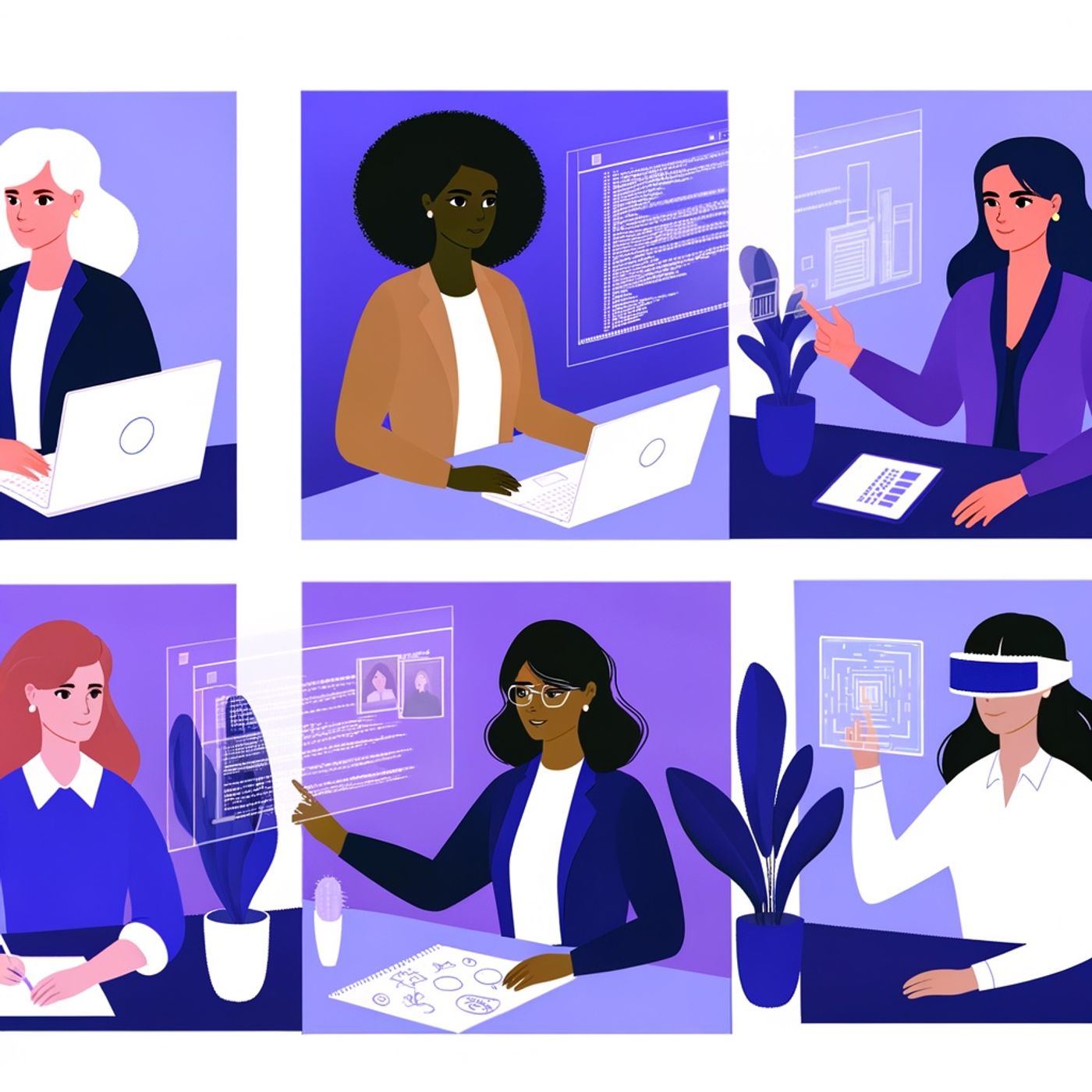
Women in Tech: Reading the Risk, Claiming the Revenue, and Building AI's Next Chapter episode artwork

EPISODE · Jan 9, 2026 · 4 MIN

Women in Tech: Reading the Risk, Claiming the Revenue, and Building AI's Next Chapter

from Women in Business · host Inception Point AI

This is your Women in Business podcast. Welcome back to Women in Business. Let’s get right to it. Right now, women make up only about a quarter to a third of the global tech workforce, even though women are roughly 42 percent of the overall labor force, according to Spacelift and WomenTech Network. That gap shapes everything about how we navigate this economic moment: who gets hired, who gets laid off, who gets funded, and who gets heard when decisions are made about AI, cloud, and cybersecurity. First, let’s talk about navigating instability. During the 2022 and 2023 tech layoffs, WomenTech Network reports that women were significantly more likely to be laid off than men, largely because they held fewer senior roles and were overrepresented in functions seen as “non-essential.” At the same time, McKinsey’s Women in the Workplace research shows companies scaling back their visible commitment to diversity just as volatility rises. For women in tech, that means learning to read the risk early: looking closely at senior sponsorship, promotion pathways, and who holds P&L responsibility in your company, then deliberately moving toward roles tied to core revenue and emerging technologies. That brings us to opportunity in the middle of disruption. Women in Tech UK points out that women are strongly represented in product management, UX and UI design, and accessibility roles that sit at the intersection of tech and the customer. And according to Women in Tech UK’s trends for 2026, new positions such as AI product manager, AI operations specialist, applied machine learning engineer, and AI ethics lead are exploding in demand. These are tailor‑made for women who combine technical skills with communication, systems thinking, and user empathy. Economic uncertainty actually amplifies the value of that blend. Next, we have to confront retention and burnout. StrongDM and Spacelift both highlight a brutal statistic: around half of women who enter tech leave by the age of 35, often citing toxic culture, limited advancement, or impossible work‑life balance. Women also report significantly higher burnout than men. For women navigating today’s landscape, that means treating culture as an economic factor, not a “soft” issue. Organizations like Women in Tech Global and WeAreTechWomen are working across continents to shift culture and policy, but on an individual level, it’s about choosing teams where leadership accountability, psychological safety, and flexible work are real, not just part of the employer brand. Fourth, let’s talk money and power: promotion and capital. StrongDM notes that women in tech are still paid less, and WomenTech Network reports that for every 100 men promoted to manager, only 87 women and just 82 women of color get the same step up. On the startup side, WomenTech Network data shows that only a tiny single‑digit percentage of venture capital flows to women‑led companies, even though multiple studies, including work cited by the UK govern This content was created in partnership and with the help of Artificial Intelligence AI.

This is your Women in Business podcast. Welcome back to Women in Business. Let’s get right to it. Right now, women make up only about a quarter to a third of the global tech workforce, even though women are roughly 42 percent of the overall labor force, according to Spacelift and WomenTech Network. That gap shapes everything about how we navigate this economic moment: who gets hired, who gets laid off, who gets funded, and who gets heard when decisions are made about AI, cloud, and cybersecurity. First, let’s talk about navigating instability. During the 2022 and 2023 tech layoffs, WomenTech Network reports that women were significantly more likely to be laid off than men, largely because they held fewer senior roles and were overrepresented in functions seen as “non-essential.” At the same time, McKinsey’s Women in the Workplace research shows companies scaling back their visible commitment to diversity just as volatility rises. For women in tech, that means learning to read the risk early: looking closely at senior sponsorship, promotion pathways, and who holds P&L responsibility in your company, then deliberately moving toward roles tied to core revenue and emerging technologies. That brings us to opportunity in the middle of disruption. Women in Tech UK points out that women are strongly represented in product management, UX and UI design, and accessibility roles that sit at the intersection of tech and the customer. And according to Women in Tech UK’s trends for 2026, new positions such as AI product manager, AI operations specialist, applied machine learning engineer, and AI ethics lead are exploding in demand. These are tailor‑made for women who combine technical skills with communication, systems thinking, and user empathy. Economic uncertainty actually amplifies the value of that blend. Next, we have to confront retention and burnout. StrongDM and Spacelift both highlight a brutal statistic: around half of women who enter tech leave by the age of 35, often citing toxic culture, limited advancement, or impossible work‑life balance. Women also report significantly higher burnout than men. For women navigating today’s landscape, that means treating culture as an economic factor, not a “soft” issue. Organizations like Women in Tech Global and WeAreTechWomen are working across continents to shift culture and policy, but on an individual level, it’s about choosing teams where leadership accountability, psychological safety, and flexible work are real, not just part of the employer brand. Fourth, let’s talk money and power: promotion and capital. StrongDM notes that women in tech are still paid less, and WomenTech Network reports that for every 100 men promoted to manager, only 87 women and just 82 women of color get the same step up. On the startup side, WomenTech Network data shows that only a tiny single‑digit percentage of venture capital flows to women‑led companies, even though multiple studies, including work cited by the UK govern This content was created in partnership and with the help of Artificial Intelligence AI.

NOW PLAYING

Women in Tech: Reading the Risk, Claiming the Revenue, and Building AI's Next Chapter

0:00 4:42

No transcript for this episode yet

We transcribe on demand. Request one and we'll notify you when it's ready — usually under 10 minutes.

MG Show MG Show The MG Show, hosted by Jeffrey Pedersen and Shannon Townsend, is a leading alternative media platform dedicated to uncovering the truth behind today’s most pressing political issues. Launched in 2019, the show has grown exponentially, offering unfiltered insights, comprehensive research, and real-time analysis. With a commitment to independent journalism and factual integrity, the MG Show empowers its audience with knowledge and encourages active participation in the political discourse. Eat to Live Jenna Fuhrman, Dr. Fuhrman Our health is our most precious gift and smart nutrition can change your life. Each month, join Dr. Fuhrman and his daughter, Jenna Fuhrman as they discuss important topics in the world of nutrition. Eat to Live will change the way you eat and think about food. French Your Way Jessica: Native French teacher founder of French Your Way Boost your French listening skills and test your comprehension with this one of a kind series of podcasts. Get the chance to listen to a real conversation between native speakers talking at normal speed AND customise your learning experience through carefully designed sets of questions (2 levels of difficulty) available for download at www.frenchvoicespodcast.com. All interviews also come with the transcript. French teacher Jessica interviews native speakers of French from around the world who share a bit of their life and passion. Where else would you meet in one same place a French yoga teacher based in Melbourne, a soap manufacturer from Provence, or a couple cycling around the world? The Small Business Startup School – Business Notes | Financial Literacy | Retail Psychology – For Professionals & Entrepreneurs The Small Business Startup School Inc. Starting or buying a small business? While personal circumstances may vary, business patterns remain timeless. On The Small Business Startup School, we explore strategies, insights, and practical solutions to help entrepreneurs confidently navigate their journey.Hosted by Ola Williams—a retail entrepreneur, fintech founder, and financial coach with over two decades of experience—this podcast marries financial awareness and retail psychology with optimism to deliver actionable takeaways.Join us to learn, grow, and connect as we uncover the keys to business success.Let’s continue to learn together and be encouraged to keep on connecting!

Frequently Asked Questions

How long is this episode of Women in Business?

This episode is 4 minutes long.

When was this Women in Business episode published?

This episode was published on January 9, 2026.

What is this episode about?

This is your Women in Business podcast. Welcome back to Women in Business. Let’s get right to it. Right now, women make up only about a quarter to a third of the global tech workforce, even though women are roughly 42 percent of the overall labor...

Can I download this Women in Business episode?

Yes, you can download this episode by clicking the download button on the episode player, or subscribe to the podcast in your preferred podcast app for automatic downloads.
URL copied to clipboard!