Women Who Should Have Won Nobel Prizes in the Sciences (2) episode artwork

EPISODE · May 8, 2023 · 5 MIN

Women Who Should Have Won Nobel Prizes in the Sciences (2)

from Infinite Women · host Infinite Women

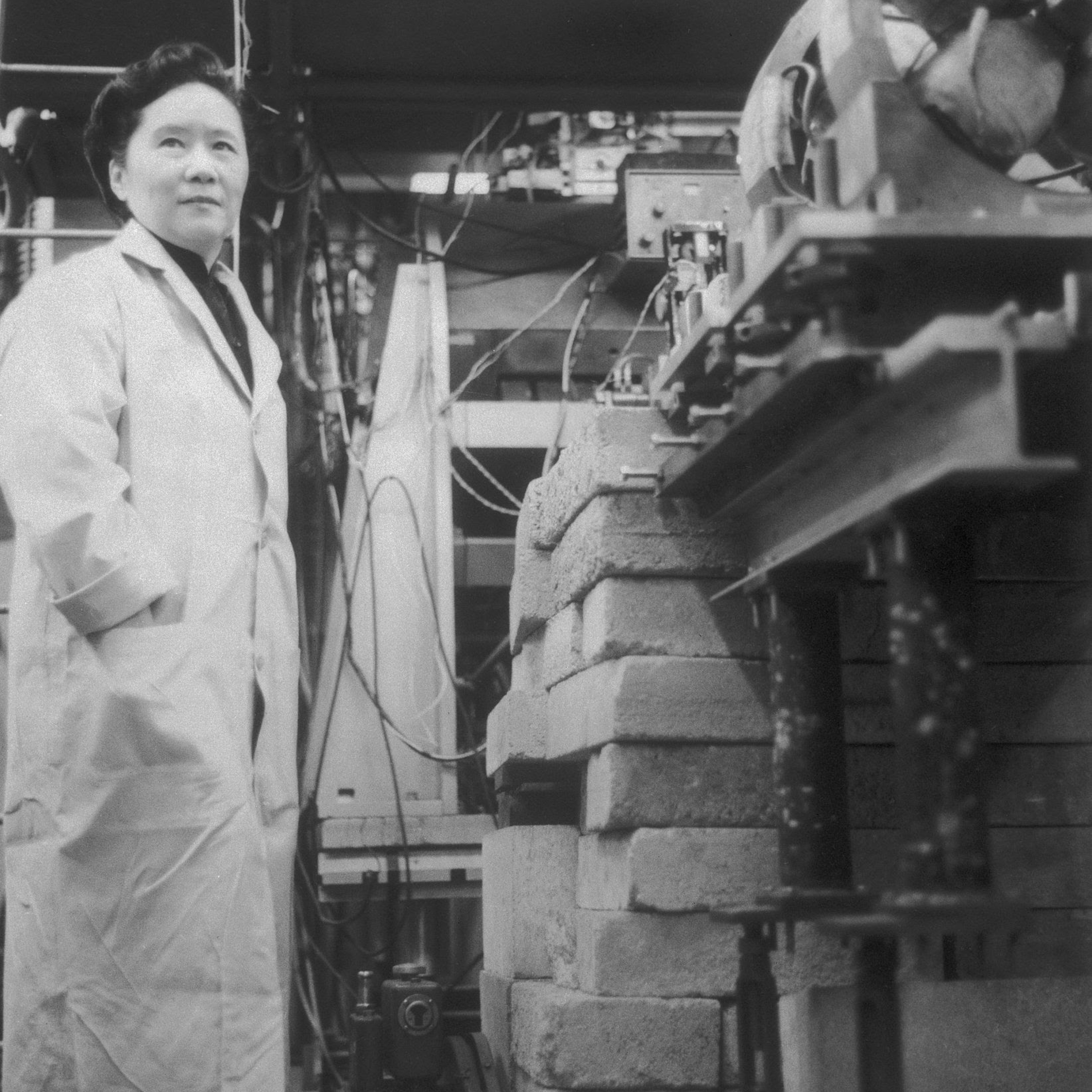
Microbiologist Esther Lederberg was a pioneer of bacterial genetics, but she experienced a common issue for women in the sciences - she worked with her husband, so everyone gave credit for her work to him. Including, in 1958, the Nobel committee, which awarded the prize for physiology or medicine to Joshua Lederberg and two other men they worked with. Lederberg’s accomplishments included discovering the Lambda bacterial virus and the bacterial fertility factor and creating a replica plating process that enabled biologists to reproduce bacterial colonies en masse. This enabled the Lederbergs to more effectively study mutations. Discovering the Lambda bacteriophage also led to her work in specialised transduction, where foreign DNA is introduced into a cell by a virus. Although Lederberg laid the groundwork for much of 20th century microbiology, she was never offered a tenured position at a university. Even modern textbooks often ignore her work and attribute her accomplishments to her husband. In fact, he likely held her back - she was a grad student when she discovered the F factor and Lambda, and Joshua, as her thesis advisor, stopped her from continuing her work on those discoveries. While we can’t say for sure exactly to what degree he reinforced or contradicted the perception of her as only his wife and assistant, when he wrote an autobiographical account of their discovery of genetic recombination in bacteria, he did not acknowledge her work. She also had to fight to stay employed at Stanford after divorcing him in 1968 - he was head of the genetics department. Physicist Chien-Shiung Wu never won a Nobel - but her male colleagues did, thanks to her work. In the 1950s, Wu set out to test a theory of Tsung-Dao Lee and Chen-Ning Yang, whether spinning, decaying particles have a preferred direction that they spin in. Wu experimented using Cobalt-60 in the presence of a strong magnetic field - the electrons produced by the radioactive decay of the cobalt showed a preferred direction. In science-y terms, she proved parity is not conserved. So even though the Nobel committee won’t give out awards for untested theories, they ignored the fact that Wu proved Lee and Yang’s theory and only recognised the men. Wu also worked on the Manhattan Project, where she helped develop the process for separating uranium into uranium-235 and uranium-238 isotopes through gaseous diffusion and later researched molecular changes in hemoglobin associated with sickle-cell anemia. Nettie Stevens discovered XY chromosomes at the same time as E.B. Wilson in 1905. The two scientists were working independently, but each was aware of the other’s work. However, when they published their respective results, Wilson was widely acclaimed as the sole discoverer. In retrospect, Stevens’ work appears to be higher quality. For example, Wilson claimed environmental factors affected sex, whereas Stevens believed it was only genetic. She was right. In fact, Wilson didn’t even bother studying eggs, examining only sperm because he claimed that eggs were too fatty for his staining procedure. After reading the papers describing Stevens' discoveries, Wilson reissued his original paper and in a footnote acknowledged Stevens for the finding of sex chromosomes. She also determined that Clarence Erwin McClung’s theory that the X chromosome determines sex was wrong, as sex is determined by the presence or absence of the small (Y) chromosome. Despite this, she was often excluded from speaking at meetings of experts where her own findings were being discussed. After her death, her own Ph.D. advisor belittled and misrepresented her contributions and even implicitly tried to take credit for her work by excluding her name while bragging about his own lab’s work in the field. Although she died only nine years after completing her PhD, Stevens published approximately 40 papers in her short career.

Microbiologist Esther Lederberg was a pioneer of bacterial genetics, but she experienced a common issue for women in the sciences - she worked with her husband, so everyone gave credit for her work to him. Including, in 1958, the Nobel committee, which awarded the prize for physiology or medicine to Joshua Lederberg and two other men they worked with. Lederberg’s accomplishments included discovering the Lambda bacterial virus and the bacterial fertility factor and creating a replica plating process that enabled biologists to reproduce bacterial colonies en masse. This enabled the Lederbergs to more effectively study mutations. Discovering the Lambda bacteriophage also led to her work in specialised transduction, where foreign DNA is introduced into a cell by a virus. Although Lederberg laid the groundwork for much of 20th century microbiology, she was never offered a tenured position at a university. Even modern textbooks often ignore her work and attribute her accomplishments to her husband. In fact, he likely held her back - she was a grad student when she discovered the F factor and Lambda, and Joshua, as her thesis advisor, stopped her from continuing her work on those discoveries. While we can’t say for sure exactly to what degree he reinforced or contradicted the perception of her as only his wife and assistant, when he wrote an autobiographical account of their discovery of genetic recombination in bacteria, he did not acknowledge her work. She also had to fight to stay employed at Stanford after divorcing him in 1968 - he was head of the genetics department. Physicist Chien-Shiung Wu never won a Nobel - but her male colleagues did, thanks to her work. In the 1950s, Wu set out to test a theory of Tsung-Dao Lee and Chen-Ning Yang, whether spinning, decaying particles have a preferred direction that they spin in. Wu experimented using Cobalt-60 in the presence of a strong magnetic field - the electrons produced by the radioactive decay of the cobalt showed a preferred direction. In science-y terms, she proved parity is not conserved. So even though the Nobel committee won’t give out awards for untested theories, they ignored the fact that Wu proved Lee and Yang’s theory and only recognised the men. Wu also worked on the Manhattan Project, where she helped develop the process for separating uranium into uranium-235 and uranium-238 isotopes through gaseous diffusion and later researched molecular changes in hemoglobin associated with sickle-cell anemia. Nettie Stevens discovered XY chromosomes at the same time as E.B. Wilson in 1905. The two scientists were working independently, but each was aware of the other’s work. However, when they published their respective results, Wilson was widely acclaimed as the sole discoverer. In retrospect, Stevens’ work appears to be higher quality. For example, Wilson claimed environmental factors affected sex, whereas Stevens believed it was only genetic. She was right. In fact, Wilson didn’t even bother studying eggs, examining only sperm because he claimed that eggs were too fatty for his staining procedure. After reading the papers describing Stevens' discoveries, Wilson reissued his original paper and in a footnote acknowledged Stevens for the finding of sex chromosomes. She also determined that Clarence Erwin McClung’s theory that the X chromosome determines sex was wrong, as sex is determined by the presence or absence of the small (Y) chromosome. Despite this, she was often excluded from speaking at meetings of experts where her own findings were being discussed. After her death, her own Ph.D. advisor belittled and misrepresented her contributions and even implicitly tried to take credit for her work by excluding her name while bragging about his own lab’s work in the field. Although she died only nine years after completing her PhD, Stevens published approximately 40 papers in her short career.

NOW PLAYING

Women Who Should Have Won Nobel Prizes in the Sciences (2)

0:00 5:28

No transcript for this episode yet

We transcribe on demand. Request one and we'll notify you when it's ready — usually under 10 minutes.

No similar episodes found.

2 Old Ladies Walking Rozee 2 Old Ladies Walking features the journeys, insights, and light conversation between Liz and Rosie, two women of a certain age who live in the Hudson Valley of New York. From pelvic floor challenges and life with young adult children to food, bird calls, fear of “mad lamb” disease, and myriad topics in between, we cover it all while walking on the scenic trails of the northeast, or wherever our travels take us. Join us and have a listen! The Hannah McGuire Podcast Hannah McGuire For women seeking encouragement on their mission of living a life of wild faith.www.hannahmcguire.com 🎙️Truth and Testimony the Broadcast Ray Gauthier & Adrian Scott This Podcast discusses and teaches the word of God. You will hear about world news and how it relates to bible prophecy. You will also hear interviews and testimonies from men and women of God who have devoted their lives to serving Yeshua (Jesus). Hosted by Ray Gauthier and Adrian Scott. These two long term broadcast colleagues have joined forces once again to provide you the highest quality in broadcast excellence, all for the glory of Yahweh: the God of all creation!You can see most of the podcasts uploaded here at our Youtube Channel.https://www.youtube.com/@truthandtestimonythebroadcast Thriving Woman Natasha Kredl Thriving Woman is the podcast where woman gather to come learn, grow & evolve. We love personal growth without "the work" or the perfectionism. Our pillars consists of being HEALTHY AF, CREATIVE & CONNECTIVE and FIERCE & FLEXIBLE. We discuss mental health, the pursuit of joy, emotional maturity, partnerships, womanhood, motherhood & postpartum, money & biz, self expression, nervous system & so much more. Postpartum Confessionals is also a series we have going on weekly to support women navigate their motherhood experience without shame or judgement.

Frequently Asked Questions

How long is this episode of Infinite Women?

This episode is 5 minutes long.

When was this Infinite Women episode published?

This episode was published on May 8, 2023.

What is this episode about?

Microbiologist Esther Lederberg was a pioneer of bacterial genetics, but she experienced a common issue for women in the sciences - she worked with her husband, so everyone gave credit for her work to him. Including, in 1958, the Nobel committee,...

Can I download this Infinite Women episode?

Yes, you can download this episode by clicking the download button on the episode player, or subscribe to the podcast in your preferred podcast app for automatic downloads.
URL copied to clipboard!