
EPISODE · Dec 4, 2025
Worcester Polytechnic Institute Builds on Three Decades of Cybersecurity Leadership with New Degree Tackling Global Skills Gap
from WPI News · host Colleen Wamback
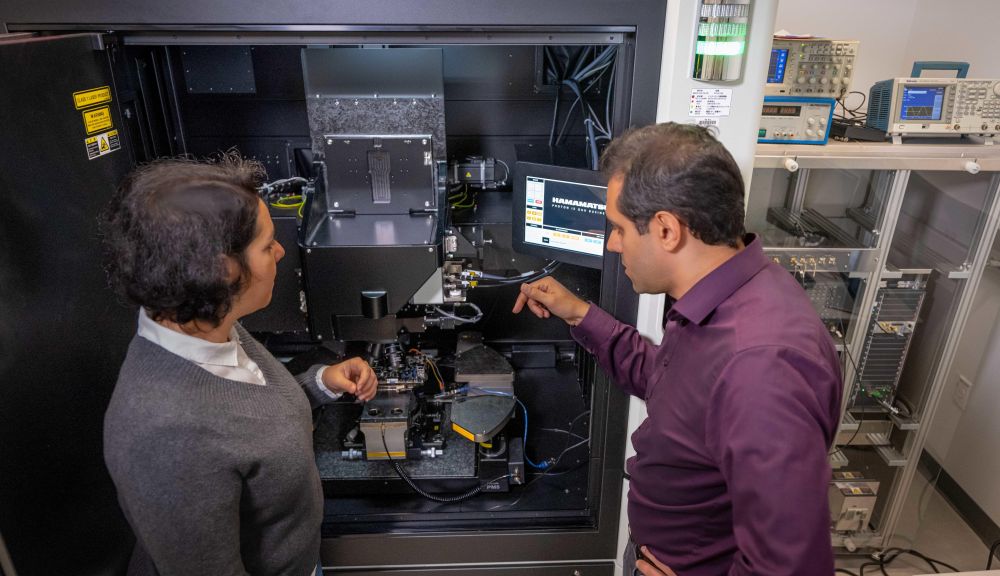
Worcester Polytechnic Institute (W.P.I.) has launched a new Bachelor of Science in Cybersecurity program to prepare students to design, analyze, and secure modern computing systems across industries. The new degree builds upon W.P.I.’s nationally recognized strengths in computer science (CS), electrical and computer engineering (ECE), and cybersecurity research. Its unique integration of C.S. and E.C.E. prepares students to understand and secure systems from the hardware circuits to the software that runs on them. Designated by the National Security Agency as a Center of Academic Excellence in Cyber Research, W.P.I. has been contributing to this vital field for nearly three decades, conducting cutting-edge research and training professionals who have shaped secure computing. Today, W.P.I. continues to advance cybersecurity research and education in hardware and software security, cryptography, analysis of security policies and protocols, network and embedded systems security, and online privacy. “With cyber threats evolving faster than most organizations can respond and targeting both software and hardware vulnerabilities, preparing a workforce of creative, ethical, and highly skilled cybersecurity professionals is essential,” said Grace Wang, President of W.P.I. “Through this new degree, W.P.I. continues to strengthen its leadership in cybersecurity education and research—advancing our mission to use science, engineering, and technology for the greater good.” According to a report cited by the National Institute of Standards and Technology, there were more than 514,000 open cybersecurity positions in the U.S. in 2023, with the Bureau of Labor Statistics projecting 35% job growth in the field—much faster than the national average. Globally today’s cybersecurity talent shortage is estimated at more than four million professionals. “The shortage of security experts is not merely an issue of headcount; it’s a critical mismatch in skills,” said Craig Shue, professor and head of the Department of Computer Science. “Organizations report significant gaps in the expertise needed to manage increasingly sophisticated threats, leaving businesses, governments, and institutions more vulnerable to data breaches, financial fraud, and other cyberattacks. This is detail-oriented work where security experts have to get everything right to successfully protect people.” The Bachelor of Science in Cybersecurity will prepare students for a range of professional roles, including security analysts, penetration testers, security architects, incident responders, malware analysts, cyber-risk analysts, and data privacy officers. The program integrates coursework from computer science, electrical and computer engineering, and mathematical sciences. Students will gain experience in both software and hardware security, network and cryptographic systems, organizational and societal security, and human factors in technology design. “Cybersecurity today demands architects, not just defenders. Our students will learn to design secure systems from first principles, anticipate emerging threats, and communicate complex ideas clearly,” said Robert Walls, associate professor of computer science and director of W.P.I.’s cybersecurity program. “These are essential skills for safeguarding the digital infrastructure our society depends on.” The new bachelor’s degree also builds on W.P.I.’s leading role in national workforce development initiatives to strengthen the nation’s cybersecurity and AI capacity. The university is one of a select group of academic institutions spearheading the DRiving Automotive Industry WorkForce Transformation (DRIFT) program, supported by a $2.5 million grant from the National Centers of Academic Excellence in Cybersecurity (N.C.A.E.-C). DRIFT focuses on upskilling professionals to secure connected vehicle systems and strengthen the cybersecurity and AI infrastructure of the U.S. automotive industry. In addition, W.P.I. is part of a coalition of universities, colleges, and cybersecurity organizations offering education through the Strengthen Workforce Education for Excellence in Programming Securely (SWEEPS) program—also funded by a $2.5 million N.C.A.E.-C grant—to train software developers nationwide in secure coding practices through online courses, bootcamps, and certificates. Further bolstering its leadership, W.P.I. is home to one of only two academics research microscopes in the U.S. dedicated to semiconductor cybersecurity—and the only one of its kind in New England. This specialized equipment, funded by the National Science Foundation, supports research into hardware-level vulnerabilities and defenses that are critical to national technology security. The Bachelor of Science in Cybersecurity will begin enrolling students in fall 2026.
Embed this episode
NOW PLAYING
Worcester Polytechnic Institute Builds on Three Decades of Cybersecurity Leadership with New Degree Tackling Global Skills Gap
No transcript for this episode yet
Similar Episodes
No similar episodes found.
Similar Podcasts
No similar podcasts found.