
EPISODE · Apr 4, 2019 · 2H 12M
WORLD ENERGY OUTLOOK 2018
from Friends of Europe podcasts · host Friends of Europe
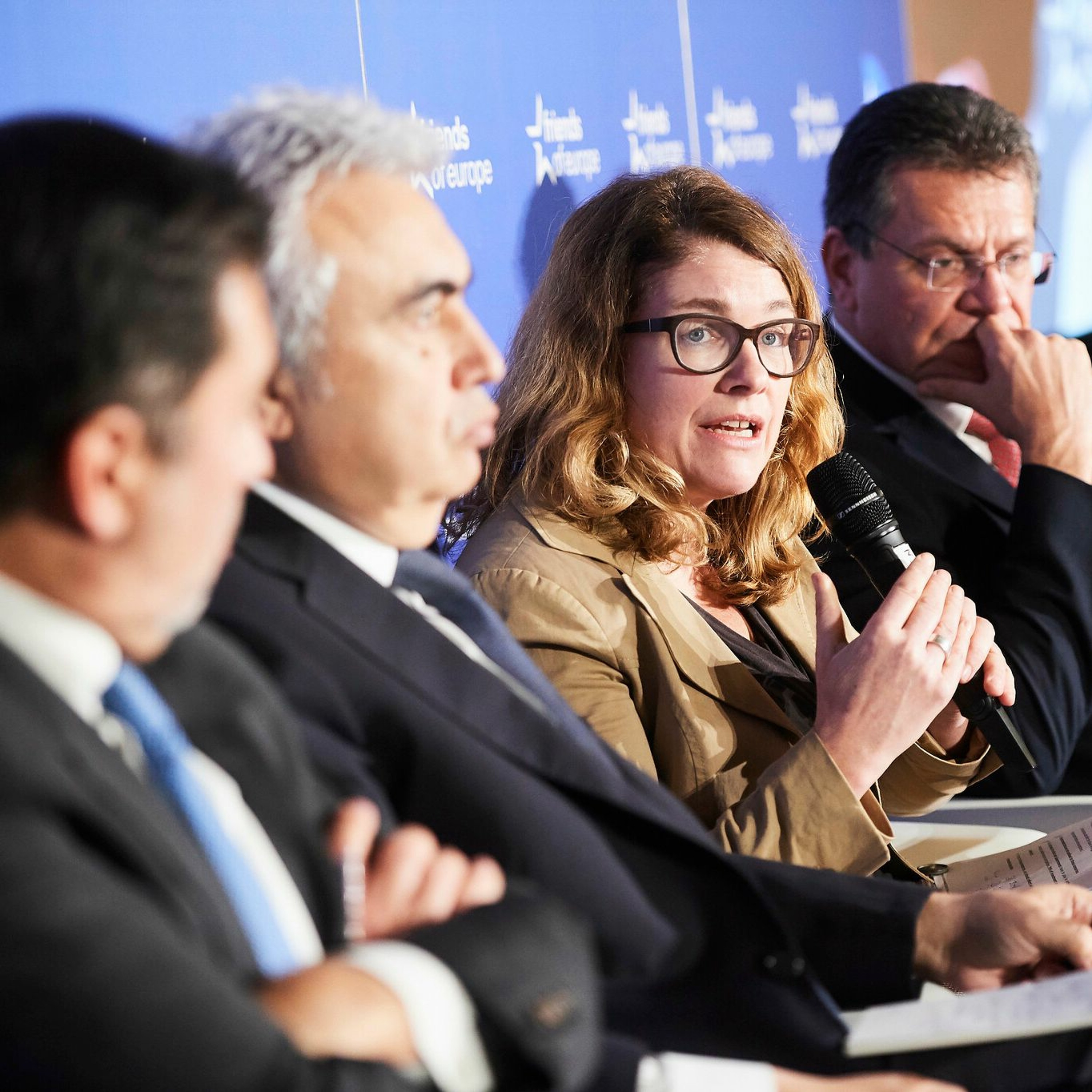
The world energy sector is experiencing major transformations. Energy markets and the climate crisis are important, but governments will drive energy decisions as most investments are government-driven, Fatih Birol, Executive Director of the International Energy Agency (IEA), said at the official 27 November launch of the World Energy Outlook 2018 report – regarded as the “gold standard in energy analysis”. “Our energy destiny rests with governments,” Birol told the Brussels conference hosted by leading think-tank Friends of Europe. Indeed, some $42.3 trillion is needed for energy supply to 2040. Over 70% of the $2 trillion required each year in energy supply investment either comes from “state-directed entities” or receives “a full or partial revenue guarantee”, he explained. The remaining 30% is driven by the market. The IEA World Energy Outlook reveals the latest energy trends and the implications of different pathways on global climate goals, energy security and geopolitics. “We chose electricity as the focus this year,” Birol said, highlighting that not only is electricity demand set to grow at twice the pace of total energy demand, its share in final consumption will increase towards one third by 2040. Maroš Šefčovič, European Commission Vice-President for the Energy Union, on the eve of presenting the Commission’s landmark “Clean Planet for All” decarbonisation strategy for 2050, agreed electrification, supported by better regional cooperation and greater flexibility, was important for the energy transition and to achieve Europe’s climate targets. The key was also to progress much faster in transport – where electricity – notably in the huge growth in electric cars and buses – again plays a central role. But while electrification has “huge potential”, it could not stop greenhouse gases emissions, that in 2018 reached a new “historic high”, the IEA chief said. With Birol calling for “much more effort in terms of lower carbon technologies,” the report concludes there is no single emissions solution: “Renewables, efficiency and a host of innovative technologies, including storage, CCUS and hydrogen, are all required.” This message was supported by Francesco Gattei, Executive Vice-President for Scenarios, Strategic Options and Investor Relations at global energy company Eni, and Olivier Grabette, Executive Vice-President at French Transmission System Operator (TSO) RTE. They both emphasized respectively, “there is no perfect energy source, each has its pros and cons” and “decentralisation is very important and we do not have to oppose decentralisation and building a strong Energy Union at European level through the development of interconnections, we need all of this." Imke Lübbleke, WWF Europe Climate and Energy Head of Unit concluded by saying “We are very much looking forward to the net-zero commitment from the European Commission which should provide a strong emphasis and strong guidance to leaders where investments have to go.”
What this episode covers
The world energy sector is experiencing major transformations. Energy markets and the climate crisis are important, but governments will drive energy decisions as most investments are government-driven, Fatih Birol, Executive Director of the International Energy Agency (IEA), said at the official 27 November launch of the World Energy Outlook 2018 report – regarded as the “gold standard in energy analysis”. “Our energy destiny rests with governments,” Birol told the Brussels conference hosted by leading think-tank Friends of Europe. Indeed, some $42.3 trillion is needed for energy supply to 2040. Over 70% of the $2 trillion required each year in energy supply investment either comes from “state-directed entities” or receives “a full or partial revenue guarantee”, he explained. The remaining 30% is driven by the market. The IEA World Energy Outlook reveals the latest energy trends and the implications of different pathways on global climate goals, energy security and geopolitics. “We chose electricity as the focus this year,” Birol said, highlighting that not only is electricity demand set to grow at twice the pace of total energy demand, its share in final consumption will increase towards one third by 2040. Maroš Šefčovič, European Commission Vice-President for the Energy Union, on the eve of presenting the Commission’s landmark “Clean Planet for All” decarbonisation strategy for 2050, agreed electrification, supported by better regional cooperation and greater flexibility, was important for the energy transition and to achieve Europe’s climate targets. The key was also to progress much faster in transport – where electricity – notably in the huge growth in electric cars and buses – again plays a central role. But while electrification has “huge potential”, it could not stop greenhouse gases emissions, that in 2018 reached a new “historic high”, the IEA chief said. With Birol calling for “much more effort in terms of lower carbon technologies,” the report concludes there is no single emissions solution: “Renewables, efficiency and a host of innovative technologies, including storage, CCUS and hydrogen, are all required.” This message was supported by Francesco Gattei, Executive Vice-President for Scenarios, Strategic Options and Investor Relations at global energy company Eni, and Olivier Grabette, Executive Vice-President at French Transmission System Operator (TSO) RTE. They both emphasized respectively, “there is no perfect energy source, each has its pros and cons” and “decentralisation is very important and we do not have to oppose decentralisation and building a strong Energy Union at European level through the development of interconnections, we need all of this." Imke Lübbleke, WWF Europe Climate and Energy Head of Unit concluded by saying “We are very much looking forward to the net-zero commitment from the European Commission which should provide a strong emphasis and strong guidance to leaders where investments have to go.”
NOW PLAYING
WORLD ENERGY OUTLOOK 2018
No transcript for this episode yet
Similar Episodes
Mar 26, 2026 ·1m
Mar 19, 2026 ·34m
Feb 18, 2026 ·11m
Feb 11, 2026 ·45m