
EPISODE · Aug 18, 2026 · 16 MIN
Wrapping Up: The Best Chinese Piano Works
from KLASSIKOM=Innovations in classical music · host Rudolph Tang
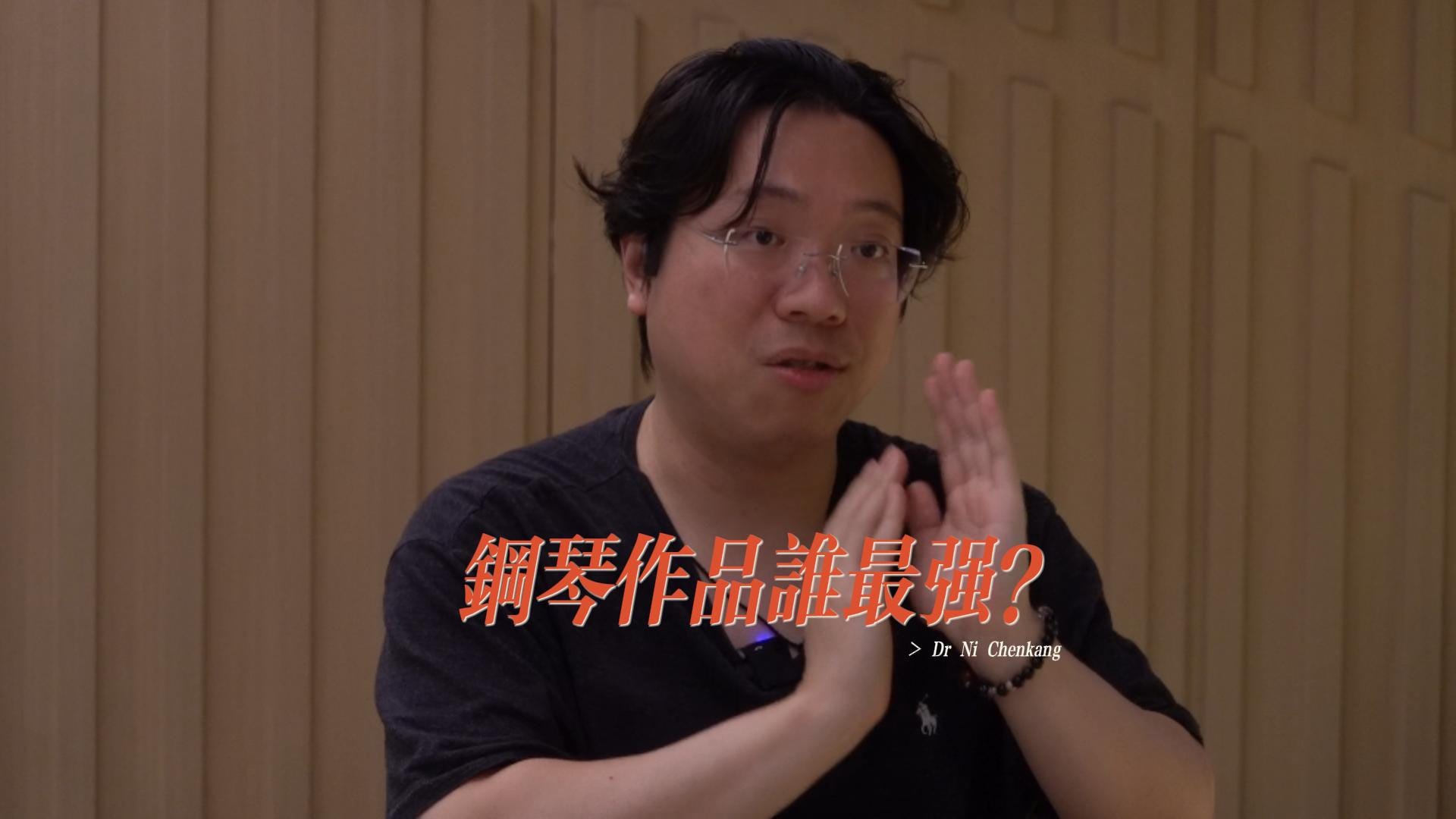
The third instalment of KLASSIKOM’s conversation with composer and postdoctoral researcher Ni Chenkang turns to two works that round out his shortlist of Chinese piano music capable of competing at the highest international level: Ye Xiaogang’s piano concerto Scent of Green Mango, and Ni’s own solo piece Night Fantasy.Ye Xiaogang’s Scent of Green Mango: Freshness as a Compositional PrincipleNi opens with a word that he returns to repeatedly when describing Ye Xiaogang’s music: fresh. Not fresh in the diminutive, decorative sense that the word sometimes carries in Chinese popular discourse, but fresh in a genuinely substantive musical sense. The quality is rooted in Ye’s approach to modulation. Working within pentatonic modes, Ye modulates with unusual speed, frequency and variety of colour, shifting between tonal centres in ways that are at once Chinese in material and wholly distinctive in character. Ni calls it pan-tonal, then adds that fresh and transcending the ordinary captures it more vividly for a general audience than any technical term could.Scent of Green Mango is a concerto, which places it in a different category from the solo works Ni recommended in the previous two sessions. A concerto means the final round, and Ni is direct about its fitness for that context. In scale, technical demand, expressive range and personal musical language, he considers it fully capable of standing alongside the standard final-round concertos, Liszt and the rest. The balance between piano and orchestra is, in his view, perfectly proportioned. The cadenza is present. Many of the textures share a recognisable kinship with Liszt and Chopin, but everything has been thoroughly absorbed into a Chinese and specifically Ye-esque idiom.The difficulty, Ni explains, lies precisely in that duality. A performer must command the Western harmonic transitions embedded in the work’s modulations while simultaneously inhabiting the Chinese modal sensibility that gives those modulations their particular colour and freshness. He describes the effect as watercolour: delicate, luminous, capable of extraordinary colour change. Getting that quality into the sound, rather than merely playing the notes correctly, is where the real challenge resides.A practical point follows. Both Ye Xiaogang and Zhang Zhao are published by Schott, which means their scores are commercially available outside China. For an international competitor or jury member, obtaining the music is straightforward.Ni Chenkang’s Night Fantasy: Silence, Eruption and the Sounds of ShanghaiWhen the conversation turns to younger composers, Ni is candid about the difficulty of the terrain. The volume of piano music being written by Chinese composers in their twenties, thirties and forties is enormous, largely unheard even by specialists, and very hard to promote. Rather than attempt a survey he cannot honestly make, he speaks to one of his own works.Night Fantasy runs to approximately eight minutes, long enough for a competition context, and Ni describes its technical demands as substantial. He adds, with evident self-awareness, that he would need a very long time to get it to the standard the work requires. A Russian professor has performed it. A pianist from the Shanghai Conservatory has played it. Neither, in Ni’s judgement, has yet fully realised what the piece demands.The work was composed during the period of Covid-19 lockdown, when physical confinement produced, paradoxically, a state of heightened mental activity. Night Fantasy is Ni’s attempt to give that contradiction a musical form: stillness on the surface, eruption underneath, a tipping point held in suspension. The folk sources woven into it are drawn from his immediate surroundings in Shanghai, principally Suzhou pingtan, the distinctive storytelling and musical tradition of the Yangtze Delta region, along with melodic fragments from the film scores of the old Shanghai Film Studio that he absorbed in childhood. Taking StockFour works have been recommended in this programme for major competition, three solo pieces and one concerto, by four composers spanning two generations. Chen Yi and Ye Xiaogang are in their seventies; Zhang Zhao is a senior figure of the preceding cohort; Ni Chenkang represents the generation that came after. The four works are Duo Ye, Nuoma Amei, Scent of Green Mango and Night Fantasy.The body of Chinese piano music is vast, almost certainly comparable in volume to the Western repertoire accumulated over centuries. What the conversation has offered is a first stone thrown, a few works selected from within the limits of two people’s knowledge and perspective. The question of which Chinese piano works deserve a place on the major competition stage or any world’s concert stage is one that the repertoire itself will ultimately answer. This is a public episode. If you would like to discuss this with other subscribers or get access to bonus episodes, visit klassikom.substack.com
Embed this episode
Ready to play
Wrapping Up: The Best Chinese Piano Works
No transcript for this episode yet
Similar Episodes
No similar episodes found.
Similar Podcasts
No similar podcasts found.