
EPISODE · Nov 5, 2025 · 1H 37M
Wrestling with God: Christianity, Wealth, Greed and the Fear That Divides Us
from Lens of Hopefulness · host John Passadino
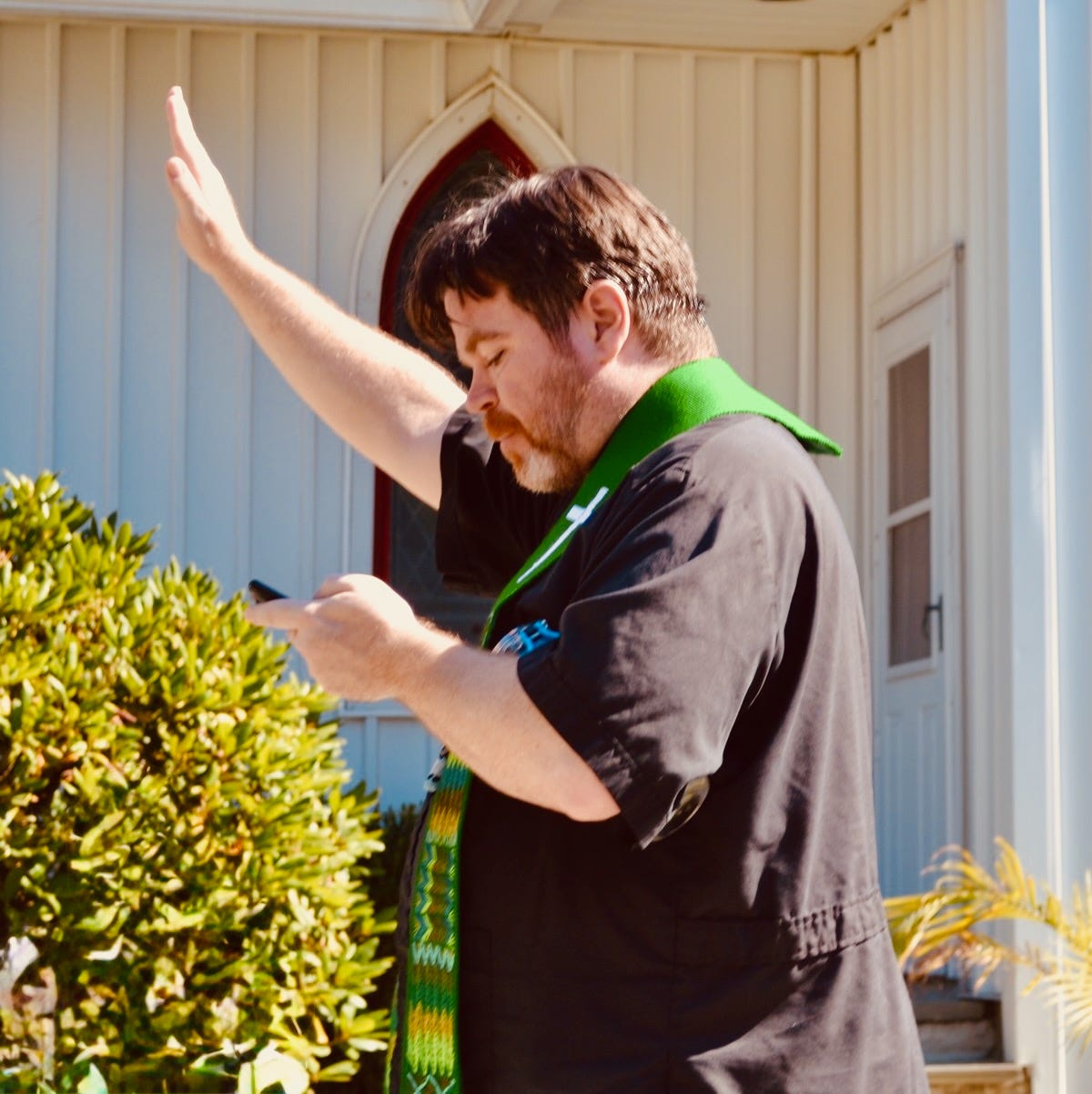
I conducted an in-depth discussion with Father Brian Barry, exploring the challenging intersection of faith, economics, and Christian values in today’s America.In a wide-ranging conversation at St. Thomas Episcopal Church in Farmingdale, New York, Father Brian Barry didn’t mince words about his opinion of wealth: if you have accumulated a billion dollars, you cannot have gotten there honestly or morally—only legally.This provocative statement launched an exploration of what it truly means to follow Jesus Christ in a society marked by extreme wealth disparity, political division, and competing claims about Christian values.The Sin of AccumulationFather Barry argued that anyone making a billion dollars has engaged in “almost every cutthroat practice possible,” including treating labor as expendable and prioritizing investor returns over human dignity. He bases his position on scripture, not political ideology.Jesus talks more about what people do with their wealth than about anything else, and the message, Father Barry notes bluntly, is to give it away.Some examples are:“Watch out! Be on your guard against all kinds of greed; life does not consist in an abundance of possessions.” (Luke 12:15)When a rich young man asked what he needed to do to inherit eternal life, Jesus said, “Go, sell your possessions and give to the poor, and you will have treasure in heaven. Then come, follow me.” (Mark 10:21)“It is easier for a camel to go through the eye of a needle than for a rich person to enter the kingdom of God.” (Matthew 19:24)The greed that drives unlimited accumulation, Father Brian explained, stems from a deeper spiritual crisis: fear of scarcity and fear of death. This fear becomes the opposite of faith, leading people to make decisions that prioritize security and appearance over genuine human connection and moral responsibility.I’ve wrestled with my financial status. Do I have too much? Am I a hypocrite for not giving more of it away? I rationalize my giving as I state to myself, “Hey, I give of my time instead. I volunteer for multiple organizations, and time is more valuable than money, isn’t it?”I also thought of trillion-dollar companies such as Amazon, Microsoft and Apple. On the one hand, they employ many people, but on the other, the bottom 50% of people own only 2.3% of US dollars. Is that the fault of those companies? Not directly. In a free market economy, investors do not have to keep or distribute their millions. I wondered how billionaires saw themselves. Why did they keep accumulating and how much do they give away?When Faith Meets PoliticsWhen asked what drives the wedge dividing Christians in America, Father Barry’s circled back to money. Despite political differences, many Americans—whether they vote democrat or republican—agree that the rich don’t pay their fair share, that the little guy gets crushed, and that healthcare and grocery costs are crushing families.I found polls that supported that conclusion. One conducted as recently as March 2025 and another in August 2025.The view of money as a key influencer is not unique to one political party. Per Father, neither political party represents the interests of the people, instead serving their donor class. In our conversation, we mentioned that presidential campaigns have spent up to one billion dollars. Where does that money come from? Much comes from political action committees. How much? PACs raised and spent about $15.7 billion during the 24-month period covering the 2023-2024 election cycle.The result is a troubling hypocrisy: misrepresented Christians walk past the poor, while policies that harm the vulnerable get pushed to the forefront, and instead of transforming lives with money, entities push for policies that enable them to hoard their wealth.What Jesus Actually SaidAt the heart of Father Barry’s message is a return to Jesus’s actual teachings. I asked Father to explain the story of the coin and Caesar during which Jesus is challenged to state whether it is lawful for Jews to pay taxes to Caesar. I wondered if there was a tie-in to his assessment of unfairness.Father Brian explained Jesus responded to the Jews by saying it is okay to pay to Caesar what is Caesar’s. Then, he reminds his questioners that they should give themselves to God because God made humans in His image.Jesus’ statement was a radical statement about where our ultimate loyalty belongs and how we should value human life over money. This point ties back to Father’s statements on income inequality. To me, he meant, humans should treat fellow humans as representatives of God.Jesus taught we are literally his hands and feet in the world—when we allow the Holy Spirit to lead us, we enact Jesus’s plan by healing the sick, feeding the poor, caring for the needy, and restoring outcasts to community.If those with huge amounts of money saw the poor as images of God, would they not want to see them fed? However, should they be forced to give up their wealth? No, I don’t think so. But, if one is to call themselves a Christian, they should absolutely take it into consideration.Although the priest did not implicate me, my Christian guilt reared its head. The thought I may be part of the problem stunned me. I am not wealthy, but I don’t live paycheck to paycheck either, which means I have a buffer. Do I give enough to charity? After conversing with Father Brian, I realized I hold back my financial support because of fears I may not have enough.Meanwhile, Jesus said we should not be afraid. We should have faith. What is it about us humans that causes such fear? It’s complicated. Some of it is instinctual and warranted. Others are a matter of choice. I am not trained clergy and don’t feel I am able to judge, but Father Brian’s words challenged me to examine whether my fears are based in reality or in a lack of faith that God will provide. I’ve had major problems with fear of not having enough money stemming from watching my parents struggle to make ends meet, and I never wanted to find myself in such a position.The Truth About Heaven and HellFather Barry challenged popular American evangelical notions about salvation. The focus on “getting to heaven” misses the point entirely—citizenship in the kingdom of God begins here and now, extending into eternity. I’ve often thought the same, especially after reading the work of Meister Eckhardt, a Christian mystic who said, “The more you forget and go within yourself, the closer you will be to him.” Even Jesus said the kingdom of God is at hand. Did he mean the kingdom of God was here now? Father felt we are on a continuum and that the afterlife extends the here and now. I believe that to be true as well.The religious life is about becoming one with Jesus through caring for people, not about checking boxes on a church rules checklist. People who left the church because of abuse, never heard the gospel, or rejected the hypocrisy they witnessed are not automatically condemned. People who say, “No one understands God,” may be closer to the truth than those who claim to understand everything about God.What awaits us? When we encounter God face to face, we will see the truth of ourselves—the consequences of our actions, the pain we’ve caused, and the ripples of our choices spreading through countless lives. This reckoning with truth may be more fearful than any fire-and-brimstone imagery. Father Brian’s description of what we may encounter someday made me shudder. Could hell be having to witness and experience firsthand the pain and suffering I caused? I thought I better get busy and right some wrongs.Wrestling with GodThe name Israel means “wrestling with God,” Father Barry notes—and that struggle is essential to authentic faith. Prayer isn’t about flattering God or performing the right rituals; it’s about honest, authentic conversation, even when that means saying “God, I think you’re being kind of a jerk right now”. That statement may sound very controversial to some but how many times have you found yourself questioning God’s ways?“Why didn’t you heal my family member?”“Why do you allow human suffering?”I contemplated questions. Will God get angry if I speak to him that way?Father countered with his belief that God already knows what we think and that authentic relationship requires genuine communication, including doubt, anger, and questions.A Simple TestFather Barry offers a powerful guideline for evaluating our positions—theological or political: If your entire position is driven by fear and hate, you need to check yourself. This doesn’t mean your position is wrong, but it means you’re not operating rationally and need to invite Jesus in to help you see clearly despite the fear.The Bottom LineThe summary of the law is simple: love God and love neighbor, particularly your poor neighbor. Everything else—the theological debates, the political divisions, the doctrinal disputes—must serve this fundamental calling.Father Barry’s St. Thomas Episcopal Church embodies this mission through its Fellowship Cafe, which feeds anyone who walks through the door, and through its simple welcome: all are accepted, regardless of race, religion, gender identity, or sexual orientation.In a time of deep division and competing claims about Christian identity, Father Barry’s message is both challenging and clear: authentic Christianity isn’t about accumulating wealth, winning political battles, or excluding those who are different. It’s about incarnating Christ’s love in the world—healing, feeding, restoring, and welcoming—right here, right now.The kingdom of God isn’t something we wait for. It’s something we build together, one act of love at a time.The video version of this interview will be available November 6th 2025 on The John Passadino Show This is a public episode. If you would like to discuss this with other subscribers or get access to bonus episodes, visit lensofhopefulness.substack.com
Embed this episode
Ready to play
Wrestling with God: Christianity, Wealth, Greed and the Fear That Divides Us
No transcript for this episode yet
Similar Episodes
No similar episodes found.
Similar Podcasts
No similar podcasts found.