
EPISODE · May 18, 2026 · 30 MIN
Writing as a Healing Act with Dr. Carolyn Roy-Bornstein
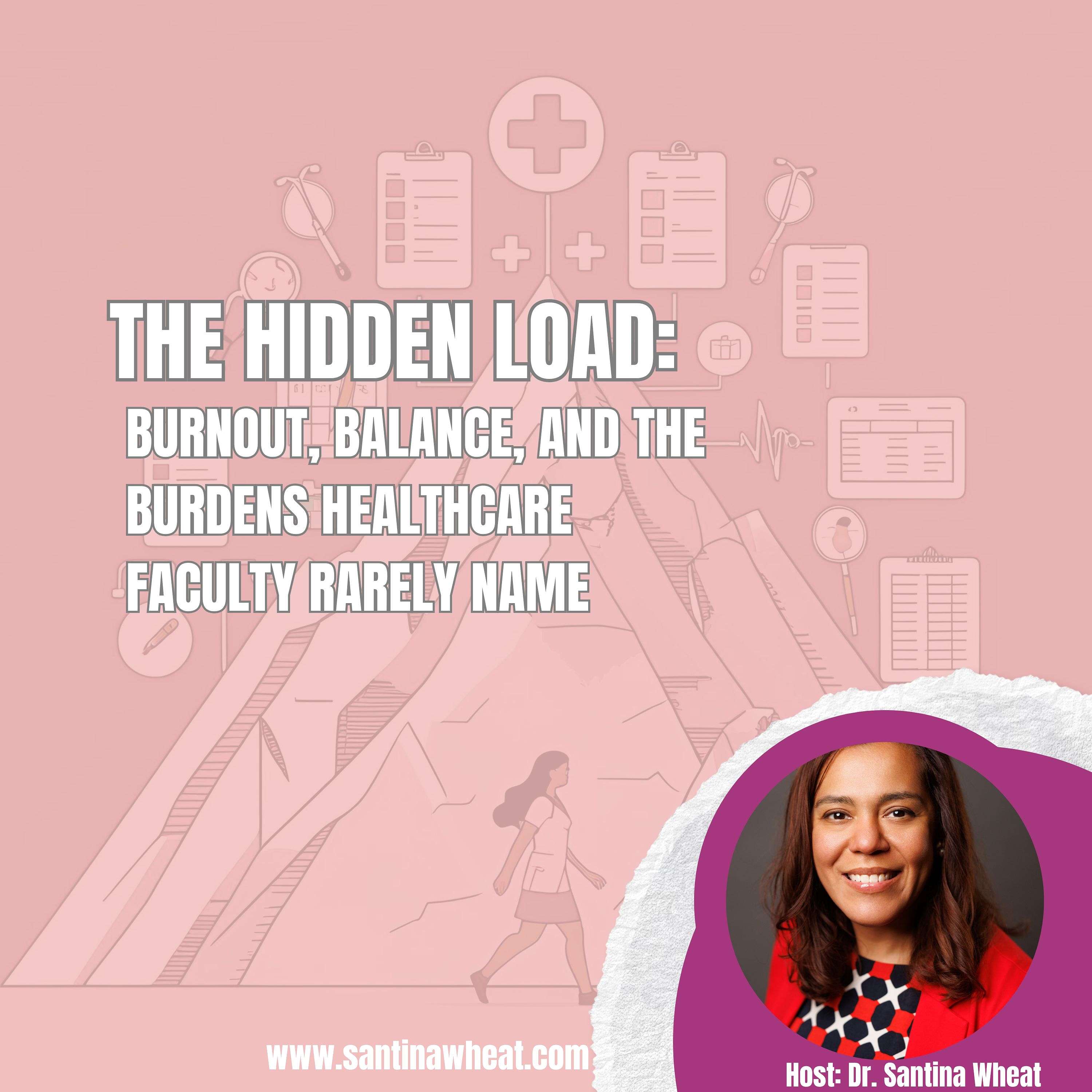
from The Hidden Load: For the educators and leaders in medicine who hold everyone up. · host Dr. Santina Wheat
In medicine, we are trained to be the witness—to hold the stories of our patients' pain and trauma. But what happens when that weight becomes too heavy to carry? In this episode, Dr. Santina Wheat sits down with Dr. Carolyn Roy-Bornstein, a pediatrician, writer-in-residence at Lawrence Family Medicine Residency, and author of A Prescription for Burnout: Restorative Writing for Healthcare Professionals.Dr. Roy-Bornstein shares her profound personal journey of using writing to navigate family trauma and "disenfranchised grief," and how she now uses those same tools to help residents process their clinical experiences. We explore the "biological back door" of narrative medicine—how to release the suffering that isn't ours while keeping the sacred wisdom that is.Key Takeaways for Leaders and Educators:The Power of Agency: How writing allows us to take control over the one thing we cannot change: the past. It shifts us from passive victims of a situation to active creators of our own narrative.The Biological "Back Door": Why doctors must develop a "permeability" to absorb patient stories, and how writing acts as the filter that allows us to set down the suffering that doesn't belong to us.Disenfranchised Grief: Identifying the hidden grief of "ambiguous loss" and how the page becomes a safe space to process feelings that the world might not yet validate.The Science of Story: A look at the evidence-based benefits of expressive writing—from improved pulmonary function and fewer sick visits to the deactivation of brain distress centers during fMRI studies.Affiliation over Isolation: Using narrative medicine workshops to build connection (affiliation) with colleagues, patients, and one's own deeper values.Pillars of Restorative Writing:How to move from a medical "mask" to authentic healing:Literature & Art: Starting with a poem or essay to bypass the professional "doctor face."Affiliation: Using shared stories to realize you aren't alone in your clinical or personal struggles.The Prompt: Using specific questions to move from "what happened" to "how it felt" and "what it meant."A Starter Prompt for the Busy Clinician:If you have 10 minutes today, sit with these questions regarding an interaction that "didn't quite sit right":What is the universe trying to teach me in this interaction?What did I gain from this moment?What meaning can be extracted from this sacred doctor-patient relationship?Resources Mentioned:Dr. Roy-Bornstein’s Book: A Prescription for Burnout: Restorative Writing for Healthcare Professionals (Johns Hopkins University Press)Dr. Carolyn Roy-Bornstein’s Website: www.carolynroybornstein.com15-Minute Alignment Check: Book Your Call HereFollow Dr. Wheat on Instagram: @drtinawheat👉 Claim Your CME Credit Here
Embed this episode
Ready to play
Writing as a Healing Act with Dr. Carolyn Roy-Bornstein
No transcript for this episode yet
Similar Episodes
No similar episodes found.
Similar Podcasts
No similar podcasts found.