Welcome to World War I Centennial News, the Doughboy Podcast, episode number 146. The Doughboy Podcast is about what happened 100 years ago, during and after the war that changed the world. And it's not only about then, but it's also about now. How World War I is still present in our daily lives in countless ways. But most important, the podcast is about why and how. We will never let the awareness of World War I fall back into the mists of obscurity. This week, as the show's in between seasons, we've pulled together a potpourri of wonderful segments as we count down to Veterans Day 2019.
The Doughboy Podcast is brought to you by the U.S. World War I Centennial Commission and the Doughboy Foundation. I'm Teo Mayer, your producer and host. Welcome to the show. In this week's episode, we're going to open with an announcement about Bells of Peace 2019. Then we'll present a series of wonderful interviews with historians, including Jay Winter and the cultural impact of World War I. Dr. Frederick Dickinson with Japan's impact on World War I. Sir Hugh Straughan with a challenging overview question about the impact of the war. For Speaking World War I, we're going to chase down the surprising origin of the word tank.
For World War I War Tech, it's all about imaging, which is a great lead-in to our interview with Brent Burge about Peter Jackson's paradigm shifting, They Shall Not Grow Old. Be sure to listen to the segment with some exciting news about the film for the 2019 holiday season. All this week on World War I Centennial News, the Doughboy Podcast. I want to open this week with some news from our sponsor, the Doughboy Foundation, about Bells of Peace 2019. For those of you who are not familiar with it, in 2018, a national bell tolling called Bells of Peace was launched as a World War I remembrance on the centennial of the armistice of World War I. Literally tens of thousands of communities, churches, military veterans, civic organizations, and individuals all over our nation and even internationally came together for a moment of reflection to honor the people, events, sacrifices, and consequences of the war that changed the world. It's a means of showing respect and reverence to the horrific, the heroic, and the consequential, both from World War I and since.
As a part of the Doughboy Foundation's commitment that these events don't fall back into obscurity, we're once again calling for a national bell tolling on the 11th hour, local, of the 11th day of the 11th month. Of course, that's on Veterans Day. And the Doughboy Foundation's not alone in this. The Society of the Honor Guard for the Tomb of the Unknown Soldier is also calling for a tolling under their National Salute 2019. It's also a bell tolling initiative as we approach the 100th anniversary of the burial of an unknown American soldier who fought and died in World War I and is buried in the Tomb of the Unknown Soldier in Arlington National Cemetery. That anniversary is in 2021.
Join us as we stop and take a moment to reflect, honor, and remember, and reverently toll the bells 21 times, five seconds apart, in hope for continued peace. But what if I don't have a bell? No problem. We have an app for that. The free Bells of Peace Participation App 2019 version is for everyone who needs a bell to toll. As the app's built-in countdown timer reaches 11 a.m. local, Bells of Peace will toll from every device, together, 21 times, in a remembrance of when the fighting ended on the Western Front in 1918.
Go to www.cc.org forward slash bells all lowercase to learn more. The 2019 Bells of Peace participation app features a countdown timer, selection from seven different bell sounds, bells that'll toll together across devices. There's a manual mode, an easy way to share with your friends, and versions for iOS and Android mobile devices. If you're going to toll the bells on 1111, please share your intent and your stories of tolling using the hashtags toll the bells and countdown to Veterans Day. Learn more by following the link of the podcast notes or going to www.cc.org forward slash bells all lowercase.
For this week's World War I Then section, we thought it might be very interesting to focus on academic historians and their various perceptions on key aspects of World War I. With that as a setup, let's dive into World War I Then with an expanded series from our Historian's Corner. First up, Dr. Jay Winter is from Yale University and the Charles J. Stile Professor of History Emeritus. Dr. Winter has a great insight into the cultural impact of our 20th century wars and is the author of such books as The Great War and the Shaping of the 20th Century, Sights of Memory, Sights of Mourning, The Great War, and European Cultural History. He's also the co-writer and chief historian for the 1996 PBS series The Great War and the Shaping of the 20th Century, which was awarded two Emmys, as well as the Alfred DuPont Journalism Award, the George Foster Peabody Award, and more. Jay, it's a pleasure to have you on the show.
Jay, you've been focusing on World War I since before the centennial. How did you come to focus on this time period? I began studying the First World War in 1965 when I was an undergraduate at Columbia University. The First World War struck me as Europe's Vietnam. So it was the contemporary echoes of the war in Vietnam that affected my choice of subject and indeed is part of the explanation for the vast expansion of First World War studies from the 1970s on. Well, now we've talked with a number of historians and others about the many changes that this period brought around. In fact, we've been referring to it as the war that changed the world. Would you agree with that?
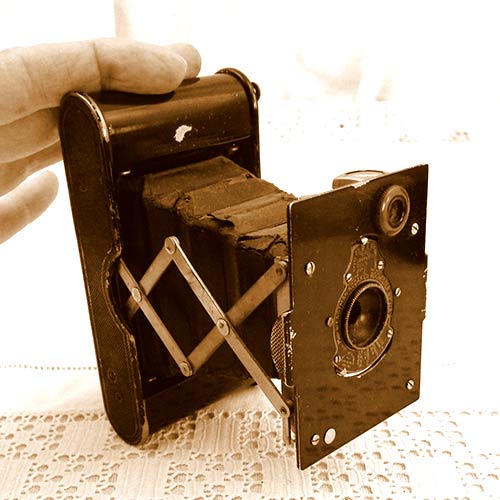
the technology of information and images was revolutionized. One of the leading revolutionaries was the Kodak company, who put in the hands of ordinary soldiers the Kodak best pocket camera that made it impossible for armies to enforce their regulations that soldiers shouldn't have images of war. They should simply fight and let the propaganda agents take care of that. In some ways, what the First World War did was to open up ordinary soldiers' vision of what war is, including American soldiers, of course, and prepare the ground for the fact that you can't control images. It's the prehistory of Abu Ghraib in Iraq.
Fascinating. And Jay, in some of your writings, you're specifically talking about World War I and how it changed the way we mourn our dead. Could you elaborate on that? The First World War produced 10 million dead men, either killed in combat or died in disease. And of those, 5 million have no known graves. It is true for the American armies, it is true for others. War has always been a killing machine, but what 1914-18 did because of artillery was to turn it into a vanishing act. The issue of missing soldiers, soldiers who died but no one has a trace of them, becomes universal in the First World War. It was the birth of the war that disappeared.
And it's also the moment when a number of different countries all attempted to represent this revolution through creating tombs for unknown warriors. In other words, not people who disappear, but a body that doesn't have a name. And it's those that we honor as an Arlington cemetery. Well, you're certainly right about that. In the thousands of locales where World War I memorials are around the country, the names of the lost sort of form the central theme for the communities and for the memorials. Is that also true in Europe? Very much so. The names are all that really matter. This is a phrase that...
British poet, Roger Kipling, who lost his son, too, who literally vanished during the Battle of Luson. His body has never been found. He put that in all of the Commonwealth, initially imperial, but now Commonwealth war graves, cemeteries. Their names shall live it forevermore because there's nothing left. Artillery killed 80% of the men who died in the First World War. It was mechanized assembly line, machine-run killing. Four years of war, the biblical message that we all return to dust was relived with a savage irony attached to it. The notion of honoring the dead meant honoring an individual who once walked by your side and who now simply vanished from the face of the earth.
In addition to all you've done, you also were asked to consult on the design for the Historial de la Grande Guerre, a major World War I memorial with multiple locations in France, a really unique design. What were some of the thoughts and considerations during that museum's design process? 1985 to be asked to design a museum. You know, we historians are used to thinking in two dimensions. I actually think in three dimensions about what a museum of the First World War should look like. And what I ultimately came up with was the idea that 20th century warfare needs to have a horizontal axis in order to do justice to the subject. The reason is soldiers dug trenches to stay alive. But the second reason is this. The language of glory, the language of heroism, 19th century language about war is vertical. 20th century war and the language we use to represent it is much more horizontal. Think of Maya Lin's Vietnam Veterans Memorial. That particular design is entirely horizontal and you can see the advantage. Horizontality is the language of mourning.
Verticality is the language of hope and celebration. In Europe, absolutely, you do not celebrate the First World War. You commemorate it. A horizontal design can express commemorating the war much better than a vertical design. Well, as you know, the U.S. World War I Centennial Commission is building a World War I memorial in Washington, D.C. And, you know, it's something that's currently missing in the capital. I know you've been following the project because you've commented on it. What do you think of the plans for the National World War I memorial? I think they're very interesting.
Indeed, there are a number of reasons why I think it's absolutely consistent with the change in representation that has taken place in museums all over the world. First is, it's a wall. And what American soldiers did was fill the holes on the Allied side and also pay for them. To have a wall, that's what to do to represent the First World War. Secondly, a wall showing men fighting for each other. And I think the third advantage of having a wall that shows men in combat is to make it clear that the First World War was the first of 20th century wars that didn't do what they were supposed to do. It was the war that made the next one almost certain. I hope funding becomes fully available. The design in question, I fully...
Dr. Jay Winter is the Charles J. Stile Professor of History Emeritus at Yale University and the author of numerous books on the cultural impact of World War I on the 20th century. Learn more by following the links in the podcast notes. Our next historian offers us a fresh view of a nation that fought the central powers on the side of the Allied nations, and who makes an interesting case that this often ignored aspect of World War I could have been a major game changer, but not one that's much focused on. Now, those who've never been exposed to what happened in the Far East during World War I are often surprised by the fact that Japan declared war almost as soon as hostilities broke out in 1914, years before America entered the fray. And many of those same people are also surprised to learn that Japan fought on the side of the Allies.
And those who know just a little about Japan in World War I tend to hold some precepts about Japan and Japan in World War I, including the accepted Western concept that Japan was an isolated nation and stalked away from the Versailles Treaty, having been seriously insulted by the non-acceptance of their proposal for racial equality for the League of Nations. I'm one of those people. So it was really great to have some of my precepts realigned by our next guest, Dr. Frederick Dickinson, professor of Japanese history at the University of Pennsylvania, co-director of the Lauder Institute of Management and International Studies, and the deputy director for the Penn Forum on Japan. Dr. Dickinson didn't just study Japan. He was born in Tokyo and raised in Kanazawa and Kyoto.
He's written a series of books, including War and National Reinvention, Japan and the Great War, 1914 to 1919. Dr. Dickinson, thank you for joining us. Sure. Thanks, Teo. Thanks for having me. Delighted to talk about Japan. Delighted to have an audience for Japan. Okay, let's start with the isolation issue. I would say, number one, that Japan was never isolated. But, you know, we have this impression because Japan was very adept at essentially controlling its own foreign policy up through the early modern period. Had a little bit of issue in the mid-19th century, obviously, when Commodore Perry came along and it turned out that the Americans were going to sort of decide the terms of trade and negotiation.
But the Japanese are first defeating the Chinese in war in 1895. They're also a very important part of the international coalition to suppress the Boxer Rebellion in China in 1900. Later 19th century, it's the age of empire, right? So there are a few things you have to do in order to be taken seriously on the international stage. You have to create a modern state and you have to create a modern empire. In order to do both of those things, you have to create a modern navy and a modern army. Essentially, Japan is doing that. And the Japanese, already by 1885, are looking to Korea as the principal target of their potential empire-building enterprise. And that very much begins with the sign of Japanese war and just continues.
So Japan is very much on the radar screen, and this is the main reason for the Anglo-Japanese alliance of 1902. The British recognize, number one, that Russia is a problem, and they recognize, number two, that the Japanese are the ones to help deal with the Russians. World War I breaks out, and within months, Japan invades the Tsingtao region of China, presumably because it was held by Germans at the time. Is that true? Definitely, but even more important than the within months idea is that the Japanese are declaring war on Germany, August 23rd of 1914. This is quite remarkable. I mean, obviously, it's after the British, after the French, but it's before the Americans, it's before the Italians, it's before the Ottoman Empire gets involved in this war. They're very much out there at the very beginning of the war. And yes, you have to ask yourself, well, what's going on? Essentially, it's the Anglo-Japanese alliance. And in particular, it has to do with the one man who was basically in charge in August of 1914. And he was the one who made almost single-handedly the decision to go to war against Germany. That was Kato Takaki. He was the foreign minister at the time. So what role did Japan play during the war?
Well, it's an interesting question, an important one, and one that you would probably be surprised to learn. But I would say, to put it in a nutshell, the Japanese belligerence against the central powers was a deciding factor in the victory of the Allied powers. The Germans essentially are knocked out of the war in Asia by November of 1914. And I would simply say that had the Japanese decided, instead of declaring war on Germany, to declare war on Britain and its allies, we would be living in a very different world right now. And that was not necessarily out of the realm of possibility.
No, it's a fascinating role. They also played a fairly large part in keeping the U-boat threat down in the Mediterranean. Exactly. So all kinds of supporting roles that the Japanese are playing throughout the war, in fact. So now the war wraps up and Japan is at the table at Versailles. How did that go? What role did classic American racism play in the outcome? So we usually simply hear the issue of the racial non-discrimination clause that the Japanese put up for inclusion in the covenant of the League of Nations. But you have to remember, I mean, that was a very minor issue for the Japanese. They essentially got everything they wanted except that clause and then some. And what they actually wanted was confirmation of their newfound power in China, number one.
And they also got confirmation of their newfound empire. And that is they were given German Micronesia as League of Nations mandate territories to essentially develop as part of their sort of informal empire after 1919. So those are the two things that the Japanese were really interested in. And they got them without a problem. Plus, they got recognition of being a world power. They were one of the five victor powers that were present at the table to discuss not simply issues in Asia, but to discuss issues of world peace.
Okay, so moving forward again, Japan was allied with the Anglo-Franco alliance during World War I. What happened between World War I and World War II that caused Japan to align themselves against the Allies 25 years later? This changes from the Manchurian Incident Award, Manchurian Incident in September of 1931. You know, after becoming a pivotal player at the Paris Peace Conference, a pivotal player at the Washington Conference, at the Geneva Conference, the Naval Arms Reductions at the London Conference in 1930, a very important signatory to the Calgary Unpact of 1928. You know, after that, clearly something different is going on. And essentially, I would say it's a problem of domestic politics in Japan.
Political parties are sort of a new phenomenon in Japan. Until the First World War, essentially, the oligarchs had been in charge, bureaucratic decision makers had been in charge. So the 1920s is a new era of political party management. And there are some within Japan that do not benefit politically by this arrangement. And they try as hard as they can throughout the 1920s to put Japan on a different path. They finally find a solution, a formula.
and that is to just start shooting at home and abroad. And so these folks are doing that in the early 1930s, and this obviously ultimately changes Japan's trajectory, puts it on a path toward alliance with Germany and Italy rather than with Britain and the United States. Dr. Dickinson, thank you so much for providing our listeners with this great overview of a story that many people I've spoken with are actually surprised at, and really a story that's pretty much untold. Thank you for coming in. My pleasure. Thanks for having me, Theo. Dr. Frederick Dickinson is professor of Japanese history at the University of Pennsylvania. You can learn more about Japan in World War I by following the links in the podcast notes.
Our final historian guest today is Sir Hugh Straughan. You know, big questions addressed in a small time frame are perhaps the most difficult combination possible. So I thought Sir Hugh was an ideal expert to provide us with a wide-angle lens view for addressing the giant question. What was the impact of World War I on the world? Or at least, what are the top-line items when you boil it all down? Sir Hugh is one of the most respected World War I historians anywhere. He's the Professor of International Relations at the University of St. Andrews and Emeritus Fellow of All Souls College, University of Oxford.
Sir Hugh, it's wonderful to have you back on the podcast. Thank you for taking the time. It's a great pleasure to hear. I'm delighted to be back on. We've been calling it the war that changed the world. Now, in your opinion, as one of the great subject matter experts on World War I, what would you pick as the top three changes that were brought about by the conflict? I suppose the first and most obvious thing, if you look at it from the perspective of 1918, 1919, is that four of the major empires in the world have collapsed. But the result across Central and Eastern Europe and into Asia and into Central Asia and down to the Middle East is massive.
Here is essentially a situation where there is a vacuum in terms of governance, in terms of which the successor states will be. All that is going on and possession is nine tenths of the law. So while the peacemakers are meeting in Paris, these competing entities are fighting each other and the force of arms is deciding a great deal. So that's perhaps a long answer, but I think that's one of the most dramatic changes. The second would be the entry of the United States into the world order, its role in shaping the international order, its positioning of itself as a global power.
So that would be my second point. And I think the third is that what emerges out of both those things is that our understanding of how states should be put together itself changes. So there's a consideration of power politics. And in some ways, Wilson pays no attention to those principles of power politics. He simply says, or he gives vent to the idea of national self-determination. And that remains, even today, something we respect as a principle. But of course, there's been a tremendous source of conflict in the 20th century world, not just in the short term, in the run-up to the Second World War, but also still today.
That's fascinating. So your biggest take on all of this is that the transformation from this was political. Yes, I think I would. I mean, if the implication of your question is, is it economic, is it social? Well, of course, it's those things as well. Sure. Technological, social. There is a lot. And I think I would put political, economic, and social ahead of technological, because although the technologies of war are put on a new footing by the First World War, you can see the antecedents of much of that with industrialization between 1850 and 1914.
And perhaps the most basic would be the notion that there are societies with mass popular press, with a very high level of literacy, with a degree of economic security, and with a genuine sense of progress defined in all sorts of ways, which makes for the war being a sort of surprise in that you'd expect Europe to have more sense than to go to war, and also makes this war so radically different so quickly. It becomes a major war involving whole societies from 1914 itself. And the collapse of the empires at the end of the war is something which all have realised is a possible implication of this war from 1914 itself. Change is there. but change now is going to be in a much more radical form and a revolutionary form. Now, there are some who argue that World War II is simply a continuation of World War I. What are your thoughts on that subject? I've never bought that argument. I don't think I've ever bought it. I certainly don't buy it now. The aspiration that this is a war to end all wars, which is an aspiration expressed by socialists, particularly in France in 1914, and one, of course, reflected by Woodrow Wilson after the US entry, that's one genuinely felt across Europe in 1919.
But I think if you look at the situation across the world from the perspective of 1924, let's say, with the Treaty of Lausanne and with people returning from the war, I think there must then have been a sense of optimism and that whatever has happened in relation to the war and the experience of the war can begin to be put behind societies as they look forward. So I don't think you can jump from 1919 to 1939 or 1941. There's too much in between. You've written a lot of books and a lot of articles about World War I, and you've done a lot of research. And what are some of the key issues about this global catharsis that remain unknown, unknowable, and unresolved? There are areas where I think research will still be done, which will leave us much better informed. In the Russian case, Russia has been neglected because at least up until the collapse of the Soviet Union, Russian history began in 1917. And so the First World War was always looked at as a precursor to the revolution. And the same point in a slightly different way applies to the Ottoman Empire.
But it has remained a story too dominated in some ways by the fact that the easily accessible source material is in languages other than Turkish. In terms of what will remain unknown, one is on hunger in the First World War. But what I think we will always struggle to identify is how much hunger across Europe in the First World War was a direct product of the war effort and how far hunger was a product of maladministration, of the mobilization of peasant societies, of withdrawal of animals from agriculture for use of the armed forces. In other words, how much is hunger an indirect consequence of the war rather than a direct consequence of military action? And this seems to be crucially important because one of the things that I thought would happen as a result of this century, but hasn't, is that we haven't the faintest idea what the total number of dead as a result of this war is. Most economic historians would say demographically, the impact of the war is pretty short term, and most societies have recovered fairly quickly in the 1920s. But it would still, to my mind, be the great project actually to answer that question. So there's a lot to be done. Thank you. Nice chatting with you. Thank you, Tim.
Sir Hugh Straughan is Professor of International Relations at the University of St. Andrews, an Emeritus Fellow of All Souls College, University of Oxford, and an author of many books and papers. Learn more about him and his work at the link in the podcast notes. That's it for 100 Years Ago. Let's jump back into the present with World War I Centennial News Now. This part of the podcast focuses on now and how World War I is being remembered, discussed, taught, and learned, and commemorated today.
for Speaking World War I, where we explore words and phrases with their origins in World War I. This week, another one of those words you think of casually, but don't automatically associate with World War I. One of the most iconic new weapon technologies of World War I is the tank. They rode into World War I on horses, and they rode out on tanks is a popular phrase that describes the times. This is the grand evolution of the armored car, and every side in the conflict tried to create an effective machine. But the British beat everyone to the punch with their land ship, premiering the Mark I in September of 1916.
Until then, this was a new secret weapon. The machines were called tanks in a ruse, describing the big metal things as water carriers, supposedly for use in the Mesopotamian front. So in conversation, the engineers referred to them as water tanks or simply tanks. Interestingly, the British Landship Committee even decided to change its name for the same secretive reason, renaming itself the Tank Supply Committee. By the time the machines rolled over the fields of Cambrai in the winter of 1917, not only did the tanks get stuck, but so did the name. No one went for the name landships. They were simply known then and are still known today as tanks. This week's word for speaking World War I. See the podcast notes to learn more. This week in World War I War Tech, the subject is photography and imaging in World War I. Photography and the war had major influences on each other.
In 1914, as the Germans streamed through Belgium towards France, pilots had seen the columns of invaders from the air. Now, they made estimations on the number of invaders, but the commanders just didn't believe that you could make such an accurate assessment from up in the sky. But soon after, the planes were outfitted with cameras, and aerial reconnaissance grew into a major part of combat and strategy. The combination of these two relatively new technologies, the airplane and the camera, provided field commanders with a comprehensive map of the enemy positions and movements as field darkroom technicians started to stitch together dozens of images into comprehensive area maps. Now, there was a pattern here. Reconnaissance overflights preceded artillery bombardments, and artillery bombardments preceded ground offensives, a pattern that the soldiers began to recognize. And if you think about it, even though fighter plane aces were the noted, notorious, wonderful knights of the sky as they engaged in dogfights, much of the time, their actual job was protecting the recon planes. And in fact, those pilots and the specialized units that made sense of their photos probably had a greater impact on the war. On the ground, official war photographs and films were being made by all sides.
The U.S. Signal Corps motion and still picture cameramen were assigned to every division and outfit of the American military, as well as the Red Cross and the Salvation Army. These cameramen produced nearly 600,000 feet of film abroad, and in the United States, the Signal Corps shot another 277,000 feet of film. The U.S. Signal Corps documented an American war in an unprecedented fashion, preserving countless motion and still images for posterity, a huge boon to the centennial as the Library of Congress has added troves of great digitized images and films to the publicly available resource.
But the Signal Corps cameramen weren't the only ones on the ground with cameras. World War I started just after the introduction of a world-changing new camera, the Vest Pocket Kodak, the VPK. By 1914, war photography had actually been around for over a half a century. However, due to the tech limitations of the camera gear, pictures of war were mostly staged. According to military historian Joe Coxie, 19th century war photographers were hampered by wet plate technology with unwieldy cameras that needed long exposure times. Not exactly ideal for capturing the chaos of war.
But the 1912 Kodak vest pocket camera was small enough to carry and anyone could take a picture. It quickly exploded in popularity and reached the front in 1914 with the first wave of British soldiers. Commanders were far from thrilled about this. They wanted to control the world vision of the war. After friendly images of Brits and Germans surfaced following the Christmas truce of 1914, the British government banned portable cameras. Of course, it didn't work.
In contrast, the German authorities were fairly tolerant about personal photography in their ranks. In the US, the Kodak company marketed the VPK specifically to soldiers who brought them to France in droves. According to a Kodak advertising poster, the camera helped the soldier create, quote, history from their viewpoint. Now, this isn't just effective marketing, but a poignant statement regarding the significance of personal photography in wartime. So thanks to this new piece of photographic technology, soldiers, nurses, and civilians alike produced a massive collection of personal images and have managed to share their experience with us about the war that changed the world. And that's the perfect lead-in to our closing segment about how legendary director Peter Jackson has taken historic World War I footage from UK's Imperial War College and has brought it to life in a compelling, memorable, and amazing way in his documentary called They Shall Not Grow Old.
It premiered around this time last year with a limited release in theaters. Today, you can see it on HBO, get it on Amazon, rent it from Amazon Video or Apple TV and various other options. But keep an eye out because we just picked up a rumor that it may come back into theatrical release this holiday season. And seeing this documentary at scale in 3D has literally been one of the most memorable lifetime theatrical film experiences I've ever had. Peter Jackson, one of the most innovative film directors working today, had an idea.
Using his craft and his genius, he wanted to create a time machine to transport those young men and boys from what we think of as a choppy, crude, black and white, silent world from 100 years ago into the present. Of course, the world really wasn't black and white and silent. It was as three-dimensional and vibrant as your world is right now. So Peter Jackson led a team of artists, technologists, creators, and they took the 100-year-old clunky silent film footage and brought it to life. I was 16 years old and my father allowed me to go.
I was just turned 17 at the time. I was 16. I was 15 years. When they came to us, they were frightened children and had to be made into soldiers. Boys, here he comes. We're in the pictures. I gave every part of my youth to do a job. I had a special treat when the project's supervising sound editor Brent Burge and I spoke. Now, he's in New Zealand and I was in LA. Brent's been working with director Peter Jackson on a lot of his projects, including all the Lord of the Ring movies. And he had some great insight into the director's vision of this special film. Here's our conversation.
It had a long history with Peter, dating back to his first film, in fact, back in 1987, Bad Taste. Peter originally had a discussion with us back in 2015 about the show. He kind of got us in to come into the cutting room and have a bit of a chat because it was a new show he was looking at. It was an interesting discussion he had about the show at that point, actually, because the interesting thing I remember him talking about when he showed us the material was just how everybody looked really happy when they were kind of going to war. You know, the propaganda machine was kind of fully on, the cameras were out with all the men heading off to the First World War, and then there was just a stark contrast to the way they returned.
It was like they were no longer aware of the camera. They didn't care about the camera at that point. It was much more grim in a way. It was a really interesting contrast that he pointed out at that point when he was obviously reviewing the footage. But of course, we thought we were going to start straight away on the show at that point. But it actually literally ended up taking another kind of two or three years for him to kind of push his way through it. You were starting with essentially a blank page as a sound editor for the project. You literally had to invent the entire audioscape for the scenes. It was all silent footage, right? There was absolutely nothing on the page in terms of sound for us at all. We did have a library.
from the UK of some original material, original tapes and so forth. But in terms of this footage, no, absolutely not. One of the things I think is really interesting is that you had to reconstruct what everybody was saying. How did that work? Peter had already identified the idea of how detailed he wanted this to be. And it was really about authenticity and about the whole going back into sounds, which would have been sounds from the time. And that included the dialogue. There was a number of things about the dialogue that he really had identified, even at that point, of wanting to know what they were saying. So he really was very serious. Even back in 2015, I had to get liberators in to check out what was being said.
Not only did we have the shots that Peter had selected that had to be fully replaced with sound, fully dialogue crowds, the whole thing. Then one step back from that was pretty much the backgrounds of the whole show. Then also you have a voiceover. Hundreds of hours of the stories that the old boys spoke about were distilled down into this project, which was originally only going to run 30 minutes. But obviously Peter had in the back of his mind, no, okay, yeah, yeah, I'm just going to give you boys this footage, but we're just going to keep working your way over the dialogue because we've got so much and I think I can actually make a feature out of this. And though we didn't know that for a long time, Peter would then hand over the material again.
and the following would be okay. But then at the same time, Peter was also recutting the voiceover. So we had a tracking issue between having to track the picture changes that Peter made, and as well as that, we then had to track all the voiceover changes that Peter made because the interviews were of completely varying quality and also had a noise floor, which was substantial. A lot of cleanup happened on the actual interviews themselves, which we didn't want to lose every time Peter handed the material back over to us. The picture and the voiceover were quite separate in the way Peter wanted to portray what was being talked about.
What's interesting is in a lot of sort of standard dialogue replacement, you have one or two people, but you're dealing with a lot of crowds. Martin Clark was the dialogue speaker on it, and he was the one who had to actually literally drill into working out the whole plan of action around how do we approach the crowds. You have what is called Walla, and you have broad effects crowds where, sure, you can get a sense of a crowd in a particular scene. And each of those different layers from the general effects crowd, which is more of a base layer, through to the Walla, through to more discernible dialogue, which is where loop groups come in. All of them were absolutely key to get right.
Because the authenticity would only come alive once you looked at it and were just completely at ease with the sound that was coming off the screen as being part of what we're seeing. And the effects crowd took some time to find because I had another person I was supervised with and when he heard about the show, the absolute thing he said to us, you have got to get the accents right. There's absolutely no way that you could put this on the page for anybody who knows those people on screen or can recognise where those people are from on screen through their uniforms or however it was. And you're putting some New Zealand look grouper trying to imitate an accent from some region in the UK. Well, talk to me a little bit about the machine sounds, the explosions, the guns, the tanks. He's a bit of an avid collector. He's got a passion for the First World War, which you can hear in the show. So he has some artillery guns himself. We had an opportunity to record all the shells being loaded. He's got empty shells. He's been able to record a lot of the foley based around the guns. And as well as that, he has some contact with the Army as well here. So occasionally they will just invite Peter to come up to Waiuru and think they're going to do a particular exercise that we might be interested in recording, which would be things like shooting off artillery shells in the middle of the desert.
We have mountains in the middle of New Zealand where the road goes up onto the plateau and the army is based around these couple of mountains. And they do a lot of exercises there. And we have the opportunity to go and record it. That's where you get to really sense the way a gun sounds. When we arrive, the army guys say, OK, well, let's go out. We'll go out and scout the terrain about where we're going to be doing this. And guns will be shooting from here. And they will be shooting over those foothills over there, about nine kilometres away to a blast site on the other side. And just by the way, we're aiming for a rock. It took us 40 minutes to drive to the blast site where the shells are going to land. So we had about four people recording sound for it.
Two people at the blast site, which included a bunker, the army person who was in charge of the operation was managing it from the blast site. So he could give them instructions about how far to adjust their registration of the gun. And then that was relayed to the gun site where me and Justin Webster again were positioned. And we just laid out a bunch of microphones. They started shooting before we'd finished laying the microphones. So I think I had something in my pants at that point because I was literally just down in front of the guns trying to set up some mics. And they started without warning. They just started firing them off. And obviously they had no instructions to start firing. So it was one of the most adrenaline-filled days.
But we still managed to get some great sounds. The guns sounded fantastic. I'm incredibly excited by what you all and Peter have done. When you go back and you think about this project in five years and 10 years, what's the one thing you're going to remember the most? I think the thing I'm going to remember the most is the absolute vision that Peter had of how he was going to put this project together. It was such a personal project for him. I just think you can see Peter all the way through it. He knew exactly how it was going to work.
It's all about what Peter put on the page for us to respond to. And we responded to it. And I think audiences are responding to it as well, because it is such a personal thing for him, I think, and passionate thing for him. I think that the methods that you're developing here are going to be used for all sorts of things. And the only thing I can say is thank you.
Brent Burge is the supervising sound editor on the Peter Jackson groundbreaking World War I documentary. They shall not grow old. We have links for you in the podcast notes. And keep an eye out for an upcoming announcement about new theatrical and 3D showings during the 2019 holiday season. Tickets are the best gift I can think of for anyone who's interested in World War I. And if you're listening to this podcast, you probably are. We have links for you in the podcast notes.
And that wraps up episode number 146, reprise segments from the award-winning World War I Centennial News, the Doughboy Podcast. We want to thank all of our contributors, talented crew, and supporters who made today's episode possible, including historian Jay Winter, historian Dr. Frederick Dickinson, historian Sir Hugh Straughn, Peter Jackson film sound supervisor Brent Burge, many thanks to Catherine Akey, World War I photography specialist and line producer for the podcast, Mac Nelson and Tim Crow, our interview editing team, to J.L. Michaud for his research, and Rachel Hurt, our fall intern. I'm Tao Mayer, your producer and host.
The U.S. World War I Centennial Commission was authorized by Congress in early 2013 to honor, commemorate, and educate the nation about World War I on the occasion of the centennial of the war. For over a half a decade, the commission, commissioners, staff, and our many associates and supporters have labored to inspire a national conversation and awareness about World War I. We've brought the lessons of 100 years ago to today's educators, their classrooms, and to the public. We've helped to restore World War I memorials in communities of all sizes across the nation.
Now, as the Commission's charter to honor, educate, and commemorate the centennial of World War I has been successfully accomplished, the full focus of the Commission is turning to its capstone mission to build the National World War I Memorial in Washington, D.C. We want to thank the Commission's founding sponsor, the Pritzker Military Museum and Library, as well as the major contribution of the Starr Foundation. Thanks to our podcast sponsors, the U.S. World War I Centennial Commission and the Doughboy Foundation. The podcast and a full transcript of the show can be found on our website at www.cc.org forward slash cn, all lowercase. You'll find World War I Centennial News, the Doughboy podcast, in all the places that you get your podcasts, including iTunes, Google Play, TuneIn, Spotify, iHeartRadio, Radio On Demand, even YouTube, Asking Siri, or your smart speaker by saying, play WWI Centennial News Podcast.
The commission's Twitter and Instagram handles are both at WW1CC and we're on Facebook at WW1Centennial. To donate to the memorial, please go to WW1CC.org forward slash donate and help keep the story alive for generations to come. Thank you for listening. So long.