
EPISODE · Apr 25, 2026 · 20 MIN
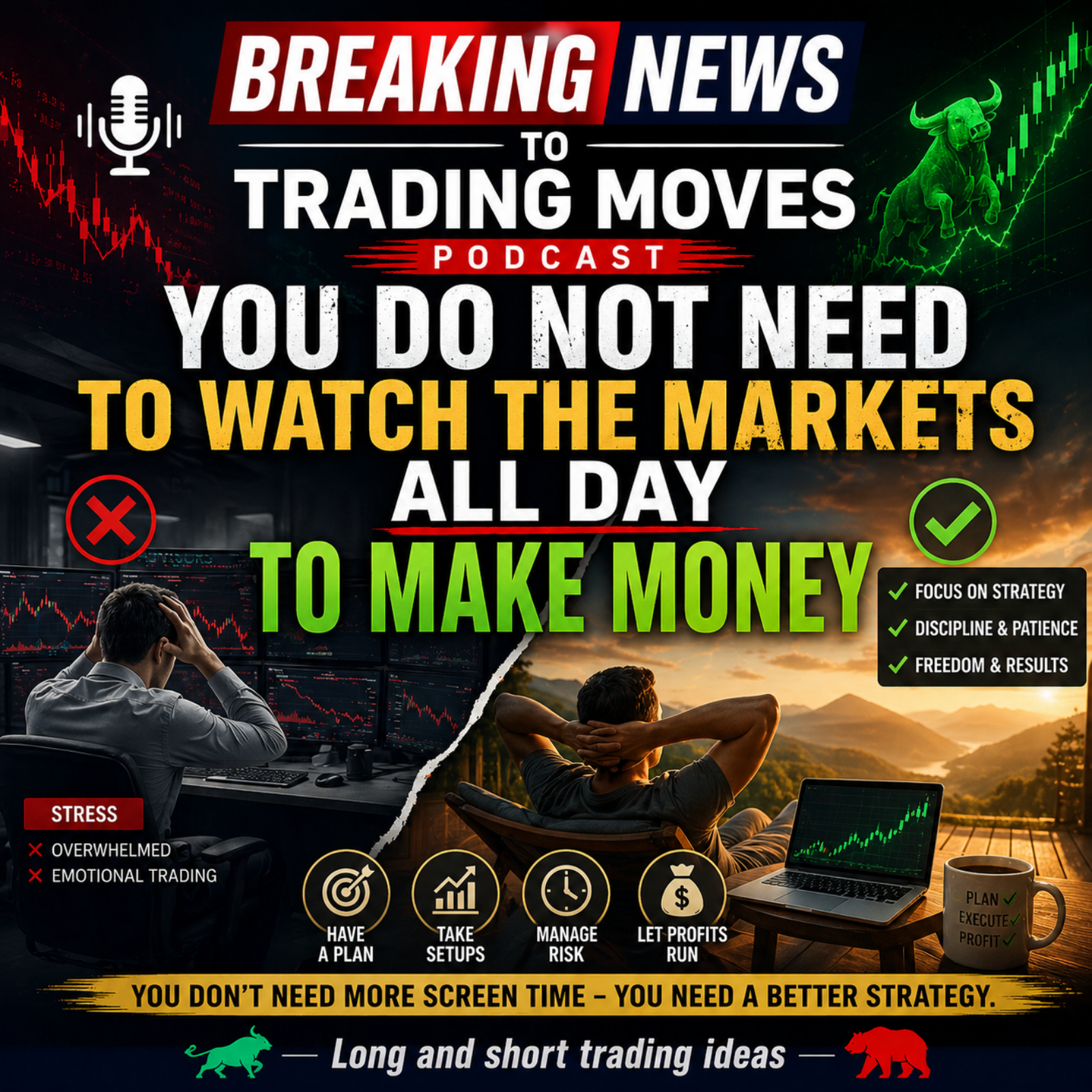
You Do Not Need To Watch The Markets All Day To Make Money
from Breaking News To Trading Moves
In this episode of Breaking News to Trading Moves, we debate one of the biggest questions in investing: is passive automation the smartest path to long-term wealth, or do markets still require human judgement, discipline and tactical decision-making?The debate begins with a powerful aviation analogy. Autopilot can work brilliantly in clear skies, but when turbulence hits, you may still want a pilot who can react to the moment. The same question applies to investing. Should your money simply follow the mathematics of index funds, robo-advisers and automatic reinvestment, or should you use behavioural safeguards and active strategies to manage risk?Key Points 1. The Case For Passive Investing Passive investing is built on simple arithmetic. William Sharpe’s zero-sum argument shows that before costs, the average active investor must equal the market return. After fees, trading costs and spreads, active managers as a group are expected to underperform. The SPIVA data strengthens this case, showing how many active fund managers fail to beat the S&P 500 over time.2. Lump Sum Investing vs Dollar Cost Averaging The episode explores the Charles Schwab study comparing different investors, including those who invested immediately, perfectly timed the market, invested monthly, waited in cash, or bought at the worst possible time. The message is clear: getting invested usually beats waiting. Even bad timing can outperform staying on the sidelines.3. Behavioural Finance and Loss Aversion The opposing argument is that investors are not robots. Kahneman and Tversky’s work on loss aversion explains why losses feel much more painful than gains feel rewarding. If a lump sum investor panics during a sharp market fall and sells at the bottom, the mathematical advantage disappears. Dollar cost averaging may not be the highest-return strategy, but it can help some investors stay committed.4. Robo-Advisers and Automation Robo-advisers can rebalance portfolios, reinvest dividends and use tax-loss harvesting with low fees and no emotion. The passive side argues this removes human mistakes and keeps money compounding efficiently over decades.5. The Risks of Blind Automation The active side argues that when passive funds become too dominant, they may create structural risks. Large index managers can hold huge voting power across entire industries, while passive capital allocation often follows market capitalisation rather than business fundamentals.6. Active Trading and Swing Trading The debate also covers whether disciplined swing trading or position trading can offer a middle ground. Active traders may use support, resistance, stop losses and trend analysis to make targeted decisions. However, the passive side warns that most retail traders struggle due to costs, poor discipline, leverage and emotional mistakes.Both sides agree on one major point: staying in cash and doing nothing is often the biggest threat to long-term wealth. Whether you prefer passive index investing, dollar cost averaging, robo-advisers, human advice or active trading, the real challenge is building a strategy you can follow through market turbulence.#StockMarket #Trading #Investing #DayTrading #SwingTrading #PassiveInvesting #IndexFunds #ActiveTrading #RoboAdvisors #DollarCostAveraging #TradingPsychology #RiskManagement #WealthBuilding #MarketTiming #FinancialFreedom #TradingPodcast
Embed this episode
NOW PLAYING
You Do Not Need To Watch The Markets All Day To Make Money
No transcript for this episode yet
Similar Episodes
No similar episodes found.
Similar Podcasts
No similar podcasts found.