
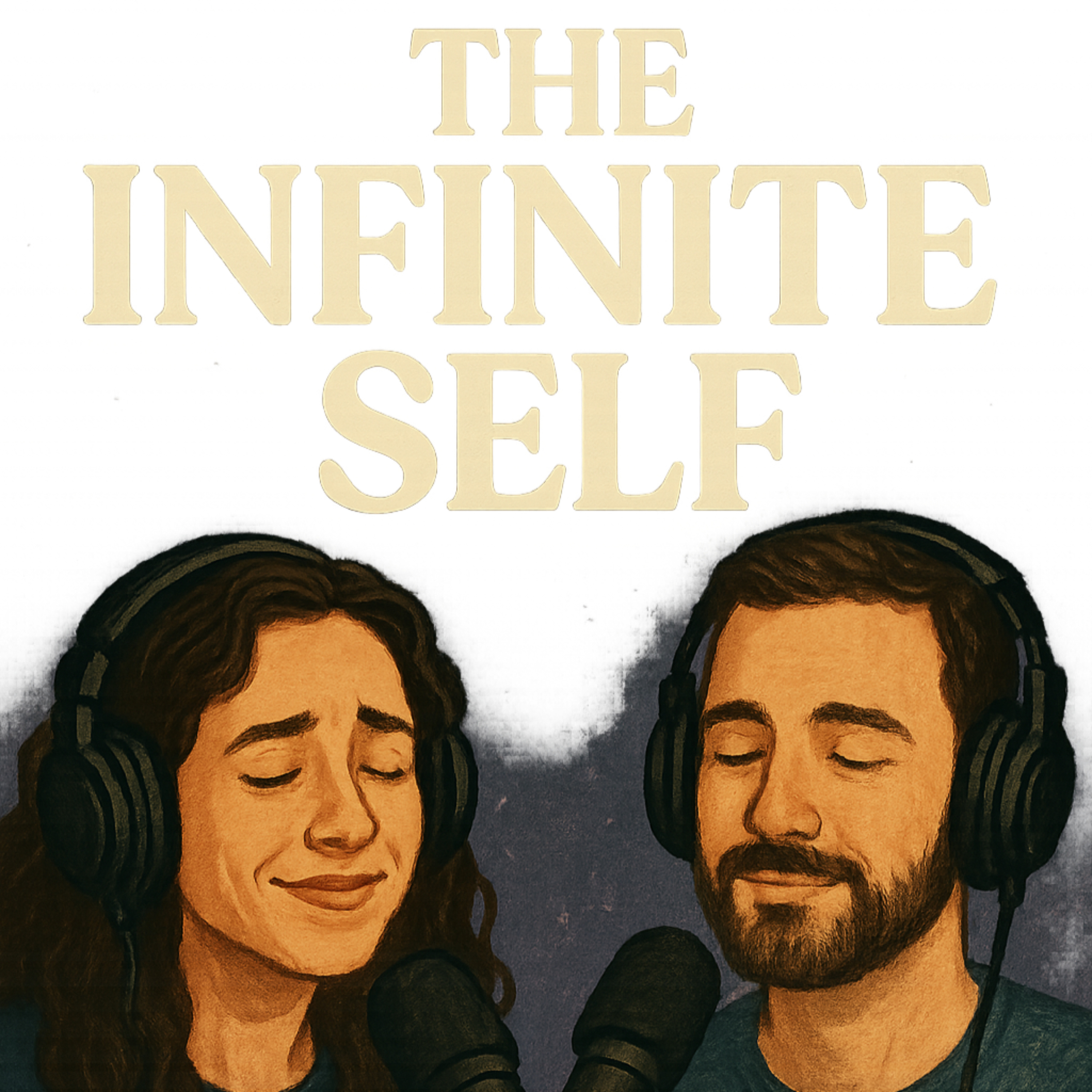
EPISODE · Jun 4, 2026 · 1H 9M
Your Darkest Secrets: Why We Hide Our 'Evil' Deeds, Even From Ourselves, and The Real Cost of Keeping Them Buried
from The Infinite Self · host Cerebral Alchemy
Have you ever looked at someone's actions and thought, 'That's pure evil'? Or perhaps, squirmed a little when contemplating your own questionable decisions? This episode dives deep into the human psyche to unravel what we truly mean when we use that loaded word. Forget the Hollywood villains; the truth about 'evil' is far more nuanced, incredibly relatable, and perhaps, a little unsettling.At its core, 'evil' isn't some mystical force or inherent quality; it's a label we assign to behaviors we perceive as intentionally causing harm that we judge to be utterly unjustifiable. And here's the kicker: your gut reaction to whether an act is 'evil' might reveal more about you than the deed itself. Because deeply embedded within our human experience is a primal fear: the profound terror of social rejection, the agony of being cast out, branded with what we call the 'Mark of Cain.' Being labeled 'evil' is the ultimate social death sentence, triggering deep-seated pain that drives us to extraordinary lengths to avoid it.Think about it: who wants to believe they're 'evil through-and-through,' beyond change or redemption? No one. That's why we've developed an astonishing arsenal of psychological defense mechanisms to sidestep this dreaded label. We might outright deny our involvement, or our memories may conveniently 'forget' the most incriminating details, sometimes even replacing them with entirely new, benign narratives. When caught, we minimize the harm we've caused, claiming it wasn't 'a big deal' or that the victims 'deserved it.' We might even try to decrease the perceived intent, arguing we weren't 'ourselves' or weren't fully in control.But the most fascinating deflection strategy? Justification. We become master lawyers for our own defense, constructing narratives that frame our actions as either serving a 'greater good' – painting ourselves as heroes acting for a noble cause far beyond self-interest – or as merely 'not bad.' This 'not bad' defense often stems from feeling victimized ourselves, leading to acts of revenge or a sense of entitlement to compensation, where harming others is seen as a regrettable, but necessary, means to an end. We even normalize our questionable behaviors, rationalizing that 'everyone does it,' or brazenly assert our immunity to judgment, daring others to condemn us.So, what actually drives these behaviors that others label 'evil'? It boils down to a fundamental principle: 'Mind over Matter.' We choose actions where the expected benefits to ourselves, or our inner circle, dramatically outweigh any perceived costs to others.Take the corrosive nature of hate. When we define hate as the desire for a target to experience harm, it instantly aligns with the core components of evil. And when hate is present, its intentionality and harmful aim compel us to justify it, lest we be seen as 'evil' ourselves. Or consider sadism – not the monstrous, rare form you might imagine, but the everyday pleasure we derive from another's discomfort. Finally, when individuals come together in groups – whether it's a corporation prioritizing profit, a regime orchestrating genocide, or a family system perpetuating abuse – the capacity for harm amplifies exponentially. What appears as 'organized evil' is simply the mass production of harmful outcomes, enabled by division of labor, institutionalized corruption, and collective rationalizations. Yet, the same individual psychological drivers remain: the relentless pursuit of desired feelings, the strategic deflection of blame, and the desperate need to avoid the 'Mark of Cain.'This episode challenges you to look beyond simplistic labels and into the uncomfortable mirror of human motivation. It's an invitation to understand why we, and others, make choices that cause pain, and to reflect on our own capacity for impact. Because by understanding the roots of 'evil,' we can begin to choose different paths, to chase feelings in ways that elevate our shared humanity.
Embed this episode
NOW PLAYING
Your Darkest Secrets: Why We Hide Our 'Evil' Deeds, Even From Ourselves, and The Real Cost of Keeping Them Buried
No transcript for this episode yet
Similar Episodes
No similar episodes found.
Similar Podcasts
No similar podcasts found.