
EPISODE · Apr 18, 2026 · 1H 18M
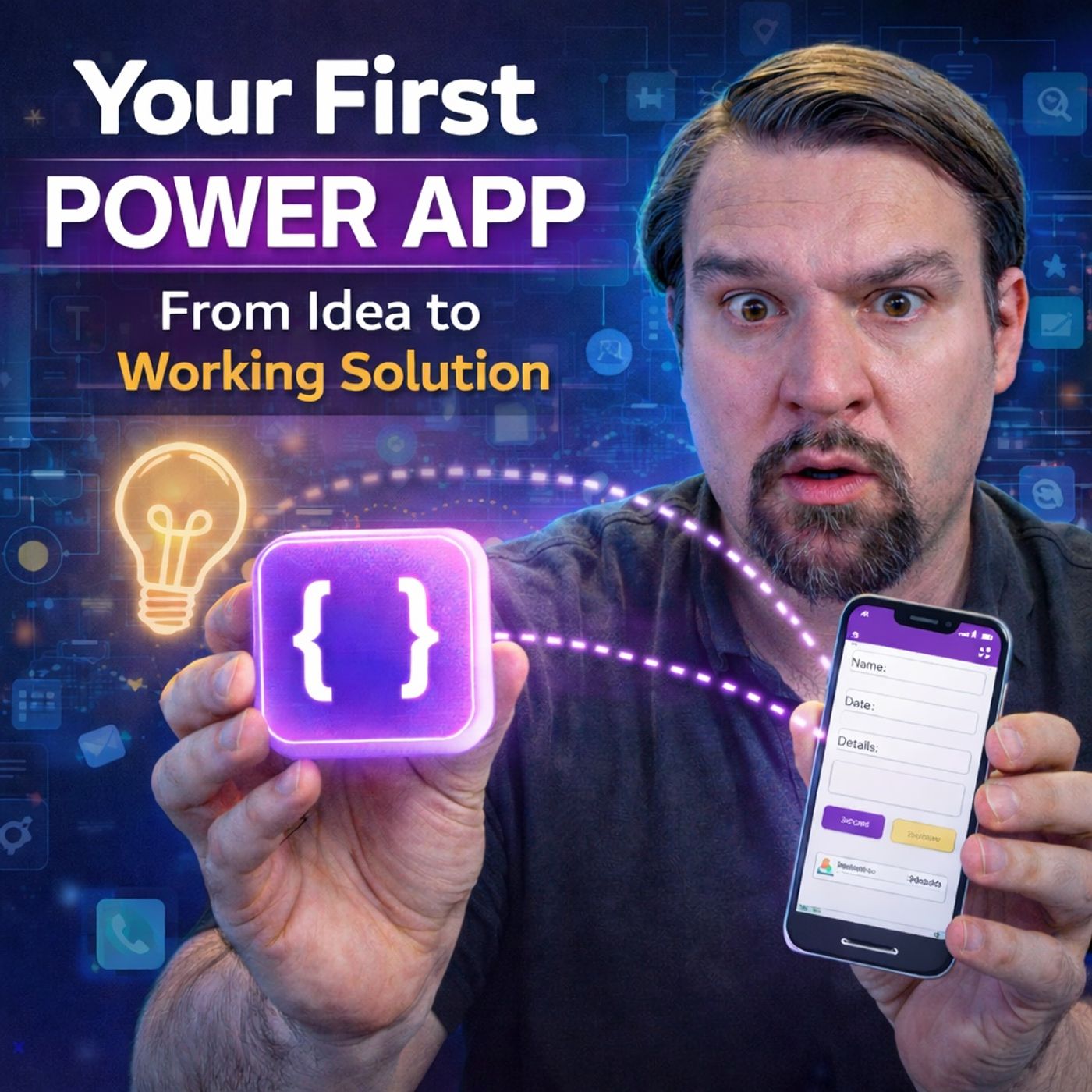
Your First Power App: From Idea to Working Solution
from M365.FM - Modern work, security, and productivity with Microsoft 365 · host Mirko Peters - Founder of m365.fm, m365.show and m365con.net
Most organizations think building an app is about screens, features, or tools. It’s not. Because apps don’t create value on their own—they change how work enters the business. And if the entry point is weak, everything behind it becomes slower, messier, and harder to trust. In this episode, we break down why your first Power App matters far more than it looks—and why the real shift isn’t “having an app,” but turning intent into structured, visible, and actionable work.🚀 What You Will LearnWhy data alone doesn’t change business behaviorThe critical difference between stored intent vs executed processWhy most first apps fail before anyone even opens themHow to define a business problem in operating terms (not features)The real difference between Canvas and model-driven appsWhy your first app is a business interface—not a demoHow to reduce cycle time by fixing the entry pointThe hidden risks of default environments and licensing decisionsHow to handle real-world complexity without overbuildingWhy the best first app should feel boring (and that’s a good thing)🧠 Core InsightYou didn’t build an app. You redesigned how work enters the system.A request in email → creates ambiguityA request in Dataverse → creates structureA request with status → creates visibilityBehavior doesn’t change when data exists.It changes when interaction becomes easier than the workaround.❌ Why First Apps FailTeams start with screens instead of process intentOld workflows get copied into new interfacesToo many features get added before trust existsComplexity gets pushed onto users instead of the systemLicensing and environment decisions are made accidentallyThe app looks modern—but behavior stays the same⚠️ Failure Patterns 1. Digitizing the messEmail → becomes a formSpreadsheet → becomes fieldsConfusion → becomes UI👉 Same problem, better visuals 2. Overbuilding too earlyEdge cases dominate designMain path becomes unclearFirst release becomes fragile👉 Complexity replaces clarity 3. Confusing storage with executionData exists, but process doesn’t moveTables are created, but behavior stays unchanged👉 “We have the data” ≠ “The system works”🧩 Core Model Every first app must align three things:Event → How work enters the systemDecision → What happens nextStatus → What everyone can seeIf these are unclear, the app becomes decoration—not operation.🔑 Key TakeawaysYour first app is a front door, not a full systemAdoption comes from reducing friction, not adding featuresCanvas = interaction-first (front door)Model-driven = structure-first (operations workspace)Dataverse is not storage—it’s business structureSimplicity creates trust → trust creates usageFixing entry improves everything downstream🏗️ The Architectural Shift Move away from:Feature-first thinkingUI-driven design“Let’s include everything” releasesEmail + memory-based processesMove toward:Clear entry pointsStructured records in DataverseShared status modelsSeparation of interaction vs orchestration⚙️ Practical ShiftsMake the right path easier than the workaroundCapture only what the next decision needsKeep the first app small and focusedStore complexity in the data model—not the UIAvoid default environment for real solutionsAvoid unnecessary premium connectors early⚡ The 30-Day Move Pick one process that still runs through:EmailTeams messagesMemoryThen:Define:EventDecisionStatusBuild:One clean entry (Canvas app)One structured record (Dataverse)Measure:Time to submitTime to respondNumber of follow-upsIf the process becomes faster and clearer, you’re on the right path.🎯 Who This Episode Is ForIT leaders starting with Power PlatformArchitects designing first-use casesMakers building their first real appHR / Operations teams stuck in email workflowsAnyone whose “process exists”—but doesn’t actually work💡 Final ThoughtYour first app is not about Power Apps. It’s about changing how work begins. Because once the entry point becomes structured, visible, and trusted— everything behind it starts to move.Become a supporter of this podcast: https://www.spreaker.com/podcast/m365-fm-modern-work-security-and-productivity-with-microsoft-365--6704921/support.
Embed this episode
NOW PLAYING
Your First Power App: From Idea to Working Solution
No transcript for this episode yet
Similar Episodes
No similar episodes found.
Similar Podcasts
No similar podcasts found.