
EPISODE · Mar 30, 2026 · 2 MIN
Your Grandparents' Neighborhood Was Designed to Exclude Black People. Let's Talk About It.
from Education is Elevation · host The Conscious Lee
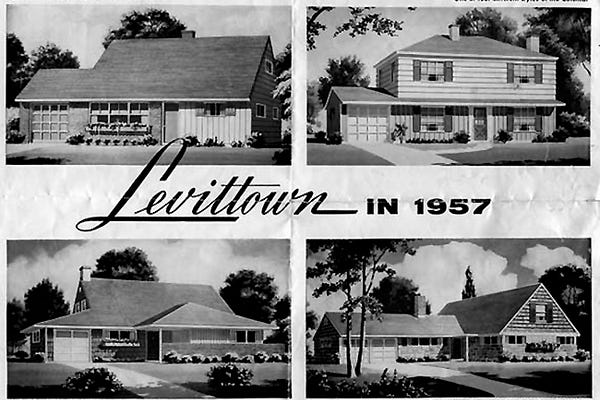
There’s a clip from the 1950s that every single American needs to see. A white woman in Levittown, Pennsylvania, looking dead into a camera, saying the quiet part loud: “I just could not live beside them. I don’t feel that they should be oppressed. But I moved here. One of the main reasons was because it was a white community. And that’s the only place I intend to live.”Let that marinate for a second. She didn’t say she hated Black people. She didn’t use a slur. She said she didn’t think they should be oppressed — and then in the very same breath explained that she chose her home specifically to avoid living near them. That’s not extremism the way most people picture it. That’s mainstream American ideology. That’s the moderate. That’s the liberal. That’s the person Martin Luther King Jr. warned us about in his Letter from Birmingham Jail — the white moderate who prefers order over justice, who agrees with the goal but not the method, who says “I support your rights, just not next door to me.”And y’all, that wasn’t some fringe figure. That was the average Levittown resident. Feel me? She was the demographic.Now let me give you the context that your school probably skipped over, because this matters.Levittown: The Blueprint for American SuburbiaLevittown, Pennsylvania wasn’t just a neighborhood. It was one of the first and largest planned suburban communities in the United States, developed by William Levitt and his company Levitt & Sons beginning in the late 1940s and expanding through the 1950s. Levitt built thousands of affordable, mass-produced homes for returning World War II veterans and their families, and the development became the model that suburbs across the entire country would follow for the next half century.But here’s the receipt they don’t put in the brochure: Levitt’s company had an explicit policy. No homes would be sold to Black families. This wasn’t informal, wasn’t a wink-and-nod arrangement. It was written into the contracts. Levitt himself said publicly that he could solve a housing problem or he could solve a racial problem, but he couldn’t combine the two. In other words, the prosperity of white American families was built on the contractual exclusion of Black ones. That’s not opinion. That’s the historical record.In 1957, when William and Daisy Myers became the first Black family to move into Levittown, Pennsylvania, they were met with mobs. Hundreds of white residents gathered outside their home. Crosses were burned. Rocks were thrown through windows. Confederate flags were raised. The police stood by and watched. And the woman in that clip — the calm, composed one who just couldn’t live beside them — she was the moderate version.The “Class Not Race” LieA lot of folks today will tell you it’s more about class and less about race. I hear this constantly. It’s one of the most persistent deflections in American discourse. But Levittown dismantles that argument in real time. The Myers family had the economic means to purchase a home in that community. William Myers was a college-educated veteran with a professional career. By every metric of class status that white America claimed to value, the Myers family qualified.It didn’t matter. Not one bit. Because when that woman said “I just could not live beside them,” she wasn’t talking about income brackets. She wasn’t evaluating credit scores. She was talking about Blackness itself. The disqualification was ontological — it was about being, not about having. You could have the job, the education, the military service, the down payment. You could check every single box. And they still didn’t believe you was worthy enough.That’s ideology. That’s not a policy failure. That’s a belief system operating exactly as intended. And we need to be precise about that distinction because it changes everything about how we understand the present.The Wealth Transfer You’re Not Supposed to TraceNow here’s where the thinking deeply about shallow stuff comes in. The suburbs of today were created back then, in the 1950s and 1960s. Every cul-de-sac, every homeowners association, every property tax-funded school district — those structures trace back to this moment. And the wealth that was generated through homeownership in those communities? That wealth didn’t just sit still. It compounded. It transferred. It moved from generation to generation to generation.The GI Bill — one of the most celebrated pieces of social legislation in American history — was administered in a way that systematically excluded Black veterans from its full benefits. White veterans got low-interest home loans, bought homes in places like Levittown, built equity, passed that equity to their children, who used it to fund college educations, start businesses, and buy their own homes. Black veterans were denied those same loans, steered into redlined neighborhoods where property values were suppressed, and locked out of the single greatest wealth-building mechanism in twentieth-century America.The Federal Housing Administration didn’t just allow this. The FHA’s own underwriting manual explicitly warned against “inharmonious racial groups” and instructed appraisers to lower property values in neighborhoods with Black residents. The Home Owners’ Loan Corporation drew maps — literal maps — color-coding neighborhoods by perceived risk, and the “riskiest” designation, marked in red, correlated almost perfectly with where Black people lived. That’s where the term “redlining” comes from.So when somebody tells you “that was a long time ago,” ask them to do the math. My grandmother was born in the 1950s. Her mother was born in the 1930s. We’re not talking about ancient history. We’re talking about the people who raised the people who run the system right now. Two generations. That’s it.Education Is Elevation is a reader-supported publication. To receive new posts and support my work, consider becoming a free or paid subscriber.Ideology Outlasts PolicyThis is the part I need y’all to really sit with. When we talk about white flight, gentrification, or redlining, it’s crucial to acknowledge that it wasn’t just policy — it was ideology. Policies can be repealed. Laws can be rewritten. The Fair Housing Act of 1968 technically made housing discrimination illegal. But ideology? Ideology lives in the culture. It lives in school funding formulas tied to property taxes. It lives in zoning laws that mandate single-family homes to keep density — and by extension, certain populations — out. It lives in HOA covenants and real estate steering and the algorithmic bias baked into modern mortgage lending.The woman in that Levittown clip didn’t need a policy to tell her to exclude Black people. She had an ideology. And that ideology didn’t die with the Civil Rights Act. It adapted. It learned new language. It stopped saying “I just could not live beside them” out loud and started saying “I just want to live in a good school district.” It stopped saying “this is a white community” and started saying “this is a safe neighborhood.” The function is identical. The vocabulary evolved.Research from scholars like Richard Rothstein, whose work The Color of Law meticulously documents how government policy created and enforced residential segregation, confirms what Black communities have always known: this was deliberate, this was systematic, and this was bipartisan. Rothstein demonstrates that residential segregation in America was not the result of private choices or market forces. It was engineered by federal, state, and local governments through explicit racial policy. And the effects compound daily.Keeanga-Yamahtta Taylor’s Race for Profit extends this analysis into the post-civil rights era, documenting how the very policies designed to expand Black homeownership in the 1960s and 1970s were captured by predatory lenders and real estate speculators who extracted wealth from Black communities while the government looked the other way. The exploitation didn’t end with the Fair Housing Act. It shape-shifted.The Throughline to NowToday, the Black-white homeownership gap is larger than it was in 1960. Read that again. After the Civil Rights Movement, after the Fair Housing Act, after decades of supposed progress, Black homeownership rates have actually declined relative to white homeownership rates. According to the National Association of Realtors, the Black homeownership rate sat at approximately 44 percent as of recent data, compared to roughly 73 percent for white households. The gap is nearly 30 percentage points. That’s not an accident. That’s a system performing exactly as it was designed.And the wealth implications are staggering. The median white family holds roughly eight times the wealth of the median Black family. Homeownership is the primary vehicle for wealth accumulation in this country, and Black Americans were systematically locked out of it at the exact moment when it mattered most — when the suburbs were being built, when equity was compounding, when generational transfers were being set in motion.So when people say “just work harder,” when they say “pull yourself up,” when they say “it’s about class not race” — they’re either ignorant of this history or they’re invested in you not knowing it. Either way, the function is the same: it protects the status quo by making structural inequality look like individual failure.The Sound of the Modern ModerateLet me bring it back to that woman one more time. “I don’t feel that they should be oppressed. But I moved here because it was a white community.” That sentence structure — the acknowledgment followed by the but — is the grammar of American racial liberalism. It’s the syntax of complicity dressed up as compassion.You hear it today in every debate about affordable housing. You hear it in the resistance to zoning reform. You hear it when parents fight against school integration proposals. You hear it when neighborhoods organize against public transit expansions that would connect lower-income communities to suburban job centers. “I’m not racist, but...” “I support equality, but...” “I believe in diversity, but not in my backyard.”That woman in 1957 is not a relic. She is a prototype. And until we confront the ideology — not just the policy, but the belief system that animated the policy in the first place — we will keep reproducing the same outcomes in new packaging.Consider Becoming A Paid SubscriberI’m fighting to fill a critical void left by the retreat of public education media. I document and teach the histories, legal frameworks, and cultural knowledge that are being systematically erased or distorted. With no corporate backing or wealthy sponsors, this work depends entirely on readers like you. As a Black educator and researcher my work depends entirely on a community of readers, not corporate sponsors. If everyone reading this became a paid subscriber, we could build a full-time digital sanctuary: a new, independent source of PBS-depth reporting and curriculum, centered on Black expertise. But right now, less than 1% of my followers are paid subscribers.Every paid subscription directly funds the research, production, and distribution of work like this article — work that traces the ideological roots of segregation from Levittown to your zip code. If this history matters to you, if you believe education is elevation, become a paid subscriber today. This is how we build the infrastructure for the truth.Education Is Elevation is a reader-supported publication. To receive new posts and support my work, consider becoming a free or paid subscriber.5 KEY TAKEAWAYS* Levittown was a prototype, not an anomaly. The exclusionary model that Levitt built — affordable homes for white families, contractual exclusion of Black families — became the template for suburban development across the country. Understanding Levittown means understanding the ideological DNA of American suburbia itself.* The “class not race” argument collapses under historical scrutiny. The Myers family met every economic standard for homeownership in Levittown and were still met with mob violence. Residential segregation was never fundamentally about income — it was about an ideology that defined Black presence as inherently incompatible with white prosperity.* Ideology outlasts and outpaces policy reform. The Fair Housing Act made housing discrimination illegal in 1968, but the belief systems that animated segregation adapted into zoning laws, school funding formulas, real estate steering, and algorithmic lending bias. Repealing a law doesn’t dismantle a worldview.* Generational wealth is generational policy. The wealth gap between Black and white families is not the product of individual choices — it’s the compound interest on decades of federally subsidized white homeownership and federally enforced Black exclusion. Two generations separate us from legal segregation. The math doesn’t lie.* The moderate voice is the most dangerous voice. The Levittown woman who said “I don’t think they should be oppressed, but I can’t live by them” is the archetype for contemporary racial liberalism — the person who supports equality in theory while actively maintaining exclusion in practice. Confronting this pattern is essential to any honest reckoning with American inequality.BIBLIOGRAPHY & RELATED READINGS* Rothstein, Richard. The Color of Law: A Forgotten History of How Our Government Segregated America. Liveright, 2017.* Taylor, Keeanga-Yamahtta. Race for Profit: How Banks and the Real Estate Industry Undermined Black Homeownership. University of North Carolina Press, 2019.* Katznelson, Ira. When Affirmative Action Was White: An Untold History of Racial Inequality in Twentieth-Century America. W.W. Norton, 2005.* Kushner, David. Levittown: Two Families, One Tycoon, and the Fight for Civil Rights. Walker & Company, 2009.* Kruse, Kevin. White Flight: Atlanta and the Making of Modern Conservatism. Princeton University Press, 2005.* Anderson, Carol. White Rage: The Unspoken Truth of Our Racial Divide. Bloomsbury, 2016. This is a public episode. If you'd like to discuss this with other subscribers or get access to bonus episodes, visit theconsciouslee.substack.com/subscribe
Embed this episode
NOW PLAYING
Your Grandparents' Neighborhood Was Designed to Exclude Black People. Let's Talk About It.
No transcript for this episode yet
Similar Episodes
No similar episodes found.
Similar Podcasts
No similar podcasts found.