
EPISODE · Apr 28, 2026 · 10 MIN
Your Kids Aren’t the Ones Buying Poptarts.
from Honestly Unorthodox · host Kayla
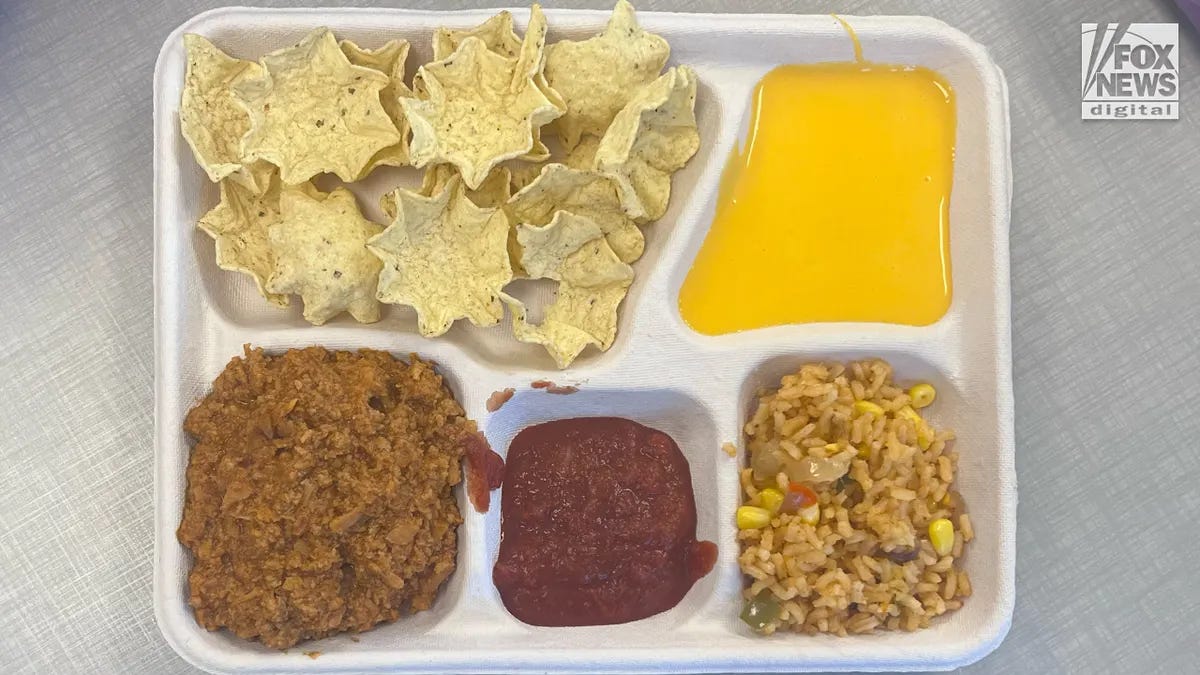
“Lard ass” was the most crowd-pleasing term for overweight children in the 90’s. Genetics blessed my brother and I with lean-yet-muscular physiques with little effort, though we inherited my Dad’s affinity for sports from early on. We were never targeted as lard-asses, and I also don’t remember us calling others “lard-ass” unless they were our closest friends.Adults passively shushed those of us slinging the sneer before moving back into the day’s lesson: preparing us for the mile-run fitness test. The test, which now only about 25% of the adult American population can complete without stopping, was the ultimate social gauntlet for chubbier minors. Ha! Look at lard-ass run! Kids are cruel.Thanks for reading Honestly Unorthodox! Subscribe for free to receive new posts and support my work.As a kid, there were only a handful of classmates that were considered overweight. It’s why terms geared toward their appearance were the “ultimate diss”: so few kids fell under the category that even being “big-boned” made one a target for abuse.One of the few overweight kids came from an entire family of morbidly obese individuals. In retrospect, it was clearly environmental-and-lifestyle-based choices which resulted in an entire family to balloon to weights we now know contribute heavily to all-cause mortality.Genetics certainly play a role, and should be weighted heavily in forming opinions about the causes of childhood/adult obesity. But genetics alone do not account for a family of 4, 5, or 6+ people all being obese.It’s this very reason why allowing children to become overweight and obese should be considered a form of parental neglect.The strongest version of this argument leans on responsibility and preventable harm.1. Knowing the Harms But Choosing Harm RegardlessThe nutrition information widely shared is, in short, confusing. On one hand, there are high-influence, public-facing individuals claiming not to touch receipts because of toxins infused in the threads, along with stamping everyday carbohydrates as “poisonous.” Others claim carbohydrates are crucial to increasing little athlete’s strength and aerobic capacity. Is protein the silver bullet we’ve made to believe it is? What about fiber?Despite nutritional information becoming a hot commodity from a marketing perspective, eating “well” is largely common sense. A serving of meat, a serving of vegetables, a serving of home-made carbohydrates with limited sugar is all it takes to promote health in adults and children. Nutrition was easy enough that, up until the late 1970’s, only a small portion of the population was overweight—- let alone obese.Childhood obesity is dangerous. It is associated with early onset of serious, often deadly diseases like diabetes, cardiovascular disease, and cancer. Obesity is also closely related to sleep problems, orthopedic issues (i.e., it’s very hard on the joints), and social/psychological consequences. From this perspective, knowingly feeding children to the point of excess should be criticized in the same manner as a neglectful parent who exposes their children to the unnecessary danger of, say, riding in a car without a seatbelt, or second-hand smoke exposure. Perhaps it’s the “slow poison” of obesity that keeps families from seeing it as an acute brand of risk.The information is not what’s missing here. Claim confusion, claim societal constraints. There’s a clear pattern of choice as it relates to well-known, well-documented-and-studied risk.2. Kids Aren’t the Ones Buying CheetosThe concept of “kids’ menus” is a marketing scheme. There is zero reason why children should be given an entirely separate meal from what their parents or the rest of the family is eating. Because children don’t control their home food environment, and they’re clearly not responsible for preparing meals and purchasing crap-laden junk, the only culpable party is the parent.I love junk food. If it didn’t make my ass fat and render my thighs into cottage-cheese-like-corn-dogs, I’d eat it every single day. But I’m a responsible adult who understands the risks, much like the parents of young children who are chronically allowing consumption of ultra-processed, calorie-dense, sugar-rich “foods”, all while modeling highly sedentary lifestyles. This pattern of unmet needs, that is, structure, boundaries, and basic health-promoting routines, is entirely within a family’s control---- it does not matter who is president, how inflation has affected grocery bills, or what RFK Jr. suggests as the food pyramid.For parents of young children, I’d wonder what your response might be to your child eating Marshmallow Fluff with a side of Mountain Dew for breakfast each morning. I’d imagine (or I’d hope) that the response might fall under disgust, even exasperation. If these feelings do arise--- what is your next action?If children do not control what’s available, why do we expect them to control the outcome of their weight? If the inputs are adult-controlled... So is the result.3. Early Habits TrackThis speaks to my above point in that, despite some genetic lulls, children who grow up without early exposure to movement, exercise, portion awareness, and basic nutrition are statistically more likely to carry these poor patterns into adulthood. They can easily fall into the camp of adults who claim to “get back on track after their baby goes to kindergarten”, or “once I get promoted I’ll have more time to focus on my health,” or whatever other excuse remains to bolster our esteem.Failing to intervene early is on-par with a child who regularly misses school, whose teeth are rotting because of untreated dental issues, or who wears soiled clothing multiple days in a row. Framed this way, you’d think families may be more inclined to get their act together?Your child will not magically “grow out” of the habits you instilled. So it’s in the family’s best interest to choose the good ones.4. Obesity Is Expensive and is Eating Your Tax DollarsObesity is a colossal economic force entirely unrelated to “beauty standards”, social media, and psychological impact. Sure, much of what drives childhood and adolescent behavior now can be attributed to some forces beyond what parents control. There are clear issues like public school lunches which make controlled portions and healthy eating that much more difficult to manage once children leave their home. But these obstacles do not eliminate the responsibility of us taxpayers: they magnify a caregivers’ role. I’d wonder if we disincentivized shitty eating through monetary measures (i.e., our paychecks), we’d see a change in poor health behavior?Obesity costs the U.S. healthcare system about $173 billion per year in direct medical spending. Some estimates push that even higher: up to $200+ billion annually depending on how it’s calculated. This is not an estimate of money from billionaire sources, either; a significant portion of these costs are being pulled from your paycheck through public programs.Type 2 diabetes, heart disease, stroke and certain cancers are expensive, very lucrative conditions. Not only do they require chronic, repeated doctor visits and hospitalizations, many patients undergo surgeries and consume multiple, lifelong medications to “manage” the symptoms.It’s because of these factors that our healthcare premiums bloat. Higher healthcare spending on obesity-related conditions results in higher employer healthcare and likely-lower wages (in an effort to offset these costs). In terms of workplace behavior and revenue-generation, reduced productivity, disability payouts, and chronic absenteeism are all directly tied to one’s poor health. It all adds up in the form of hard-earned taxpayer dollars.Money funneled into simply managing very preventable disease, instead of funding truly useful (but not profitable, unfortunately) programs like preventative education and healthcare, is the resource allocation problem of America.The private problem of family values is now everyone’s problem, a problem with clear public consequences.I’m an anorexic 15 years in recovery. I wholly acknowledge that a hyper-focus on children’s weight and eating habits, or embodying the “Almond Mom” meme, carries its own risks. Eating disorders are the most lethal of mental disorders. With this in mind, though, the “kids eat what adults eat” argument is less about the outcome (i.e., the child’s actual body and aesthetics) and more about the inputs---- the inputs that adults control (what is cooked, what is allowed, what boundaries are in place in the home).If a child’s environment consistently lacks structure around food, movement and exercise, sleep, and basic behavioral limits… is this not neglectful? Would we not call it neglect in any other domain? Why does childhood health, in particular, get a hall pass?Children cannot reasonably change their own environment and certainly know fuck-all about what is best for “future them”, despite what modern child psychology claims. We grossly underestimate their physical abilities all while burdening them with overestimations of their psychological capacity. They cannot, should not, and do not ever set their environment. Adults do.Call it whatever you want; neglect, laziness, gentle parenting. But when a child lives in a preventable pattern of impairment they didn’t choose, the label isn’t the problem.Thanks for reading Honestly Unorthodox! Subscribe for free to receive new posts and support my work. This is a public episode. If you would like to discuss this with other subscribers or get access to bonus episodes, visit honestlyunorthodox.substack.com
Embed this episode
NOW PLAYING
Your Kids Aren’t the Ones Buying Poptarts.
No transcript for this episode yet
Similar Episodes
No similar episodes found.