
EPISODE · Jun 2, 2026 · 21 MIN
Your trading journal may be hiding the real problem
from Breaking News To Trading Moves
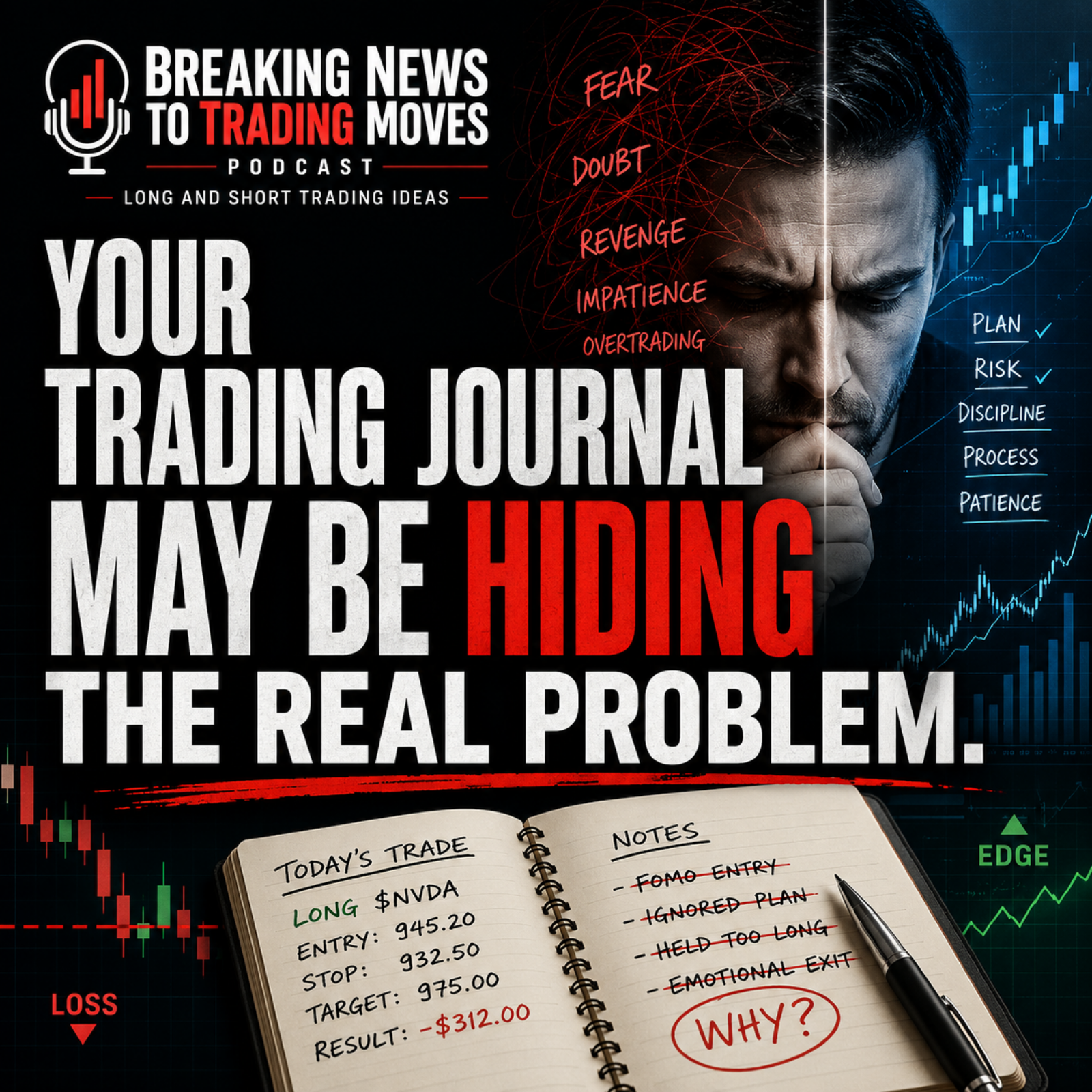
In this episode of Breaking News to Trading Moves, we look at the battle between willpower and arithmetic in retail trading. Can a structured pre-trade journal interrupt impulsive trading, or do traders need stronger systems that step in before stress, FOMO, revenge trading and overconfidence take control?The central idea is simple. A journal that only records what happened is not enough. A useful journal should force you to pause before the trade, explain the setup, define the stop, state why the trade could fail, and make the emotion behind the decision visible before money is at risk.Why journaling can helpA proper trading journal is not just a diary. It is a reasoning document. When you write down your thesis before entering a trade, you create a gap between emotion and action. That gap matters because many bad trades happen in the seconds between seeing price move and clicking buy or sell.The episode uses examples such as ignoring a stop loss, averaging down after the original idea has failed, chasing a viral stock after the crowd has moved, and rewriting history after a loss. In each case, the journal can reveal whether the trade was based on a setup or simply panic, greed or boredom.The problem with willpowerJournaling still relies on the trader being honest, calm and consistent. That is difficult when real money is involved. Stress can change how risk feels. A dip can look like a bargain. A loss can trigger revenge trading. A winning streak can make normal variance feel like skill.This is where the episode challenges the idea that discipline alone is enough. If a trader is in a fight-or-flight state, they may not open the journal, may ignore their rules, or may justify the behaviour they should be tracking.Why arithmetic mattersThe alternative argument is that traders may need objective systems that calculate the cost of bad behaviour. Instead of saying “I need more discipline,” the trader sees the numbers clearly: trading after a loss has cost £1,840 this month, doubling size after a winning streak has added drawdown, or socially influenced trades are underperforming by 20%.That feedback turns emotional mistakes into measurable financial patterns.Key pointsA trading journal should record the reason before the result, not just after the damage is done.Pre-trade writing can expose weak setups, emotional entries and hidden FOMO.Retrospective journaling can fail if the trader rewrites the story to protect their ego.Emotional trading mistakes are often behavioural patterns, not isolated accidents.Hard numbers can reveal the true cost of revenge trading, overconfidence and averaging down.Who this episode is forThis episode is for retail traders who already journal but still repeat the same mistakes. It is also for traders who feel disciplined when the market is closed but behave differently when price is moving. If your trading notes look organised but your account still suffers from the same emotional errors, the problem may not be your strategy. It may be that your journal is recording symptoms instead of diagnosing behaviour.Final thoughtYour journal should not just tell you what happened. It should tell you why you acted, what emotion was present, what rule was broken, and what that behaviour has cost over time. The goal is to stop treating trading mistakes as random events and start seeing them as patterns you can measure and improve.#StockMarket #Trading #Investing #DayTrading #SwingTrading #TradingJournal #TradingPsychology #RiskManagement #RetailTrading #TradingDiscipline #FOMO #RevengeTrading #TechnicalAnalysis
Embed this episode
Ready to play
Your trading journal may be hiding the real problem
No transcript for this episode yet
Similar Episodes
No similar episodes found.
Similar Podcasts
No similar podcasts found.