Your Worldview Matters
from Gnostic Reformation, Clear and Simple Hosted by Cyd Ropp
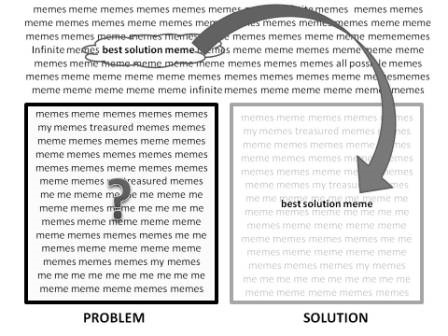
Today we're going to talk again about worldviews, ideologies, and memes. And the way I use the word meme is to represent an idea, a tidbit, a small piece of information. It was actually Richard Dawkins, of all people, that coined the term meme, and he used it as an analogous term to the word gene—so a meme is to worldviews and ideologies as a gene is to your DNA makeup. And your DNA is made up of genes, just as our ideologies are made up of countless memes. So I'm going to explain a little bit about what a meme is and what their effect is on our worldview. Do you know what your worldview is? What is your worldview? Have you thought about it? If you were king of the world, what would you have other people believe? What would be the consequences? If everyone believed what you believe, what would that world look like? Here at Gnostic Insights, I'm promoting a type of Gnosticism that comes from the Tripartite Tractate of the Nag Hammadi, primarily, as a type of worldview, a type of ideology that would help everyone to get along, that would make this world a better place. It's not just about our afterlife or what came before the Fall. It's about: how do we live our lives now? So I'm going to give you some fresh information at the beginning of this episode, but then I'm going to kick back into an excerpt from a previously recorded episode concerning ideologies and worldviews. In 2018, I posted an article called Apocalyptic Visions on my Simple Explanation blog, and if you go to the Gnostic Insights homepage, gnosticinsights.com, I'll be putting hypertextual links to that original article in this transcript. That first article, Apocalyptic Visions, was about the role of free speech in a representative republic, or what we usually refer to as a democracy. The system of government that the United States has been operating on is ideally run with what is called the consent of the people. That is, you agree with what your government is doing. The populace elects representatives who promise to bring the wishes of the people to their state house or to Congress, and to fairly represent those wishes. These representatives promise to vote in a manner that upholds the will of all the people in their district that they are representing. This is in stark contrast with a government ruled by a small group of elites who consider themselves superior to the populace, and therefore endowed with the ability to make better decisions than the people can make for themselves. These ruling elites do not care for the wishes of the people, and they do not feel bound to represent their constituents. In the kindest terms, this would be called a nanny state, because the people are being told what to do for their own good, like a nanny tells little children. In harsher terms, this ruling elite is called authoritarianism or fascism. In that case, the people may be told it's for their own good, but really, it's for the good of the ruling elite, which is usually a combination of extremely wealthy industrialists who make money from the legislation they enforce, and ideological fanatics who apparently believe in the agenda they impose upon the masses, again, “for their own good,” despite the negative outcomes their decisions may bring. There's an old saying that power corrupts, and absolute power corrupts absolutely. We also hear the expression, follow the money, in order to figure out who is actually in control. The ones who are in control are both those who profit financially at the expense of others, and those who gain more control over the population as an outcome of their decisions. So, when we find ourselves scratching our heads and wondering what on earth is happening, we can look around at exactly who is profiting by the decisions being enacted, both in power and control, and with money, big money. Figuring out who holds the power and who is making the money is key to figuring out what kind of government you have in control. And then look at the promises that are being made by those in control “for your own good” and “for the good of the planet,” and see how those promises are concentrating money and power in certain industries and rulers' hands. In order to concentrate power in the hands of the rulers and the elites, it is necessary to shut down freedom of speech and freedom of thought. With the rise of social media and the concentration of mainstream media into the hands of a few powerful elites, freedom of thought may now be easily controlled by controlling the information that is allowed to get out. We call that sort of information control propaganda because only the officially endorsed information is allowed to be disseminated. The Tripartite Tractate speaks a lot about power and the roots of power. The following quote sums it up pretty well: “The thought of the archons is not barren. All that they thought about they have as potential offspring. Fighters, warriors, troublemakers, apostates, disobedient beings, lovers of power.” (Tripartite Tractate, verse 79) Now I'm going to replay a portion of an episode from May of 2021 because I believe the message is needed now more than ever: What is and isn't allowed in the minds of members is determined by which memes are included and which are excluded from the group's ideological meme chord. Because of this, information exchanged between members of different cultures will resonate more strongly with the sender's memes than with the receiver's memes. For example, when an American speaks of free and democratic elections, his or her mimetic definitions for free and democratic may differ radically from another culture. The extent to which communication may occur between cultures is determined by their overlapping memes and the permeability of each culture's deterministic screens and the extent to which they are open to foreign memes. Another example of delimiting memes occurs during problem solving. The more tightly held one's memes are, the fewer solutions will present themselves. If you think only a hammer will drive a nail, you will not even consider the flat side of the heavy wrench lying nearby. If a group thinks outsiders are untrustworthy, then they will not trust any outsider. The ability to consider solutions outside the box and to engage in lateral thinking comes about through non-attachment to the shoulds and oughts of how things work. One must be willing to set aside treasured beliefs in order to perceive memes outside one's own bundle and thereby discover fresh solutions. In the same manner that a person's personality is defined by its unique meme bundle, institutions are also defined by their sets of treasured memes. Memes are even more important to an institution than are its members in the sense that members come and go, but memes persist. As President John F. Kennedy put it, “people may die, nations may rise and fall, but an idea lives on.” Each and every cultural institution we belong to—family, workplace, church, mosque, tribe, nation, and so on—not only comes with its own bundle of shared memes held in common by its members, it also comes with a filter that limits members from acknowledging or adopting ideologically incompatible memes. Institutions are defined as much by their excluded memes as they are by their included memes. An exclusive institution holds tightly to the identity provided by its current memes. Its border is strong and its filter is powerful. An inclusive institution allows members more latitude in the memes they may hold. Its border is less defended, its filter less opaque. An open-minded institution allows that there may be memes out there in the larger culture of value. Its filter is more permeable. In the United States, for example, and I believe it's worldwide at this point, progressive institutions are no longer inclusive. They talk as though they're inclusive, they talk as though they accept diversity of thought and behavior, but actually they only currently accept their particular view, so they are no longer a… This is a public episode. If you'd like to discuss this with other subscribers or get access to bonus episodes, visit cydropp.substack.com/subscribe
Embed this episode
No transcript yet.