
EPISODE · Feb 23, 2026 · 1 MIN
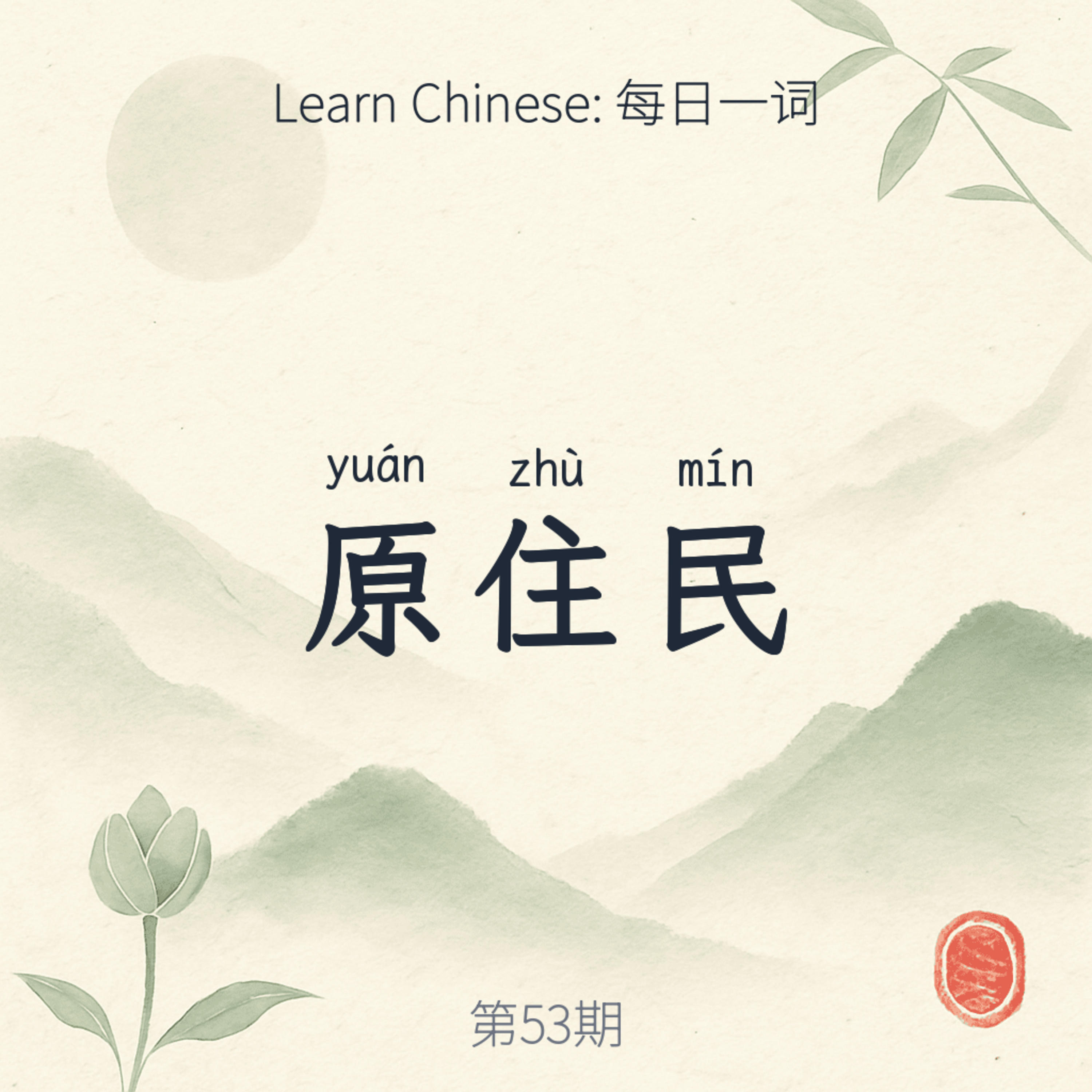
原住民 (yuán zhù mín)
from Chinese Word of the Day | 每日一词 · host Gallant Guo
特师的每日一词,2026年2月21日的词汇是:原 yuán 住 zhù 民 mín释义 Definition原住民是指某个地区最早居住的居民,通常指在殖民或外来移民到来之前就生活在那里的民族。原住民 (yuán zhù mín) refers to the earliest inhabitants of a region, typically referring to ethnic groups that lived there before colonization or the arrival of external immigrants.例句 Example2026年2月20日的《第一财经》杂志中,有篇标题为《AI时代的原住民》的文章是这样用这个词的:「对这批AI时代的原住民来说,AI是日常之用,他们并没有像成年人那样展现出特别的惊奇。」这里说的是在人工智能时代成长起来的年轻人,他们从小接触AI技术,已经习以为常。In the February 20, 2026 issue of the magazine 'First Financial', there is an article titled 'AI Era's 原住民' that uses this term as follows: 'For these 原住民 of the AI era, AI is a daily tool, and they do not show the same special amazement as adults.' This refers to young people who grew up in the age of artificial intelligence, having been exposed to AI technology from a young age and already accustomed to it.你知道吗? Did You Know?原住民和土著意思相近,都指最早居住在某地的人,但原住民更常用于正式或学术语境,而土著有时带贬义。这个词源于日语,在20世纪初传入中文。例如,台湾的原住民包括阿美族、泰雅族等;澳大利亚的原住民被称为土著居民。注意,原住民通常指特定民族群体,而本地人可能泛指在当地出生或长期居住的人。原住民 (yuán zhù mín) is similar in meaning to 土著 (tǔ zhù), both referring to the earliest inhabitants of a place, but 原住民 (yuán zhù mín) is more commonly used in formal or academic contexts, while 土著 (tǔ zhù) sometimes carries a derogatory connotation. This term originated from Japanese and was introduced into Chinese in the early 20th century. For example, Taiwan's 原住民 (yuán zhù mín) include the Amis and Atayal peoples; Australia's 原住民 (yuán zhù mín) are referred to as Aboriginal residents. Note that 原住民 (yuán zhù mín) typically refers to specific ethnic groups, while 本地人 (běn dì rén) may broadly refer to people born or long-term residents in a local area.
Embed this episode
Ready to play
原住民 (yuán zhù mín)
No transcript for this episode yet
Similar Episodes
No similar episodes found.
Similar Podcasts
No similar podcasts found.