
All Episodes
100 Facts About the Earth — 120 episodes
The Earth's oceans are interconnected and form a continuous body of water and more
The Earth's atmosphere extends up to about 10,000 kilometers (6,200 miles) above the planet's surface and more
Earth's magnetic field protects the planet from solar wind and cosmic radiation and more
The Earth has a natural cycle of ice ages and warmer periods and more
The Earth is part of the Solar System, which includes the Sun, eight planets, and their moons and more
The Earth's surface is constantly being reshaped by natural processes such as erosion, volcanism, and plate tectonics and more
The deepest point on Earth's land surface is the Mariana Trench and more
The Earth's atmosphere scatters sunlight, creating the blue sky and more.mp3
The Earth has an oblate spheroid shape and more.mp3
Earth has been struck by numerous meteorites and asteroids throughout its history and more
The largest canyon on Earth is the Grand Canyon in the USA and more
The Earth's rotation causes the Coriolis effect, which affects the direction of wind and ocean currents and more
A year on Earth is about 325 days, which is why we have a leap year every four years and more
Earth’s oceans contain about 97 of the planet's water and more.mp3
The Earth's crust varies in thickness, ranging from about 5 kilometers (3 miles) under oceans to about 70 kilometers (43 miles) under contin
Earth has experienced five major ice ages and more
The Earth’s albedo (reflectivity) is about 30 and more
The Earth's crust is made up of various types of rocks igneous, sedimentary, and metamorphic and more
The Earth's magnetic north pole is not aligned with its geographic north pole and more
The Amazon Rainforest is the largest tropical rainforest on Earth and more
The Earth's outer shell is known as the lithosphere and more
The Earth's atmosphere contains 21 oxygen and more
Earth's magnetic field protects us from harmful solar radiation and more
Earth has one natural satellite, the Moon and more
Earth's Wonder and More
Earth is the only known planet with liquid water on its surface, which is essential for life as we know it.
The Earth's atmosphere is essential for life, providing oxygen and protecting us from harmful radiation.
The Earth's oceans are interconnected and form a continuous body of water.
The Earth has a variety of landforms, including mountains, valleys, plains, and plateaus.
The Earth's magnetic field is stronger at the poles and weaker at the equator.
The Earth's atmosphere contains about 03% carbon dioxide.
The Earth's surface is about 29% land and 71% water.
Earth has a variety of natural resources, including minerals, fossil fuels, and renewable energy sources.
The Earth's atmosphere is essential for the water cycle, which distributes water across the planet.
Earth's magnetic field protects the planet from solar wind and cosmic radiation.
The Earth's crust is made up of several major tectonic plates that move over time.
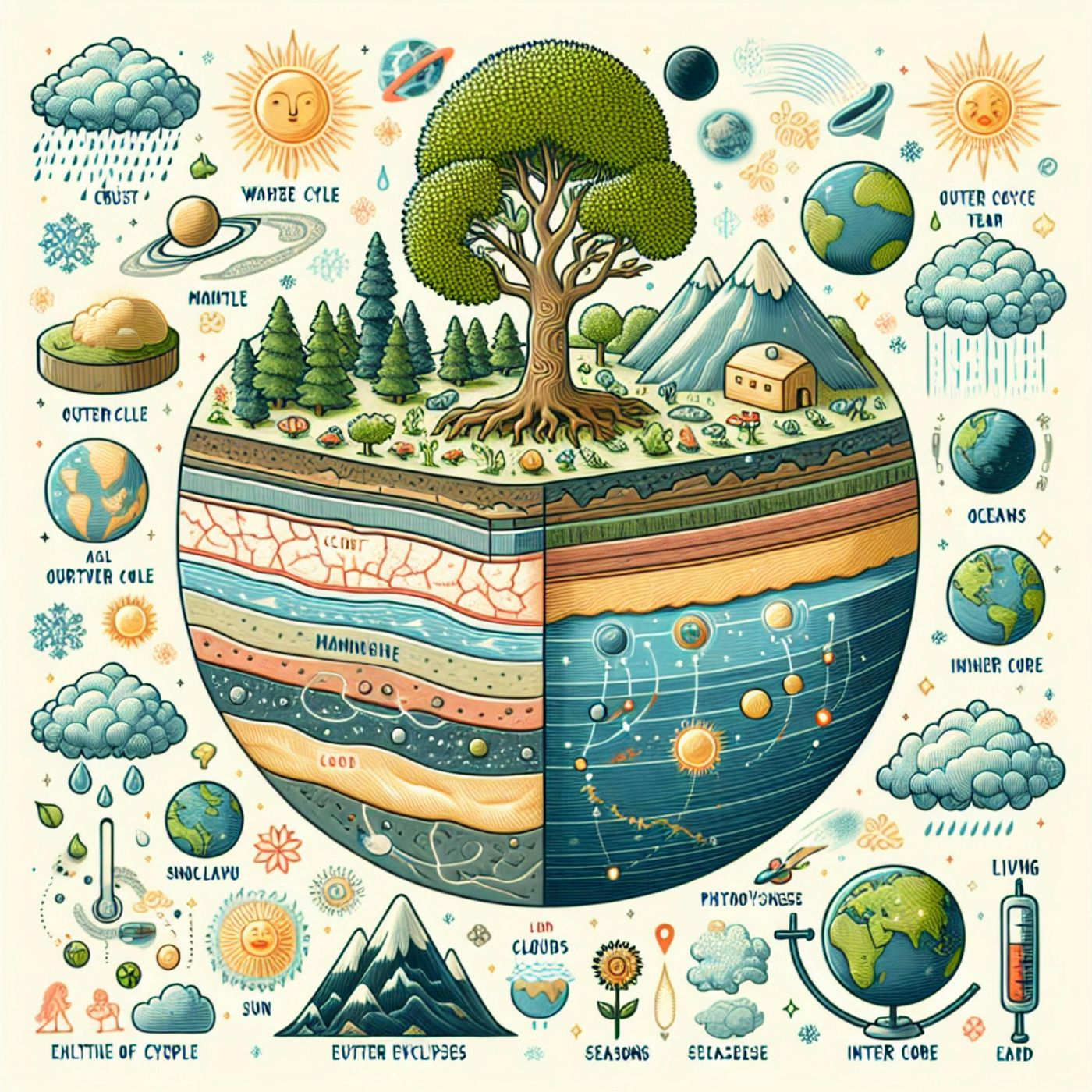
The Earth's interior is composed of several layers, each with different properties.
The Earth's surface temperature is moderated by the presence of its atmosphere and oceans.
The Earth has a natural cycle of ice ages and warmer periods.
Earth's orbit around the Sun is elliptical, not circular.
The Earth's oceans are home to a vast diversity of marine life.
The Earth is part of the Solar System, which includes the Sun, eight planets, and their moons.
The Earth's magnetic field extends several tens of thousands of kilometers into space.
Earth's atmosphere contains about 93% argon.
The Earth has polar ice caps that contain most of the planet's freshwater.
The Earth's surface is constantly being reshaped by natural processes such as erosion, volcanism, and plate tectonics.
The Earth's crust is made up of a mosaic of oceanic and continental plates.
The Earth has a unique biosphere that supports millions of species of plants and animals.
Earth's atmosphere helps to burn up most meteoroids before they reach the surface.
The deepest point on Earth's land surface is the Mariana Trench.
Earth has a diverse range of ecosystems, from deserts to rainforests.
The most abundant element in Earth's crust is oxygen.
The Earth's atmosphere scatters sunlight, creating the blue sky.
Earth's oceans play a crucial role in regulating the planet's climate.
The Earth's magnetic field is generated by the movement of molten iron in its outer core.
Earth’s longest living organisms are the bristlecone pine trees, which can live for thousands of years.
The Earth has an oblate spheroid shape.
Earth is sometimes referred to as the "Blue Planet" because of its appearance from space.
The Earth's atmosphere contains about 1% argon.
The Earth's surface is about 12,742 kilometers (7,918 miles) in diameter.
Earth has been struck by numerous meteorites and asteroids throughout its history.
The Earth's rotation is not perfectly uniform, and it varies slightly over time.
Earth's gravity is what keeps the Moon in orbit around the planet.
The largest canyon on Earth is the Grand Canyon in the USA.
The Earth is composed of four main layers: the crust, mantle, outer core, and inner core.
The longest cave system on Earth is the Mammoth Cave system in Kentucky, USA.
The Earth has a variety of climates, from polar to tropical.
The Earth's rotation causes the Coriolis effect, which affects the direction of wind and ocean currents.
Earth's atmosphere contains about 04% carbon dioxide.
The highest waterfall on Earth is Angel Falls in Venezuela.
The Earth's crust is divided into 15 major tectonic plates.
The Earth's magnetic field has flipped its polarity many times throughout history.
The Earth's atmosphere helps to keep the planet warm through the greenhouse effect.
The Earth has experienced numerous mass extinctions throughout its history.
Earth’s oceans contain about 97% of the planet's water.
Earth's atmosphere contains traces of several noble gases, including argon, neon, helium, and krypton.
The Sahara Desert is the largest hot desert in the world.
The average temperature of Earth's surface is about 16°C (8°F).
The Earth's crust varies in thickness, ranging from about 5 kilometers (3 miles) under oceans to about 70 kilometers (43 miles) under contin
Earth has a gravitational force that is 8 meters per second squared.
The Earth's core is made primarily of iron and nickel.
Earth has experienced five major ice ages.
Earth’s largest inland body of water is the Caspian Sea.
The Earth's atmosphere exerts a pressure of about 7 pounds per square inch at sea level.
The Great Barrier Reef is the largest coral reef system in the world.
The Earth’s albedo (reflectivity) is about 30%.
The longest river on Earth is the Nile River.
The Earth travels through space at a speed of about 67,000 miles per hour (107,826 kilometers per hour).
Earth is located in the Milky Way galaxy.
The Earth's crust is made up of various types of rocks: igneous, sedimentary, and metamorphic.
The Earth is slightly flattened at the poles and bulges at the equator.
Earth's atmosphere is responsible for the planet's weather and climate.
The Earth's magnetic north pole is not aligned with its geographic north pole.
The Earth's atmosphere is divided into five layers: the troposphere, stratosphere, mesosphere, thermosphere, and exosphere.
The Earth's surface is constantly changing due to the movement of tectonic plates.
Earth is the only planet in our solar system with liquid water on its surface.
The Amazon Rainforest is the largest tropical rainforest on Earth.
The Earth's largest desert is Antarctica.
The Earth's longest mountain range is the Andes in South America.
Earth experiences about 100,000 earthquakes annually.
The Earth's outer shell is known as the lithosphere.
The Mariana Trench in the Pacific Ocean is the deepest part of the world's oceans.
The ozone layer, found in the stratosphere, protects life on Earth by absorbing ultraviolet radiation from the Sun.
The Earth's atmosphere contains 21% oxygen.
The Pacific Ocean is the largest and deepest ocean on Earth.
The Earth's axis is tilted at an angle of 5 degrees, which causes the seasons.
The equatorial circumference of Earth is about 40,075 kilometers (24,901 miles).
Earth's magnetic field protects us from harmful solar radiation.
The Earth is about 54 billion years old.
About 30% of Earth's surface is land.
Earth is the densest planet in the Solar System.
The Earth's atmosphere extends up to about 10,000 kilometers (6,200 miles) above the planet's surface.
The lowest point on land is the Dead Sea shore, which is about 430 meters (1,411 feet) below sea level.
The highest point on Earth is Mount Everest, which stands at 8,848 meters (29,029 feet) above sea level.
The Earth's crust is divided into several tectonic plates.
A year on Earth is about 325 days, which is why we have a leap year every four years.
The Earth orbits the Sun at an average distance of about 93 million miles (150 million kilometers).
Earth's core is as hot as the surface of the Sun, around 5,500 degrees Celsius (9,932 degrees Fahrenheit).
The Earth's rotation is gradually slowing, adding approximately 7 milliseconds to the length of each day per century.
Earth has one natural satellite, the Moon.