Episodes
-
The Progressive Era Triple Alliance: Government as Cartellizer (continued)
The state must invest in human beings the same way you invest in cattle on a farm. This progressive corporatist view was behind the creation of the Rockefeller Foundation. Industrial solutions were to be strictly scientific, e.g. minimum wage laws, public works, and government concentration camps...
-
The Inflationary Boom of the 1920s
The Industrial Revolution and the development of the modern banking system were the two big things that happened in the Eighteenth Century in Britain. Why does the boom-bust cycle emerge? Is the cycle just a natural part of industry, or is it caused by the banking system? The Austrian explanation...
-
The Inflationary Boom of the 1920s (continued)
Republican policy has always been high tariffs, keeping foreign goods out. But, then the US would lend those countries money to be able to pay for our higher-priced exports. This peculiar foreign-lending scheme included farm goods. Until 1928 there was an enormous foreign lending boom. The stock...
-
The New Deal and the Post-War International Monetary System
The World Economic Conference of 1933 in London met to deal with America's Great Depression, but, without consulting anyone, FDR declared that the U.S. would not agree to the proposal because he wanted to take the U.S. off the gold standard in order to inflate the dollar. The gold-supporting...
-
The Future of Libertarianism
Rothbard explains why he is optimistic. The norm of civilization has been despotism and statism. The quantum quality change in history has been the Industrial Revolution from mid-18th Century to mid-19th. Only the free market, libertarian society can expand this viable and moral industrialism. A...
-
The Rise of Big Business: The Failure of Trusts and Cartels (continued)
Despite the drive for monopoly, only oil, sugar and corn products ended up dominated by a particular company. Bigger was not better. Biggest was not best. Smaller and more mobile was more competitive. Major inventions are still coming from small firms. From Murray Rothbard's 20th Century American...
-
The Progressive Era Triple Alliance: Government as Cartellizer
The progressive period birthed the cancerous growth of the welfare/warfare state, fake capitalism, the middle way, neomercantilism, and the corporate state. Morgan and Rockefeller men warred with each other over many issues and many generations. Effective competition was attacked as government...
-
The Rise of Big Business: The Failure of Trusts and Cartels
In the 19th Century and the beginning of the 20th, the rise of big business on the free market could not create monopolies and cartels. Only government could do that. Government tried. Government failed. From Murray Rothbard's 20th Century American Economic History lecture series.
About this show
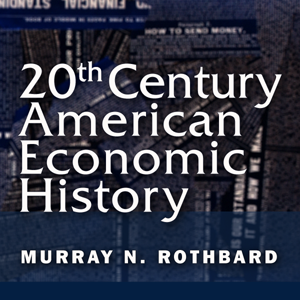
A rare collection of eight Murray N. Rothbard lectures.
Hosted by
Murray N. Rothbard