
PODCAST · technology
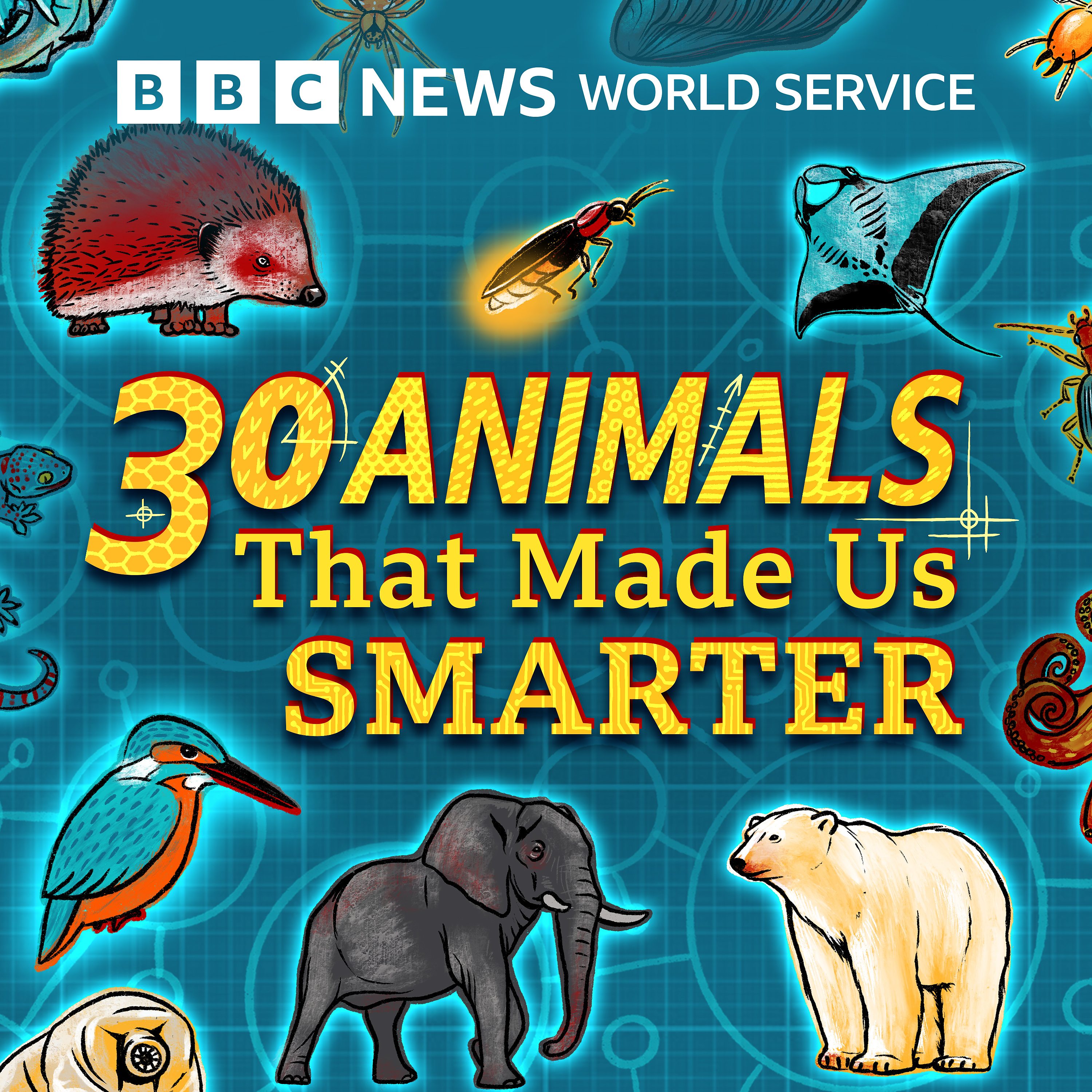
30 Animals That Made Us Smarter
by BBC World Service
Amazing things humans have learnt from the animal kingdom. Inspiring, fascinating, bingeable.Please note, we are no longer able to receive emails for this series.
Episodes
-
Insects and mobile phone
S2 Ep 30. Smart phones could become even smarter – thanks to ants, beetles, moths and spiders! A multi-animal special episode, marking the season 2 finale. Patrick explores what could be an insect inspired phone of the future! There’s the story of the fire ants and bark beetles and a new camera...
-
Butterfly and eye implant
S2 Ep 29. Not all butterflies are colourful. The transparent wings of the longtail glasswing butterfly may hold the key to more effective eye implants. This could be of huge benefit to people with glaucoma - the second leading cause of blindness in the world. Get in touch:...
-
Slug and surgical glue
S2 Ep 28. From goo to super glue! Slug slime may hold the key to mending wounds without stitches or staples. Scientists have developed new adhesives based on the properties of slug slime, that are as sticky as any glue, stretchier than a rubber band and aren’t toxic to humans. This sticky…
more -
Dragonfly and sky spy
S2 Ep 27. The amazing agility of a dragonfly leads to the creation of a new spy drone. Their four wings can move independently of each other, enabling them to fly forwards, backwards, sideways, up and down and suddenly stop and hover like a helicopter. This caught the attention of engineers who...
-
Kingfisher and soil erosion
S2 Ep 26. A very clever solution to a significant environmental problem based on a kingfisher’s eyelids. When the brightly coloured bird dives for food, its eyes are covered in a way that protects the kingfisher’s eyeballs, rather like swimming goggles protect ours. Architects have copied this...
-
Bees and fast deliveries
S2 Ep25. Sweet moves! Honey bees have developed an extraordinary form of communication known as the “waggle dance”, which directs other bees to where the best nectar can be found. As more and more bees explore the area, their directions become more refined. This method of refining information has...
-
Jellyfish and underwater robot
S2 Ep 24. The world’s most efficient swimmer is the moon jellyfish! It’s the inspiration for a soft underwater robot that is safe enough to use in fragile environments like coral reefs and aquatic archaeological sites. By contracting a ring of muscle, the jellyfish can push water out of their...
-
Polar bear and insulation
S2 Ep 23. The science behind some fascinating fur could help humans keep warm in space. A polar bear’s fur is brilliant at insulating it from freezing arctic temperatures. Each shaft of hair contains multiple chambers which trap heat close to the skin, making it an incredible thermal insulator....
-
Electric eels and medical implants
S2 Ep 22. From heart stopper to heart saver? The electric eel creates energy within its body to shock its prey. Scientists are copying the electricity-producing cells of the eel to develop a new type of soft, fleshy battery which may be used inside the body to power medical implants. Let us know...
-
Camel and desert architecture
S2 Ep 21. Take a peek into a camel’s nose! The science inside could help to cool desert homes. A camel re-absorbs the water normally lost in the breathing cycle, keeping its temperature down. An architect has copied this to create a system that could control the temperature of desert dwellings...
-
Lobsters and space telescopes
S2 Ep 20. How a sea creature can help us see more of our universe. A lobster’s eyes have evolved to spot food and potential threats in murky conditions at the bottom of the ocean. Scientists have copied their structure to create a new X-ray telescope that can be used to see into the dark expanse…
more -
Pangolins and Waterloo Station
S2 Ep 19. A tricky design challenge solved! All thanks to the scaly skin of the pangolin. Scales cover its body in an overlapping pattern, providing both flexibility and armour against attack. Architects copied this to create a glass roof for a famous British railway station, which meant the...
-
Ants and mini robots
S2 Ep18. Snap! The trap-jaw ant’s amazing jaws can move faster than a speeding bullet, snapping shut at a top speed of 230km per hour. When the ant bites down, the force is so great that it launches the insect high into the air. Their powerful spring mechanism is being copied by scientists and…
more -
Horseshoe crabs and vaccines
S2 Ep 17. A new synthetic test to create safe vaccines – based on the secrets of the horseshoe crab and its blue blood. Scientists hope this new technology could mean they no longer need to use the blood to test vaccines for harmful bacteria. Get in touch: www.bbcworldservice.com/30animals...
-
Arapaima fish and armour
S2 Ep16. It’s a “living fossil”! This fish can resist piranha attacks and is inspiring a new body armour. The arapaima has been swimming the waters of the Amazon for millions of years. It’s also home to a famous predator, the fearsome piranha. The Arapaima has a secret weapon – it’s scales are…
more -
Barn owl and drone
S2 Ep15. Learning from Lily the owl – could she help small aircraft cope with turbulence? Scientists hope what they’ve learnt about barn owls might help with the design of drones. Let us know what you think. #30 Animals www. bbcworldservice.com/30animals
-
Manta ray and pollution solution
S2 Ep14. Will a ray save the day? It’s inspiring a way to prevent more pollution of our oceans. As sea water enters a manta ray’s large mouth, plankton are captured and other particles are thrown up by whirlpools. Systems are being developed to extract or capture microplastics from water. Thanks...
-
Cicada and safe surfaces
S2 Ep13. Bye-bye bacteria! How an insect’s wings inspired materials that could keep surfaces free from bacterial infections. The wings of cicadas are covered with tiny spikes which burst the walls of bacteria and kill them. Replicating this remarkable design could lead to the development of...
-
Cats and road safety
S2 Ep12. We love cats (well, many people do)! Thanks to one feline friend, they help keep us safe. An inventor narrowly avoided a road accident thanks to the eyes of a cat. He developed reflective road studs and named them, fittingly, ‘cat’s eyes’, which help us drive safely at night. Thanks for...
-
Octopus and transplants
S2 Ep11. Can the remarkable dexterity of octopus suckers help improve delicate surgery? The octopus uses its powerful arms to grip onto rocks, capture prey and walk around the sea floor. Suckers are found along the arms which are crucial for manipulating objects. The action of these suckers has...
-
Rose butterfly and solar panels
S2 Ep10. Their wings aren’t just for show! The rose butterfly can help us harness energy from sunlight. Scientists have been inspired by their wings’ unique lattice structure. This could lead to cheaper and more effective solar panels. Thanks for listening. Let us know what you think. #30Animals...
-
Sponge and skyscraper
S2 Ep9. Ever heard of Venus’s Flower Basket? It’s the marine sponge inspiring bridges and skyscrapers! Its delicate and resistant structure is both lightweight and very resistant to buckling - it may provide the blueprint for the next generation of big builds. Thanks for listening. Let us know…
more -
Cow and sewage treatment
S2 Ep8. A cow’s amazing stomach could hold the key to stopping wastewater pollution. Engineers have designed a new sewage treatment plant based on a cow’s unique digestive process. Wastewater is progressively cleaned by microorganisms until it’s safe enough to be released into the environment.…
more -
Snake and rescue robot
S2 Ep7. Imagine being rescued by a snake! A new generation of wriggly robots, inspired by the movement of snakes, could save your life. The way a snake can move over a complex variety of landscapes could be replicated by robots to rescue people after earthquakes. It could even help with...
-
Mantis shrimp and aircraft
S2 Ep6. Bam! The mantis shrimp’s powerful punch could change the way we build cars and planes. The little crustacean has inspired lighter, more impact-resistant materials. These shrimps are ferocious predators which use their forelimbs to hit their prey with one of the strongest weight-for-weight...
-
Wasp and keyhole surgery
S2 Ep5. Scared of wasps? They could help keep you alive, perhaps transforming life-saving keyhole surgery. Parasitic wasps possess a long tube which can reach inside the body of their host where they lay their eggs. Thanks for listening. Let us know what you think. #30Animals Get in touch:...
-
Hedgehog and helmet
S2 Ep4. A hedgehog could save your life! Spiky quills protect hedgehogs from being eaten by predators. But they also play an important role in cushioning the animal when it falls, keeping it safe even if it plunges from a great height. And now, they can help keep humans safe, too. By mimicking…
more -
Camel and cool medicines
S2 Ep3. Camels are cool. They cope with intense desert heat, inspiring a gel for storing medicines. It could extend the life of medicines, making it easier to transport them across the globe. Thanks for listening. Let us know what you think. #30Animals Get in touch: www.bbcworldservice.com/30animals
-
Squid and self-healing materials
S2 Ep2. What if a robot could fix itself? It’s the story of the secret of scary squid suckers, with their razor sharp teeth-like structures. They could hold the key to materials which can repair themselves without human intervention. Scientists think this could be useful for repairing hazmat…
more -
Elephant and robotic arm
S2 Ep1. An elephant’s trunk is amazing. Imagine a robotic arm with the same capabilities. Not only does a trunk have the strength to topple trees and lift hundreds of kilograms in weight, it can also perform precise and delicate movements. It has inspired engineers to create a "bionic handling...
-
Season 2 is coming soon!
Get ready to meet 30 more amazing animals. From cats to camels, ants to elephants, discover the unexpected things they can do that have inspired new technologies that make us smarter. Season 2 begins on 28 June. #30Animals
-
30 Animals LIVE
The "nerd-fest" live show! A scorpion and tarantula on stage, biomimicry bingo and animal music, recorded at the BBC Radio Theatre in London. Welcome to the season finale, with your suggestions of animals which are inspiring us. Watch all the animations here: www.bbcworldservice.com/30animals…
more -
Spider and remote sensing
When a fly hits a spider’s web the web sends vibrations to the spider crouched at its edge. This is known as remote sensing. The webs may help us design sensors to detect vibrations in the earth and the built environment. These vibrations could be turned into electricity. This could lead to small...
-
Butterfly and paints
The wings of one of the most beautiful butterflies could transform paints and textiles. Scientists are fascinated by how the blue morpho produces its shimmering blue effect. With Patrick Aryee. #30Animals www.bbcworldservice.com/30animals
-
Peacock and computer screen
Unlocking the secrets of the dazzling colours in the tail of the peacock. It is designed to attract females but has caught the eye of scientists, as they mimic it to develop high-resolution reflective colour-screen displays. With Patrick Aryee. #30Animals www.bbcworldservice.com/30animals
-
Ant and networks
How road, subway and computer systems could be helped by trails created by turtle ants. For extra information about all episodes, visit: www.bbcworldservice.com/30animals #30Animals
-
Mussel and foetal surgery
Babies in the womb could be saved with the help of a glue based on proteins found in mussels. Performing surgery on foetuses in the womb is an astonishing medical feat but closing the delicate amniotic sac after surgery is difficult. A synthetic adhesive could do the job and help save lives of…
more -
Butterfly and butterfly house
Imagine a building based on the shape of an egg – all thanks to the butterfly. Nature has long been a source of inspiration for the design of buildings, like the Sagrada Familia basilica in Barcelona. This is the story of a butterfly house inspired by the shape of the eggs of the White Royal...
-
Dolphin and tsunami detector
The way dolphins communicate is being studied to create tsunami early warning systems. They produce click sounds to help navigate and hunt for prey. They listen back to the echoes to help create a 3D image and visualise their surroundings. www.bbcworldservice.com/30animals With Patrick Aryee....
-
Bat and robot
Picture the scene after a serious earthquake or a tornado. A flying robot inspired by bats could help survey the damage. There may be burst gas pipes, live electrical wires and many other dangers. Scientists have been studying bats to design an “eye in the sky” for use in exactly these…
more -
Fish schools and windfarm
The way hundreds of fish move together may help with the design of wind turbines. Schools of fish appear to move as one - turning, contracting, expanding, even parting and then coming back together again. This is a beautiful sight. Scientists have been studying them to try to make wind farms more...
-
Bombardier beetle and fuel injection
It blasts a toxic spray at predators. Now this beetle may help cars become more fuel efficient. The bombardier is the species of beetle that even sprayed acid in Charles Darwin’s mouth. The 'biological cannons' may help in the design of powerful fuel injection systems. See our animations here:...
-
Bat and unassisted flight
Imagine flapping your arms and flying. Could we do that based on how the bat does it? Leonardo Da Vinci was fascinated by the flight of bird and bats and used to sketch ideas in notebooks for a flying machine called the Ornithopter. With Patrick Aryee. Catch-up with our animations here:...
-
Spider and window glass
How can we prevent millions of birds from being killed by flying into windows? The solution could rest with spiders. Webs containing UV reflective threads deter birds from colliding with them. With Patrick Aryee. To see our spider and window glass animation go to…
more -
Whale and wind turbine
The shape of flippers may help with the efficiency of wind turbines, thanks to humpback whales. Bumps on the edge of their flippers assist them, as they power through water. Biologist Frank Fish discovered this when he saw a sculpture. With Patrick Aryee. For more information and animations:...
-
Gecko and adhesives
How do geckos walk up walls and across ceilings? It is all down to the hair-like structure on their feet. A sticky material based on these clever lizards could help us grab debris in space! With Patrick Aryee. For more information and animations: www.bbcworldservice.com/30animals #30Animals
-
Spider and rescue robot
Meet the spider-inspired robot that one day might just save your life. Based on how spiders move, it could get to places too difficult for a rescue team to access. Just like our eight-legged friends, it can squeeze around obstacles and through small spaces. With Patrick Aryee. For more…
more -
Shark and hospital surfaces
Millions of ridged scales make it difficult for bacteria to attach to the skin of a shark. Can we reduce infections and fight superbugs in a similar way? Have a look at our beautiful animation to see how the shark’s scales or ‘denticles’ work: www.bbcworldservice.com/30animals With Patrick Aryee....
-
Albatross and drone
Imagine a drone that can fly like the Wandering Albatross. The huge bird harnesses power from the wind and sun and glides over the sea. It is extraordinary. And an engineer has designed a robotic glider that can also ride the wind, while surfing the waves like a sailboat. With Patrick Aryee. See...
-
Stenocara beetle and water collector
It performs headstands in a desert; now this beetle is teaching us how to collect water. The Stenocara beetle survives in one of the most arid places in the world – the Namib Desert in southern Africa. Scientists have been studying its wings and back. With Patrick Aryee. See our Stenocara beetle...
We're indexing this podcast's transcripts for the first time — this can take a minute or two. We'll show results as soon as they're ready.
No matches for "" in this podcast's transcripts.
No topics indexed yet for this podcast.
Loading reviews...
ABOUT THIS SHOW
Amazing things humans have learnt from the animal kingdom. Inspiring, fascinating, bingeable.Please note, we are no longer able to receive emails for this series.
HOSTED BY
BBC World Service
CATEGORIES
Loading similar podcasts...
Frequently Asked Questions
How many episodes does 30 Animals That Made Us Smarter have?
30 Animals That Made Us Smarter currently has 63 episodes available on PodParley. New episodes are automatically indexed when they're published to the podcast feed.
What is 30 Animals That Made Us Smarter about?
Amazing things humans have learnt from the animal kingdom. Inspiring, fascinating, bingeable.Please note, we are no longer able to receive emails for this series.
How often does 30 Animals That Made Us Smarter release new episodes?
30 Animals That Made Us Smarter has 63 episodes. Check the episode list to see recent publication dates and frequency.
Where can I listen to 30 Animals That Made Us Smarter?
You can listen to 30 Animals That Made Us Smarter on PodParley by clicking any episode. We provide an embedded audio player for direct listening, and you can also subscribe via your preferred podcast app using the RSS feed.
Who hosts 30 Animals That Made Us Smarter?
30 Animals That Made Us Smarter is created and hosted by BBC World Service.
URL copied to clipboard!