
PODCAST · religion
A Coptic Orthodox Journey through the Bible
by SMSA - COC
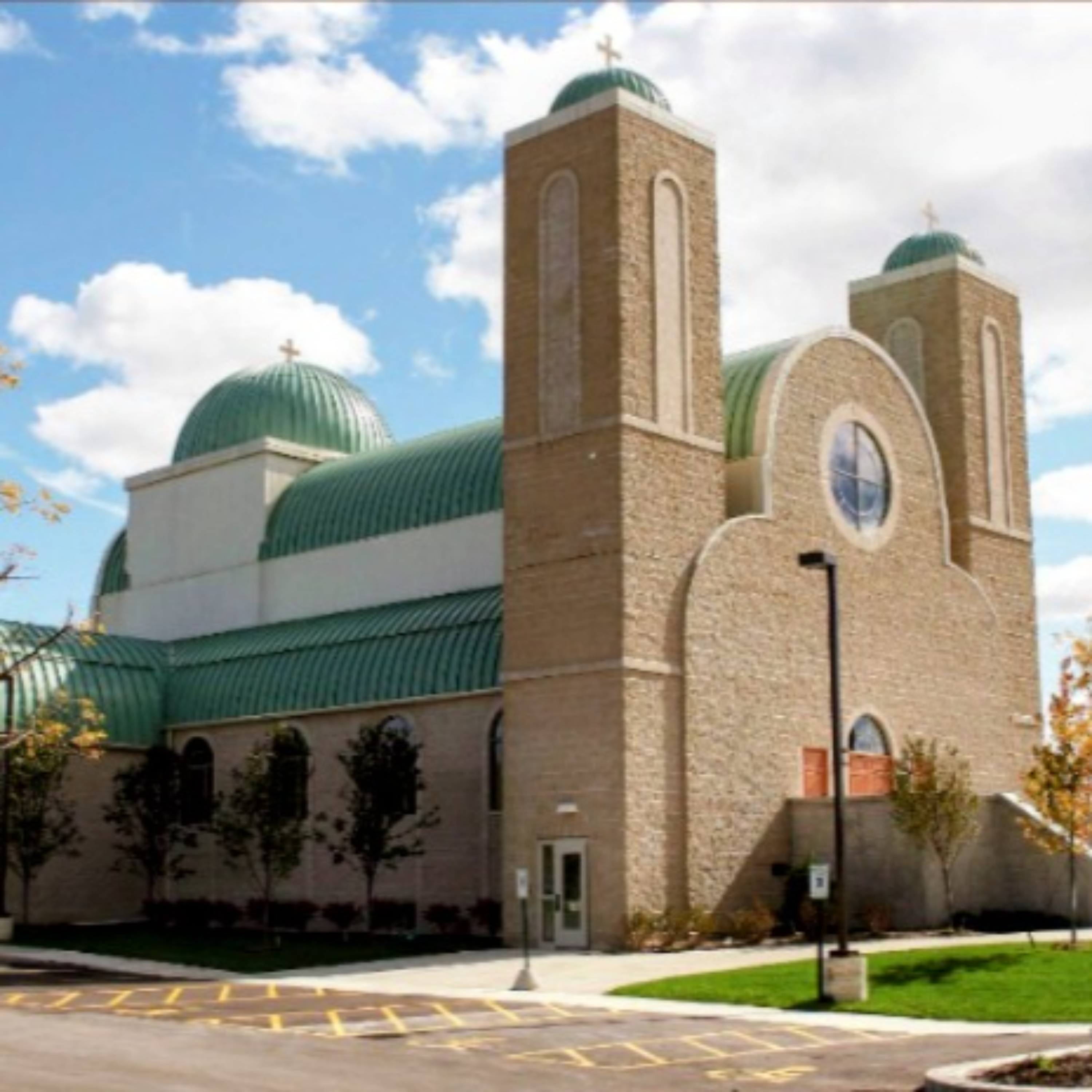
A verse-by-verse Bible Study from the Coptic Orthodox Christian perspective. Geared for those who want to understand the Bible from the perspective of one of the most ancient churches in the world. Established in the first century in Egypt by St. Mark the Evangelist, the Coptic Orthodox Church has spread to the four corners of the world. These podcasts were originally prepared for the college and young professionals of St. Mary & St. Antonious Coptic Orthodox Church in Milwaukee, WI. Please keep this service in your prayers. For more information, visit the church's website: wiscopts.net
-
71
Second Epistle to the Corinthians Chapter 12
In previous chapters, St. Paul defended himself against those who criticized him. He did it, not for himself but because he wanted the people of Corinth to not lose faith in him and start following the false teachers. These false teachers would take them away from Christ. St. Paul comes to the climax of his self-defense. Having related all his trials, adventures, and persecutions, he is about to show how these are allowed by the Lord in order to save him from being exalted by the abundance of his heavenly revelations, save him from pride. The abuse, necessity, and persecution he has experienced are not signs of his worthlessness. Rather, they are caused and necessitated by his greatness.To establish his apostleship, St. Paul here speaks about the divine revelations that he enjoyed; of which he confirms that it is not profitable for him to boast. When he presents it, he speaks about it like he is sharing the story of another person. He even says at the end of the last chapter, “If I must boast, I will boast in the things which concern my infirmity” (2 Cor 11:30). As if he is saying that if he boasts about himself it must be in his weaknesses. We see him discuss how God allowed for him to have a temptation in his body. What he truly boasts is the possibility granted to him by God to endure the temptations and the afflictions for the sake of the Lord; beside his exalted love for his people as his own children. Finally, he seeks from them to get prepared by the holy life, so that he would rejoice when he comes to them.In brief, we see St. Paul speak more clearly than anywhere else about his own visionary experiences. Even in admitting to these experiences, he treats them less as a boast than as a confession as he recounts how God has aided him in maintaining his humility. We have often heard about St. Paul’s thorn in the flesh. It is here that he shares it and how he prayed repeatedly that God would heal him and take it away but learned that what God had given him was sufficient. Paul saw even this persistent problem as a means to his repentance and humility.
-
70
Second Epistle to the Corinthians Chapter 11
In the previous chapter, St. Paul refused to compare Himself with others, especially with the false apostles; counting his call as divine, and his measures as not according to the human mind. Now, however, he decides to respond to all the criticism he has been receiving from the false apostles in Corinth. From what is known, it is believed that these false apostles were Judaizers. As a reminder, Judaizers are Christians from a Jewish background who felt that Gentile Christians should be following many of the Jewish laws, including circumcision and the food laws, if they really want to be Christian. And, yes, there were still people who made these arguments despite the council of Jerusalem we read about in Acts 15 that declared the opposite. Here St. Paul defends himself and, at the same time, criticizes these false apostles not because he cares about what they say about him but because they are taking people away from following Christ by preaching false doctrines. St. Paul needs to defend himself so the Corinthians follow the Truth, which is what he offers them.
-
69
Second Epistle to the Corinthians Chapter 10
In this and the next couple of chapters, St. Paul is preparing them for his next visit. That is why in this chapter we see him responding to several charges and suspicions which they have raised against him, and warns that he will exercise strict discipline if it is necessary when he arrives. We know that there were many detractors who came to Corinth and were casting doubt on his Apostleship. This is why he returns to his own defense in this chapter to defend his conduct and his authority. Regarding his conduct they accuse him of writing harsh letters and then being weak when he visited them in person. He explains that, in part, he does not want to use harshness in front of them. Regarding his authority, he says it is the same, in word, when absent, and when with them. When he is gentle in front of them it is a choice he is making and he pleads with them to not put him in a position to use his authority to discipline them to bring them back to Christ. When the false teachers evaluate themselves they do 2 things: 1) they set the measure, in other words they decide their standard by comparing themselves to themselves and 2) they compare themselves by themselves not by those who are superior to them. The result of these 2 things is that they are unwise because a person should evaluate themselves according to the measure of God and not a measure they set for themselves.
-
68
Second Epistle to the Corinthians Chapter 9
Chapter 8 is about the principles of giving. To ensure that he was not misunderstood in the last chapter of accusing the church in Corinth of being mean in giving, St. Paul presents an apology for his zeal in exhorting them to practice that grace (1-5). Then he goes on to give some instructions concerning the well-received gift, and how to practice it. While St. Paul writes about the collection for the Church in Jerusalem, he writes that he doesn’t need to bring it up because he knows of their willingness to send these contributions. He writes to them to ensure their gift is ready, while explaining their gift should be one of generosity and not one of compulsion. He did not want to show up and talk to them about contributions because if he did they might give them in front of him out of embarrassment and he did not want to put them in that position. Another reason is if they were not ready when he arrived it would be embarrassing for them (Corinth) and for St. Paul - imagine if some people from Macedonia came with him and saw the Corinthians were not ready. This would be embarrassing for them when they began the collection a year earlier. He also discussed the idea of sowing and reaping. We reap what we sow. So if we sow scarcely or abundantly that is what we will reap.
-
67
Second Epistle to the Corinthians Chapter 8
In the previous chapter, St. Paul continued a discussion about how we perfect our holiness, his joy at the Corinthians repenting, returning to God and the Church. He discussed Godly vs worldly sorrow and he shares his joy regarding their interactions with Titus.St. Paul begins a new topic in this chapter. He discusses collecting donations for the Jerusalem church.We previously discussed how collecting donations for that church accomplished many things including, helping those who were in need in Jerusalem, assists believers in living out their faith, and helps to grow relations between Churches who were mostly made up of Jewish followers of Christ with those who were mostly Gentile followers such as in Corinth. The Corinthians had already agreed to help the Jerusalem church as he asked them in 1 Corinthians 16. However, the money had not been collected so with great care he brings it up again in this chapter offering them an opportunity to fulfill their commitment.
-
66
Second Epistle to the Corinthians Chapter 7
Remember, St. Paul’s whole goal with this epistle is to get peace back and reconcile the people with him. In the last chapter he was speaking to the people who felt alienated. Telling them to come back to Church and that if they do not come back to church, they will end up joining a different community, away from God. He reminded them that they are different people now. They have been baptized and follow Christ so they cannot go back and follow one of those communities because you can’t have fellowship with them anymore. You have been transformed and no longer have anything in common with those people, those who worship pagan gods.In other words, he appealed to them to not associate with the world. He continues this idea at the beginning of this chapter. St. Paul begins by talking about how we perfect our holiness, then his joy at the Corinthians repenting and returning to God and the Church. He discusses Godly vs worldly sorrow and he shares his joy regarding their interactions with Titus.
-
65
Second Epistle to the Corinthians Chapter 6
In this chapter St. Paul speaks about his spiritual ministry, the sacrifice he is making for the Gospel, and about his authenticity as an apostle, because he wants the Corinthians to believe in his message - he is an authentic apostle and this message he delivers comes directly from Christ.This is important because there are a number of false prophets who are jealous of St. Paul and speak out against him, so the more people trust in him, the more they will listen to his message which is the message of salvation.
-
64
Second Epistle to the Corinthians Chapter 5
St. Paul has been defending his apostleship and explaining the nature of his service. In chapter 4 he explained that in spite of the suffering, in spite of the false accusations, in spite of hardships he faces he will not lose heart/hope. In this chapter he gives some reasons why he will continue to be hopeful. He says that even if they killed him (tent) he will be raised with the glorious body (a house not made with hands but prepared by God). He is confident we will go to heaven and be raised with Christ. This confidence is based on the Lord giving us the Holy Spirit as a guarantee. Here in the flesh we see God by faith, not by our eyes but when we are raised we see Him face-to-face. This is why we walk by faith here. He discusses how we must live our life and remember that eventually we will be raised before the throne of God and give an account of ourselves. Near the end of the chapter he reflects on his ministry. Knowing that he will be before God to be judged keeps him motivated to preach about Christ and to persuade people. It is not just the fear of God but his love of Christ that compels him. Also, he does not judge people on their appearance because he knows once people accept Christ they are a new creation in Him.
-
63
Second Epistle to the Corinthians Chapter 4
Having talked about the mutual relationships of love between the shepherd and his flock (Chapter 2), and having revealed the glory of the ministry of the New Covenant, entrusted to him (Chapter 3). Here St. Paul continues to discuss his ministry, and the importance of faithfulness in ministry amid labors and afflictions. And warns the Corinthians about getting distracted by the devil to focus on this world which is temporary and get pulled away from Christ, who is eternal.
-
62
Second Epistle to the Corinthians Chapter 3
In this chapter, St. Paul reveals that the ministry of the New Covenant is a ministry of the Spirit that grants life; and not a ministry of the deadly letter, which is the Old Covenant, the law of Moses. St. Paul presents a comparison between the gospel of the New Testament and the literalness of the law, without denigrating the law in itself. He also shared that there is glory in the Old Covenant but it is not comparable to the glory with Christ.The ministry of the New Covenant is not formal like a teacher giving something to his disciples, but a ministry of love. St. Paul bears his disciples in his heart, to become his readable message by all people. Reading the heart of Paul, all would find the souls ministered by Christ inscribed by the Holy Spirit. His ministry is a reflection of the glory of God. The ministry of the New Covenant is an entrance to eternal glory. There is no comparison between the splendor of the glory of the righteousness of Christ, and the glory of the mortal face of Moses. Additionally, we take a moment to discuss St. Paul's view of the Law of Moses in the context of Jewishness.
-
61
Second Epistle to the Corinthians Chapter 2
In this chapter, St. Paul presents to us the concept and nature of ministry of seeking repentance of sinners and not their grief. He expands on the end of the last chapter on the idea that he delayed his visit because he did not want to bring them more grief. He begins by letting them know how much he loves them . We revisit the man who St. Paul commanded them to excommunicate in 1 Corinthians 5 (which we explain again here) and how that man responded, now we see how St. Paul wants the church to respond to the repentant man. St. Paul also shares with them the good news of the amazing works of God with him; having opened before him a wide door of preaching; and that through him, and his co-workers, the sweet fragrance of Christ for the salvation of many will be shared.
-
60
Second Epistle to the Corinthians Introduction and Chapter 1
This episode offers a general introduction to St. Paul's Second Epistle to the Corinthians and a review of chapter 1.This chapter reveals the heart of the shepherd who seeks, not what is his, but what is for the sake of the church of God. In the midst of his anguish th at he despaired even of life (8), he was only preoccupied with the mutual and practical love between him and his flock. He begins with a declaration of the significance of his relationship with the Corinthians before he offers the explanation of the events that have caused the Corinthians to doubt his sincerity and authority. He talks about: victory over suffering and death, hope and consolation, what happened to him is an opportunity for encouragement of others. His patience is a testimony against despair.The purpose of afflictions, if we use them properly, may be our comfort and salvation, as the Father Himself preserves us through them (v. 3). The means of facing our afflictions is a hope in God that allows us to enter into the afflictions of others in actual, experiential knowledge. In this case, this means people empathizing with St. Paul’s trials. The communion of saints, spiritual solidarity, is to begin now, while we are living our earthly life.
-
59
First Epistle to the Corinthians Chapter 16
Having dealt with the behavioral, dogmatic, and social problems in the church of Corinth, St. Paul ends his epistle, proclaiming his love for them. Specifically, this chapter completes an epistle that dealt with a diversity of issues with feelings of true practical love in the Lord, He exhorts them to give to those persecuted in Jerusalem, who became poor for the sake of Christ (1-4); proclaims his desire to visit them (5-9); his intention to send Timothy to them; and tells them about whether Apollos will be coming. He concludes by asking them to greet one another with a holy kiss, and to receive his love for them in Christ.
-
58
First Epistle to the Corinthians Chapter 15:35-58
In the last episode we reviewed verses 1-34 where St. Paul discussed a heresy among the Corinthians. Some in the Corinthian Church were saying that while they believed that Christ had risen from the dead, they did not believe in the final resurrection of the dead for people. While St. Paul is concerned that they understand this theologically, he is also concerned how their mistaken idea negatively impacts their daily lives. He wants them to “sober up” and “not sin.” He also wants them to recover their moral zeal that they had when first coming to Christ.As I mentioned last time St. Paul answers four important questions in this chapter: 1) Is there a resurrection from the dead? (verses 1 to 34) - which he answered last time; 2) With what body shall we be raised up? (verses 35 to 51); 3) What will be the position of those who will be living when the Lord comes? (verses 51 to 54); and, 4) What is our practical role through our hope in the resurrection? (verses 55 to 58)
-
57
First Epistle to the Corinthians Chapter 15:1-34
This is the first part of chapter 15. In this episode we review verses 1-34. Having dealt with problems of divisions and immorality in the community and having answered the questions asked of him, St. Paul turns to a heresy among the Corinthians. Some were saying that there was no final resurrection of the dead. They were not denying that Christ had been raised—only that we would also be raised. Here St. Paul reminds them of the Gospel Tradition that they have received, which includes the promise of their own resurrection. While he is concerned that they understand this theologically, he is also concerned how their mistaken idea negatively impacts their daily lives. He wants them to have the correct view of the Resurrection and to awaken from the idea that what they do now does not matter because there is no resurrection of the dead. He presents to us the resurrection of the Lord Christ as a confirmation and a firstborn of our own resurrection from the dead, the firstfruit of the harvest among the dead. In this chapter, as well, he answers four important questions:Is there a resurrection from the dead? (verses 1 to 34) With what body shall we be raised up? (verses 35 to 51) What will be the position of those who will be living when the Lord comes? (verses 51 to 54)What is our practical role through our hope in the resurrection? (verses 55 to 58)This episode looks at the first question, “Is there a resurrection from the dead?” In the next episode, we will finish this chapter and go through the remaining questions.
-
56
First Epistle to the Corinthians Chapters 13 & 14
Chapter 14 begins just after the 12:20 mark in the podcastIn looking at this podcast, we remember that in chapter 12, St. Paul discussed spiritual gifts and how all spiritual gifts are offered by the Holy Spirit for the benefit of the Church. We should not be jealous of other’s gifts and we should not take pride in any gifts we may have. Here in Chapter 13, he pauses to discuss love. He seems to be pausing because he is aware of all the issues in Corinth and he wants to emphasize the importance of LOVE before returning to his discussion of gifts because without LOVE the rest of the discussion does not matter. St. Paul returns to discussing spiritual gifts in Chapter 14. So far he has compared all the spiritual gifts to a body and that all are necessary; he discussed some specific spiritual gifts and then in chapter 13 he discussed that the love that unites and bonds as a community is more important than any spiritual gift. In this chapter he returns to spiritual gifts, specifically speaking in tongues. This comes up, in part because as was mentioned when we discussed chapter 12, the Corinthians took great pride in this particular gift and would boast about it with others. Additionally, this is the chapter where St. Paul mentions that women should be silent in church. Of course, when we get to that point in the chapter we will discuss these verses, which are actually part of a larger section where St. Paul is discussing order/structure in the church.
-
55
First Epistle to the Corinthians Chapter 12
Beginning with this chapter, St. Paul deals with spiritual gifts that members of the church in Corinth have received, though many have misunderstood and abused the gift they received. He highlights that spiritual gifts are offered by the Holy Spirit for the sake of the one Church. They have to be diversified, so that the members support each other in their various needs. None of them should boast over another believer regarding the gifts they have received. God gives freely for the uplifting of everyone in the Church.
-
54
First Epistle to the Corinthians Chapter 11
Starting with this chapter, St. Paul changes subjects. He has been dealing with social issues, including divisions in the church, sexual immorality, and eating food that had been dedicated to idols. Now he shifts to questions regarding worship. In this chapter, the apostle deals with certain spiritual church regulations. He specifically discusses 1) head covering for women during prayer: and 2) believer’s behavior and attitude in the church due to the divisions that existed in the church at that time, which impacted them when they came to together to celebrate communion (vv17-34)
-
53
First Epistle to the Corinthians Chapter 10
Chapter 10 is the last chapter of a 3-chapter arc discussing food dedicated to idols. Building on the previous chapters, St. Paul answers three questions concerning the same issue:How does a believer respond when invited to banquets in a pagan temple? (vv1-22)May a believer eat meat sold in the market that was probably came from a sacrifice made to idols? (vv23-26)May a believer accept an invitation to eat in the house of a pagan worshipper? (27-33)As people living in the world today, much of St. Paul's discussion still applies with how we interact with others in the world while maintaining our faith.
-
52
First Epistle to the Corinthians Chapters 8 & 9
Chapters 8-10 are a discussion about eating food dedicated to idols and living out Christian love by putting the needs of others before our own.In chapter 8, he begins the discussion of food dedicated to idols. In lessons that apply to us today, St. Paul develops the argument that our behavior should be determined by our love for others, and not just our knowledge. This means that we will need to make concessions regarding things we may want to do. We will see that St. Paul was not concerned with just laying down rules. He wanted the Corinthians to see the underlying issues and principles so they would understand how to live as followers of Christ in the world. In chapter 9, St. Paul continues his argument from the previous chapter by using himself as an example of letting his love for others and their salvation be the guide for his actions; instead of relying on any rights he may have as an apostle.
-
51
First Epistle to the Corinthians Chapter 7
Over the next few chapters St. Paul responds to social problems that the congregation sent to him. In this chapter he deals with questions concerning marriage, virginity, and physical relationships among married couples. The church in Corinth suffered controversies because of concepts of sex, physical relationships, and marriage because of being raised in a pagan society. Living in the world today, presents believers with many of the same challenges.
-
50
First Epistle to the Corinthians Chapters 5 & 6
In the first 4 chapters, St. Paul dealt with unity in the church. In chapter 5, he begins discussing sexual immorality among Christians. In chapter 6, he tells people to not file lawsuits against other believers. He builds on ideas from previous chapters including the Church has authority over believers, and that spiritual people should bring their problems before spiritual people.
-
49
First Epistle to the Corinthians Chapter 4
In the first 4 chapters of this epistle, St. Paul deals with the problem of unity in the church. In this chapter, he builds on his arguments from the previous chapters regarding the importance of unity. We will see that he pushes them further, in an effort to convict them so they recognize their error. In every step of his argument, St. Paul reinforces that their focus should be on the crucified Christ
-
48
First Epistle to the Corinthians Chapter 3
In this chapter St. Paul continues to deal with the problem of divisions in the church. Here he diagnoses the problem and gets more personal by telling the people of Corinth that they are carnal people. St. Paul describes people in 3 groups: spiritual, natural and carnal. In the last chapter he discussed spiritual and natural. To resolve this problem, they must grow in their spiritual maturity. These issues continue to trouble the church today, and the resolution remains the same.
-
47
First Epistle to the Corinthians Chapter 2
In this chapter, St. Paul builds on that idea that we are all united in Christ. He points out that he does not depend on persuasive words. Instead he relies on heavenly wisdom which comes from the Holy Spirit when we build our relationship with God. He also introduces the natural man while in the next chapter he discusses the carnal man. Here, he explains that the natural person cannot understand heavenly wisdom, because they only rely on their own wisdom and that of the world.
-
46
First Epistle to the Corinthians Introduction and Chapter 1
This episode offers a general introduction to St. Paul's First Epistle to the Corinthians and a review of chapter 1.In this Chapter, we see St. Paul writing to a church he loved, he feels they are family. He begins with a joyful introduction that brings to them the spirit of hope. He sets forth with them to the cross of the Lord of glory Jesus Christ to find in it a solution for all their problems, whether concerning their behavior, families, church, or doctrines; He brings them over to the cross, to see in it the secret of hope and unity.
-
45
Epistle to the Romans Chapter 16
The previous chapter could be considered as the concluding part of the practical teachings of the Epistle. It is in harmony with the first part of the epistle where St. Paul discussed theological issues. This is because it is impossible to separate the faith of the church from its daily conduct. This chapter represents the concluding words of the Epistle, and provides us with a great number of names. While we know very little about many of them, the Holy Spirit reveals, through them, the fervor of the Church. All sought to establish a spiritual Church in the Lord, and they were charged with a spirit of love which sanctifies shared feelings and emotions.
-
44
Epistle to the Romans Chapter 15
St Paul considers that ‘the mystery of the Lord Jesus Christ’ lies in the opening of the door of faith to the whole world, and allowing all nations access to salvation. While the entire epistle proclaims the nature of salvation, here St. Paul presents practical applications which are in harmony with all the other parts of his message. He stresses the obligations of the Church as a whole as well as the role of each member of the Church. All should demonstrate a loving heart that yearns to bring all to salvation.
-
43
-
42
Epistle to the Romans Chapters 12 & 13
This episode reviews both chapters 12 & 13.Chapter 12 is roughly divided into 3 parts: 1) asking us to be transformed by the renewal of our minds; 2) instructing us how to use the spiritual gifts to the glory of God; and 3) how to live as Christians in this world with one another and with our enemies.In Chapter 13, St Paul addresses, in a spirit of humility and respect, the issue of his status as an active citizen who feels an obligation towards his country. For believers, our country is a heavenly one. In this chapter, St. Paul discusses many of the responsibilities we have as Christians.
-
41
Epistle to the Romans Chapter 11
In this chapter, St Paul addresses the Gentiles and warns them against misunderstanding his earlier speech directed to the Jewsish-Christians and advises them not to harbor any pride or contempt towards them. He explains that towards the end of time, the Jews will ultimately accept the Lord Jesus Christ and repent. In other words, when St Paul speaks to the Jews, he reproaches them in order to lead them to open their hearts with love towards the Gentiles. When he speaks to the Gentiles, he reproaches them in order to lead them to open their hearts to the Jews who repent and turn to God with faith. St. Paul yearns that all humanity supports one another in the spirit of love and humility and that none die through pride and arrogance.
-
40
Epistle to the Romans Chapter 10
Here in Chapter 10, St Paul addresses the issue of being ‘God’s chosen people.’ Instead of feeling God’s love for them and feeling committed to their responsibility of preaching among the Gentiles, their hearts were hardened with ingratitude. In addition to helping the Jews understand how they are stumbling on Christ instead of embracing him, St Paul writes to us about the issue of the ingratitude of the Jews so that we might avoid falling into the same problem.
-
39
Epistle to the Romans Chapter 9
Most look at chapters 9-11 as a shift in Romans, as St. Paul shows that God has not rejected Israel and turned His back on promises He has made. In this chapter, we see St. Paul speak from a place of great love for his Jewish brethren. He wants them to see that they have rejected God and everything He offered them. That is, it is they who have left God and not God who left them. He confirms that they are God’s chosen people, not due to any personal distinction or entitlement they possess; rather, it is due to God’s love. In this sense, God also has proclaimed His love to the Gentiles and He has chosen them as well.This can be one of the tougher chapters - people often stumble over the language of God choosing people and preferring some people over other people. But it is really all about the free choice that people have and whether we choose God.
-
38
Epistle to the Romans Chapter 8
St. Paul began his epistle to the Romans by talking about the sinful state of both Gentiles and Jews; and that Christ came to save both. Then St. Paul discussed the relationship between sin and death and how, through Adam, death came into the world. Because of what Adam chose to do, all human beings became mortal, and being mortal, all human beings fell into sin. St. Paul then presented Christ as the solution to this problem in overcoming death and overcoming sin for our salvation.In this chapter St. Paul contrasts “flesh” and “the spirit.” He is talking about two principles that are at work inside of us, assuming we have been baptized/chrismated. Thus, we have the Holy Spirit dwelling within us, who’s working with us to transform us, free us from sin, bring about repentance, and bring us closer to Christ. And then we also have this sinful flesh that is trying to draw us back to the world. We live our lives according to one or the other of these principles. We have to choose which we’re going to follow.
-
37
Epistle to the Romans Chapter 7
St. Paul continues his argument from the previous chapter, where he asserted that the reason believers can now overcome sin is that they are no longer under Law, but under grace. In this chapter, he further reflects on the nature of the Law. The Law helps us see that we are sinning but does not save us. Thus, while the Law exposes sin and does not deal with it or treat it, it still leads us to the Lord Jesus Christ in order to enjoy His righteousness.
-
36
Epistle to the Romans Chapter 6
Chapter 5 focused on Adam, he was the key to the problem, through his transgression, all humanity became mortal and disposed to sin; while Christ was the solution.In this chapter, St. Paul begins discussing how we move from Adam’s side to Christ’s. He discusses baptism where we move to being children of God. When we follow Our Lord Jesus, we offer our bodies as instruments of God’s righteousness after they had been corrupt instruments of sin.
-
35
Epistle to the Romans Chapter 5
Chapter 5 is a shift in St. Paul’s argument and can be broken into two halves: In the first half of this chapter (vv1-11): after we were enemies with God because of our sins, now having been justified through our Lord Jesus Christ, we have peace with Him. Also through our justification we have access to the grace of God and the gifts of the Spirit. We also have hope in the glory of God and it is this hope which allows us to rejoice even during times of tribulation. In the second half of the chapter (vv12-21): we see a comparison between Adam and Jesus Christ and how their actions impacted us. We will see that Adam is the type of Christ (the second Adam) although there is a big difference between the offense and the free gift.
-
34
Epistle to the Romans Chapter 4
In this chapter, St. Paul presents an example of Abraham as a righteous person in the Old Testament, Jewish Scriptures. He was justified through his faith even though he was uncircumcised and before he had practiced any of the instructions in the Law of Moses because the Law of Moses had not been given.
-
33
Epistle to the Romans Chapter 3
Among other things, here St. Paul discusses that all people have fallen under the yoke of sin - Jews & Gentiles. In some ways, this chapter sounds like an indictment of all humanity: all lack true righteousness and need to be justified.
-
32
Epistle to the Romans Chapter 2
In chapter 1, St. Paul spoke about the sins of the Gentiles and how they needed salvation and justification. Chapter 1 ended with St. Paul giving a long list of sins - things that people were doing and justifying to others that they were good things. In the last chapter St. Paul basically shared that the Gentiles have no excuse to not follow Jesus. In this chapter he is saying the same thing to the Jews. Here, St. Paul speaks about the sins of the Jews and how they need salvation and justification.
-
31
Epistle to the Romans Introduction & Chapter 1
This episode offers a general introduction to St. Paul's Epistle to the Romans and a review of chapter 1.In this chapter, St Paul reveals the essence of his whole message. Throughout his letter, we see St. Paul’s love for everyone.
-
30
Acts of the Apostles Chapter 28
The last chapter explains St. Paul’s journey from Caesarea to Rome. We did not see him make it all the way to Rome as he journeyed at sea, encountered a storm, and the last chapter ended with a shipwreck. In this chapter we learn that they came ashore after the shipwreck on the island of Malta. We see God working through St. Paul on this island and the rest of his trip to Rome. Overall, the book of Acts covers approximately 30 years. It begins in Jerusalem and ends in Rome. At this time, Rome is still at the height of its power.
-
29
Acts of the Apostles Chapter 27
In this chapter we see the beginning adventures of St. Paul’s journey to Rome.St. Luke has constructed Acts in such a way that chapter 27, the great voyage and shipwreck, functions as a kind of parallel to the climax of his Gospel, which is obviously the trial and crucifixion of Jesus. That had been the moment when “the power of darkness” did its worst. This, now, is the moment when Paul has to face the worst that the powers of darkness (the devil) can throw at him before he can arrive in Rome to announce Jesus as Lord. His rescue and his arrival in Rome thus have the character of “salvation,” a major theme of the chapter.This chapter explains St. Paul’s journey from Caesarea to Rome. Some might ask how we can benefit from a chapter like this where it is about a journey at sea, a storm, and a shipwreck. We will see that this is a great chapter to read and contemplate on when we are going through hard times in our own lives. It shows us how to trust in God during difficult times and not just rely on our own understanding.
-
28
Acts of the Apostles Chapter 26
In this chapter we see St. Paul’s speech in front of Festus, Agrippa, and Bernice. This is the last time we see him give this type of speech in Acts. His speech before Agrippa, Bernice, Festus, and the others who are gathered is longer than either the Areopagus (Acts 17) address or the farewell address to the Ephesian elders (Acts 20). Like them, however, what is written in Acts must be a great deal shorter than what Paul actually said. However, this speech presses many of the same buttons that we have seen again and again in Paul’s own writings so we can be sure it summarizes his words fairly accurately. One thing we will see is that St. Paul is not defending himself. He is really preaching to King Agrippa about Christianity. Also, this is Paul’s longest, theologically most explicit defense.
-
27
Acts of the Apostles Chapter 25
In the previous chapter St. Paul had a trial before Felix, the Roman governor of the region with both the Jewish leaders and St. Paul present. Following the trial, the governor refused to make a final decision and put St. Paul back in prison. Afterwards, Felix and his wife, Drusilla met with St. Paul for some conversations.St. Paul spent two years in prison with no trial, as Felix did a favor for the Jews. The relationship between the Jewish leadership and Felix the Roman governor was characterized by some tension which is why he took steps to curry favor with them. Even so, he was removed from office and recalled to Rome due to complaints from the Jews. In part to curry favor with them, Felix left St. Paul in prison for his replacement, Festus.In this chapter we see St. Paul a couple of times and a couple of other times we see him being the subject of people’s conversation.Festus’ account often seeks to make his own handling of St. Paul’s case look better than it was. Overall, Festus emerges as a figure like Felix who is compromised as an administrator of Roman justice because of his concern to grant favor to the Jewish leaders accusing St. Paul.Theologically, the theme that is implicit in this chapter is the gracious providence of God, fulfilling his purpose for Paul by protecting him from injustice and making it possible for him to be taken to Rome.
-
26
Acts of the Apostles Chapter 24
This chapter contains two parts and a summary: verses 1-23 relate a formal trial before the governor with both parties present (Jewish leaders and St. Paul). The second part briefly recounts St. Paul’s conversations with Felix and his wife, Drusilla. The summary is then the last couple of verses.
-
25
Acts of the Apostles Chapter 23
In the last chapter, we see St. Paul's first defense against the Jews. In this chapter, St. Paul defends himself a second time; but this time it is before the Sanhedrin. While the last few chapters of Acts covers approximately 4 years of St. Paul’s life, it feels like things are moving fast. However, this chapter is pretty straightforward. Paul meets the Jewish leaders, we learn of a plot to kill him, and the Roman commander sends St Paul away to the governor of the area for Paul’s protection.
-
24
Acts of the Apostles Chapter 22
in this chapter, we see St. Paul's defense to the Jewish accusations against him. Paul addressed the crowds in their own language and told them his story. He told them of coming from Tarsus to study with Gamaliel. He told them of being radicalized and going from synagogue to synagogue seeking to oppress and end the Christian movement. He told them what happened on the road to Damascus and about his baptism. He concluded by speaking of something that had happened during his first visit to Jerusalem after his baptism. At which point, the mob’s patience ended, and the Roman tribune had him brought into the barracks.
-
23
Acts of the Apostles Chapter 21
In the current chapter St. Paul journeys to Jerusalem which marks the end of his 3rd missionary trip. Before arriving in Jerusalem we see warnings about what will happen to him there and people trying to convince him to not go. We also see what happens to him after he arrives in Jerusalem.
-
22
Acts of the Apostles Chapter 20
In this chapter, St. Luke, the author of Acts, rejoins St. Paul. God glorified as a young man falls from the third story and was taken up dead, but God raised him up by St. Paul’s hand. Later in the chapter, St. Paul delivers a farewell address to the elders (priests/bishops) of the church, revealing the practical concept of shepherding.
We're indexing this podcast's transcripts for the first time — this can take a minute or two. We'll show results as soon as they're ready.
No matches for "" in this podcast's transcripts.
No topics indexed yet for this podcast.
Loading reviews...
ABOUT THIS SHOW
A verse-by-verse Bible Study from the Coptic Orthodox Christian perspective. Geared for those who want to understand the Bible from the perspective of one of the most ancient churches in the world. Established in the first century in Egypt by St. Mark the Evangelist, the Coptic Orthodox Church has spread to the four corners of the world. These podcasts were originally prepared for the college and young professionals of St. Mary & St. Antonious Coptic Orthodox Church in Milwaukee, WI. Please keep this service in your prayers. For more information, visit the church's website: wiscopts.net
HOSTED BY
SMSA - COC
CATEGORIES
Loading similar podcasts...
URL copied to clipboard!