
PODCAST · religion
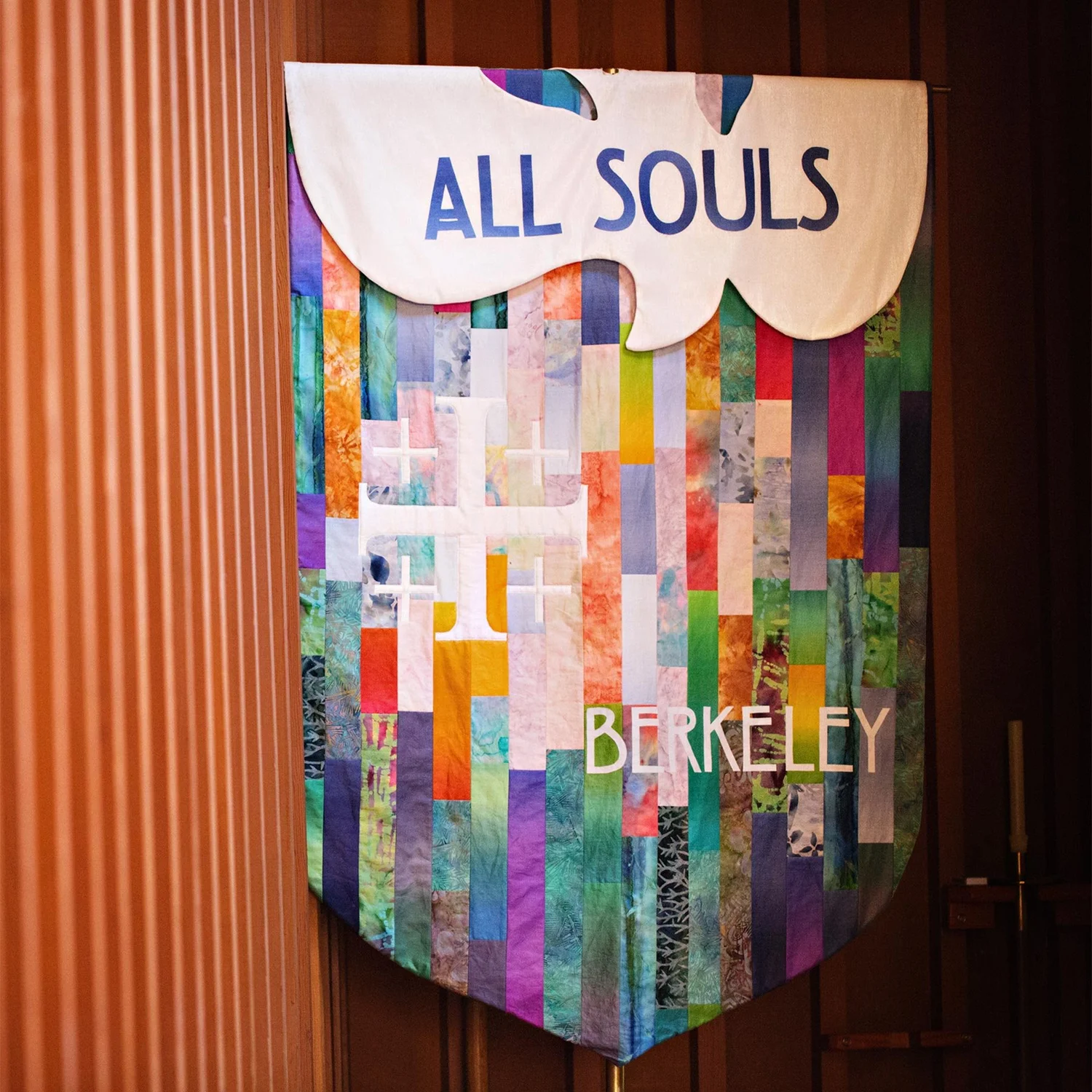
All Souls Parish Sermons
by All Souls Parish, Berkeley
These are the weekly sermons of All Souls Parish in Berkeley, CA.
-
300
Sixth Sunday after Pentecost
The Rev. Phil Brochard The sermon explores Jesus' invitation, "Come to me, all you who are weary," by placing it in the context of John the Baptizer's question from prison: "Are you the one who is to come?" John's uncertainty reflects the surprising nature of Jesus' ministry, which transforms the world not through political power or revolution, but through countless acts of mercy, healing, and compassion. Using the image of the yoke, the preacher explains how Jesus transforms a symbol of oppression into one of liberation. Rather than blind obedience, the yoke represents deep listening—to God and to one another. Celebrating the wedding of Lani and Tyree, the sermon presents marriage as a joyful example of this liberating yoke: a covenant in which two people freely bind themselves together so they can bear life's burdens together. Ultimately, Jesus' yoke is one of gentleness, humility, mercy, and shared love that sets people free by teaching them to carry one another's burdens.
-
299
Fifth Sunday after Pentecost
The Rev. Emily Boring This sermon reflects on Jesus' teaching that discipleship requires not only serving others but also accepting our own vulnerability and dependence. Drawing on Matthew's Gospel, the preacher explains that Jesus intentionally sent his disciples out with no provisions so they would have to depend on the hospitality of strangers. This dependence is not incidental but essential to following Christ. Human beings are created for interdependence, continually giving and receiving throughout life. Welcoming others—and allowing ourselves to be welcomed—is itself God's reward, forming relationships that reflect the love and generosity at the heart of the Gospel.
-
298
Fourth Sunday after Pentecost
The Rev. Phil Brochard Using stories of political disagreements with his father and his mother's earlier conflicts with her own father, the preacher reflects on how family tensions often arise when visions of justice challenge accepted social norms. He connects these experiences to a Juneteenth sermon about living between the "almost" of promised freedom and the "not yet" of fully realized justice. Turning to Jesus' difficult teaching about family division, the preacher argues that Christ is not promoting conflict for its own sake. Rather, Jesus recognizes that faithful discipleship often creates tension when people challenge systems, narratives, and comforts that sustain injustice. The Gospel's call to justice inevitably creates friction between the world as it is and the world as God intends it to be. The sermon concludes that freedom and justice require confronting the gap between promise and reality. The question is not whether conflict will arise, but whether those conflicts will produce light, growth, and transformation rather than merely generating heat and division.
-
297
Juneteenth Feast Day Celebration
The Rev. Erika Jackson Using the framework of living between "almost and not yet," this Juneteenth sermon explores the gap between freedom promised and freedom realized. Juneteenth itself exists because enslaved people in Texas remained in bondage more than two years after emancipation had been declared, revealing that legal freedom and lived freedom are not always the same. The preacher connects this reality to Scripture. The Israelites waited for liberation after God promised deliverance. Paul envisioned a community without hierarchy in Christ. Jesus proclaimed freedom for the oppressed while ministering in a world still marked by injustice. In every case, God's people lived between promise and fulfillment. The sermon challenges Christians to recognize who still lives in that gap today and to resist the temptation to settle for "almost." True Christian hope does not deny unfinished work; it trusts that Christ remains present within it. Until freedom is experienced by all, the work of liberation continues.
-
296
Third Sunday after Pentecost
The Rev. Dr. Bill McNabb Preaching during Pride Month, the preacher celebrates God's inclusive love and focuses on what he calls "the greatest verse in the Bible": Romans 5:1, which declares that believers are justified by faith and have peace with God through Jesus Christ. He argues that after describing humanity's brokenness, Paul delivers the astonishing good news that God has reconciled humanity to himself. Using the humorous story of Chippy the Parakeet, the sermon explores how suffering can suddenly disrupt life. Paul does not teach that suffering is enjoyable, but that God uses it to produce endurance, character, and hope. The Greek word hypomonē—the ability to "hang in there"—becomes a central theme. The sermon concludes by affirming that God's love remains present even in hardship, summarized in Karl Barth's famous answer: "Jesus loves me, this I know, for the Bible tells me so."
-
295
Second Sunday after Pentecost
The Rev. Phil Brochard The sermon connects the founding of the Metropolitan Community Church by Troy Perry in 1968 with Jesus' ministry among tax collectors and sinners. Perry created a worshiping community for LGBTQ Christians who had been rejected by society and the church, offering them a place to experience God's love and healing. Drawing on Jesus' call of Matthew and his statement, “I desire mercy, not sacrifice,” the preacher argues that God's kingdom is characterized by compassion rather than exclusion. Stigma and judgment push people to the margins and convince them they are unworthy, but mercy restores dignity and belonging. The sermon concludes that no one is outside the reach of God's grace. Every person is worthy of healing and wholeness, and Christians are called not to draw tighter boundaries around God's love but to extend mercy as Jesus did.
-
294
First Sunday after Pentecost: Trinity Sunday
The Rev. Rachel Dykzeul On Trinity Sunday, the preacher reflects on the Trinity not as a doctrine to be solved but as a mystery to be embraced. Recalling a childhood conversation with a pastor grandfather who admitted he could not explain the Trinity, she argues that humility before divine mystery is an essential part of faith. Drawing on Genesis, she highlights the plural and relational language used for God and suggests that creation itself reveals a God who exists in community rather than isolation. The sermon contrasts this vision with the ancient world’s belief in many competing gods, using the Babylonian creation story, the Enuma Elish, as an example. Whereas those gods were violent, transactional, and self-interested, the Christian understanding of God reveals an eternal community of love. Because God is love—not merely loving—the Trinity becomes a model for human relationships, care for creation, and communal life. The preacher concludes that the Trinity invites people into a “divine dance” of relational love. Rather than clinging to certainty or systems of domination, Christians are called to embrace mystery, diversity, community, and the fundamental goodness of creation as reflections of God's own life.
-
293
Day of Pentecost
The Rev. Emily Boring This sermon explores mystical experience, depression, healing, and Christian community through the preacher’s personal experience with ketamine therapy. The preacher describes how ketamine sessions produced profound experiences of interconnectedness, dissolving feelings of isolation and revealing a deep sense of divine unity. She reinterprets depression as disconnection rather than simply sadness and suggests that healing comes through reconnection with others and with creation. Drawing on Paul’s discussion of spiritual gifts and the body of Christ in 1 Corinthians, the sermon argues that spiritual gifts are not private possessions but acts of service that bind communities together. Ultimately, the sermon emphasizes that true spiritual wholeness is found not in escaping embodiment but in embracing human life together through love, care, touch, worship, and shared community.
-
292
Seventh Sunday of Easter
The Rev. Phil Brochard This sermon reflects on the period between Jesus’s Ascension and Pentecost, when the disciples waited in uncertainty for the coming of the Holy Spirit. The preacher connects the disciples’ “in-between time” to today’s cultural instability, political upheaval, climate anxiety, and technological transformation. The disciples ask Jesus whether he will restore the kingdom of Israel, but Jesus redirects their focus toward God’s greater kingdom beyond earthly power. After Jesus departs, the disciples return together to pray and wait faithfully. The sermon’s central theme comes from Matt Skinner: living with “urgency without haste.” Rather than reacting fearfully or impulsively, the disciples remain together in trust and discernment. The preacher encourages listeners to do the same in their own uncertain lives, trusting that God continues authoring a story of justice, compassion, and hope even when the future is unclear.
-
291
Sixth Sunday of Easter
The Rev. Michael Lemaire
-
290
Fifth Sunday of Easter
The Rev. Phil Brochard The sermon critiques the idea of an “AI Jesus” as a modern expression of human loneliness and longing for connection. Drawing on John 14, it explains that Jesus’s promise of “many dwelling places” is not about a physical heaven but about ongoing relational presence. “I am the way, the truth, and the life” is presented not as exclusion but as an invitation into trust and connection. The sermon concludes that Christ is encountered not in artificial substitutes but in community, shared care, and human relationships.
-
289
Fourth Sunday of Easter
The Rev. Phil Brochard The sermon uses a real-life experience with sheep to illustrate that trust is essential for following. It explores Jesus’ statement “I am the gate” not as exclusion, but as protection and guidance, especially in light of the story of the man born blind who is cast out and then welcomed by Jesus. Jesus is portrayed as the threshold—both protector and guide—leading people into safety and abundant life. The sermon invites listeners to consider their own life transitions and discern which voices they trust, contrasting destructive voices with the life-giving call of the Good Shepherd. It ends by encouraging attentiveness to that voice in stillness and everyday experience.
-
288
Third Sunday of Easter
The Rev. Emily Boring The sermon connects a personal experience of spiritual disconnection during COVID with the story of the disciples on the road to Emmaus. It emphasizes that failing to recognize God is a normal part of human limitation, especially in times of grief and uncertainty. Christ’s presence is not dependent on our awareness but remains constant, often revealed through companionship, humility, and acts of hospitality. The story invites us to openness—small acts of welcome through which we may later recognize that God has been with us all along.
-
287
Second Sunday of Easter
The Rev. Joseph Delgado The sermon explores how the hope and renewal of Easter can be sustained and shared. Using the metaphor of newborn babies, it highlights the theme of potential and new beginnings. Reflecting on Jesus’s post-resurrection appearance to his fearful disciples, the preacher emphasizes that instead of condemning them, Jesus expresses faith in them and sends them out into the world. The central message is that, even in our imperfection, God believes in us and calls us to embody hope and renewal in a broken world.
-
286
Easter Sunday!
The Rev. Phil Brochard This Easter sermon contrasts the coercive power of empires with the life-giving power revealed in Jesus’s resurrection. Through the story of Jesus’s death and resurrection—marked by earthquakes and upheaval—the preacher argues that domination and violence do not have the final word. Instead, true power is found in sacrificial love, mercy, and life. Though difficult to trust and often contradicted by history, this power remains the deepest truth of the world, calling people to remember that love ultimately prevails over death.
-
285
Great Vigil of Easter
The Rev. Emily Boring This Easter sermon explores resurrection not as a distant historical event but as a living, transformative experience. Through Mary Magdalene’s encounter with the risen Christ, it highlights how hope emerges even in deep grief and invites believers to recognize resurrection in their own lives. Rather than clinging to past experiences, the sermon calls the community to carry forward the love and transformation of Easter into the world, becoming the living embodiment of that hope.
-
284
Good Friday
The Rev. Michael Lemaire The sermon asks whether Jesus died a “good death,” concluding that although his death was painful and humiliating, it was “good” because it aligned with his life’s purpose of self-giving love. In contrast to a culture that fears and tries to control death, the sermon argues that humans are called to live lives of self-giving love rather than self-preservation. By practicing love and sacrifice throughout life, death becomes not something to fear but the final act of returning to God. Jesus’ death models this way of living—and dying.
-
283
Maundy Thursday
Annie Hayes On the night before his death, Jesus chooses to wash his disciples’ feet—an intimate, humble act that redefines power and belonging in God’s kingdom. This “foolish” love becomes both a gift and a command: the disciples are to receive it and then embody it by loving others in the same way. As Jesus prepares to leave, he entrusts his mission to them, declaring through his actions that they are now his body in the world. The sermon calls listeners to step into this ongoing work of healing and service, living out Christ’s love in tangible ways.
-
282
Palm Sunday: Sunday of the Passion
The Rev. Dr. Ruth Meyers The sermon explores Jesus’s triumphal entry into Jerusalem as a subversion of worldly power. While it mirrors royal processions, Jesus enters humbly on a donkey, fulfilling prophecy and embodying a different kind of kingship rooted in peace and self-giving love. The preacher connects this act to modern nonviolent protest movements that challenge injustice, while also emphasizing that Jesus’s path leads not to immediate victory but to suffering and the cross. Palm Sunday thus invites reflection on humility, resistance, and the deeper meaning of true power.
-
281
Fifth Sunday in Lent
The Rev. Emily Boring This sermon reflects on grief, resurrection, and divine love through the story of Lazarus. While Christian tradition offers powerful language for mourning, faith does not remove the pain of loss. Like Mary and Martha, we are invited to bring honest grief before God. Jesus reframes resurrection not as a distant future event but as a present reality grounded in relationship with God. The sermon concludes that death, while painful, often reveals the depth of love—and that love ultimately endures beyond death because it is rooted in God.
-
280
Fourth Sunday in Lent
The Rev. Phil Brochard The sermon connects a story from All Souls about recognizing a formerly homeless man who had transformed his life with the Gospel story of the man born blind in John 9. After gaining sight, the healed man is no longer recognized by his neighbors because they had always defined him by his blindness. The passage highlights a deeper theme of spiritual perception: while the healed man gradually perceives who Jesus is, those around him refuse to see the truth. Using the concept of “difficult knowledge,” the sermon explores how people often resist truths that challenge established beliefs or systems. Such resistance can appear as rejection, certainty from those in power, scapegoating, or avoidance. The healed man models a different response—listening, curiosity, and openness to transformation. When the man is expelled from the synagogue for acknowledging Jesus, Christ seeks him out and finds him. The sermon concludes that difficult truths may lead to conflict or exclusion, but they ultimately set people free, and Christ accompanies those who are cast out for seeing what others cannot.
-
279
Third Sunday in Lent
The Rev. Rachel Dykzeul The sermon reflects on a world divided by conflict and identity politics, using the story of Jesus and the Samaritan woman as a model for crossing human boundaries. The historical hostility between Jews and Samaritans illustrates how deeply communities can exclude one another. Drawing on Miroslav Volf’s theology of “exclusion and embrace,” the sermon describes reconciliation as an embodied process: opening oneself in vulnerability, waiting for response, embracing the other, and then allowing both people to remain transformed yet distinct. Jesus models this radical openness by crossing into Samaria and initiating connection with someone his society rejected. His actions reveal that he is not a regional Messiah but the sustaining light for the entire world. The sermon concludes by inviting listeners, especially during Lent, to resist tribal divisions and instead practice the courageous act of embracing those whom society labels as “other.”
-
278
Second Sunday in Lent
The Rev. Phil Brochard The preacher begins with the joyful discovery of a marble run sculpture at the Albany Bulb, where freeing a clogged channel of marbles led to a sudden cascade of movement and sound. This becomes a metaphor for spiritual awakening. The sermon then explores why Nicodemus, a religious leader, comes to Jesus by night. His confusion about being “born again” reflects the limits of linear logic. Jesus’ teaching points instead to being born anew—open to ongoing revelation. The story of Thomas Aquinas, who stopped writing after a profound encounter with God, underscores that theology, though important, is not the same as divine experience. Nicodemus’ later appearances—culminating in his public act of burying Jesus—show quiet transformation. Like the freed marbles, something in him is released. The sermon invites believers to remain open, to risk new paths, and to allow God’s Spirit to move them into new perception and courage.
-
277
First Sunday in Lent
The Rev. Emily Boring Using the image of hovering over a deep ocean drop-off, the sermon explores human longing as a boundary between the finite and the infinite. Reframing Adam and Eve and Jesus in the wilderness as two responses to hunger, the preacher suggests that longing itself is not sin. Adam and Eve grasp to eliminate their limits, leading to alienation. Jesus inhabits his hunger with trust and dependence on God. Lent becomes a season to examine our own longings—not to suppress them, but to let them draw us into deeper relationship with the infinite source who alone can hold them.
-
276
Ash Wednesday
The Rev. Phil Brochard Reflecting on writing their aunt’s obituary, the preacher explores how obituaries reveal what a person truly treasured in life. This becomes a lens for understanding Lent as a yearly reminder of mortality and a chance to reorient our hearts. Drawing on Jesus’ teaching about almsgiving, prayer, fasting, and treasure in Matthew’s Gospel, the sermon invites listeners to pay attention to where they direct their hearts and energy. By facing death honestly, we learn how to live intentionally—storing up what truly matters rather than what rusts and fades.
-
275
Last Sunday after the Epiphany: Feast of the Transfiguration
The Rev. Michael Lemaire The sermon reflects on the Transfiguration as both a climactic epiphany and a hinge moment leading toward the cross. While the event reveals Jesus’ divine identity, the deeper transformation occurs in the disciples, whose understanding of God is challenged and expanded. The preacher argues that “believing is seeing”—our prior assumptions shape what we perceive, especially in the spiritual life. Our limited images of God can confine our experience of God. Drawing on Anthony de Mello, cosmic imagery, and the open-handed posture of early Christian prayer, the sermon invites listeners to hold their understanding of God lightly and remain open to being changed. The final question lingers: if Jesus invites you up the mountain, will you go?
-
274
Fifth Sunday after the Epiphany
The Rev. Dr. Bill McNabb Returning to the pulpit after five years, the preacher reflects on finding a spiritual home at All Souls and celebrates a faith marked by joy, inclusivity, and life. Drawing on Jesus’ images of salt and light, he calls Christians to enhance the world with delight rather than gloom and to shine visibly against fear and oppression. Through stories from history, personal memory, and scripture, the sermon affirms that love, joy, and small acts of light can become hinge moments that change the world.
-
273
Fourth Sunday after the Epiphany
The Rev. Phil Brochard This sermon links Jesus’s Beatitudes and Micah’s call to justice, showing that faith is not about achieving moral perfection or offering extravagant sacrifice, but about paying attention to where God already is. God’s blessing rests with the vulnerable, the grieving, and the oppressed. True faithfulness means acting with justice, kindness, and humility in places of suffering—embodied in acts of courage and compassion amid real human cruelty.
-
272
Third Sunday after the Epiphany
The Rev. Phil Brochard Jesus begins his ministry not in peace but in response to political repression, moving away from power and proclaiming an anti-imperial vision of God’s reign. The kingdom of heaven is not about the afterlife but God’s justice breaking into the present, calling people to repentance, understood as transformation and new vision. Discipleship is risky, communal, and urgent, especially in a world marked by violence and cruelty. The sermon invites listeners to see where healing and justice are already happening—and to follow Jesus together into that kingdom.
-
271
Second Sunday after the Epiphany
The Rev. Emily Boring The sermon proclaims that in a time marked by fear, cruelty, and division, the Christian calling is to witness to a deeper truth: love overcomes separation. Drawing on stories of communal resistance in Minnesota, the theology of John’s Gospel, and the season of Epiphany, the preacher names sin not as individual failure but as the illusion of separation. Jesus reveals that illusion and invites people into abiding relationship through love. Where separation feels strongest, love’s power is greatest—and the church is called to choose that love through movement, encounter, and courageous kinship.
-
270
First Sunday after the Epiphany: Baptism of Our Lord
The Rev. Phil Brochard, Pastor Anthony Hughes, & Rabbi Rebekah Stern In a shared interfaith sermon, three clergy reflect on Isaiah 42 as a call to collective, gentle justice rooted in vulnerability rather than domination. Reading the “servant” as a symbol of communal responsibility, they explore how true power emerges through care, shared suffering, and relational strength. Together, they affirm that justice is not inevitable through force, but possible through communities willing to protect the fragile, resist coercion, and imagine a different future.
-
269
Second Sunday after Christmas Day
The Rev. Phil Brochard This sermon reflects on marriage, family, and faith through the lens of Mary’s example in Luke’s Gospel. Love, it argues, is not about perfection but about the capacity to hold joy, conflict, and mystery together. Drawing connections between Mary’s response to Jesus, long-term marriage, and Christian commitment, the preacher emphasizes that true freedom lies in choosing to give oneself fully. Grace is found not in flawless relationships, but in the willingness to stay, treasure the hard moments, and be “in it for all of it.”
-
268
First Sunday after Christmas Day
The Rev. Dr. Mark Richardson This sermon proclaims that Christmas reveals what is truly real: a world created from God’s longing to be present within it. Drawing from John’s Gospel, it affirms that God is found not above the material world but within it, shining light into real darkness without denying suffering. Through poetry, community stories, and personal testimony, the sermon calls listeners to recognize and embody small but powerful lights of hope, trusting that God’s creative love continues to work through fragile, human lives.
-
267
Christmas Day 2025
The Rev. Emily Boring
-
266
Christmas Eve 2025
The Rev. Phil Brochard The sermon reimagines the Christmas story to recover its urgency and humanity, moving from a crowded, astonished stable to a close focus on Mary’s contemplative presence. While others celebrate, Mary treasures and ponders the moment, holding together joy, fear, and trust. Her response becomes a model for faith in chaotic times: God meets us where we are, without requiring escape or certainty, and invites us to trust that Emmanuel is already with us.
-
265
Fourth Sunday of Advent
The Rev. Emily Boring The sermon reflects on a childhood fantasy of proving the virgin birth through science, using it to explore the deeper meaning of the incarnation. Rather than a mystery to be proven, the incarnation is revealed as God’s intimate entry into human life and suffering. In a world marked by violence and pain, Advent invites honest lament, the naming of darkness, and openness to a God who does not remove suffering but shares it. Christmas and the cross belong to one story: love meeting brokenness. This shared suffering is the true gift of Emmanuel, God with us.
-
264
Third Sunday of Advent
The Rev. Rachel Dykzeul John the Baptist’s question from prison—“Are you the one?”—reveals Advent as a season of uncertainty rather than clarity. Jesus does not arrive as expected, and John’s doubt mirrors our own questions about where God is amid suffering and injustice. Yet Jesus responds not with shame but with a reframing vision: the kingdom is already breaking in through healing, hospitality, and good news for the poor. Uncertainty, the sermon teaches, is not a failure of faith but a pathway to deeper revelation.
-
263
Second Sunday of Advent
The Rev. Phil Brochard The sermon uses Nomadland to illustrate how many people in America survive on society’s edge, making visible the injustice that keeps some secure while others live in precarity. This image leads to John the Baptist, a prophet living on the margins, whose harsh words to religious leaders expose both their complicity and their awareness that something is wrong. John calls them—and us—not to rely on privilege but to bear good fruit by confronting what is broken. Isaiah’s poetic vision of predators and prey living peacefully is presented as “impossible” imagery meant to expand our imaginations so we can see God’s realm breaking into the world. The preacher offers Elizabeth House as a real-world example where hope, community, and transformation reveal that such impossible peace is already emerging. We are called to see these signs, imagine the world God desires, repent, and live into it.
-
262
First Sunday of Advent
The Rev. Emily Boring The sermon uses Mary Oliver’s poem about the world descending into winter “rich mash” to explore how loss, darkness, and stillness are not endings but the ground of renewal. While nature’s cycles teach this intuitively, trusting the same process within our inner lives—especially during Advent—can be frightening. Stillness can uncover unprocessed grief or desired changes we’ve avoided. Though the Advent gospel speaks of upheaval and the unknown timing of Christ’s return, it reassures us in three ways: Christ meets us amid ordinary life; faith requires surrender rather than control; and in God, every ending becomes the seed of a beginning. Resurrection is a pattern that shapes all creation. Advent invites us to enter our “inner winter” with trust—slowing down, keeping awake, and attending to hidden truths—supported by Scripture, liturgy, and poetry. The sermon ends with Oliver’s reminder that the vigor of what was is connected to the vitality of what will be.
-
261
Last Sunday after Pentecost: Christ the King
The Rev. Phil Brochard The sermon asks, “If Jesus is a king, what kind of king is he?” Using Luke’s crucifixion narrative, it shows that Jesus is a king who refuses to save himself even when mocked by religious leaders, Roman soldiers, and the criminal beside him. His kingship is revealed not through power or self-preservation but through self-giving love. In contrast to modern cultural tendencies toward self-interest, the sermon calls Christians to a citizenship defined by mercy, solidarity with the vulnerable, and allegiance to a king whose authority is expressed in sacrificial compassion.
-
260
Twenty-Third Sunday after Pentecost
The Rev. Michael Lemaire The sermon uses the story of the failed Millerite rapture predictions to explore why people long for the world to end: because the real world feels unbearably painful. Drawing on Jesus’s prophecy of the temple’s destruction, the preacher shows how ancient and modern communities alike cling to apocalyptic hope when everything familiar collapses. But prophecy and visions of a perfect future can become escapist fantasies. Isaiah dreams of a world without suffering, yet our own world remains filled with war, grief, and injustice. Instead of waiting for God to fix everything, the gospel points us toward endurance, love, and the everyday practice of kindness. Like Naomi Shihab Nye’s poem teaches, only when we know sorrow can we recognize kindness as the deepest thing. In a broken world, kindness is the call, the task, and the sustaining presence.
-
259
Twenty-Second Sunday after Pentecost
The Rev. Phil Brochard The sermon reflects on All Saints and All Souls traditions—especially this year’s ofrenda—as ways of making the hope of resurrection tangible. It connects the congregation’s questions about the afterlife with the Gospel story in which the Sadducees challenge Jesus using an exaggerated scenario about a widow marrying seven brothers. Their real goal is to mock belief in resurrection. Jesus responds by meeting them within their own scriptural framework, pointing to God as the God of Abraham, Isaac, and Jacob—living beings to God. His teaching doesn’t describe the mechanics of the afterlife but emphasizes that we will be known by God and that earthly structures like marriage cannot contain the fullness of intimacy and joy in the life to come. The sermon concludes that our identities remain, our relationships matter, and nothing will hinder the deep communion God intends for us after death.
-
258
Feast of All Saints and All Souls
The Rev. Canon Sierra Reyes On All Saints’ Sunday, the preacher reflects on the hymn “When the Saints Go Marching In” and its line, “Lord, I want to be in that number.” The sermon explores the human longing to belong among the saints and reassures the congregation that sainthood is not earned but given — an identity rooted in God’s grace and baptismal love. The preacher honors both the famous “capital-S Saints” and the everyday “lowercase-s saints” who shaped our lives. As the church baptizes new members, the community joins an unbroken line of faith. The life of discipleship, the preacher reminds us, is not easy — it is a journey through hardship, calling for courage and “holy trouble” in pursuit of justice and truth. The hymn, reimagined as a defiant protest song, proclaims that God’s love conquers death and despair. To be in that number means to live as one already beloved, bearing witness to God’s enduring grace and hope.
-
257
Twentieth Sunday after Pentecost
Michael Lewis, Senior Warden Michael reflects on stewardship through stories of faith, inclusion, and gratitude. Raised in the Black church, he learned that giving is joyful participation in community life. His journey to the Episcopal Church began when he and his husband David sought an affirming congregation for their marriage — finding both acceptance and history in the Episcopal tradition. For Michael, All Souls embodies radical openness and active compassion, much like the church of his youth. Quoting 2 Timothy, he frames stewardship as gratitude for God’s sustaining presence: not repayment, but renewal. He celebrates the generosity already thriving in the parish and invites all to renew and sustain both their faith and this beloved community through cheerful giving.
-
256
Nineteenth Sunday after Pentecost
The Rev. Phil Brochard This sermon reflects on Jesus’ parable of the persistent widow as a call to steadfast faith and courage in troubled times. Just as the widow refused to give up on justice, we too are invited to persevere in prayer, community, and hope, trusting in God rather than in worldly power. Faith (the greek word pistis) is about where we place our trust; courage, as Brené Brown teaches, is about living with heart. The preacher calls the church to be a “school for courage” — a place where people learn to not lose heart and to support one another in love, persistence, and generosity.
-
255
Eighteenth Sunday after Pentecost
The Rev. Emily Boring This sermon contemplates the ten healed lepers, especially the nine who did not return to thank Jesus. Their silence is explored with empathy—shock, fear, or unready hearts may explain their absence. Healing, the preacher reminds, has stages. The Samaritan who does return becomes the first “Eucharistic disciple,” giving thanks to Jesus with the same word that grounds the Church’s central act of thanksgiving. His gratitude mirrors the pattern of worship: confession, mercy, praise, and shared communion. Gratitude, the sermon concludes, is not demanded but discovered; it moves us toward action, generosity, and joy. Stewardship is the living out of that thankful turning—faith made visible.
-
254
Seventeenth Sunday after Pentecost
The Rev. Rachel Dykzeul The sermon reflects on the life of St. Francis of Assisi, who abandoned wealth and status after a vision redirected him to serve God rather than worldly success. Francis embraced poverty, compassion, and stewardship of all creation, making his legacy one of faith rather than wealth. Mother Rachel connects Francis’s example to the parish’s stewardship campaign, urging the community to see generosity not as financial transaction but as investment in God’s transforming work. Unlike corporations that measure success in profit, the church’s mission is to nurture relationships, support one another, and follow Christ. True legacy is not found in money or reputation but in Christ, who makes generosity and love endure across generations.
-
253
Sixteenth Sunday after Pentecost
The Rev. Phil Brochard The sermon begins with Trump’s reflection on heaven and uses it to frame Luke’s parable of the rich man and Lazarus. The preacher highlights Jesus’ warnings about wealth, comfort, and distraction, which insulate people from others’ suffering. The rich man’s failure is not active cruelty but his inability to see Lazarus. Christian faith, the preacher insists, is a “mysticism of open eyes” — perceiving suffering and responding with compassion. The sermon ends with the parable’s haunting question: even if someone rose from the dead, would we truly live differently?
-
252
Fifteenth Sunday after Pentecost
The Rev. Emily Boring The sermon reflects on Jeremiah’s lament, choosing to dwell in grief rather than avoid it. Jeremiah’s tears are shown to be not just his own but also the tears of his people and of God, who grieves alongside humanity out of love. Emily+ emphasizes that grief, honestly expressed, is transformative, turning isolation into shared companionship and hope. Ultimately, God’s sorrow is the measure of God’s love, and God continually works toward reconciliation and renewal even amid human brokenness.
-
251
Fourteenth Sunday after Pentecost
The Rev. Marguerite Judson The sermon contrasts Jeremiah’s vision of creation unraveling with Jesus’s parables of the lost sheep and lost coin. While humanity often brings devastation and folly upon itself, the gospel insists that God does not abandon us. Instead, God actively seeks out the lost and rejoices in their return—grace that comes not from our efforts but from God’s own Spirit.
We're indexing this podcast's transcripts for the first time — this can take a minute or two. We'll show results as soon as they're ready.
No matches for "" in this podcast's transcripts.
No topics indexed yet for this podcast.
Loading reviews...
ABOUT THIS SHOW
These are the weekly sermons of All Souls Parish in Berkeley, CA.
HOSTED BY
All Souls Parish, Berkeley
CATEGORIES
Loading similar podcasts...
Frequently Asked Questions
How many episodes does All Souls Parish Sermons have?
All Souls Parish Sermons currently has 50 episodes available on PodParley. New episodes are automatically indexed when they're published to the podcast feed.
What is All Souls Parish Sermons about?
These are the weekly sermons of All Souls Parish in Berkeley, CA.
How often does All Souls Parish Sermons release new episodes?
All Souls Parish Sermons has 50 episodes. Check the episode list to see recent publication dates and frequency.
Where can I listen to All Souls Parish Sermons?
You can listen to All Souls Parish Sermons on PodParley by clicking any episode. We provide an embedded audio player for direct listening, and you can also subscribe via your preferred podcast app using the RSS feed.
Who hosts All Souls Parish Sermons?
All Souls Parish Sermons is created and hosted by All Souls Parish, Berkeley.
URL copied to clipboard!