
PODCAST · business
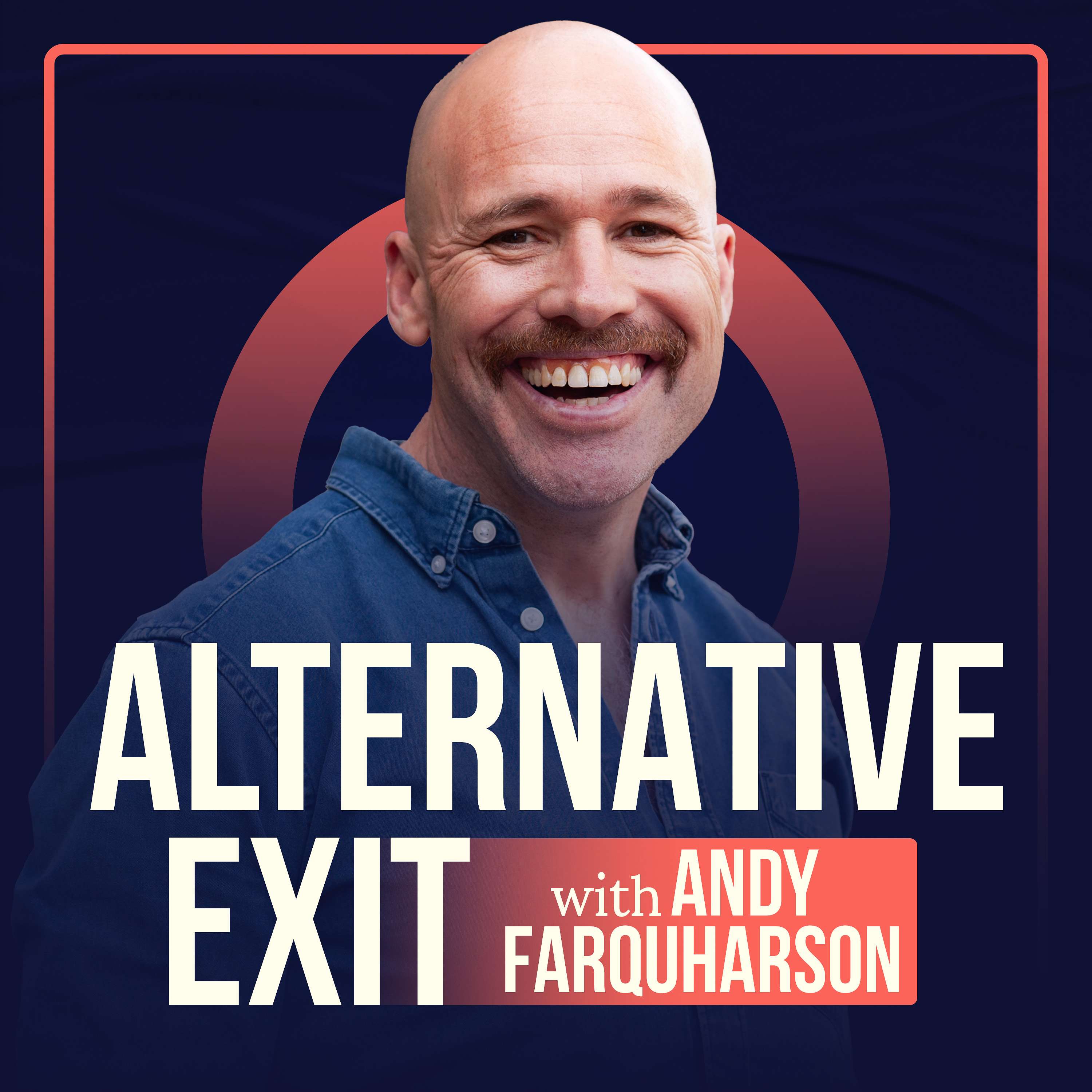
Alternative Exit
by Andy
Alternative Exit is a dedicated to educating small business owners about the possibilities, benefits, and challenges of transitioning to an employee ownership model.There are over 200m SMEs with an owner who will be retiring in the next 10 years, many of which will never find a buyer for their business, forcing them to close their doors. There is an alternative. This show will explore various the different forms of employee ownership and best practices for successful transitions.Each episode features interviews with experts in employee ownership, business owners who have made the transition, and consultants who facilitate these changes.
-
66
Alternative Exit #64 | 400+ Transitions Later: What Actually Makes EO Work
After 400+ employee ownership transitions and over two decades in the space, Ewan Hall has seen what works and what doesn't. In this episode, he walks Andy through the practical realities of EOT transitions in the UK — from the tax recalibration last October to the four pillars every successful transition needs (deal, ownership, governance, culture). Ewan unpacks the concept of "enough" that unlocks seller psychology, the underused role of debt finance, and a deceptively simple framework — informed, consult, consent — that resolves who decides what after the founder steps back. Honest, experienced, and refreshingly free of the EO hype.Chapters(00:00) Welcome and introduction(02:26) The story behind 20+ years in EO(05:53) Why employee owned firms still face succession challenges(07:42) Separating ownership succession from leadership succession(11:17) Why owners choose EO over a trade sale(13:21) The concept of "enough" and the magic number(18:00) The 25% rule: how long it really takes to fund a 100% disposal(22:21) The 2014 tax relief and mainstreaming EO(23:41) October 2024: from 100% to 50% CGT discount(28:34) The missed opportunity around debt finance(32:26) Refinancing the back-end of founder debt(33:26) The four pillars: deal, ownership, governance, culture(37:04) Informed, consult, consent in practice(40:31) Day, year, extremis: stress-testing your structure(42:27) Fast round: leaders, resources, advice(45:00) Where to find EwanKey takeaways💡 Ownership succession and leadership succession run on different timelines — don't conflate them.✅ The conversation about "enough" unlocks every other decision a founder needs to make.🎯 Profit multiple + 25% = roughly the years it'll take to fund a 100% disposal at flat profits.🌟 The four pillars of a healthy transition: the deal, ownership, governance, and culture.💷 EOT tax relief at 50% still saves around 12% — no other UK exit comes close.⚖️ Stress-test your structure across three scenarios: a day, a year, and an emergency.Notable quotes"You don't just stick shares in a trust and call it a day.""Once people get past the concept of enough, they unclench a bit.""I want to be able to drive past this workplace and feel all right about it."Links🔗 Ewan Hall on LinkedIn: https://www.linkedin.com/in/ewan-hall-3a7b902a/🔗 Baxendale Employee Ownership: https://baxendaleownership.co.uk🔗 Employee Ownership Association: https://employeeownership.co.uk🔗 Host Andy Farquharson: https://www.linkedin.com/in/andyfarquharson/🔗 a better monday: https://abettermonday.me
-
65
Alternative Exit #63 | No Silver Bullet, But There Is Magic in EO | Joseph Cureton, Sarvis Health
Joseph Cureton spent nearly a decade building Obran Cooperative, the first worker-owned cooperative holding company in the US. In 2025, he exited and started something new. Sarvis Health is an ESOP-based roll-up of home care agencies, wrapped in a proprietary AI-enabled operating platform called Sarvis OS. In this conversation, Joseph breaks down why he shifted from co-op to ESOP, what he learned about the "magic" (and the myths) of shared ownership, and why home care is uniquely suited to employee ownership. He also shares how Sarvis is using AI to fix broken workflows, why design partners matter, and the one question every fence-sitting owner should ask themselves.Chapters:(00:00) Welcome and introducing Joseph(01:39) From Obran to Sarvis: co-op to ESOP(07:10) No silver bullet — operations come first(09:26) The real magic of employee ownership(11:05) Home care and the Silver Tsunami(13:29) Going head-to-head with private equity(16:32) Rituals, open-book management, alignment(23:50) Sarvis OS: the three-part rollout(30:53) Investing in tech and people together(34:00) The design partner model(39:30) A five-year vision(43:50) Fast round(46:10) A question for owners on the fenceKey Takeaways:💡 Employee ownership isn't a magic bullet. You still have to be a great operator every day.✅ The magic is a team of "disagreeable givers" aligned around shared outcomes.🌟 Home care fits employee ownership because workers already care deeply about their communities.🎧 A single AI-enabled platform turns ownership engagement into action.✅ Start with the detractors. The loudest critics make the best design partners.Notable Quotes:"There's no silver bullet. And there is some magic.""Clarity is kindness.""In five or ten years, what option would you regret not taking?"Links & Resources:Joseph Cureton: https://www.linkedin.com/in/josephbuilds/Sarvis Health: https://sarvishealth.comObran Cooperative: https://www.obran.coopThe Companies We Keep by John AbramsCollective Courage by Jessica Gordon NembhardHost Andy Farquharson: https://www.linkedin.com/in/andyfarquharson/a better monday: https://abettermonday.me
-
64
Alternative Exit #62 | From Fortune 500 to EO: why Kevin Clegg bet on his people & doubled profits
What happens when a CEO with over a decade in Fortune 500 companies returns to a family auto business and insists from day one that any exit must benefit the employees? You get America's first employee ownership trust – and one of the most compelling performance stories in the employee ownership movement. Kevin Clegg shares how Clegg Auto, a group of four repair shops in Utah County, doubled profits and grew employee profit-sharing tenfold in their very first year as an EOT – without raising a single price. He also digs into the real challenge: building an ownership culture from the inside out, and his evolving vision for a business cooperative movement that could reshape small business succession across the US.Key Takeaways:✅ Employee ownership isn't just an exit strategy – it's an operating model that drives measurable performance from day one ✅ Structuring profit-sharing so employees benefit immediately (not after former owners are paid off) is what makes it real and tangible ✅ Financial transparency is a powerful tool – but open-book management only works when employees can see their own personal impact on the numbers ✅ Building an ownership culture takes years, not a transaction – and even seasoned owners don't always act like owners ✅ A business cooperative (not a worker cooperative) could be the scalable model to bring the Silver Tsunami of retiring owners into employee ownership en masse ✅ The best employee voice frameworks match decision-making authority to expertise – not a one-person, one-vote free-for-allNotable Quotes:💬 "There should be some sort of exit that's beneficial for everyone – not just for the people who started the thing."💬 "The hardest part of the transition to employee ownership wasn't coming up with the structure and transacting it. The hardest part still is – and is – the culture afterwards."💬 "There's nothing better than preserving what you've created, and there's no better way to do it, in my opinion, than employee ownership."Links:🔗 Kevin Clegg on LinkedIn: https://www.linkedin.com/in/kevin-clegg-59655a/ 🔗 Clegg Auto website: https://cleggauto.com 🔗 Host Andy Farquharson: https://www.linkedin.com/in/andyfarquharson/ 🔗 a better monday: https://abettermonday.me
-
63
Sleeping Giant: How One MD Tripled Revenue Through Employee Ownership | Colin Wade, Chemco
What happens when you stop looking for a younger version of yourself and start fixing what's actually broken?Colin Wade tripled revenue at a Scottish coatings manufacturer by doing succession differently.About the episode:Most founders approach succession by searching for someone just like them — younger, with decades of niche expertise, ready to replicate what made the business successful. Colin Wade's founder at Chemco International tried that approach multiple times. It never worked. The business didn't need another technical genius. It needed someone to cherish the strengths whilst fixing the weaknesses.Colin joined Chemco in 2018 specifically to lead its transition to 100% employee ownership — an unusual move for a seasoned MD, but one inspired by David Erdal's book about Loch Fyne Oysters. He started with a simple SWOT analysis, recruited to fill the gaps, and spent two patient years building a culture where factory floor workers became self-empowered shareholders. Chemco now runs a hybrid model with a 51% EOT and up to 49% direct shares distributed equally to all employees.This conversation explores deliberate succession planning, why manufacturing employees can absolutely embrace ownership, and how quarterly "shareholder meetings" change the relationship between management and workforce.Guest Information:🔗 Colin Wade — Managing Director, Chemco International LinkedIn: https://www.linkedin.com/in/colinwade1967/🔗 Chemco International: https://www.chemcoint.comChapters:00:00 - Introduction 01:52 - Actively seeking employee ownership 03:05 - Why founders seek younger versions of themselves 04:26 - Inspired by David Erdal's book 06:22 - The succession unicorn problem 08:05 - Starting with SWOT analysis 09:10 - Cherishing strengths, recruiting for weaknesses 10:05 - Succession planning & EO transitions 11:30 - Collaborative problem-solving 12:43 - Can manufacturing embrace ownership? 13:18 - The settling-in period 14:33 - Resistance to change 15:30 - Two years to build the right team 16:24 - When self-empowerment feels overwhelming 18:17 - Quarterly shareholder meetings 20:04 - Hybrid model: 51% trust, 49% direct shares 22:31 - Skin in the game 24:17 - Patience in culture change 25:42 - Leadership in employee-owned businesses 27:46 - Best of capitalism and cooperation 28:38 - Advice for owners on succession 31:27 - Fast round 34:03 - Connect with Colin and ChemcoAbout The Alternative Exit:A podcast exploring employee ownership as a succession planning strategy, hosted by Andy Farquharson of a better monday.🔗 Host: Andy Farquharson — https://www.linkedin.com/in/andyfarquharson/🔗 Learn more: https://abettermonday.meLinks & Resources:Chemco International: https://www.chemcoint.com"Local Heroes" by David Erdal (Loch Fyne Oysters story)Employee Ownership Association UK: https://employeeownership.co.ukScottish Enterprise Employee Ownership support#EmployeeOwnership #EOT #Manufacturing #SuccessionPlanning #Scotland #EmployeeOwned #BusinessSuccession #AlternativeExit #Leadership #Coatings
-
62
Alternative Exit #60 | Three Dimensions of Ownership: Purpose, Profit & Power | Mark Hand
What if every business owner played a different game? Mark Hand has spent his career asking that question, first in community development in Latin America, then as an impact investor, and now as a scholar mapping the ownership economy. His weekly newsletter, The Stakehold, tracks everything from ESOPs to worker co-ops to purpose trusts, revealing an ecosystem most people don't realise exists. In this conversation, Mark breaks down the three dimensions of alternative ownership (purpose, profit distribution, and power), explains why 'fat wallets and broken hearts' is the real cost of traditional exits, and challenges us to help business owners surface what actually matters to them beyond maximising financial returns.Key Takeaways:💡 Three dimensions of ownership transformation — companies are experimenting with purpose (why we exist), profit distribution (who benefits), and power (who decides), and these dimensions can be approached independently or together✅ Structure makes purpose real — benefit corporations, purpose trusts, and employee ownership lock in commitments that signal to stakeholders this isn't lip service, it's irrevocable🌟 As many employee owners as union members — in the US, employee ownership already touches as many workers as labour unions, but most employee owners don't see themselves as part of a movement🎧 Owners are playing multiple games — business owners aren't just profit-maximisers, they're parents, community members, congregation members with different identities that get triggered by how you approach the conversation📈 Fat wallets and broken hearts — many owners who sell to private equity leave wealthy but regretful, watching their companies dismantled and their employees laid off💼 Democracy works in complex systems — if countries can operate democratically without dictators, companies (which are simpler than nations) can tooNotable Quotes:"I saw friends of his sell to private equity companies and they left with fat wallets and broken hearts. Humans have wallets and we also have hearts.""Our commitment to shareholder value maximisation has actually blinded us to the ways that humans interact with each other and what is possible.""If you can figure out how to run a country democratically, why wouldn't we be able to do that in a company, which is actually a much simpler structure?"Links & Resources:🔗 Guest: Mark Hand — https://www.linkedin.com/in/markchand🔗 The Stakehold (weekly newsletter): https://www.thestakehold.com🔗 PTON (Purpose Trust Ownership Network): https://trustownership.org/🔗 Mark's website: https://markclaytonhand.com/📖 Recommended: Rutgers CLEO website (compilation of academic learning on employee ownership)🔗 Host: Andy Farquharson — https://www.linkedin.com/in/andyfarquharson/🔗 a better monday: https://abettermonday.me
-
61
Alternative Exit #59 | The Danish Blueprint: How to Pass Employee Ownership Laws w Andreas Jørgensen
On 1st January 2026, Denmark made history. For the first time, the country passed dedicated legislation creating a vehicle for employee ownership — the EOC, or Employee Ownership Company. This is the story of how it happened. Andreas Pinstrup Jørgensen spent seven years cold-calling politicians, uniting seven parties across the political divide, building coalitions with unions and universities, and publishing a book that sparked a national conversation. What started as a bottom-up grassroots initiative became landmark legislation. In this episode, Andreas walks through the blueprint for making employee ownership law — and what Denmark does next to make the revolution real.Key Takeaways:🌟 Denmark's EOC law creates a level playing field for the first time — previously it was always easier to sell to family or an external buyer than to employees✅ Cross-party unity was the secret weapon — seven parties from across the political divide agreed because employee ownership solved four shared problems: succession, productivity, worker welfare, and community resilience💡 Three implementation lessons from the UK — create early champions, build the advisor ecosystem, and rigorously document everything so the law can be refined🎧 Lower barriers accelerate uptake — Denmark only requires a 33% minimum sale to employees (vs 50% in the UK's EOT), making it easier for cautious owners to take the first step📈 Capital infrastructure is next — five financial institutions are already in discussions on loan guarantees and strategic employee ownership lending🔗 The employees are genuinely in control — unlike some models, Denmark's EOC gives employees 100% ownership of the holding vehicle and seats on the boardNotable Quotes:"I have never been in a room where we could agree so much across the radical left and radical right. I've not seen anything like it since the climate movement in Denmark.""You have an opportunity to make history. This is a way to preserve your legacy — by turning your company over to the employees. That will make your company more stable in the future.""We are in great debt to the UK, the EOA, Graham Nuttall, Campbell. We've got all these people that have helped us — and that's the only reason I have quite a bit of optimism that this might create, within a few years, an ownership revolution."Links & Resources:🔗 Guest: Andreas Pinstrup Jørgensen — https://www.linkedin.com/in/andreas-pinstrup-j%C3%B8rgensen-021ba3a8/🔗 Think Tank for Democratic Businesses: https://demokratiskerhverv.dk/📖 Book: Medejer (Co-Ownership — the art of overtaking competitors through democratic ownership), 2020📖 Recommended reading: Making One Dragon (White & White) | The Citizen's Share (Blasi, Freeman & Kruse, 2013)🔗 Host: Andy Farquharson — https://www.linkedin.com/in/andyfarquharson/🔗 a better monday: https://abettermonday.me
-
60
Alternative Exit #58 | A 40M Owner Vision Through Employee Ownership& EtA | Michael Morosi
What if the most powerful way to create employee owners wasn't one company at a time - but through strategic acquisitions?Michael Morosi is proving that existing employee-owned companies can become acquisition engines that transform entire industries. As Co-Founder of 40 Million Owners and Managing Partner at Southeast Acquisition Capital, he's pioneered a model where ESOPs use M&A to grow, create value, and expand employee ownership at scale.About the episode:This conversation dives deep into the mechanics and mindset of ESOP acquisitions. Michael shares his journey from managing $100M in equity funds in Madrid to building Southeast Acquisition Capital from zero to $25M in revenue through strategic ESOP acquisitions. We explore why ESOPs have structural advantages as acquirers, how to build culture across a portfolio of employee-owned companies, and why the upcoming wave of Baby Boomer exits could create 40 million new employee owners. Whether you're running an ESOP considering growth through acquisition or a business owner exploring succession options, this episode reveals a playbook for building sustainable, employee-owned enterprises.Guest Information:🔗 Michael Morosi - Co-Founder, 40 Million Owners & Managing Partner, Southeast Acquisition Capital LinkedIn: https://www.linkedin.com/in/michael-morosi/🔗 40 Million Owners: https://40millionowners.com🔗 Southeast Acquisition Capital: https://www.southeastacquisition.comChapters/Timestamps:00:00 - Introduction to Michael Morosi04:32 - From Global Equity Management to Employee Ownership12:15 - The Birth of 40 Million Owners18:45 - Why ESOPs Make Excellent Acquirers27:30 - Southeast Acquisition Capital's Model35:20 - From Zero to $25M in Revenue Through Acquisitions42:15 - The Mechanics of ESOP M&A51:00 - Building Culture Across Multiple Companies58:30 - The 3LS Acquisition Story01:04:20 - Vision for 40 Million Employee OwnersAbout The Alternative Exit:A podcast exploring employee ownership as a succession planning strategy, hosted by Andy Farquharson of a better monday.🔗 Host: Andy Farquharson - https://www.linkedin.com/in/andyfarquharson/🔗 Learn more: https://abettermonday.meLinks & Resources:40 Million Owners website: https://40millionowners.comSoutheast Acquisition Capital: https://www.southeastacquisition.comMichael's article "The Force Multiplier": https://40millionowners.com/2025/03/12/the-force-multiplier/#EmployeeOwnership #ESOP #MergersAndAcquisitions #SuccessionPlanning #ImpactInvesting #PrivateEquity #BusinessGrowth #EmployeeOwned #CorporateDevelopment #AlternativeExit
-
59
Alternative Exit #57 | Closing the $10 Trillion Wealth Gap with Employee Ownership with Noelle Lentz
Episode Summary:What if the solution to America's wealth inequality crisis was hiding in plain sight?Noelle Lentz is mobilising millions in capital specifically designed for employee ownership transitions. As CEO of Allivate Impact Capital, she's launched one of only two ESOP-focused funds in the US, providing the subordinated debt that makes employee ownership financially viable for selling owners. With over 50% of business owners aged 55+, Noelle explains why employee ownership isn't just good for workers it's the smartest succession strategy for preserving legacy, stabilising supply chains, and creating economic equity at scale.Chapters:00:00 - Introduction01:42 - From International Development to Community Finance04:54 - Founding Allivate Impact Capital08:56 - The Silver Tsunami and Employee Ownership12:45 - How the Elevate Employee Ownership Fund Works18:30 - Target Companies and Investment Criteria22:15 - The Capital Gap in ESOP Transitions27:09 - Scaling from $10M to $150M Through SBIC Licensing30:08 - Finding Deal Flow and Partnerships31:04 - Quick Fire RoundKey Takeaways:✅ Over 50% of US business owners are 55+ and facing succession decisions in the next decade💡 Employee-owned companies show higher productivity, retention, and morale than traditional structures🎯 Most ESOP transitions require 70-80% seller financing because banks won't subordinate debt💰 Allivate provides $1-2M in subordinated debt (15% of deal value) to make transitions financially viable📈 The fund is targeting $150M through SBIC licensing to create thousands of employee owners🌟 Employee ownership receives rare bipartisan political support due to economic stabilisation benefitsNotable Quotes:"This is not just a payday, this is your legacy. And if there's a way to preserve that legacy, empower your employees, and still get the financial return you've worked so hard for, it's really worth considering.""When you're not just coming to work to check your time card and clock out, you're really thinking like an owner and contributing to not just the company's bottom line, but your own bottom line."Links & Resources:🔗 Noelle Lentz on LinkedIn: https://www.linkedin.com/in/noellestclair🔗 Allivate Impact Capital: https://allivate.com
-
58
Alternative Exit #56 | The Intersection of ETA and Employee Ownership w Geoffrey Easterling
KeywordsEmployee Ownership, ETA, ESOP, Acquisition, Leadership, Business Strategy, Employee Engagement, Company Culture, Value Creation, Business TransitionSummaryIn this episode of the Alternative Exit, host Andy Farquharson interviews Jeff Easterling, CEO of ART and Associates, who shares his unique perspective on employee ownership through the lens of entrepreneurship through acquisition (ETA). Jeff discusses the moral imperative behind his leadership style, the challenges and strategies involved in transitioning to an employee-owned company, and the cultural shifts necessary for success. He emphasizes the importance of collaboration, transparency, and the long-term benefits of employee ownership for both employees and business owners. The conversation also touches on the barriers to employee ownership in the ETA space and offers advice for business owners and ETA searchers considering this path.TakeawaysGeoff Easterling emphasizes the moral imperative behind employee ownership.The transition to employee ownership requires cultural shifts within the company.Collaboration and transparency are key to successful leadership in employee-owned businesses.Employee ownership can create a legacy that benefits both employees and owners.The acquisition process can be structured to minimize personal risk for the buyer.Long-term strategies are more beneficial than short-term profit maximization.There are significant barriers to understanding and implementing ESOPs in the ETA space.Business owners should consider employee ownership as part of their exit strategy.ETA searchers can find creative financing options through ESOP funds.Building a strong network is crucial for success in the acquisition process.Chapters00:00 Introduction to Employee Ownership and ETA02:48 The Unique Perspective of Employee Ownership05:48 Navigating the Acquisition Process08:51 Moral Imperative in Business Leadership12:12 Cultural Shifts in Employee-Owned Companies14:47 Value Creation Strategies Post-Acquisition17:50 Challenges of Transitioning to Employee Ownership20:58 The Knowledge Gap in Employee Ownership24:03 Advice for Business Owners and ETA Searchers
-
57
Alternative Exit #53 | Live from the EOA, Employee ownership, inequality, and Denmark’s quiet revolution
In this live episode from the EOA Conference in Telford, Andy sits down withIn this live episode from the Employee Ownership Association Conference in Telford, with Andreas Jørgensen, one of the architects behind Denmark’s renewed push for democratic ownership.Andreas shares how a cold winter classroom at Yale, a pregnant French professor, and exposure to extreme inequality in the US set him on a path to dedicate his career to employee ownership and cooperatives. That journey ultimately led to the creation of Denmark’s first national think tank focused on democratic business models.The conversation covers why Scandinavia forgot its own cooperative roots, how Denmark quietly rebuilt the infrastructure for democratic ownership, and why new legislation coming into force marks a genuine inflection point for employee ownership across Europe.Key themes discussedWhy employee ownership barely featured in Danish academic or policy circles for 30 yearsHow exposure to US-style inequality changed Andreas’ worldviewPre-distribution vs redistribution and why ownership matters more than tax after the factThe scale of cooperatives in Denmark and why most employees don’t feel like ownersThe limits of “EO light” models in consumer cooperativesBuilding a movement and a knowledge base at the same timeDenmark’s new Employee Ownership Company model and how it compares to the UK EOTIndivisible reserves, long-term stewardship, and preventing extractive behaviourWhy democratic ownership is politically acceptable across party linesWhat other countries can learn from Denmark’s approachWhy this mattersDenmark went from almost zero employee-owned transitions to passing national legislation in under a decade. Not because of ideology, but because ownership structures solve real economic problems: succession, inequality, engagement, and long-term resilience.This episode is a reminder that employee ownership doesn’t need reinvention. It needs infrastructure, patience, and people stubborn enough to stick with it.LinksAndreas Jørgensen and his work: https://demokratiskerhverv.dk/Learn more about employee ownership at abettermonday.meSponsor: This episode is brought to you by EOT Expert by Christian Wilson – providing technical expertise and compliance support for EOT transitions and ongoing governance. Learn more at eotexpert.co.uk
-
56
Alternative Exit #52 | Live from the EOA, Measuring What Matters - Jonathan Winchester on Customer and Employee Experience
Episode: Measuring What Matters - Jonathan Winchester on Customer and Employee ExperienceIn this live episode from the EOA Conference in Telford, Andy sits down with Jonathan Winchester, CEO of Insight6, a customer experience specialist who keynoted at last year's conference with a memorable twist: he mystery shopped the audience.Key Takeaways:Jonathan brings a unique outside perspective to employee ownership. Insight6 helps businesses transform customer experience through six methods: mystery shopping, inquiry handling, employee and client listening platforms, online feedback analysis, focus groups, customer journey mapping, and mentoring/coaching/training.The conversation reveals a critical gap in how most organisations listen to their teams. Annual surveys with 30-40 questions that 50% of staff fill out begrudgingly, followed by months of board review and often no action. Jonathan shares the story of an optician where deep listening revealed the problem wasn't massive - it was the tea room. Old sofa, broken coffee machine, no milk. Basic stuff. But the CEO ripped it out over a weekend and satisfaction went up.The key insight: CX is all about making people feel special through human connection. And that requires asking the right questions at the right cadence. Not annual surveys - regular net promoter scores every two months. Not questions written by "Mary" who doesn't understand what you're trying to achieve. And critically, taking visible action so people feel listened to.Memorable Moments:"You bugger" - how attendees greeted Jonathan after last year's mystery shopping exerciseEO businesses handle inquiries three times better than accountants (and twice as good as most sectors)The tea room transformation story and why deep listening matters"If you were me, what would you do?" - the simple question that unlocks real feedbackWhy asking the wrong questions is worse than not asking at all"No knobs" - the rule of business Jonathan loved hearing at the conferenceGuest: Jonathan Winchester, CEO at Insight6LinkedIn: https://www.linkedin.com/in/jonathanwinchester/overlay/photo/Company: https://www.insight6.comEmail: [email protected]: This episode is brought to you by EOT Expert by Christian Wilson – providing technical expertise and compliance support for EOT transitions and ongoing governance. Learn more at eotexpert.co.uk
-
55
Alternative Exit #51 | Live from the EOA, The Power of People - Andrew Lane on Building Real Employee Ownership at Union Industries
Episode: The Power of People - Andrew Lane on Building Real Employee Ownership at Union IndustriesIn this high-energy live episode from the EOA Conference in Telford, Andy sits down with Andrew Lane, Managing Director of Union Industries, a Yorkshire-based manufacturer of high-speed industrial doors. If you've bought food from a supermarket, it's been through one of their doors somewhere in its life.Key Takeaways:Andrew brings a unique perspective: he led a failed employee ownership transition in 2008, learned from every mistake, and then joined Union Industries in 2014 specifically to spearhead their transition into employee ownership. His biggest lesson? Start from the right place. If an owner's primary motivation is "tax-free money," it's probably not the right decision.Union Industries' former owners wanted their money over 14 years. The owner was 78. That's when Andrew knew they were in it for the right reasons. The business paid them off years early "because they'd done a benevolent transaction that empowered their employees."The conversation dives deep into Union's distinctive approach: equal bonuses regardless of tenure or salary ("You can't be in it together, but I get more money than you do"), weekly financial updates with numbers-graphs-traffic lights for every learning style, and a managing director who walks the floor weekly to keep ownership real for every fabricator and welder.Memorable Moments:The forklift truck driver who's been the biggest bonus recipient for five years straightWhy Andrew spent his energy on the 20% who didn't care (spoiler: you can't convert them)The service division employee who created a marketing campaign that sold £30,000 in three weeks"Don't come with a problem that doesn't have a matching solution"Why the business took a step change when the detail-grinding bottleneck was removedAndrew's closing challenge: "Tell me the reason not to"Guest: Andrew Lane, Managing Director at Union IndustriesLinkedIn: https://www.linkedin.com/in/andrew-lane-1b2b9815/Company: https://www.unionindustries.co.uk/Sponsor: This episode is brought to you by EOT Expert by Christian Wilson – providing technical expertise and compliance support for EOT transitions and ongoing governance. Learn more at eotexpert.co.uk
-
54
Alternative Exit #50 | Live from the EOA, Exploring Insights with Dr Shelley Poole from WellingtonHR
Episode: Building Ownership Culture from Day One - Shelley Poole on HR in Employee-Owned BusinessesIn this live episode from the EOA Conference in Telford, Andy talks with Shelley Poole, founder of Wellington HR, who started her business in 2019 with the intention from day one to grow it into an employee-owned business. She also conducted doctoral research on employee voice in EO organizations, making her uniquely positioned to bridge academic research and practical implementation.Key Takeaways:Wellington HR proves that employee ownership can work at micro scale - they're a team of six (soon to be seven). Shelley waited until the business was financially sound before transitioning, not because of a magic number of employees, but because she wanted to demonstrate that EO "isn't all scary" when you have money in the bank and stable operations.The conversation reveals a powerful insight from Shelley's doctoral research: people need information, but they also need to understand that information to have intelligent contributions to make. Otherwise, employee voice stays superficial - "where should we go for the Christmas party?" - rather than meaningful strategic input.At Wellington HR, they practice radical transparency: everyone knows everyone's salaries, the team looks at P&L statements, and they spent significant time educating the team on how to read financials. Shelley's research identified that barriers to voice often come from how information is shared and made available, not just whether it's shared at all.Memorable Moments:Starting a business in 2019: "Great year to be starting a business just as we go into a pandemic"The horror story: "When did you find out you were becoming employee owned?" "On the day we transitioned"Why salary transparency and financial education matter before expecting meaningful voiceHow HR can lead by example: consulting employees on maternity policy rather than just announcing itThe succession gap: new leaders thrown in the deep end when founders exit without preparationRobert Oakeshott's legacy of dividing not just profit but power and voiceGuest: Shelley Poole, Founder at Wellington HRLinkedIn: [Shelley's LinkedIn Profile - you'll need to add this]Company: [Wellington HR website - you'll need to add this]Resource: Shelley's doctoral thesis summary available via Wellington HRSponsor: This episode is brought to you by EOT Expert by Christian Welsom – providing technical expertise and compliance support for EOT transitions and ongoing governance. Learn more at eotexpert.co.uk
-
53
Alternative Exit # 49 | Live from the EOA, Unlocking Capital - Chris Walton from Shawbrook on Finance for Employee Ownership
In this live episode from the EOA Conference in Telford, Andy explores the critical but often overlooked piece of the employee ownership puzzle: access to capital. Chris Walton from Shawbrook, a specialist SME lender, explains why the UK's EO ecosystem has historically been underserved by finance and how that's changing.Key Takeaways:While the tax-free incentive has driven amazing growth in UK employee ownership, it's also created a significant barrier: many transitions rely entirely on deferred consideration, with sellers waiting years to receive their money. This lack of accessible finance has held back countless transitions that could otherwise happen.Chris explains why mainstream lenders have retreated from anything "out of the ordinary" and how Shawbrook was founded specifically to serve these underserved niches. There's nothing fundamentally different about lending to employee-owned businesses - but you do need to understand the nuances around governance, management transitions, and how businesses prepare to bring employee owners on the journey.The conversation reveals a fascinating insight: if tax advantage is the only reason someone's going through the transition, they're probably not well-prepared for it, making it more challenging for lenders to provide finance. Chris's team looks beyond the numbers and management CVs to assess how thoughtfully businesses have considered what employee ownership actually means.Memorable Moments:Why the US has both strong service providers AND strong finance, while the UK has lagged on the latterThe importance of not being afraid of "prodding and poking" - it's part of growing up as a businessHow roughly half of Shawbrook's clients come directly through relationships and referralsChris's unique answer about Victorian-era cooperative movements providing inspiration for todayWhy talking to businesses that have already made the transition is the best research you can doGuest: Chris Walton, ShawbrookLinkedIn: https://www.linkedin.com/in/cjwalton/Company: https://www.shawbrook.co.ukSponsor: This episode is brought to you by EOT Expert by Christian Wilson – providing technical expertise and compliance support for EOT transitions and ongoing governance. Learn more at eotexpert.co.uk
-
52
Alternative Exit #48 | Live from the EOA, Legacy Over Money - Catherine Cameron on Employee Ownership
In this live episode from the EOA Conference in Telford, Andy sits down with Catherine Cameron, founder of Agulhas (nobody can spell it, nobody can say it), a research and consulting firm specialising in climate change and conflict/fragility for international development. Five years into their employee ownership journey, Catherine shares why they chose legacy over a lucrative trade sale.Key Takeaways:Agulhas works with the World Bank, African Development Bank, Green Climate Fund, UK government, and foundations like the Gates Foundation. When Catherine and the other two founders (now in their 50s and 60s) started succession planning, they had trade sale offers on paper that looked "really tempting." But research revealed the inside story wasn't as glowy - trade sales often affect values and lead to redundancies.The financial outcome? A trade sale would have been better. But the decision wasn't about money.Catherine describes their thoughtful transition process: 12-18 months of founder discussions, involving the four-person leadership team, keeping staff informed without overwhelming them. The key message wasn't about bonuses - it was about opportunity, responsibility, governance changes, and empowerment.Five years later, the results speak for themselves: two of their main partner companies have since transitioned to EO, and one member of their supply chain too. Staff are having conversations about what EO means with their own agency and authority. And the founders are gradually exiting - Catherine leaves as a paid employee at the end of this year.Memorable Moments:Why they named the company after Cape Agulhas (the southernmost tip of Africa where ocean currents meet)The "strange people coming in and out of the office" during transition planningStaff feedback: Agulhas focused on opportunity and empowerment, other companies went straight to "when do we get our bonus?"The employee trustee's quarterly anonymous pulse surveys to check how everyone's feelingTransitioning in December 2020: "We were playing Hokey Cokey with COVID"Achieving B Corp certification in summer 2023 as a reinforcement of EO valuesCatherine's immediate answer to who she most admires: "Ann Tyler" - no hesitationGuest: Catherine Cameron, Founder at AgulhasLinkedIn: https://www.linkedin.com/in/catherine-cameron (simple!)Company: https://agulhas.co.ukSponsor: This episode is brought to you by EOT Expert by Christian Wilson – providing technical expertise and compliance support for EOT transitions and ongoing governance. Learn more at eotexpert.co.uk
-
51
Alternative Exit #47 | Live from the EOA, Direct Ownership Done Wright - Michael Hodgson from GLIDE
In this live episode from the EOA Conference in Telford, Andy sits down with Michael Hodgson, elected chair of Glide, an employee-owned membership organization that holds shares across three manufacturing businesses: Gripple (wire joiners, £130M turnover), LoadHog (returnable transit packaging, £45M turnover), and GoTools (tooling manufacturer).Key Takeaways:Glide operates a direct ownership model that's different from most EOTs discussed at the conference. Every employee is required after one year to buy shares in their parent company from Glide, which holds about 20% of gifted non-tradable shares donated by founder Hugh Facey. The model is set up like a sports club: one member, one vote, no hierarchy, with elected representatives.The power of this approach? When people have skin in the game and see personal financial growth linked to business performance, "you see the cogs turn." The connection between discretionary effort and individual dividend payments creates powerful alignment. Michael describes how sharing forecast dividends and share price impacts generates tangible engagement with business performance.The conversation explores sophisticated governance: Glide operates with clear accountability around growing businesses, new product innovation as a percentage of turnover, charity contributions, and sector support. Michael serves on company boards, participatory frameworks include 200 members in budget discussions, and the model has proven sustainable for decades - the founder gifted shares in the early 1990s.Memorable Moments:Hugh Facey's view: "It's not proper employee ownership" without direct ownershipThe coffee shop conversation: understanding dividends through the lens of personal spendingHow 11.5% annual share price growth demonstrates the model's successThe delicate balance: Glide challenges and holds businesses to account, but doesn't manage themWhy every key person in the business is a shareholder (succession risk mitigation)The "largest shareholder" insight: 20% gifted shares plus all individual shareholders who are Glide membersMichael's admiration for Andrew Lane at Union Industries: "Very authentic Yorkshire business"Guest: Michael Hodgson, Elected Chair at GlideLinkedIn: https://www.linkedin.com/in/michael-hodgson-a79ab625/overlay/photo/Companies: Gripple, Load Hog, GoTools (find via their websites)Sponsor: This episode is brought to you by EOT Expert by Christian Wilson – providing technical expertise and compliance support for EOT transitions and ongoing governance. Learn more at eotexpert.co.uk
-
50
Alternative Exit # 46 | Live from the EOA, The Middle of the Journey - Liam Toms on Grapevine's EO Evolution
Sponsor: This episode is brought to you by EOT Expert by Christian Wilson – providing technical expertise and compliance support for EOT transitions and ongoing governance. Learn more at eotexpert.co.ukIn this live episode from the EOA Conference in Telford, Andy talks with Liam Toms, Communications and Engagement Manager at Grapevine, a managed service provider for IT and telecom services. Nearly three years into their employee ownership journey, Liam shares candid insights about being somewhere "in the middle" - past the early surprises but still navigating challenges.Key Takeaways:Liam represents a common experience: he found out Grapevine was transitioning to EO through individual meetings, not a broad announcement. He'd heard whispers the week before and "did a very good job of pretending to be totally surprised." While conventional wisdom suggests consulting staff beforehand, Liam acknowledges the tradeoff: "If you're going to work for a company rather than starting your own business, you're doing it because you want the features of being employed. Suddenly you're saying people have these heightened responsibilities they didn't ask for."The business set up an EO forum with their longest-serving employee (33 years), Liam, and a very new recruit. What started as employee representation became a "task squad" - lifting rocks that hadn't been moved in years, dealing with organizational "life laundry" accumulated over 30 years. This gave Liam and his senior colleague confidence to move into management roles.The conversation explores the challenge of profit share volatility: year one had healthy profit share, year two didn't. Logically, averaging across two years is still good. But people don't think that way. "It's like we did really well and then we're not doing well." The business is still learning how to help people see the bigger picture.Memorable Moments:Finding out individually and pretending to be surprisedThe EO forum becoming an organizational "task squad""Do things different so people see that something has changed" - Bella's key adviceThe challenge: "People don't really get it yet, like what they can and can't do"Year one profit share vs year two: "Business is like a piece of trucks"Hosting their first annual conference (after the venue cancelled a week before)Liam's advice: "Give it a go. What's the alternative? You sell to a bigger organization. I think we've had enough of that."Guest: Liam Toms, Communications and Engagement Manager at GrapevineLinkedIn: https://www.linkedin.com/in/liamtoms/Company: https://grapevine.uk.comSponsor: This episode is brought to you by EOT Expert by Christian Wilson – providing technical expertise and compliance support for EOT transitions and ongoing governance. Learn more at eotexpert.co.uk
-
49
Alternative Exit #45 | Transformative Impact: Exploring Employee Ownership with Campbell Mcdonald
What does it really take to make employee ownership work? In this episode, I talk with Campbell McDonald, one of the UK’s leading experts on employee ownership and managing director of the Eternal Business Consultancy. With 14 years in the EO space—from his early days at the John Lewis Partnership to leading the landmark 2023 EO Knowledge Programme—Campbell brings unmatched insight into what truly drives successful EO businesses.We break down what the data shows about EO’s transformative impact and uncover what really happens between the deal and a healthy ownership culture. Campbell shares the two essential questions every employee-owned company must answer, why education matters more than instructions, and how trust between boards and trustees shapes outcomes. We also touch on what employees value most and why setting honest expectations from day one is crucial.Whether you’re a founder exploring EO or already past the transaction stage, Campbell offers a clear, practical roadmap for turning employee ownership into real, lasting impact.Timestamps:00:00 Introduction and Guest Overview 01:30 Campbell's Journey into Employee Ownership 05:45 The Power of John Lewis Partnership's Legacy 09:20 The Transformative Impact of Employee Ownership 14:15 The 2023 EO Knowledge Programme: Proof of Impact 22:40 What Happens Inside the Black Box? 28:50 The Two Critical Questions Every EO Business Must Answer 35:10 Education vs. Instruction: Building Ownership Behaviors 42:30 Setting Honest Expectations from Day One 48:15 The Role of Independent Trustees in Building Trust 55:20 Challenges and Opportunities Ahead for UK Employee OwnershipKey Takeaways:⚫ Campbell’s Dublin “prove it” moment sparked his mission to gather hard data on EO impact.⚫ The 2023 EO Knowledge Programme showed an 8–12% productivity boost and strong individual outcomes in EO businesses.⚫ Leaders must answer two questions: What are your 2–3 ownership differences? What owner behaviors do you expect?⚫ The “good company penalty”: strong pre-EO businesses must work harder to show clear ownership benefits.⚫ Materiality surveys uncover surprising differences in what employees value across locations and roles.About Campbell McDonald:Campbell McDonald is the Managing Director of the Eternal Business Consultancy, Chief Executive of Ownership at Work, and an Executive Fellow at Rutgers University’s Institute for the Study of Employee Ownership. With 14 years in the EO movement, he has supported dozens of businesses through transitions and serves as an independent trustee for several employee-owned companies. He led the 2023 EO Knowledge Programme—the UK’s largest research study on the impact of employee ownership. Campbell previously consulted for the John Lewis Partnership and founded Baxendale Advisory, an EOT-owned management consultancy. He champions evidence-based approaches to unlocking the transformative power of EO.Connect with Campbell McDonald:Website: https://www.theeternalbusiness.com LinkedIn: https://www.linkedin.com/in/campbell-mcdonald-628378 Ownership at Work: https://ownershipatwork.org Connect with Andy Farquharson:LinkedIn - https://linkedin.com/in/andyfarquharson/ Instagram - https://instagram.com/andyfarq Website - https://abettermonday.me/ Email - [email protected]
-
48
Alternative Exit #44 | Tiara Letourneau on Innovative Finance and Employee Ownership
What does it take to build an entirely new employee ownership ecosystem from the ground up? In this episode, I sit down with Tiara Letourneau, co-founder and CEO of Rewrite Capital and board chair of Employee Ownership Canada, to explore how she's architecting Canada's emerging EOT market. With a Master's in Finance from Cambridge and a background in climate finance and impact investing, Tiara brings a unique lens to employee ownership—one focused on creating excellent companies, not just executing transactions.We dive into the fascinating journey from lobbying for new legislation to building a specialized advisory firm that combines M&A expertise with industrial psychology. Tiara shares why change management is just as critical as financial structuring, how Canadian EOTs offer unprecedented flexibility, and what it takes to help business owners reimagine succession beyond the traditional sale. This conversation is packed with insights on trustee roles, governance transitions, securing bank financing without personal guarantees, and why Canada's three-year window demands a quality-first approach to every transaction.Timestamps:00:00 Introduction and Tiara's Journey to Employee Ownership 08:00 Lobbying for Canada's EOT Legislation and Building a Coalition 14:00 Why Design and Implementation Matter as Much as M&A 22:00 Training the ABCs: Trustees, Boards, and Management 32:00 Helping Owners Reimagine Control and Legacy 37:00 Financing EOTs: Securing Bank Partnerships Without Personal Guarantees 46:00 The Three-Step Process: Feasibility, Roadmapping, and Transaction 54:00 Quickfire Round: Leaders, Resources, and Advice for OwnersKey Takeaways:Combining M&A expertise with industrial psychology and change management prevents years of post-transaction governance friction and creates stronger employee ownership transitionsCanada secured 14 financial partners willing to lend for EOTs without personal guarantees by focusing on conservative leverage (40-50%) and speaking the language of bankersThe critical question for business owners isn't about maximizing price—it's "What do you wish to preserve about your company?" and designing the transaction around that visionAbout Tiara Letourneau:Tiara Letourneau is co-founder and CEO of Rewrite Capital, Canada's premier M&A advisory firm dedicated exclusively to Employee Ownership Trusts, and board chair of Employee Ownership Canada. With a Master's in Finance from Cambridge and extensive experience in climate finance, Islamic finance, and impact investing, she has designed and optimized multi-billion dollar funds before turning her focus to employee ownership. Tiara was instrumental in advocating for Canada's EOT legislation and is recognized as a thought leader in innovative finance solutionsConnect with Tiara Letourneau:LinkedIn: https://linkedin.com/in/tiaraletourneau/ Website: www.rewritecapital.com Connect with Andy Farquharson:LinkedIn - https://linkedin.com/in/andyfarquharson/ Instagram - https://instagram.com/andyfarq Website - https://abettermonday.me/ Email - [email protected]
-
47
Alternative Exit #43 | Exploring the Benefits of Employee Ownership with Frank Cetera
What does it mean to truly live the values of shared ownership? In this episode, I sit down with Frank Cetera, Director of the Business Transfers Program at the Democracy at Work Institute, to explore his journey from a union household to becoming a national leader in employee ownership transitions. Frank shares how early experiences with workers' rights shaped his career helping businesses transition to worker cooperatives, ESOPs, and other employee ownership models.We dive into the practical challenges workers face when stepping into ownership—from understanding financial statements to building confidence in decision-making. Frank breaks down open book management, effective facilitation techniques, and how cities are creating entire ecosystems to support transitions. Plus, he shares his remarkable story of converting his own Syracuse home into a housing cooperative, truly walking the talk of shared ownership.Timestamps:00:00 Introduction and Frank's Journey to Employee Ownership05:00 Understanding the Democracy at Work Institute's Mission09:00 Core Benefits of Employee Ownership for Workers16:00 Overcoming Financial Literacy Challenges Through Open Book Management 22:00 Building Confidence and Creating Effective Governance Structures 29:00 Values-Driven Transitions and Working with Business Owners 33:00 Building City-Scale Ecosystems for the Silver Tsunami 37:00 Quickfire Round: Leaders, Resources, and Final AdviceKey Takeaways:➔ Employee ownership delivers stability, increased wages through profit-sharing, and confidence growth—with the confidence factor being the most underappreciated benefit➔ Financial literacy is the biggest challenge for new worker-owners; open book management should start years before transition with clear, jargon-free statements that connect numbers to daily work➔ Strong facilitation and ongoing education are essential for effective participatory meetings and decision-making, helping workers build confidence to contribute strategically➔ Successful transitions come from values-driven owners who prioritize legacy and community impact over maximizing sale price, though awareness gaps among accountants and advisors remain a major barrier➔ City-level ecosystem building—with municipal funding for technical assistance, marketing, and referral networks—is proving to be the most effective strategy for scaling employee ownership during the silver tsunamiAbout Frank Cetera:Frank Cetera is the Director of the Business Transfers Program at the Democracy at Work Institute, where he leads national efforts to support business transitions toward employee ownership. With roots in a union household and experience spanning environmental nonprofits to business development, Frank serves as the backbone coordinator for the Workers to Owners Collaborative—a network of 50+ organizations supporting employee ownership transitions across the United States. He also serves on the board of Syracuse Cooperative Federal Credit Union and is actively converting his own collective house into a housing cooperative, embodying the cooperative values he advocates professionally.Connect with Frank Cetera:Website: www.institute.coopWebsite (Resources): www.becomingemployeeowned.orghttps://www.linkedin.com/in/frankraymondcetera/ Connect with Andy Farquharson:LinkedIn - https://linkedin.com/in/andyfarquharson/ Instagram - https://instagram.com/andyfarq Website - https://abettermonday.me/ Email - [email protected]
-
46
Alternative Exit #42 | Eric Strickland on Employee Ownership & Innovation
What happens when you combine employee ownership with human services? In this episode, I sit down with Eric Strickland, CEO of 3TLs—a purpose-driven group of 18 employee-owned companies with nearly 700 employee owners across five states. Eric shares his 20-year journey from CFO to CEO, including the rare "ESOP-to-ESOP" transaction that launched 3Ls and his innovative approach to building employee wealth through vertical integration.We explore how Eric thinks about employee ownership as an asset allocation problem, why culture requires intentional investment, and how to drive innovation in purpose-driven organizations. From quarterly town halls to investing in early-stage healthcare tech, Eric reveals what it takes to make employee ownership work in mission-focused businesses where workers care more about impact than retirement accounts.Timestamps:00:00 Introduction and Eric's Background03:00 The First ESOP and Why It Closed to New Participants07:00 The Rare ESOP-to-ESOP Leveraged Buyout12:00 Three Ls and the Vertical Integration Strategy20:00 Investing in Culture and Building Trust30:00 Driving Innovation Through Frontline Creativity36:00 Innovation as Asset Allocation39:00 Common Myths About ESOPs45:00 Quickfire Questions and Final AdviceKey Takeaways:Why OmniVisions needed a second ESOP after the first closed to new participantsHow to think about employee ownership as a retirement asset allocation problemThe vertical integration playbook: turning operating expenses into employee-owned businessesWhy quarterly town halls with open Q&A build the trust necessary for strong EO cultureThe biggest ESOP myths: complexity and cost compared to traditional exitsWhy it takes 24+ months for young workers to see meaningful value in their ESOP accountsAbout Eric Strickland:Eric Strickland is the CEO of 3Ls, a purpose-driven organization of 18 employee-owned companies serving human and health services across five states. With a 20-year tenure that began as CFO of OmniVisions in 2005, Eric has become a leading voice in the employee ownership movement, bringing a systems-minded, numbers-focused approach to social entrepreneurship.Connect with Eric Strickland:LinkedIn:https://linkedin.com/in/eric-strickland-3ls/ Website: https://3ls.com Connect with Andy Farquharson:LinkedIn - https://linkedin.com/in/andyfarquharson/ Instagram - https://instagram.com/andyfarq Website - https://abettermonday.me/ Email - [email protected]
-
45
Alternative Exit #41 | Redefining Succession: Embracing Employee Ownership with David Owen
In this episode of Alternative Exit, Andy Farquharson sits down with legal industry veteran David Owen (formerly CEO of Oliver & Co Solicitors) to unpack the real-world exit journeys from law practice, the shift to employee ownership, and why the toughest deals often happen internally. We dive into leadership, succession strategy, emotional and financial components of exiting a professional services business, and how to position yourself well ahead of the sell or transition day.David shares his path from rising partner to CEO of Oliver & Co, his decision-making as the firm moved to 100% employee ownership, the deal structure (and mindset) behind the transition, and how he navigated the emotional side of stepping away. We explore: How do you know when it’s time to exit? How do you craft an exit that preserves culture? How much is “enough”? And, maybe most importantly, how do you prepare your successor (or successor culture) so the business survives — and thrives — after you depart?Timestamps:00:00 Introduction: Why Podcast Sustainability Matters03:15 Environmental Impact - Digital Carbon Footprint 08:45 Green Hosting and Production Practices 12:30 Social Sustainability - Diversity and Inclusion Goals 18:20 Making Content Accessible to All 22:40 Economic Sustainability - Revenue Diversification 27:15 Team Wellbeing and Fair Compensation 31:50 Content Strategy for Long-term Impact 36:25 Measurement, Metrics, and Accountability 41:10 Quick Wins You Can Implement TodayKey Takeaways:Exiting a professional-services business is not just about money — culture, client continuity and legacy matter significantly.Start planning the exit years before you actually want to depart: mindset, systems, leadership, client relationships.Converting to an employee ownership model (like Oliver & Co did) can align incentives and preserve continuity for clients and staff.Value creation happens in the business long before a board says “we’re ready to exit” — leadership matters.The emotional aspect of “letting go” is often underestimated — even when financials are strong.After exit, staying involved in a non-executive/trustee role can help with transition and personal identity.David OwensDavid Owens is the former CEO of Oliver & Co Solicitors, a firm based in Chester, UK. Under his leadership, the firm became 100% employee-owned and has consistently championed a high-performance but client-first culture. His expertise spans professional-services leadership, exit strategy, succession planning and governance in owner-led firms.Oliver & Co Solicitors is a full‐service law firm based in the North-West of England. It provides services in personal and business law, including conveyancing, wills & probate, family law, commercial property and more. The firm emphasises “we are accountable to our clients and to each other” as part of its employee-ownership culture. Connect with David Owen:LinkedIn - https://www.linkedin.com/in/david-owen-eot/ Website - https://www.oliverandco.co.uk/ Connect with Andy Farquharson:LinkedIn - https://linkedin.com/in/andyfarquharson/ Instagram - https://instagram.com/andyfarq Website - https://abettermonday.me/ Email - [email protected]
-
44
Alternative Exit #40 |The Data Behind Employee Owned Success with Rutgers' Adria Scharf
What drives a founder to sell their company to employees instead of outside investors? In this episode, I sit down with Dr. Adria Scharf, Project Director of the Curriculum Library for Employee Ownership (CLEO) at Rutgers University, to explore her groundbreaking research on what motivates business owners to choose employee ownership as their exit path. Adria shares insights from her ongoing study of ESOP sellers, unpacks the emotional and economic logic behind these decisions, and reflects on why ownership transitions are never just financial—they’re deeply human.We dive into the emerging evidence shaping the future of employee ownership in the U.S., from macroeconomic trends to personal stories of founders who prioritise legacy over liquidation. Adria discusses why awareness and education remain the biggest barriers to broader adoption, and how a high-trust culture can make or break a successful transition. Packed with data, heart, and hope, this episode offers a rare window into the psychology of selling—and the possibility of exits that build both wealth and community.Timestamps:00:00 Introduction and Guest Overview 01:13 Exploring the Rutgers Institute’s Research Legacy 04:17 The Rising Awareness of Employee Ownership in the U.S. 08:20 What Motivates Founders to Choose Employee Ownership 11:55 The “Benevolence” Factor and Cultural Transitions 15:17 How Awareness and Advisor Education Affect Adoption 17:33 The Synergy Between High-Trust Culture and Employee Ownership 23:28 The True Cost—and Payoff—of Investing in Culture 28:34 ESOPs and the Wealth-Building Impact for Workers 32:20 Barriers to Scaling Employee Ownership 34:12 Fast Round: Leaders, Resources, and Final Words of AdviceKey Takeaways:Why wealth inequality and wage stagnation are driving renewed interest in employee ownershipThe mixed motivations of sellers—balancing liquidity, values, and workforce legacyHow some owners find ESOPs a financially rational exit, not just a benevolent oneThe hidden effort required to build high-trust, high-performance cultures post-transitionWhy awareness and advisor education are the biggest barriers to EO adoptionThe proven wealth impact of ESOPs: average $165,000 per employee in retirement valueWhy ESOP regulation makes it a uniquely inclusive and equitable ownership modelAdria’s call for simpler, off-the-shelf EO models to reach smaller businessesAbout Dr. Adria Scharf:Dr. Adria Scharf is the Project Director of the Curriculum Library for Employee Ownership (CLEO) at Rutgers University, the world’s largest university-based institute dedicated to advancing research and education on shared capitalism. Her work explores how employee ownership influences job quality, economic security, and business succession. A respected researcher and advocate, Adria has co-authored multiple reports and is shaping the academic foundation for the next generation of equitable business models.Connect with Dr. Adria Scharf:Website: https://cleo.rutgers.edu LinkedIn: https://www.linkedin.com/in/adria-scharf-621b442/Connect with Andy Farquharson:LinkedIn - https://linkedin.com/in/andyfarquharson/ Instagram - https://instagram.com/andyfarq Website - https://abettermonday.me/
-
43
Alternative Exit #39 | The Power of EOTs: Creating 3,500 Employee Owners with Christian Wilson
What does it really take to transition a business to employee ownership—and what happens after you sign on the dotted line? In this episode, I sit down with Christian Wilson, a specialist solicitor with over 25 years of experience in business law and employee ownership. Christian has helped more than 62 companies transition to Employee Ownership Trusts (EOTs), creating 3,500 employee owners across businesses valued at over £450 million. He shares the legal, emotional, and practical realities of making employee ownership work.Timestamps:00:01:12 Christian's Journey into Employee Ownership Law 00:04:36 What Makes a Company Right for an EOT 00:08:12 The Three Parts of an EOT Transition 00:12:29 Valuation, Affordability, and the Retirement Conversation 00:19:13 Life After Completion: The Real Work Begins 00:23:23 Why Open Book Management Matters 00:27:07 Giving Employees a Voice and Influence 00:34:23 Success Stories: Real Examples from EOT Companies 00:38:58 Quickfire Round: Leaders, Resources, and AdviceKey Takeaways:Employee ownership transitions involve three journeys: legal structure, personal succession for the owner, and cultural evolution for the teamValuation and affordability are different—the company funds the purchase through future profits over 6-10 years typicallyThe day you complete the EOT is day one of being employee owned, not the finish lineOpen book management unlocks entrepreneurial thinking and helps employees understand business trade-offsEmployee voice must be matched with responsive leadership—ask for feedback, then show how you've considered itWell-structured EOTs include flexibility for market changes and unexpected challengesAbout Christian Wilson:Christian Wilson is a Partner Solicitor at Spencer West LLP, specializing in Employee Ownership Trusts and business succession. With over 25 years of experience, he has guided more than 62 companies through successful transitions to employee ownership, creating 3,500 employee owners with a combined business value exceeding £450 million. Christian is ranked as a Leading Individual in Legal 500 and a Notable Practitioner in Chambers Guide to the Legal Profession. He is also a member of the Employee Ownership Association, an independent trustee for several EOTs, and was previously a non-executive director of the Eden Project. Christian is known for his genuine passion for employee ownership and his ability to make complex legal processes accessible and seamless.Connect with Christian Wilson:Website: https://employee-ownership-trusts.co.uk Spencer West Profile: https://www.spencer-west.com/team/christian-wilson/ LinkedIn: https://www.linkedin.com/in/christian-wilson-a3597017/ Email: [email protected] Connect with Andy Farquharson:LinkedIn - https://linkedin.com/in/andyfarquharson/ Instagram - https://instagram.com/andyfarq Website - https://abettermonday.me/ Email - [email protected]
-
42
Alternative Exit #38 | Karen McGuire's Succession: A Deep Dive Into Employee Ownership in Northern Ireland
What happens when personal loss becomes the catalyst for transformative business change? In this episode, I sit down with Karen McGuire, founder of Relinea, a successful GRP manufacturing company in Northern Ireland that transitioned to employee ownership in 2022. Karen shares her deeply personal journey from building a business over 17 years to making the brave decision to hand it over to her employees after her father's death changed everything. Her story reveals how employee ownership became not just an exit strategy, but a powerful way to preserve culture, protect jobs, and strengthen communities.We explore the remarkable transformation that followed her transition - from initial employee confusion to unprecedented productivity gains, from suggestion boxes full of requests for four-day work weeks to business cases for trolleys that improve efficiency. Karen unpacks the practical realities of implementing Employee Ownership Trusts, the cultural shifts that drive real results, and why she's now leading Employee Ownership Ireland's mission to create 10,000 employee-owners by 2029. This conversation is packed with honest insights for any founder considering alternative exits and reveals why employee ownership is becoming the succession strategy of choice in Northern Ireland.Timestamps: 02:25 Building Relinea and Personal Circumstances That Changed Everything 06:11 Discovering Employee Ownership and Making the Decision 07:43 Telling Employees About the Transition - Reality vs. Expectations 09:13 The Importance of Management Structure in Employee Ownership 11:38 Three Years Later - Performance and Culture Transformation 21:21 Education and Communication Strategies for Employee Ownership 39:15 Employee Ownership Ireland - Building the Movement 43:47 The Future of Employee Ownership in Northern Ireland 47:42 Quick Fire QuestionsKey Takeaways:How personal loss can redirect business priorities and reveal what truly matters beyond profitWhy M&A meetings left Karen feeling "dirty" while employee ownership aligned with her valuesThe reality gap between owner excitement and initial employee confusion about ownership transitionThe role of succession planning pressures in driving interest in alternative exit strategiesWhy Employee Ownership Ireland aims to prevent any business sale without EO being "on the table"About Karen McGuire:Karen McGuire is the founder of Relinea, a specialist manufacturer of GRP (Glass Reinforced Plastic) structural products based in Crumlin, Northern Ireland. She built the company from 2005 into one of the leading suppliers across the UK and Ireland before transitioning it to 100% employee ownership in 2022. Karen now serves as Chair of Employee Ownership Ireland, a business alliance working to create 10,000 employee-owners in Northern Ireland by 2029. She's recognized for her advocacy of employee ownership as a succession model that preserves business culture and strengthens local communities.Connect with Karen McGuire:Website: https://www.relinea.com LinkedIn: https://www.linkedin.com/in/karen-maguire-581b9698/ Employee Ownership Ireland: https://employeeownershipireland.com Connect with Andy Farquharson:LinkedIn - https://linkedin.com/in/andyfarquharson/ Instagram - https://instagram.com/andyfarq Website - https://abettermonday.me/ Email - [email protected]
-
41
Alternative Exit #37 | Redesigning Capitalism : How Share Tribe Built A Purpose-First Company
What happens when a tech startup realizes that traditional venture capital doesn't align with its mission to democratize platform ownership? In this episode, I sit down with Juho Makkonen, co-founder and CEO of Sharetribe, a Finnish marketplace-building platform that made the bold transition from venture-backed startup to steward-owned company in 2018. Juho shares how a chance encounter at a post-Burning Man event sparked a structural revolution that would preserve Sharetribe's independence and purpose for generations.We explore the practical realities of steward ownership - from negotiating with skeptical investors to creating a governance structure where 19 employees now hold equal voting power. Juho opens up about the unexpected challenges of democratizing decision-making, the financial mechanics of capped returns, and how this alternative ownership model became a competitive advantage in hiring purpose-driven talent. This conversation reveals what it truly means to put mission before profit and the tangible steps any founder can take to protect their company's values in its legal DNA.Timestamps:00:00 Introduction and Guest Overview 01:50 What is Steward Ownership? 03:16 Sharetribe's Origin Story and Early Mission 10:17 The Accidental Discovery of Steward Ownership 12:50 Difficult Conversations with Venture Investors 16:40 The Purpose That Drives Democratized Platform Ownership 19:22 The Financial Structure: Capped Returns and Share Classes 24:21 Self-Governance and Democratic Decision-Making 31:18 Profit Distribution and Employee Equity 36:05 Taking Employees on the Ownership Journey 38:17 Low Attrition and Cultural Alignment 40:06 Quick Fire QuestionsKey Takeaways:Steward ownership combines two core principles: purpose over profit and self-governance by people connected to the company's missionThe transition began when Sharetribe realized they couldn't credibly advocate for platform democratization while being venture-backedInvestors were initially resistant but agreed to a buyout structure when shown it wasn't the company's "golden ticket" opportunityThe financial model uses different share classes - voting shares for employees (no economic rights) and investor shares (no voting power, capped 5x returns)The structure serves as a powerful hiring filter, attracting mission-aligned talent while deterring profit-only motivated candidatesEmployee tenure averages 8+ years with minimal voluntary turnover, demonstrating strong cultural alignmentAbout Juho Makkonen:Juho Makkonen is the co-founder and CEO of Sharetribe, a Finnish marketplace platform that enables anyone to build their own online marketplace. Under his leadership, Sharetribe transitioned from a traditional venture-backed startup to a pioneering steward-owned company in 2018. The company is now owned by 22 team members and funded by its customers - over 1,000 marketplace founders from 70+ countries. Juho is passionate about democratizing platform ownership and creating alternatives to extractive business models.Connect with Juho:Website: www.sharetribe.com Blog: www.sharetribe.com/balanced LinkedIn: https://linkedin.com/in/juhomakkonenConnect with Andy Farquharson:LinkedIn - https://linkedin.com/in/andyfarquharson/ Instagram - https://instagram.com/andyfarq Website - https://abettermonday.me/ Email - [email protected]
-
40
Alternative Exit #36 | Building Legacy Through Employee Ownership: A Conversation with Robert Postlethwaite
What drives a successful corporate lawyer to abandon the mainstream legal world and dedicate their career to democratizing business ownership? In this episode, I sit down with Robert Postlethwaite, partner and managing director of Postlethwaite Solicitors and author of The Employee Ownership Manual. Robert shares his transformation from traditional M&A lawyer to becoming one of the UK's most prominent experts in employee ownership trusts, having guided over 200 companies through the transition to employee ownership.We explore Robert's idealistic twenties decision to seek "a better way of organizing business," his move from Bristol to Leeds to learn from the only other employee ownership specialist in the country, and how environmental concerns shaped his early vision for shared ownership. From the technical challenges of structuring EOTs to the often-overlooked people side of transitions, Robert offers candid insights on what works, what doesn't, and why some businesses simply aren't ready for employee ownership. He also reveals the biggest challenge his own firm faced after becoming employee-owned: leadership succession.Timestamps:00:00 Introduction and Guest Overview 01:14 Robert's Background and Journey into Employee Ownership 03:52 Early Employee Ownership Models in the UK 05:02 The Decision to Leave Corporate Law 07:01 Building Collaborative Advisor Networks 08:24 Evolution of EOT Adoption from Evangelical to Pragmatic 11:02 The Role of Tax Incentives vs. Cultural Commitment 12:46 200+ Transactions: Common Owner Motivations 14:08 Transitioning Postlethwaite to Employee Ownership 35:59 When Employee Ownership Isn't the Right FitKey Takeaways:• Robert's journey from corporate lawyer to EO specialist was driven by wanting "a better way of organizing business" and environmental concerns • The technical legal aspects are often the "easy bit" - the people side of letting go and leadership succession are the real challenges• Democratic decision-making requires intentional culture change and empowering non-lawyer staff in business decisions • Environmental impact was an early idealistic goal, with some positive examples emerging in sectors like architecture • Employee ownership isn't right for businesses with fundamental trust issues between leadership and staffAbout Robert Postlethwaite:Robert is the founder and managing director of Postlethwaite Solicitors, a 100% employee-owned legal practice specializing in employee ownership and share schemes. A graduate in law from the University of Bristol, Robert was a partner in a national firm of corporate lawyers before founding Postlethwaite in 2003. He has been a Band 1 Ranked Lawyer for fifteen years in his field by the legal rankings guide Chambers and Partners. Robert is the author of The Employee Ownership Manual and has guided over 200 companies through EOT transitions.Connect with Robert Postlethwaite:Website: https://postlethwaiteco.com LinkedIn: https://linkedin.com/in/robertpostlethwaite Book: The Employee Ownership Manual (Second Edition)Connect with Andy Farquharson:LinkedIn - https://linkedin.com/in/andyfarquharson/ Instagram - https://instagram.com/andyfarq Website - https://abettermonday.me/ Email - [email protected]
-
39
Alternative Exit #35 | From 15 to 340: How Scotland Built a Global EO Powerhouse
How do you transform an entire country's approach to business succession? In this episode, I sit down with Glen Dott, a specialist advisor in employee ownership at Cooperative Development Scotland, part of Scottish Enterprise. Glen shares the remarkable story of how Scotland went from having just 15 employee-owned businesses to over 340 in less than a decade, making it a global leader in the EO movement.We explore the pivotal role of the Nuttall Review in 2014, the psychology behind why business owners choose employee ownership over traditional exits, and the practical challenges of financing EO deals. From his farming background that sparked his interest in cooperatives to his front-row seat watching Scotland's EO revolution unfold, Glen provides unique insights into what makes successful transitions work and how government support can catalyze grassroots movements.Timestamps:00:00 Introduction and Guest Overview 01:11 Glen's Journey to Employee Ownership 02:29 Owner Motivations Beyond Money 03:43 From Farming to Scottish Enterprise 05:20 Glen's Role in EO Advisory 07:25 The Dramatic Growth in EO Awareness 09:39 Consistent Lead Flow and Market Maturity 11:04 Tax Benefits Driving Uptake 12:18 Financing EO Deals - The Reality 20:47 What Makes Successful EO Transitions 25:23 Professional Management vs Entrepreneurial Founders 27:42 The Kemco International Success Story 30:33 Entrepreneurial Orientation in EO Businesses 33:19 Scottish Government Goals and Results 35:19 Accelerating EO Growth - Lessons from Northern Ireland 38:07 Quick Fire Questions 41:51 Where to Connect with GlenKey Takeaways:Why most EO-bound owners have motivations beyond money and want businesses to remain local and intactHow Scotland's EO sector exploded from 15 to 340+ businesses, with 60% being Scottish-headquarteredWhy most EO deals are financed through deferred consideration over 5-10 years rather than bank lendingHow strong company culture and democratic decision-making are prerequisites for successful EO transitionsWhy "Freedom Day" (debt payoff) psychology matters for employee motivation during transition periodsHow Northern Ireland's grassroots, privately-funded approach is accelerating EO growth faster than top-down modelsAbout Glen Dott:Glen is a specialist advisor in employee ownership at Cooperative Development Scotland, a unit within Scottish Enterprise. With a farming background that gave him early exposure to cooperative models, Glen has been instrumental in Scotland's remarkable EO growth story. He manages lead flow for potential EO transitions, supports feasibility studies, and has helped develop Scotland into one of the world's leading EO regions through practical support, market building, and policy development.Connect with Glen:LinkedIn: https://linkedin.com/in/glen-dott-512b141a/?originalSubdomain=uk Website: https://scottish-enterprise.com/ Connect with Andy Farquharson:LinkedIn - https://linkedin.com/in/andyfarquharson/ Instagram - https://instagram.com/andyfarq Website - https://abettermonday.me/ Email - [email protected]
-
38
Alternative Exit #34 | The Future of Employee Ownership and Financial Wellness | John Hoffmire
What happens when a 9-year-old's sense of justice grows into a $2.2 billion investment banking career dedicated to employee ownership? In this episode, I sit down with John Hoffmire, research associate at Oxford's Center for Mutual and Co-owned Business and founder of an investment banking firm that facilitated massive ESOP transactions. John shares his unconventional journey from working with displaced farm workers in California to becoming a leading voice in employee ownership finance, revealing why he chose the challenging path of making employee ownership deals bankable.We explore the financial realities behind employee ownership transitions, from the struggle to raise capital for EO-focused funds to the critical role of "bankable" CEOs in deal success. John opens up about the contradictions of working in high finance while staying true to his mission of economic justice, and introduces a revolutionary concept for expanding employee ownership globally through nonprofit surplus-sharing models. This conversation is packed with hard-won insights for anyone curious about the financial mechanics that make alternative exits possible.Timestamps:00:00 Introduction and Guest Overview 01:51 Early Career Path to Employee Ownership 02:10 From California Farm Workers to Finance 05:03 Why John Considers Himself "Lucky" 06:53 From Bain & Company to Investment Banking 08:01 The Discomfort of Corporate Contradictions 09:48 The 9-Year-Old's Revelation About Poverty 11:25 Why Investment Banking for Employee Ownership 20:55 Employee Ownership in Countries Without Tax Support 24:01 Nonprofit Surplus-Sharing as EO Alternative 28:28 The Dignity Principle in Employee Ownership 33:36 Transition from Practitioner to Academic 37:08 Policy Advice: Start with One Case Study 39:53 Quick-Fire Questions 41:37 Contact Information and Wrap-UpKey Takeaways:How childhood experiences with poverty and injustice can shape a lifetime career in economic democracyThe fundamental challenge of raising capital for employee ownership funds when you're giving away majority controlWhy "bankable" leadership matters more than perfect financial structures in EO transitionsThe critical importance of dignity as a first principle in employee ownership designWhy starting with one successful case study beats creating perfect policy frameworksThe role of community organizers in building sustainable employee ownership ecosystemsHow going public became an alternative solution when private fundraising failedAbout John Hoffmire:John Hoffmire is a research associate at the University of Oxford Center for Mutual and Co-owned Business and director of the Center on Business and Poverty. He holds a PhD from Stanford and co-hosts the annual Oxford Symposium on Employee Ownership. John founded an investment banking firm that facilitated approximately $2.2 billion in ESOP transactions and has dedicated his career to promoting inclusive economic development through innovative financial structures and employee ownership.Connect with John:Website: cobap.orgLinkedin: https://uk.linkedin.com/in/john-hoffmire-5999621 Connect with Andy Farquharson:LinkedIn - https://linkedin.com/in/andyfarquharson/ Instagram - https://instagram.com/andyfarq Website - https://abettermonday.me/ Email - [email protected]
-
37
Alternative Exit #33 | Employee Ownership vs. Traditional Capitalism: Insights from Ian Hiscock
What happens when you flip the traditional business pyramid upside down? In this episode, I sit down with Ian Hiscock, founder of IHC Limited and a seasoned voice in the UK employee ownership sector. After 30 years at the iconic John Lewis Partnership, Ian now helps companies navigate the complex transition to employee ownership as an independent trustee and advisor. He shares the psychological shifts, leadership challenges, and cultural transformations that make employee ownership work—or fail.We explore the fundamental mindset changes required from both leaders and employees when transitioning to shared ownership. Ian unpacks his "Four Cs" framework for successful employee engagement, discusses why employee ownership is actually the "purest form of capitalism," and reveals why the transition can be harder for leaders than employees. From managing through tough times to creating psychological safety, this conversation is packed with practical insights for any founder considering an alternative exit strategy.Timestamps:00:00 Introduction and Guest Overview 01:18 Ian's Journey at John Lewis Partnership 03:39 Understanding the Philosophy Behind Employee Ownership 06:31 Balancing Commercial Success with Employee Benefits 11:49 Protecting Business Independence Through EO 12:59 The Psychological Contract in Employee Ownership 15:23 Inverting the Leadership Pyramid 18:48 The Four Cs: Clarity, Context, Consistency, Contribution 22:25 Creating Psychological Safety for Employee Voice 24:58 Who Struggles More: Leaders or Employees? 29:46 Employee Ownership During Tough Times 34:18 The Twin Tracks: Culture and Financial Reward 36:16 Quick Fire Questions: Leadership Inspirations 41:28 Advice for Business Owners on the Fence 43:06 How to Connect with IanKey Takeaways:Leaders must psychologically shift to serving daily colleagues who now own the businessThe "Four Cs" framework: Clarity, Context, Consistency, and ContributionEmployee ownership is pure capitalism—spreading ownership benefits, not rejecting commercial successLeaders often struggle more than employees due to emotional obligations to colleaguesPsychological safety must exist organization-wide, not just in specific voice sessionsTwo tracks required: developing ownership culture while ensuring financial rewardsAbout Ian Hiscock:Ian Hiscock is the founder of IHC Limited and a leading voice in the UK employee ownership sector. After spending 30 years at the John Lewis Partnership, including roles as an employee trustee and chair of democratically elected bodies, Ian now serves as an independent trustee on multiple Employee Ownership Trusts. He helps businesses transition their governance, culture, and trust structures toward employee ownership, drawing on deep experience in both the philosophical foundations and practical realities of shared ownership models.Connect with Ian:LinkedIn: https://linkedin.com/in/ian-hiscock-926437137/ Website: https://ihclimited.co.uk Connect with Andy Farquharson:LinkedIn - https://linkedin.com/in/andyfarquharson/ Instagram - https://instagram.com/andyfarq Website - https://abettermonday.me/ Email - [email protected]
-
36
Oxford Symposium on Employee Ownership Series - Day 3
Host Andy Farquharson closes out Day 3 of the Oxford Symposium on Employee Ownership with quick hits from the field. From the human side of ownership and employee wellbeing, to governance trade-offs in one-person-one-vote systems, to financing growth via ESOP-style leverage and M&A, this mini-episode captures what’s working, what’s hard, and what’s next for scaling EO worldwide.Key takeawaysCenter the human/leadership dimension. Ownership mindsets, dignity, and employee wellbeing must be designed—not assumed.“Pilot first, policy next.” Start with a success case to build proof and momentum before pushing for policy.Governance is a muscle. One-person-one-vote can tilt short-term; boards and education must balance long-term stewardship.Finance drives scale. ESOP-style leverage, pension alignment, and M&A can accelerate sector growth when done responsibly.Bottom-up pathways matter. Grassroots entrepreneurship—e.g., women-led cooperatives—can transition into EO and broaden impact.Chapters00:00 — Host intro: Reflections from Blenheim; empathy, employee voice, and mental health in EO.00:53 — Chantal Carr: From co-ops to EO; start with one success; ambition: a women’s co-op in Kenya transitions to EO.03:26 — Robert Postlethwaite: Candid governance realities; one-person-one-vote and balancing short- vs long-term incentives (Basque case).04:20 — Glen Dott: Financing innovation; interest in ESOP leverage, sector growth via M&A, potential role of AI.06:53 — Outro: What’s next on Alternative Exit: deeper interviews with global EO leaders.Notable quotesAndy: “Let’s design with empathy—employee voice, mental health, and wellbeing are part of the ownership equation.”Chantal: “Go do it first. Build the success case—policy follows evidence.”Robert: “Be honest about governance—employees often favor the short term; structures must protect the long view.”Glen: “To reach the next level, we should learn from ESOP financing and unlock more M&A activity.”Who should listenOwners exploring succession; EO practitioners; policymakers; advisors; leaders building resilient, values-driven companies.Resources & mentionsOxford Symposium on Employee Ownership (event)Hope Arising; Disruptive Giving (Chantal)Postlethwaite Solicitors (Robert)Scottish Enterprise / Co-operative Development Scotland (Glen)Call to actionSubscribe to Alternative Exit for deeper, long-form EO conversations.Share this episode with owners or advisors considering employee ownership.Connect with us for case studies and practical transition toolkits.
-
35
Oxford Symposium on Employee Ownership Series - Day 2
Join Andy Farquharson as he hosts a special series live from the Oxford Symposium on Employee Ownership. Day two was filled with deep dives into various forms of employee ownership and impact investing, featuring insightful conversations with industry leaders.Key Highlights:Smitha Mankat shares her dual role in grassroots work with artisans in India and as an independent director on corporate boards. She discusses the potential for broad-based employee ownership in India. Ita McMahon from Castlefield Investment Partners reflects on the importance of democratizing wealth and the innovative practices of John Lewis in employee ownership. Callum expresses his amazement at the supportive community and the potential for pension reform in the UK to support employee ownership. Barry Horner highlights the growing international movement in employee ownership and the exciting potential for expansion in the UK. Michael Golden discusses the rapid implementation of employee ownership in Slovenia and the potential for Canada to perfect the model with profit-sharing elements.Conclusion: The symposium continues to be a platform for exchanging ideas and fostering innovation in employee ownership. Stay tuned for more insights as the event progresses.Hashtags: #EmployeeOwnership #Innovation #OxfordSymposium #ImpactInvesting
-
34
Oxford Symposium on Employee Ownership Series - Day 1
Join us as we delve into the highlights of the Employee Ownership Symposium, featuring insights from industry leaders like Karen McGuire, Chair of Employee Ownership Ireland, and Pascal Nieuwland-Jansen, Director of the Netherlands Participation Institute.Frank Cumberbatch, Bader PhilanthropiesJone Nolte, General Manager ASLEDr. Gonzalo Hernandez, Professor and researcher ITESO Discover the latest innovations and the growing momentum of employee ownership models across the globe.Key Highlights:Karen McGuire shares her excitement about the growing awareness and application of employee ownership models in Northern Ireland. Pascal Nieuwland-Jansen discusses the organic evolution of employee ownership and its potential as the primary business model for new companies. Jone Nolte from the Basque Country emphasizes the importance of legislative innovation in Spain to promote employee ownership. Frank Cumberbatch highlights the cultural values at Bader Philanthropies and the wealth-building potential of employee ownership for low-income individuals.Hashtags: #EmployeeOwnership #Innovation #BusinessModels
-
33
Alternative Exit #32 | The Honest Truth about Employee Ownership: Lesson from Founder Turned Advisor
What happens when a founder realizes they're no longer the most passionate person in the room about their business's future? In this episode, I sit down with Chris Maslin, who made the bold decision to transition his accounting firm Maslin to an Employee Ownership Trust (EOT) in 2021. Chris opens up about the personal moment when he recognized his team's excitement for growth had surpassed his own, and how this realization sparked a journey toward employee ownership that would transform both his business and his life.We explore the messy realities of transitioning ownership and leadership simultaneously—something Chris admits they "did a fairly bad job of" initially. From navigating the 30-30-40 rule of employee engagement to creating a hybrid ownership model that combines EOT benefits with direct share ownership, Chris shares hard-won insights about what really works in employee ownership. Now helping other small businesses through GO EO, he brings both founder and advisor perspectives to the challenges of making employee ownership accessible and affordable.Timestamps:00:50 Introduction and Chris's EOT Journey03:21 What Sparked the Transition to Employee Ownership 05:05 The Challenge of Transitioning Ownership and Leadership08:23 Employee Engagement and the 30-30-40 Rule 12:25 The Reality of Employee Mindset in Ownership Models 17:45 Creating a Hybrid EOT Model with Direct Share Ownership 23:46 Advising Others: Common Questions from Business Owners 29:46 EOT Sales vs Traditional Trade Sales 32:33 Preparing for Employee Ownership Transition 35:06 Advice for Business Owners on the FenceKey Takeaways:Why losing passion for growth can be a signal it's time to transition ownershipThe importance of clearly defining roles and responsibilities during leadership transitionsThe 30-30-40 rule: 30% of employees will embrace ownership, 30% can be engaged with effort, 40% view it as just a jobHow a hybrid EOT model can balance collective ownership with individual stake and accountabilityWhy direct share ownership creates both upside potential and downside risk for key employeesThe advantages of EOT sales: control over process, minimal haggling, and tax benefitsCommon valuation challenges when owners have unrealistic expectations about business worthThe importance of having a clear post-sale purpose and role definitionWhy EOT works best for founders who genuinely care about staff and long-term business futureAbout Chris Maslin:Chris Maslin transitioned his accounting firm Maslin to an Employee Ownership Trust in 2021, serving as both founder and employee trustee during the transition. Now working with GO EO, he helps small businesses (5-50 employees) navigate affordable EOT transitions. Chris brings a unique perspective having experienced employee ownership from both sides—as a business owner making the transition and as an advisor helping others through the process.Connect with Chris Maslin:LinkedIn: https://linkedin.com/in/chris--maslin/ Website: go-eo.uk Connect with Andy Farquharson:LinkedIn - https://linkedin.com/in/andyfarquharson/ Instagram - https://instagram.com/andyfarq Website - https://abettermonday.me/ Email - [email protected]
-
32
Alternative Exit #31 | How to Exit Without Leaving: Tim Rettig’s Playbook for Purposeful Ownership
Alternative Exit #031 | How to Exit Without Leaving: Tim Rettig’s Playbook for Purposeful OwnershipWhat happens when you witness the worst possible exit scenario and vow never to repeat it? In this episode, I sit down with Tim Rettig, CEO of Intrust IT, to explore his deliberate 8-year journey from sole ownership to employee ownership. Tim shares the pivotal moment in a Texas manufacturing plant that changed everything—watching employees discover their company had been sold without warning, their owner vanished overnight, and their futures thrown into uncertainty. This traumatic experience sparked Tim's commitment to creating a radically different legacy through employee ownership.We dive deep into Tim's methodical approach to ESOP transition, starting with his father's successful employee ownership story and evolving into his own strategic implementation. From introducing open-book management and the Great Game of Business to building a culture where 70 employees understand financials and forecast P&L line items weekly, Tim reveals how transparency and education became the foundation for shared ownership. This conversation is packed with practical insights on financial literacy training, daily huddles, quarterly bonuses, and the governance structures that make employee ownership thrive.Timestamps:00:00 Introduction and Guest Overview 02:48 The Flexibility and Complexity of ESOP Structures 08:28 The Catalyst: Witnessing a Traumatic Business Sale 16:23 Setting the 8-Year ESOP Goal and Employee Involvement 20:51 The Accounting Game: Teaching Financial Literacy 25:42 Cultural Changes Moving to 100% Employee Ownership 32:05 Innovation from Employee Ownership: The AI Security Solution 34:07 Quick Fire Questions and Final AdviceKey Takeaways:How witnessing a traumatic business sale in Texas became the catalyst for Tim's ESOP commitmentWhy announcing ESOP goals 8 years in advance gets employees invested in the journeyThe power of the "Accounting Game" workbook to teach financial literacy in just 8 hoursHow 35 of 70 employees forecasting P&L line items gives real-time financial visibilityWhy the 30% ESOP threshold enables 1042 tax-deferred exchanges for business ownersHow employee-driven innovation led to an AI-powered cybersecurity solution becoming a new productThe governance shift from advisory board to external board with firing power at majority ownershipAbout Tim Rettig:Tim Rettig is the CEO of Intrust IT, a technology services company he founded in 1992 and transitioned to 30% employee ownership in 2019. Currently in due diligence to become 100% employee-owned, Tim has set an ambitious goal to create 10,000 employee owners in his lifetime. He's also the interim owner of Staff Nation, which he plans to transition to employee ownership as well, continuing the family legacy started by his father's successful ESOP transition in the early 2000s.Connect with Tim Rettig:Linkedin: https://linkedin.com/in/timrettig/ Website: intrust-it.com/ Connect with Andy Farquharson:LinkedIn - https://linkedin.com/in/andyfarquharson/ Instagram - https://instagram.com/andyfarq Website - https://abettermonday.me/ Email - [email protected]
-
31
Alternative Exit #30 | From Ownership to Legacy: Barry Horner’s Journey to Employee Empowerment
What happens when a traditional exit strategy feels like value destruction rather than creation? In this episode, I sit down with Barry Horner, co-founder and executive chair of Paradigm North, one of the UK's leading financial planning firms. Barry shares his transformative journey from exploring trade sales to pioneering employee ownership in 2019, and how he recently completed the leadership transition piece of the puzzle by stepping back as CEO while remaining as executive chair.We dive deep into the practical realities of building an employee-owned business over six years. From managing deferred consideration payments to restructuring governance models, Barry unpacks the lessons learned, challenges faced, and unexpected benefits of choosing employee ownership. This conversation is packed with honest insights about leadership transition, stakeholder management, and why protecting culture and client relationships ultimately trumped financial maximization.Key Takeaways:Why Barry's exploration of trade sales felt like "value destruction" rather than creationHow wide share ownership (20 employees) complicated but ultimately enhanced the EO transitionThe strategic decision to communicate EO plans 18 months early to build trust and excitementWhy a nine-person trust board was too big and how they streamlined to five with independent chairsThe critical importance of aligning meeting cadences between main board and trust board decisionsHow "partner voice" groups separate operational input from trust board governance responsibilitiesWhy deferred consideration payments create healthy tension around growth vs. payout prioritiesThe unexpected client acquisition benefits of being publicly employee-ownedHow leadership transition and ownership transition are two distinct processes requiring separate focusAbout Barry Horner:Barry is the co-founder and executive chair of Paradigm North, a 93-person financial planning firm that transitioned to employee ownership in 2019. With over two decades of building values-driven businesses, Barry recently completed his leadership transition by stepping back as CEO while maintaining his role as board chair. He's an active champion of the employee ownership community and advocates for sustainable, purpose-led business models that prioritize long-term stakeholder value.Connect with Barry:LinkedIn: https://linkedin.com/in/barry-horner Website: https://paradigmnorth.co.uk Connect with Andy Farquharson:LinkedIn - https://linkedin.com/in/andyfarquharson/ Instagram - https://instagram.com/andyfarqWebsite - https://abettermonday.me/Email - [email protected]
-
30
Alternative Exit #29 | The Exit That Gives Back: Mike Brady on Selling Without Selling Out
What happens when a strategy consultant turns social entrepreneur and then becomes a champion for employee ownership? In this episode, I sit down with Mike Brady, co-founder of 40 Million Owners, to explore his fascinating journey from PWC strategy work to pioneering open hiring at Greyston Bakery, and now to scaling employee ownership across America's lower middle market. Mike shares how his experience creating inclusive cultures taught him that providing access to jobs isn't enough—we need to create pathways to wealth building and true ownership.We dive deep into the practical challenges facing the "silver tsunami" of retiring business owners and why employee ownership offers solutions that go far beyond traditional succession planning. From the capital structures needed to make deals competitive, to the cultural shifts required for successful ownership transitions, Mike unpacks the real work happening on the ground. This conversation is packed with insights for anyone curious about how employee ownership can scale beyond aligned sellers to become a mainstream business solution.Key Takeaways:Why workforce development alone isn't enough—quality jobs with wealth-building opportunities are essential for systemic changeHow the "silver tsunami" creates dual challenges: business succession and labor shortages that employee ownership uniquely addressesThe competitive advantage of employee ownership in attracting talent as labor markets tightenWhy successful EO transitions require both adequate capital and strong operators, not just aligned sellersHow existing ESOPs can become powerful acquirers, creating an ecosystem for scaling employee ownershipThe importance of transparency and "loving action" in building authentic ownership culturesWhy market-based solutions are crucial for employee ownership to compete with private equity and search fundsHow the lower middle market ($3-50M enterprise value) represents the biggest opportunity for employee ownership growthAbout Mike Brady:Mike Brady is co-founder of 40 Million Owners, an organization dedicated to scaling employee ownership across America's lower middle market. Previously, he served as CEO of Greyston Bakery, where he pioneered award-winning open hiring practices and delivered a TED talk on inclusive employment. Mike began his career in strategy at PwC, had a tech exit with Fast, and currently serves as an operating partner at Southeast Acquisition Capital. He's recognized as a leader in impact entrepreneurship and workforce development innovation.Connect with Mike Brady:LinkedIn:https://linkedin.com/in/mikebrady40million/ 40 Million Owners: https://40millionowners.com/Connect with Andy Farquharson:LinkedIn - https://linkedin.com/in/andyfarquharson/ Instagram - https://instagram.com/andyfarq Website -https://abettermonday.me/ Email - [email protected]
-
29
Alternative Exit #28 | Building an Ownership Culture with Dr. Ellen Frank-Miller
Episode Summary:In this episode of The Alternative Exit Podcast, Andy Farquharson is joined by Dr. Ellen Frank-Miller, a seasoned expert in workforce research and organizational development. Ellen, the founder and CEO of the Workforce and Organizational Research Center (Work), shares her expertise on the role of employee ownership in creating better workplaces. With a focus on the link between quality jobs and employee engagement, she discusses the pivotal role of leadership in shaping a culture of ownership within companies. Ellen explains how operational practices, such as giving employees more autonomy and fostering collaborative management, can ignite an ownership mindset, leading to better business outcomes. She also provides a deep dive into the scientific tools and research methods her organization uses to help businesses track progress and make informed decisions about cultivating an ownership culture.Ellen challenges the traditional view of ownership, emphasizing that the culture around ownership is as important as the financial incentives tied to it. She outlines practical strategies that businesses can use to integrate ownership principles into their daily operations, fostering an environment where employees feel both responsible and invested in the company's success. This episode is a must-listen for leaders and business owners who want to build more engaged, loyal, and high-performing teams.Key Takeaways:Ellen’s journey from HR consulting to founding WORKHow academic research can be applied to improve business outcomesThe connection between employee ownership and job qualitySocial exchange theory and its impact on ownership mindsetsHow to create an ownership mindset through management and autonomyThe importance of measuring ownership behaviors with the Ownership Impact IndexThe role of leadership and communication in fostering ownership culturesSteps to implement an ownership culture through incremental changesThe role of employee ownership in preserving a company’s legacyThe various structures of employee ownership and their benefitsAbout Dr. Ellen Frank-Miller:Dr. Ellen Frank-Miller is a thought leader in the field of workforce and organizational research. As the founder and CEO of the Workforce and Organizational Research Center (Work), she is committed to advancing research that links employee ownership with job quality and organizational success. Ellen’s work combines over three decades of experience in human capital strategy, research, and business transformation. She focuses on the intersection of academic research and practical application, using evidence-based methodologies to help organizations foster ownership cultures that drive business outcomes. Ellen’s insights are invaluable for companies looking to implement meaningful organizational change and create lasting improvements in employee engagement and performance.Connect with Dr. Ellen Frank-MillerWebsite: https://www.worcimpact.com/LinkedIn: https://www.linkedin.com/in/ellenfrankmiller/Connect with Andy Farquharson:LinkedIn - https://www.linkedin.com/in/andyfarquharson/ Instagram - https://www.instagram.com/andyfarq Website - https://abettermonday.me/ Email - [email protected]
-
28
Alternative Exit #27 | From Awareness to Action: Scaling EO Through Tech and Trust
Episode Summary:What if small business owners could explore employee ownership with clarity, confidence, and tools built just for them? In this episode, I’m joined by Sonali Kothari, Co-founder, Chief Product Officer, and Chief Operating Officer of Zolidar—a platform dedicated to unlocking employee ownership transitions for small and medium-sized businesses.Sonali brings together deep experience from organizations like Kiva and Jobs for the Future, along with a passion for scaling systems that work for people. We explore how Zolidar is tackling the "leaky bucket" problem of awareness and adoption in EO, what it looks like to support both business owners and advisors through the early stages of transition, and why technology might finally be the key to helping employee ownership reach its full potential.Key Takeaways:How Sonali's work with Kiva and small business consulting led her to discover employee ownershipThe founding story of Zolidar and its mission to scale EO through smart tech toolsA breakdown of Zolidar’s tools: Day Zero Guide, AHA Planner, and ZolidAI support botHow Zolidar helps owners navigate valuations, exit scenarios, and financing optionsWhy advisors benefit from owners who arrive EO-ready with clear questions and dataThe importance of storytelling, decision support, and community building in EO adoptionWhat’s next: supporting post-transaction businesses and building advisor/owner matching toolsAbout Sonali Kothari:Sonali is the co-founder and CPO/COO of Zolidar. She previously served as COO of Kiva and held leadership roles at Jobs for the Future. With a career focused on equitable economic solutions, Sonali is committed to using technology to unlock inclusive, employee-owned futures.Connect with Sonali & Zolidar: Website: www.zolidar.comLinkedIn: Sonali KothariEmail: [email protected] with Andy Farquharson:LinkedIn - https://www.linkedin.com/in/andyfarquharson/ Instagram - https://www.instagram.com/andyfarq Website - https://abettermonday.me/ Email - [email protected]
-
27
Alternative Exit #26 | Leading with Heart: Arabella Lewis-Smith on the Power of EO
What does it take to let go of your business—and hand it over to your team? In this episode, I sit down with Arabella Lewis-Smith, founder and managing director of the creative agency Salad, to explore her journey from sole owner to 100% employee-owned company. Bella shares what sparked her pivot away from a traditional exit and into a future shaped by trust, transparency, and shared ownership.We dive into the mindset shifts, practical steps, and candid lessons she encountered along the way. From pizza on the beach to quarterly vision days, Bella unpacks how leadership evolved, how her team responded, and how intentional communication turned doubt into advocacy. This one is packed with honest insights for any founder curious about what an alternative exit really looks like in action.Key Takeaways:Why Bella initially planned to sell Salad, and what changed her mindHow a single question reframed the company’s growth narrativeWhat Chris Budd advised her not to do after learning about EOThe emotional and operational impact of telling her teamSetting up the employee council, trust board, and operational boardHow employee voice helped shape company policies and cultureWhy a strong leadership model still matters in EO businessesThe surprising benefits of staying small and running leanAbout Arabella Lewis-Smith: Arabella is the founder and MD of Salad, a UK-based creative design agency. With over two decades at the helm, she transitioned the business to 100% employee ownership in 2021. Bella is known for her transparent leadership style and active advocacy for people-first business models.Connect with Arabella:Website: www.saladcreative.comLinkedIn: Arabella Lewis-SmithConnect with Andy Farquharson:LinkedIn - https://www.linkedin.com/in/andyfarquharson/ Instagram - https://www.instagram.com/andyfarq Website - https://abettermonday.me/ Email - [email protected]
-
26
Alternative Exit #25 | Turning Scraps into Soil and Shared Power: The Rust Belt Riders Story
Episode Summary:Ever wondered what it really takes to turn a grassroots composting hustle into a thriving, worker-owned enterprise? This conversation with Michael Robinson, co-founder of Rust Belt Riders, takes us inside that transformative journey.Michael and I talk about how Rust Belt Riders evolved from an idea rooted in community gardens and philosophical values into a formal worker cooperative. We unpack how financial transparency, shared decision-making, and open dialogue have powered their growth, and how the team continues to navigate complex conversations around pay equity, governance, and scaling workplace democracy. This episode is full of practical wisdom for any founder considering a co-op model or looking to deepen employee engagement.Key Takeaways:Why Rust Belt Riders started with a cooperative mindset from day oneThe long road from LLC to formal worker cooperativeLessons in financial transparency and open-book managementNavigating pay structures and consensus-based decision-makingThe role of trust, compassion, and unlearning in cooperative successUsing tech like Lumio to streamline collective decisionsThe cultural shift from "pretending to be a co-op" to truly being oneAbout Michael RobinsonMichael is the co-founder of Rust Belt Riders and serves as treasurer on the board of Cleveland Owns. With a background in philosophy and a passion for social and political equity, Michael brings a grounded, values-driven approach to cooperative leadership and community wealth building.Connect with Michael RobinsonWebsite: www.rustbeltriders.comTilth Soil: www.tilthsoil.comCleveland Owns: www.clevelandowns.coopLinkedIn: Michael RobinsonConnect with Andy Farquharson:LinkedIn - https://www.linkedin.com/in/andyfarquharson/ Instagram - https://www.instagram.com/andyfarq Website - https://abettermonday.me/ Email - [email protected]
-
25
Alternative Exit #24 | Unlocking the Donut Economy Through Employee Ownership
Episode Summary:In today’s episode of The Alternative Exit, I’m joined by Erinch Sahan, Business and Enterprise Lead at the Donut Economics Action Lab. Erinch brings a bold new lens to our conversations on ownership, rooted in his work with the Donut Economics framework – a model that calls for businesses to operate within ecological limits while meeting social needs.Erinch and I dive into how enterprise design and ownership models like employee ownership can transform businesses into vehicles for long-term sustainability, fairness, and resilience. We explore why now is the perfect moment for retiring business owners to reimagine the future of their companies, and how structures that give employees a real stake in decision-making and outcomes can help get us into the “donut” – a safe, just space for humanity.Key Takeaways:What is Donut Economics and how it redefines the role of businessWhy ownership and governance models matter for sustainable transformationThe connection between employee ownership and long-term ecological resilienceHow local ownership leads to more responsible decision-makingChallenges owners face when transitioning to alternative ownership modelsWhy fear of change – from employees or advisors – is often misplacedThe role of enterprise design in unlocking innovation and employee engagementWhy the transition to employee ownership isn’t binary and doesn’t mean giving up all controlAbout Erinch SahanErinch Sahan is the Business and Enterprise Lead at the Donut Economics Action Lab. Prior to this, he served as the Chief Executive of the World Fair Trade Organization, worked at Oxfam, and taught at the Cambridge Institute for Sustainability Leadership. With over 900 businesses engaged in his work, Erinch brings deep insight into how to redesign businesses to serve both people and planet.Connect with Erinch Sahan:Website: https://doughnuteconomics.orgLinkedIn: Erinch SahanConnect with Andy Farquharson:LinkedIn - https://www.linkedin.com/in/andyfarquharson/Instagram - https://www.instagram.com/andyfarq Website - https://abettermonday.me/ Email - [email protected]
-
24
Alternative Exit #23 | From Employee to Owner: Igniting the Entrepreneurial Mindset
Episode Summary:Today’s episode offers a fresh perspective—from the employee’s seat. I’m joined by the brilliant and energetic Sam Moles, who brings a front-line view into what employee ownership actually looks like day-to-day. As a Trustee Representative and marketing lead at Stephens Scown, Sam unpacks how ownership changes mindsets, motivates innovation, and transforms how people show up at work. We dive into practical systems, cultural shifts, and leadership traits that make employee ownership real.We dive into what it really means to be an employee owner—from developing commercial awareness and mindset shifts, to creating structured systems for employee voice and innovation. Sam shares how Stephens Scown is empowering their people through initiatives like their "Ideas from Sconers" portal and parishes forum, and what leadership looks like in a democratically governed, employee-driven business. If you're wondering how to unlock engagement, transparency, and entrepreneurial thinking in your own business, this is an episode you’ll want to take notes on.Key Takeaways:What it means to serve as an elected trustee in an employee-owned firmHow Stephens Scown created employee voice at the strategy tableThe shift from employee to owner—and how it unlocks commercial thinkingHow the "Ideas from Sconers" system works and the business case behind itThe role of trust boards, parishes, and peer-to-peer coaching in EO culturesWhy great EO leaders coach, challenge, and encourage entrepreneurial risk-takingHow employee ownership can drive better businesses and better societiesWhy open feedback loops and transparency build real trustHow employees can grow their EO knowledge through community sharingAbout Sam MolesSam Moles is the Digital Marketing Manager and Trustee Representative at Stephens Scown, a leading employee-owned law firm in the UK. Named the Employee Owner of the Year in 2023, Sam has played a key role in shaping how employee voice is embedded at a strategic level within the firm. Known for his boundless energy and passion for EO, Sam also leads peer-learning initiatives across employee-owned businesses and champions practical tools that help shift mindsets from employee to owner.Connect with Sam Moles:LinkedIn: Sam Moles – Stephens ScownWebsite: https://www.stephens-scown.co.ukConnect with Andy Farquharson:LinkedIn - https://www.linkedin.com/in/andyfarquharson/ Instagram - https://www.instagram.com/andyfarq Website - https://abettermonday.me/ Email - [email protected]
-
23
Alternative Exit #22 | Building a European Future Through Employee Ownership
Episode Summary:In this episode of The Alternative Exit Podcast, I’m joined by Dr. Tej Gonza—researcher, author, and co-founder of the Institute for Economic Democracy in Slovenia. Tej is a powerful voice in the global employee ownership movement, leading policy innovation and grassroots change across Europe. He’s also a research fellow at Rutgers University and the co-author of the “European ESOP,” an ambitious model that aims to expand employee ownership through democratic, cooperative structures.We talk about the real impact of employee ownership on businesses, communities, and economic resilience—especially as Europe braces for a wave of generational business exits. Tej also dives deep into how the European ESOP was designed, what makes it unique, and why he believes participatory ownership is essential for building sustainable enterprises. Whether you're a business owner, policy leader, or just curious about the future of capitalism, this one’s packed with fresh ideas and global insight.Key Takeaways:- How Tej discovered employee ownership through academic curiosity and macroeconomic mentorship- Why employee ownership matters from business, social, and macroeconomic perspectives- The generational wealth transfer challenge facing Europe—and why employee ownership is a strategic solution- How Slovenia is setting the pace for employee ownership policy in the EU- The fundamental differences between employee ownership and employee shareholding- Why capital access and ownership rights matter in building sustainable employee-owned businesses- How the European ESOP uses a cooperative SPV and rollover model to tackle liquidity challenges- The importance of education and financial literacy in making employee ownership work- Why political will, smart regulation, and scalable models are key to driving broader adoptionAbout Dr. Tej GonzaDr. Tej Gonza is the co-founder and director of the Institute for Economic Democracy in Slovenia. A leading researcher in the field, Tej is a research fellow at Rutgers University’s Institute for the Study of Employee Ownership and Profit Sharing and is actively shaping employee ownership legislation across the European Union. He is the co-author of the European ESOP model and a vocal advocate for democratizing economic systems through broad-based, participatory ownership structures.Connect with Dr. Tej GonzaLinkedIn: https://www.linkedin.com/in/gonzatej/Website: https://ied.si/en/Connect with Andy Farquharson:LinkedIn - https://www.linkedin.com/in/andyfarquharson/ Instagram - https://www.instagram.com/andyfarq Website - https://abettermonday.me/ Email - [email protected]
-
22
Alternative Exit #21 | Scaling Employee Ownership, One State at a Time
Episode Summary:For today's episode of The Alternative Exit Podcast, I'm joined by Steve Storkan, Executive Director of the Employee Ownership Expansion Network (EOX). With over 25 years of experience in the employee ownership space, Steve has helped shape how businesses and communities embrace ownership models like ESOPs and Employee Ownership Trusts across the U.S.We dive into the cultural and emotional side of employee ownership, the growing network of state centers EOX is building, and what it takes to make ownership more mainstream in America. Steve also shares some of the biggest misconceptions about employee ownership and why capital access and education remain two of the biggest hurdles. Whether you're a business owner considering your next move or someone passionate about inclusive growth, this conversation is packed with perspective and purpose.Key Takeaways:How Steve’s experience in the Marine Corps led to a surprising path into employee ownershipThe emotional connection and cultural power of ESOPsWhy financial literacy is critical to employee engagementThe role third-party administrators play in bridging education gapsCommon misconceptions that make ESOPs hard to explain—and how to fix thatHow EOX is scaling state-by-state to increase national awarenessWhy employee ownership is a retention tool, and not (yet) a recruitment toolThe challenge of capital access—and how philanthropy and impact funds are changing thatThe rise of ESOP-led acquisitions to grow ownership across sectorsWhat’s next for the employee ownership movementAbout Steve StorkanSteve Storkan is the Executive Director of the Employee Ownership Expansion Network (EOX), a national nonprofit on a mission to grow employee ownership across the United States by supporting the development of state centers. Since joining EOX in 2019, Steve has helped expand the network from 8 to 24 state centers and continues to advocate for inclusive business models that benefit both owners and employees.Connect with Steve StorkanEmail: [email protected]: Steve StorkanWebsite: https://eoxnetwork.orgConnect with Andy Farquharson:LinkedIn - https://www.linkedin.com/in/andyfarquharson/ Instagram - https://www.instagram.com/andyfarq Website - https://abettermonday.me/ Email - [email protected]
-
21
Alternative Exit #20 | Building Ownership That Lasts: Daniel Goldstein on Culture, Governance, and the Power of ESOP Holding Companies
Episode Summary:In this episode of The Alternative Exit, I’m joined by Daniel Goldstein an experienced executive, former CEO of Foliance, and a dedicated advocate for employee ownership. With a career spanning corporate governance, ESOP advocacy, and organizational transformation, Daniel brings a deeply thoughtful and practical lens to how businesses can embrace employee ownership and thrive.We dive into what happens after the ownership transition — how to ensure long-term sustainability, build buy-in, and drive culture within employee-owned companies. From turning a balance sheet crisis into a holding company opportunity, to creating tangible tools like a "license to act" card that foster true ownership mindset, Daniel shares a masterclass in smart leadership, accountability, and systems that scale.Key Takeaways:The biggest fear in employee ownership isn’t the model — it’s employees undervaluing what they haveWhy shared services and ESOP holding companies simplify transition and scaleThe difference between ownership and entitlement (and how education bridges the gap)Why culture change starts with leadership modeling, not employee handbooksThe “80,000 hours” mindset that makes work about more than just financial rewardsHow governance done well empowers decision-making and accountability at every levelWhy focusing on what’s working — through appreciative inquiry — is more powerful than postmortemsWhat’s next in employee ownership: EOTs, sustainability modeling, and cultural storytellingAbout Daniel Goldstein:Daniel Goldstein is the former President and CEO of Foliance, a 100% employee-owned holding company based in Iowa. During his tenure, he transformed the organization through innovative acquisitions, thoughtful governance, and deep cultural investment. Today, he serves as an executive fellow at the Rutgers Institute of Employee Ownership and Profit Sharing, and continues to support the EO community as a speaker, board member, and advisor.Connect with Daniel Goldstein:Email: [email protected]: Daniel GoldsteinConnect with Andy Farquharson:LinkedIn - https://www.linkedin.com/in/andyfarquharson/ Instagram - https://www.instagram.com/andyfarq Website - https://abettermonday.me/ Email - [email protected]
-
20
Alternative Exit #19 | The 'Whoosh' Effect of Employee Ownership
Episode Summary:For today's episode of The Alternative Exit Podcast, Andy Farquharson is joined by Deb Oxley, a prominent advocate for employee ownership and the Chair, NED, Mentor, and Specialist in Employee Ownership. She shared stories of how she influenced companies about employee ownership, the need to influence influencers like accountants and lawyers about its importance, and its impacts. They also talked about the 'whoosh' effect on employee ownership and the concept of 'financial freedom day.' Listen to learn more about these. Enjoy the show!Key Takeaways:How Deb found her way into the employee ownership spaceBig challenges to sharing awareness about employee ownership with companiesThe pre-transition space of accountants and lawyersWhat is the ownership 'whoosh' effect?The financial freedom dayEmployee ownership is a change of ownership, not leadership.Importance of financial literacy in employee ownershipGiving a level of personal accountability to employeesWhat is the biggest barrier to growth for employee ownership?About Deb OxleyDeb Oxley is a prominent advocate for employee ownership. She had a tenure from 2015 to 2022 as the CEO of the Employee Ownership Association in the UK. During her time, she had a significant impact on the organization, growing its reach and impact. Deb was awarded an OBE in 2019 for her services to employee ownership and social enterprise. Connect with Deb OxleyX: @DebOxley LinkedIn: https://www.linkedin.com/in/deboxley Email: [email protected] Resources: https://employeeownership.co.uk/ Connect with Andy Farquharson:LinkedIn - https://www.linkedin.com/in/andyfarquharson/ Instagram - https://www.instagram.com/andyfarq Website - https://abettermonday.me/ Email - [email protected]
-
19
Alternative Exit #18 | Employee Ownership as a Legal and Financial Transaction
Episode Summary:In this episode of The Alternative Exit Podcast, Andy Farquharson interviews Chris Mackin, a luminary in employee ownership who has spent four and a half decades in this field. He is the founder and president of Ownership Associates, a consulting firm based in Cambridge, Massachusetts.Today, he talks about the history of employee ownership in the U.S., the introduction of employee relationships, and the idea of employee ownership in the legal and financial aspects. Listen and enjoy the show!Key Takeaways:The history of employee ownership in the United StatesIntroduction of employee relationshipThe misconceptions about employee ownership: It is not socialismThe vision of an industrial republicImportance of changing organizational culture and employee engagement as part of the transitionCreating democratic capitalismESOP vs EOTThe biggest challenge to implementing employee-owned structures in companiesHaving future committees in ESOP companiesThe Employee Equity Investment ActAbout Chris MackinChris Mackin is the founder and president of Ownership Associates, a consulting firm based in Cambridge, Massachusetts. He is also a fellow at the Rutgers University School of Management and Labor Relations, where he teaches a course on democratic capitalism and contributes to the Institute for the Study of Employee Ownership and Profit Sharing. He plays an active role in shaping policies that govern employee ownership and participates in employee ownership symposiums around the world.Connect with Chris Mackin-Website: https://ownershipassociates.com/-LinkedIn: https://www.linkedin.com/in/christopher-mackin-3238723/Connect with Andy Farquharson:LinkedIn - https://www.linkedin.com/in/andyfarquharson/ Instagram - https://www.instagram.com/andyfarq Website - https://abettermonday.me/ Email - [email protected]
-
18
Alternative Exit #17 | The Barriers to Employee Ownership for SMB
Episode Summary:In this episode of The Alternative Exit, Andy Farquharson speaks with John Guzek, a researcher and practitioner specializing in Employee Ownership and Organizational Behavior. Recently, he co-authored an article called 'Overcoming the Barriers to Employee Ownership: Insights from a Small and Medium Business.'Today, John will dive into the conversation about the barriers to employee ownership, especially for small and medium business owners, the idea of an ownership operating system, and the difference between ESOP and shared ownership. Listen and enjoy!Key Takeaways:- John's inspiration to research barriers to employee ownership among SMB owners- Reasons why people reject the idea of employee ownership- What is shared ownership and the ownership operating system?- The easiest and toughest thing for owners to do in employee ownership- Turning employees into an innovation engine- Difference between ESOP and shared ownership- The transition towards a shared ownership lifestyle model- John's advice for business owners who want to transition to employee ownershipAbout John GuzekJohn Guzek is a researcher and practitioner specializing in Employee Ownership and Organizational Behavior. Recently, he has co-authored an article called 'Overcoming the Barriers to Employee Ownership, Insights from a Small and Medium Business.'Connect with John Guzek:- LinkedIn - https://www.linkedin.com/in/guzekjc/ Connect with Andy Farquharson:- LinkedIn - https://www.linkedin.com/in/andyfarquharson/ - Instagram - https://www.instagram.com/andyfarq - Website - https://abettermonday.me/ - Email - [email protected]
-
17
Alternative Exit #16 | The Culture Shift to Employee Ownership via Co-Operative
Episode Summary:For today's episode of The Alternative Exit Podcast, Andy Farquharson is joined by Beth Spong, CEO of Dean's Beans Organic Coffee. She had a career working in a non-profit and a respected leader in employee ownership.In this episode, she shared her journey working with Dean's Beans Organic Coffee and how she helped the company on its transition from being a founder-led company to an employee-owned company via co-op. She also talked about the challenges of leading change in a company, and the response of employees with their transition to employee ownership. Listen and enjoy the show!Key Takeaways:- Helping Dean's Beans' transition from being founder-led to employee-owned via co-op- Preserving the mission and looking after employees in the local community- How to know if a company is ready for the ownership transition?- What do bylaws mean in a co-op?- Periodic opportunities for people to question decisions- The biggest challenge as a leader in supporting and guiding change in a company- Employees' response to their transition to being an owner- Beth's favorite resource on employee ownershipAbout Beth SpongBeth Spong is the CEO of Dean's Beans Organic Coffee. She has a career in non-profits and is a respected leader in employee ownership. Beth has overseen the transition of this business from founder-led to an employee-owned model and as a co-op. As a permanent voice in employee ownership, she contributed to reshaping the narrative of how worker empowerment and shared governance can transform the work environment for her people.Connect with Beth Spong:- Website: https://deansbeans.com/ - Facebook: https://www.facebook.com/DeansBeansOrganicFairTradeCoffee Instagram: https://www.instagram.com/deansbeanscoffee Connect with Andy Farquharson:- LinkedIn - https://www.linkedin.com/in/andyfarquharson/ - Instagram - https://www.instagram.com/andyfarq - Website - https://abettermonday.me/ - Email - [email protected]
We're indexing this podcast's transcripts for the first time — this can take a minute or two. We'll show results as soon as they're ready.
No matches for "" in this podcast's transcripts.
No topics indexed yet for this podcast.
Loading reviews...
ABOUT THIS SHOW
Alternative Exit is a dedicated to educating small business owners about the possibilities, benefits, and challenges of transitioning to an employee ownership model.There are over 200m SMEs with an owner who will be retiring in the next 10 years, many of which will never find a buyer for their business, forcing them to close their doors. There is an alternative. This show will explore various the different forms of employee ownership and best practices for successful transitions.Each episode features interviews with experts in employee ownership, business owners who have made the transition, and consultants who facilitate these changes.
HOSTED BY
Andy
CATEGORIES
Loading similar podcasts...
Frequently Asked Questions
How many episodes does Alternative Exit have?
Alternative Exit currently has 50 episodes available on PodParley. New episodes are automatically indexed when they're published to the podcast feed.
What is Alternative Exit about?
Alternative Exit is a dedicated to educating small business owners about the possibilities, benefits, and challenges of transitioning to an employee ownership model.There are over 200m SMEs with an owner who will be retiring in the next 10 years, many of which will never find a buyer for their...
How often does Alternative Exit release new episodes?
Alternative Exit has 50 episodes. Check the episode list to see recent publication dates and frequency.
Where can I listen to Alternative Exit?
You can listen to Alternative Exit on PodParley by clicking any episode. We provide an embedded audio player for direct listening, and you can also subscribe via your preferred podcast app using the RSS feed.
Who hosts Alternative Exit?
Alternative Exit is created and hosted by Andy.
URL copied to clipboard!