
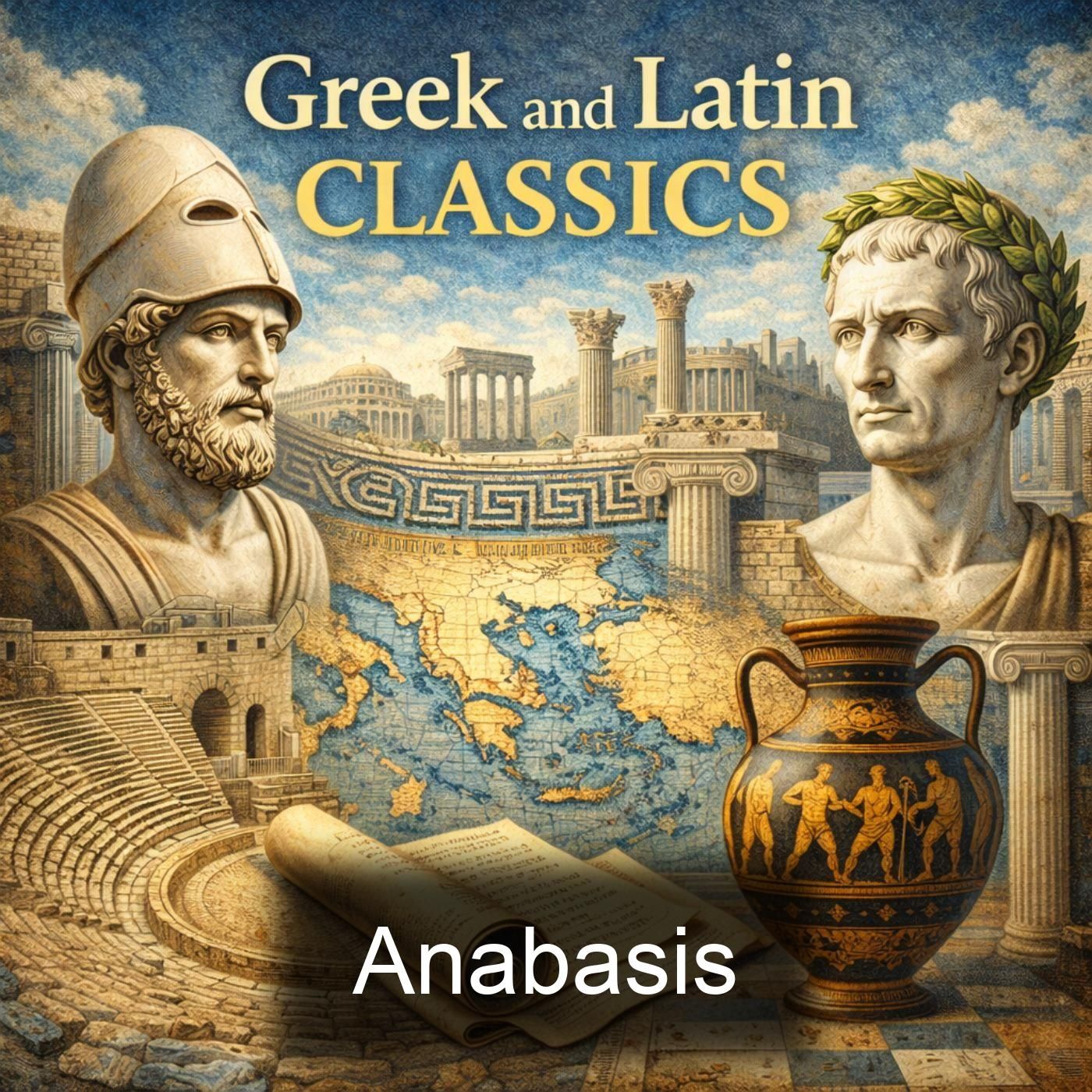
PODCAST · arts
Anabasis
by Xenophon
Xenophon the Athenian was born 431 B.C. He was a pupil of Socrates. He marched with the Spartans, and was exiled from Athens. Sparta gave him land and property in Scillus, where he lived for many years before having to move once more, to settle in Corinth. He died in 354 B.C. "Anabasis" is a Greek word which means "journey from the coast to the center of a country." This is Xenophon's account of his march to Persia with a troop of Greek mercenaries to aid Cyrus, who enlisted Greek help to try and take the throne from his brother Artaxerxes, and the ensuing return of the Greeks, in which Xenophon played a leading role. This occurred between 401 B.C. and March 399 B.C. (Summary from Gutenberg version of text.)
-
1
On Generation and Corruption-Aristotle
"On Generation and Corruption" by Aristotle delves into the fundamental principles of change and permanence in the natural world, exploring how things come into existence and eventually decay. This work is essential for understanding the cyclical nature of life, as Aristotle examines the processes of generation and corruption that define existence. Its themes of transformation and the interplay between creation and destruction remain relevant today, prompting listeners to reflect on the ongoing cycles in their own lives and the world around them. Aristotle's insights into the nature of reality and change offer timeless wisdom that continues to resonate with contemporary audiences seeking to comprehend the complexities of existence.
-
0
Symposium-Plato (Πλάτων)
"Symposium" by Plato is a foundational text in Western philosophy that explores the nature of love through a series of dialogues among notable figures of ancient Athens. Each speaker presents their perspective on love, ultimately leading to profound insights about desire, beauty, and the pursuit of truth. This timeless work remains relevant today as it delves into universal themes of human connection and the quest for understanding, inviting listeners to reflect on their own experiences and beliefs about love. The dialogues not only stimulate intellectual engagement but also encourage a deeper appreciation for the complexities of relationships, making it an enduring exploration of one of humanity's most fundamental emotions.
-
-1
Oedipus Rex (Storr Translation)-Sophocles
"Oedipus Rex," translated by Storr, is a timeless tragedy by Sophocles that explores the themes of fate, free will, and the search for truth. The story follows Oedipus, the King of Thebes, as he seeks to uncover the cause of a devastating plague ravaging his city, only to discover a harrowing truth about his own identity and actions. This powerful narrative delves into the complexities of human nature and the consequences of our choices, making it a poignant reflection on the struggle between destiny and self-determination. Hearing this classic tale today resonates deeply as it challenges listeners to consider the implications of their own decisions and the inescapable nature of fate in their lives.
-
-2
Lucian's Dialogues Volume 3 The Dialogues of the Dead-Lucian of Samosata
Lucian's Dialogues Volume 3, The Dialogues of the Dead, presents a fascinating exploration of the afterlife through the lens of Lucian of Samosata's wit and satire. This collection invites listeners to engage with profound philosophical questions about mortality, existence, and the human condition, all conveyed through lively and thought-provoking conversations among the deceased. The enduring appeal of these dialogues lies in their ability to provoke reflection on life and death, themes that remain relevant in today's society as we continue to grapple with our own beliefs and fears regarding the unknown.
-
-3
Agricola-Publius Cornelius Tacitus
Agricola by Publius Cornelius Tacitus is a compelling account of the life and achievements of Gnaeus Julius Agricola, the Roman general and governor of Britain. This work not only highlights Agricola's military exploits but also reflects on the broader themes of governance, cultural exchange, and the complexities of imperialism. Tacitus's sharp observations on power and leadership remain relevant today, inviting listeners to consider the enduring impacts of authority and the human condition. The eloquence of Tacitus's prose and his insightful commentary offer a timeless exploration of ambition and morality that resonates with contemporary audiences.
-
-4
Gorgias-Benjamin Jowett, Plato (Πλάτων)
Gorgias, translated by Benjamin Jowett, is a profound dialogue by Plato that delves into the nature of rhetoric, ethics, and the pursuit of truth. Through a series of discussions, the text examines the power of persuasive speech and its implications for morality and justice, challenging listeners to reflect on the role of rhetoric in their own lives. The themes of manipulation versus genuine understanding remain relevant today, as society grapples with the impact of media and communication on public opinion and personal beliefs. This enduring work invites contemplation on the responsibilities that come with the power of words and the quest for authentic knowledge in an increasingly complex world.
-
-5
Constitution of Athens-Aristotle
The "Constitution of Athens" by Aristotle provides a detailed examination of the political structure and governance of Athens during his time. This work is a critical analysis that explores the principles of democracy, citizenship, and the rule of law, making it a foundational text in political philosophy. Hearing this audiobook today offers valuable insights into the complexities of political systems and the enduring nature of civic responsibility. Aristotle's observations on governance remain relevant as they encourage listeners to reflect on the principles that underpin modern democracies.
-
-6
Lucian's Dialogues Volume 1 The Dialogues of the Gods-Lucian of Samosata
Lucian's Dialogues Volume 1, The Dialogues of the Gods, presents a captivating exploration of divine themes through sharp wit and engaging discourse. This collection invites listeners into a world where gods converse, revealing their personalities and flaws, while also reflecting on the nature of belief and the human condition. The dialogues challenge traditional views of divinity, making them relevant to contemporary discussions about faith and skepticism. Lucian's clever satire and philosophical insights continue to resonate, encouraging audiences to reflect on the complexities of belief and the interplay between humans and the divine.
-
-7
Economics-Aristotle
"Economics-Aristotle" delves into the foundational principles of economics as articulated by Aristotle, exploring the timeless concepts of wealth, value, and the role of human behavior in economic systems. This work is essential for understanding how ancient philosophical insights continue to shape modern economic thought and practice. Aristotle’s exploration of ethics in relation to economics prompts listeners to reflect on the moral implications of wealth and trade, making it particularly relevant in today's discussions about economic inequality and sustainable practices.
-
-8
Bacchides or, The Twin Sisters-Titus Maccius Plautus
"Bacchides or, The Twin Sisters" by Titus Maccius Plautus is a comedic exploration of mistaken identities and the complexities of love and relationships. This enduring tale showcases the cleverness and wit of Plautus as he navigates themes of deception, familial bonds, and the pursuit of happiness. The humor and insight into human nature found in this ancient work continue to resonate today, reminding us of the timelessness of these social dynamics. As listeners engage with Plautus's sharp dialogue and humorous situations, they will appreciate how these age-old themes of love and mischief remain relevant in our modern lives. Experience the cleverness of Plautus in this delightful classic.
-
-9
Suppliant Maidens (Morshead Translation)-Aeschylus
"Suppliant Maidens," translated by Morshead, is a poignant exploration of the themes of supplication, justice, and the quest for refuge. This ancient Greek play by Aeschylus presents a powerful narrative where a group of women seeks sanctuary from their pursuers, highlighting the timeless struggle for safety and dignity. The emotional depth and moral dilemmas faced by the characters resonate today, as issues of asylum and protection remain ever-relevant in contemporary society. Listeners will find the play's exploration of human vulnerability and the quest for compassion to be both moving and thought-provoking, making it an enduring work that speaks to the heart of the human experience.
-
-10
Electra (Murray Translation)-Euripides
Euripides' "Electra," translated by Murray, delves into themes of vengeance, justice, and the complexities of familial loyalty. The story centers around Electra's profound anguish following the murder of her father, Agamemnon, and her relentless quest for retribution against her mother, Clytemnestra, and her lover, Aegisthus. This timeless tragedy explores the depths of human emotion and the moral dilemmas faced when seeking justice, making it a compelling listen for those interested in the darker aspects of human nature and the consequences of revenge. Its enduring relevance lies in its exploration of the struggle between duty and desire, a theme that resonates deeply in today's world.
-
-11
Bacchae-Euripides
"Bacchae" by Euripides is a powerful exploration of the duality of human nature, the tension between civilization and primal instincts, and the consequences of denying one's true self. This timeless tragedy delves into themes of faith, identity, and the struggle for control, making it a profound reflection on the human condition. Its exploration of the divine and the chaos that ensues when boundaries are crossed resonates deeply in today's world, where the balance between reason and passion remains ever relevant. The emotional intensity and philosophical depth of "Bacchae" ensure its place as a compelling work that invites listeners to reflect on the complexities of life and belief.
-
-12
Selection from the Discourses of Epictetus with the Encheiridion-Epictetus
"Selection from the Discourses of Epictetus with the Encheiridion-Epictetus" presents profound insights into Stoic philosophy, emphasizing the importance of personal responsibility and the pursuit of virtue. This collection distills Epictetus's teachings, offering timeless wisdom on how to navigate life's challenges with resilience and grace. The ideas explored in this work resonate deeply today, as they encourage listeners to cultivate inner strength and maintain perspective in a world filled with uncertainty. By reflecting on the nature of control and acceptance, Epictetus's discourse remains a guiding light for those seeking clarity and purpose in their lives.
-
-13
Dialogue Concerning Oratory, or the Causes of Corrupt Eloquence-Publius Cornelius Tacitus
"Dialogue Concerning Oratory, or the Causes of Corrupt Eloquence" by Publius Cornelius Tacitus delves into the nature of rhetoric and the decline of eloquence in public discourse. Tacitus examines the reasons behind the corruption of oratory, highlighting the importance of clear and truthful communication in society. This exploration remains relevant today as we navigate a world filled with misinformation and persuasive yet misleading rhetoric. By reflecting on the principles of effective communication, listeners can gain insights into the art of oratory and its vital role in fostering understanding and integrity in dialogue. Tacitus's work serves as a timeless reminder of the power of words and the responsibility that comes with them.
-
-14
Heautontimorumenos; the Self-Tormentor-Terence
"Heautontimorumenos; the Self-Tormentor-Terence" explores the complex interplay of self-inflicted suffering and the quest for redemption. This timeless work delves into the human psyche, revealing how our own actions can lead to internal conflict and emotional turmoil. The themes of self-reflection and the consequences of one's choices resonate deeply today, reminding us of the ongoing struggle between our desires and moral obligations. Terence's poignant examination of these universal themes invites listeners to reflect on their own lives, making it an enduring piece that continues to provoke thought and inspire introspection across generations.
-
-15
Agamemnon (Browning Translation)-Aeschylus
"Agamemnon," translated by Robert Browning, brings to life the powerful themes of fate, justice, and the consequences of war as it unfolds the tragic return of Agamemnon from the Trojan War. This classic work of Aeschylus explores the dark complexities of human nature and the moral dilemmas faced by its characters, making it a timeless reflection on the cost of ambition and the cycle of vengeance. Its exploration of themes such as betrayal and the struggle for power resonates deeply in today's world, where the echoes of ancient conflicts can still be felt. Listening to this profound tragedy offers not only a glimpse into the past but also an opportunity to reflect on the enduring nature of human struggles.
-
-16
Protagoras-Plato (Πλάτων)
"Protagoras-Plato" delves into the profound philosophical dialogues between Socrates and Protagoras, exploring the nature of virtue, knowledge, and the role of the individual in society. This timeless work invites listeners to reflect on the complexities of human understanding and the pursuit of wisdom, themes that remain highly relevant in today's world. The dialogue not only challenges conventional beliefs about morality and education but also encourages critical thinking and self-examination.
-
-17
Trinummus The Three Pieces of Money-Titus Maccius Plautus
Trinummus, or The Three Pieces of Money, by Titus Maccius Plautus, explores themes of wealth, morality, and the complexities of human relationships through the lens of ancient Roman society. This comedic play delves into the consequences of greed and the pursuit of material gain, highlighting the timeless struggle between financial ambition and ethical considerations. Its witty dialogue and engaging plot make it a captivating listen, resonating with audiences today as they navigate their own challenges with money and values. The enduring relevance of Plautus's insights into human nature ensures that this work remains a significant reflection on the balance between prosperity and integrity.
-
-18
Three Hundred Aesop's Fables-Aesop
"Three Hundred Aesop's Fables" is a timeless collection of moral tales attributed to Aesop, a storyteller from ancient Greece. Each fable imparts valuable lessons about human nature, ethics, and the consequences of our actions, making them as relevant today as they were centuries ago. These short narratives, featuring animals and simple plots, encourage listeners to reflect on their own behaviors and the world around them. The enduring wisdom found in Aesop's Fables resonates with audiences across generations, offering insights that can guide us in navigating the complexities of modern life. Experience the charm and depth of these classic tales that continue to inspire and educate.
-
-19
Memorable Thoughts of Socrates - Xenophon
"Memorable Thoughts of Socrates" by Xenophon provides a compelling exploration of the philosophical insights and teachings of Socrates, as captured through the lens of one of his devoted followers. This work delves into the essence of Socratic thought, emphasizing themes of ethics, virtue, and the pursuit of knowledge that remain relevant in today’s world. By reflecting on Socrates' dialogues and his quest for truth, listeners are invited to engage with timeless questions about morality and the nature of wisdom.
-
-20
Anabasis - Xenophon
Xenophon the Athenian was born 431 B.C. He was a pupil of Socrates. He marched with the Spartans, and was exiled from Athens. Sparta gave him land and property in Scillus, where he lived for many years before having to move once more, to settle in Corinth. He died in 354 B.C. "Anabasis" is a Greek word which means "journey from the coast to the center of a country." This is Xenophon's account of his march to Persia with a troop of Greek mercenaries to aid Cyrus, who enlisted Greek help to try and take the throne from his brother Artaxerxes, and the ensuing return of the Greeks, in which Xenophon played a leading role. This occurred between 401 B.C. and March 399 B.C. (Summary from Gutenberg version of text.)
We're indexing this podcast's transcripts for the first time — this can take a minute or two. We'll show results as soon as they're ready.
No matches for "" in this podcast's transcripts.
No topics indexed yet for this podcast.
Loading reviews...
ABOUT THIS SHOW
Xenophon the Athenian was born 431 B.C. He was a pupil of Socrates. He marched with the Spartans, and was exiled from Athens. Sparta gave him land and property in Scillus, where he lived for many years before having to move once more, to settle in Corinth. He died in 354 B.C. "Anabasis" is a Greek word which means "journey from the coast to the center of a country." This is Xenophon's account of his march to Persia with a troop of Greek mercenaries to aid Cyrus, who enlisted Greek help to try and take the throne from his brother Artaxerxes, and the ensuing return of the Greeks, in which Xenophon played a leading role. This occurred between 401 B.C. and March 399 B.C. (Summary from Gutenberg version of text.)
HOSTED BY
Xenophon
Loading similar podcasts...
Frequently Asked Questions
How many episodes does Anabasis have?
Anabasis currently has 22 episodes available on PodParley. New episodes are automatically indexed when they're published to the podcast feed.
What is Anabasis about?
Xenophon the Athenian was born 431 B.C. He was a pupil of Socrates. He marched with the Spartans, and was exiled from Athens. Sparta gave him land and property in Scillus, where he lived for many years before having to move once more, to settle in Corinth. He died in 354 B.C. "Anabasis" is a Greek...
How often does Anabasis release new episodes?
Anabasis has 22 episodes. Check the episode list to see recent publication dates and frequency.
Where can I listen to Anabasis?
You can listen to Anabasis on PodParley by clicking any episode. We provide an embedded audio player for direct listening, and you can also subscribe via your preferred podcast app using the RSS feed.
Who hosts Anabasis?
Anabasis is created and hosted by Xenophon.
URL copied to clipboard!